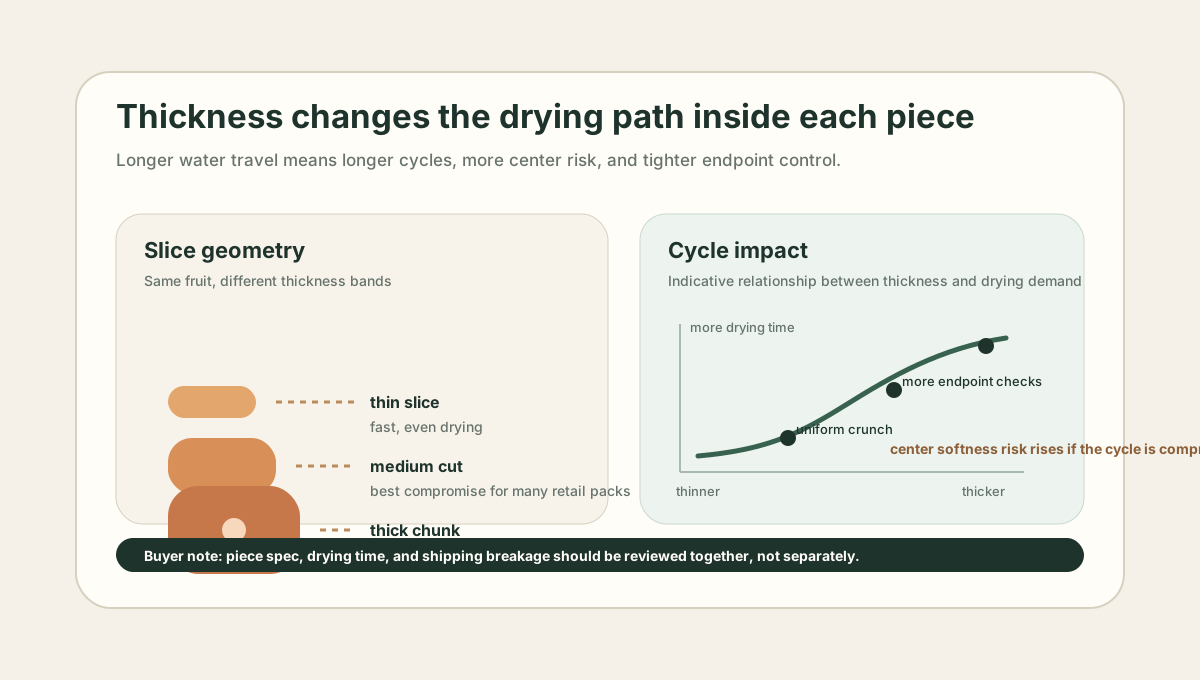
- Thicker fruit pieces usually need longer primary and secondary drying to reach a stable endpoint.
- Uneven slice thickness often creates mixed texture inside the same lot.
- Shortening the cycle without adjusting cut size can leave tough centers or soft pieces.
- Buyers should connect piece specification to texture target, breakage tolerance, and landed cost.
In freeze-dried fruit, cut size is not a cosmetic choice. Thickness changes the drying path, the texture outcome, and the economics of the batch.
That matters because many quality complaints that sound vague at first, such as "some pieces are too hard" or "the center feels different from the outside," often start with thickness control. A dryer can be well run and still deliver inconsistent fruit if the pieces entering the chamber are not matched to the cycle.
The direct answer
Thicker fruit pieces usually take longer to freeze-dry because water has farther to travel from the center of the piece to the surface. That longer path affects cycle time, energy use, uniformity, and final texture.
Thin pieces generally dry faster and more evenly, but they may be more fragile. Thick pieces can look more premium, yet they demand tighter process control if the goal is a crisp, uniform interior.
Why thickness matters physically
Freeze-drying removes ice by sublimation under vacuum. For that to happen efficiently, the frozen water inside the fruit has to move out through the porous structure left behind during drying.
The thicker the piece, the more demanding that path becomes. The outer zone may appear ready first while the center is still lagging behind. If the cycle ends too early, the batch can leave the dryer looking acceptable while still carrying a texture risk inside the thickest pieces.
This is one reason buyers should be cautious when a supplier promises both oversized premium pieces and unusually low processing cost. Those goals can conflict.
Thickness changes more than cycle length
People often treat thickness as only a throughput issue. It is also a quality issue.
Thin pieces tend to favor:
- faster drying
- better batch uniformity
- lower center-to-surface variation
- easier moisture endpoint control
Thick pieces tend to demand:
- longer cycles
- tighter loading discipline
- closer endpoint testing
- stronger justification for the premium format
The right answer depends on the fruit and the intended use. A topping crumble does not need the same geometry as a retail pouch built around large visible pieces.
Why the same bag can contain mixed textures
One common source of inconsistency is not the average slice thickness. It is the variation around that average.
If one tray contains 4 mm slices and 9 mm chunks together, the dryer is being asked to finish two different jobs at once. The thinner pieces may already be extremely dry and fragile by the time the thicker pieces approach the target. The result can be a bag where some fruit shatters into fines while other pieces feel denser or slightly chewy at the center.
That inconsistency is often misread as random quality drift. In reality, it can begin at the cutting step.
Texture trade-offs by format
Thickness also shapes the type of crunch a fruit delivers.
Thin slices often create a lighter, faster break. They feel delicate and crisp, but they may crack more easily in shipping.
Medium-thickness pieces often offer the best compromise between visual presence and process control. That is why many commercial formats settle in the middle rather than at the extremes.
Very thick pieces can create a more substantial bite, but only when the drying cycle is built specifically for that format. Otherwise, they are more likely to expose non-uniform texture.
Why cycle compression becomes risky
Processors naturally want shorter cycles because dryer time is expensive. But reducing cycle time without tightening thickness control can shift risk downstream.
Possible consequences include:
- center softness
- faster texture loss after packaging
- greater lot-to-lot variability
- disputes over whether the product was fully dried
- more aggressive secondary drying that increases brittleness in thin pieces
This is why "faster cycle" is not automatically a process improvement. It only works if the fruit size, tray loading, and endpoint validation still support the intended quality target.
What buyers should ask suppliers
If piece integrity matters to your product, ask more than "What size do you offer?"
A stronger buyer conversation includes:
- target slice or dice dimensions
- acceptable thickness range
- whether the format is hand-cut, machine-cut, or screened after drying
- how the thickest pieces are validated at endpoint
- typical moisture and water activity range by format
- whether whole-piece and crumble formats run on the same cycle
These questions help reveal whether the supplier treats geometry as a controlled variable or as a rough visual description.
Thickness and cost are connected
Thickness affects cost in several ways at once:
- longer dryer occupancy
- possible lower throughput per day
- higher need for precise cutting
- more sorting if the pack requires a narrow appearance spec
- more reject risk if the target is large premium pieces
That does not mean thicker pieces are a bad choice. It means buyers should understand what they are paying for. A visibly larger format can justify a higher price, but only if the eating quality remains consistent enough to support that premium.
Practical guidance by use case
For retail snacking, moderate thickness is often the safest commercial choice because it balances visible piece size, consistent crunch, and survivable shipping.
For bowl toppings or cereal inclusions, smaller and thinner formats often perform better because they dry evenly and distribute more cleanly.
For ingredient use, piece geometry should be matched to the manufacturing step after the bag is opened. If the fruit will be blended, folded, or crushed anyway, a costly oversized format may not add real value.
A simple warning sign
If a sample bag contains several especially large pieces that look attractive but the texture inside those pieces differs from the rest of the bag, do not treat that as a minor sensory quirk. It may indicate that the product format is ahead of the process control.
That is the point where buyers should ask whether the piece spec and the drying cycle are actually designed for each other.
Bottom line
Piece thickness affects freeze-dried fruit cycle time because it changes how far water must travel during drying. That same variable also affects texture consistency, breakage, and cost.
The best suppliers do not discuss piece size only as a sales feature. They connect it to drying logic, endpoint control, and the final eating experience.
Frequently Asked Questions
Why does piece thickness affect freeze-drying cycle time?
Freeze-drying removes ice by sublimation under vacuum, and the frozen water has to travel out through the porous structure left behind. The thicker the piece, the longer that water path becomes. The outer zone may appear ready first while the center is still lagging behind.
Are thicker freeze-dried fruit pieces automatically better quality?
No. Thicker pieces can look more premium, but they demand tighter process control if the goal is a crisp, uniform interior. Be cautious when a supplier promises both oversized premium pieces and unusually low processing cost — those goals can conflict.
Why can the same bag contain pieces with mixed textures?
Often it is not the average slice thickness but the variation around that average. If one tray contains 4 mm slices and 9 mm chunks together, the dryer is being asked to finish two jobs at once. Thinner pieces can be extremely dry and fragile by the time thicker pieces approach target — producing a bag where some fruit shatters into fines while other pieces feel denser at the center.
What happens if a freeze-drying cycle is shortened too aggressively?
Reducing cycle time without tightening thickness control shifts risk downstream. Possible consequences include center softness, faster texture loss after packaging, greater lot-to-lot variability, disputes over whether the product was fully dried, and more aggressive secondary drying that increases brittleness in thin pieces.
What thickness works best for different applications?
Retail snacking: moderate thickness balances visible piece size, consistent crunch, and survivable shipping. Bowl toppings and cereal inclusions: smaller and thinner often distributes more cleanly. Ingredient use: piece geometry should match the manufacturing step after the bag is opened — if the fruit will be blended or crushed, a costly oversized format may not add real value.
What should buyers ask suppliers about piece geometry?
Ask for target slice or dice dimensions, the acceptable thickness range, whether the format is hand-cut or machine-cut, how the thickest pieces are validated at endpoint, typical moisture and water activity range by format, and whether whole-piece and crumble formats run on the same cycle.
Why might large pieces in a sample bag have inconsistent centers?
If a sample bag contains several attractive oversized pieces whose interior texture differs from the rest, that often signals the format is ahead of the process control. The supplier may not have built the drying cycle to match the piece spec.
Primary sources & further reading
- Sublimation Rate in Freeze-Drying — Modeling Heat & Mass Transfer Institute of Food Technologists — Journal of Food Science Peer-reviewed reference for how product geometry drives primary-drying cycle length.
- Lyophilization: Introduction & Basic Principles Parenteral Drug Association Industry-standard textbook on freeze-drying physics, widely cited in food and pharma.
- Vacuum Process Engineering for Food Drying USDA Agricultural Research Service USDA-published research on vacuum-drying scale-up and cycle optimization.
External links open in a new tab. We do not receive compensation from any organization listed; sources are referenced because they are primary, current, and publicly verifiable.