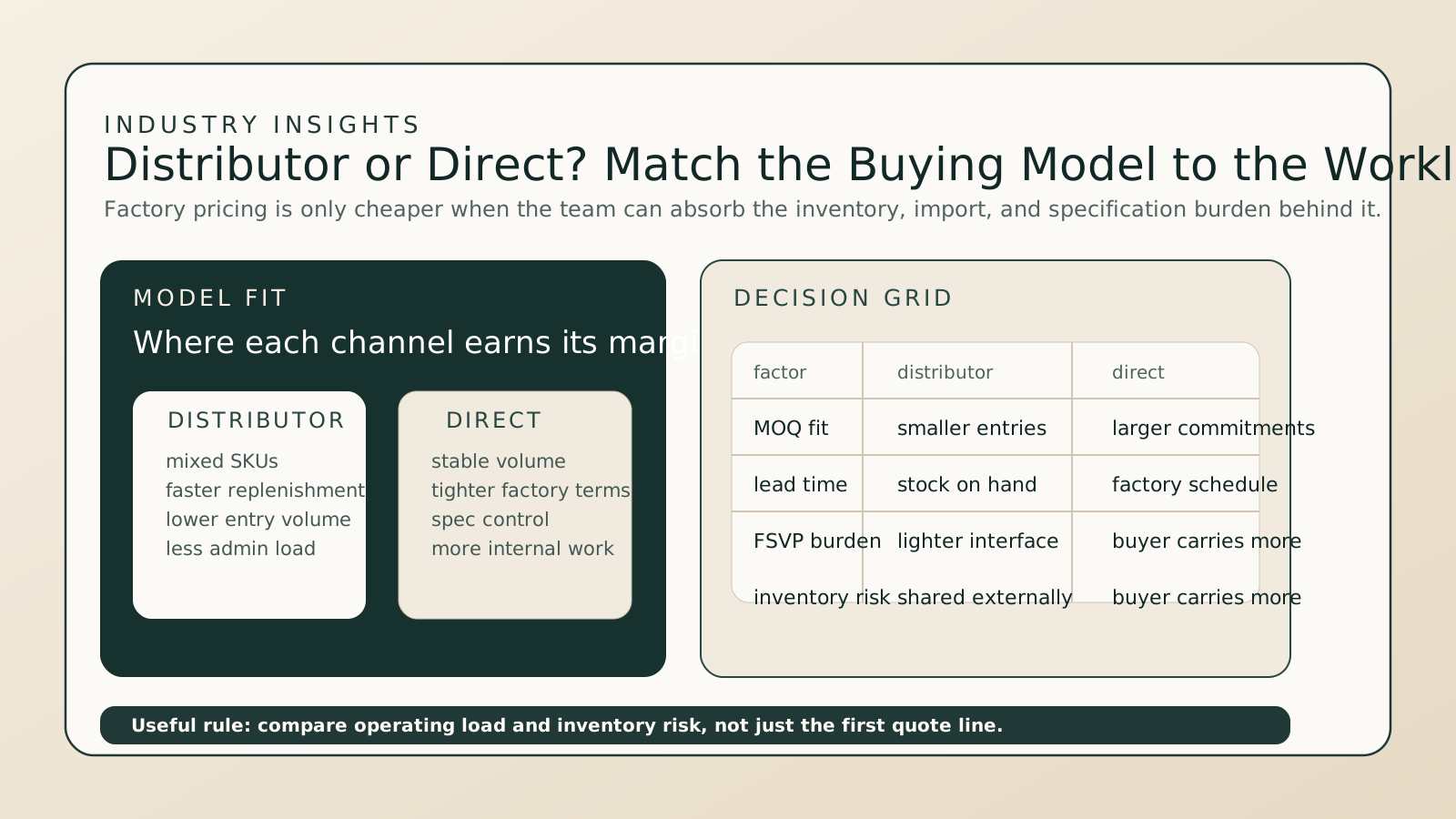
- Direct buying usually fits larger, steadier programs that can manage specs, lead times, and import or warehouse complexity.
- Distributors earn their margin when buyers need smaller runs, mixed SKUs, faster replenishment, or less administrative burden.
- The real comparison is total operating load and cost-in-use, not just the first quoted case price.
- If a team cannot manage lot review, supplier verification, and forecast discipline, direct buying often creates more risk than savings.
In freeze-dried fruit, "buy direct" is often treated like the grown-up move. The phrase implies lower cost, fewer middlemen, and cleaner supply.
Sometimes that is true. Often it is only partly true.
The direct answer
Buy freeze-dried fruit through a distributor when your volumes are still uneven, you need mixed SKUs or quick turns, or your team does not want to carry the full supplier-verification, import, and inventory-management load. Buy direct when your volume is large enough, your specification is stable enough, and your organization can absorb the operational work that factory pricing shifts onto the buyer.
The better model is the one your system can actually support, not the one that sounds leanest in theory.
Direct and distribution solve different problems
A distributor and a processor are not interchangeable versions of the same vendor.
A direct processor relationship is best when the buyer wants tighter control over:
- specification details
- packaging format
- long-run unit cost
- production planning
- dedicated supply arrangements
A distribution model is best when the buyer wants help with:
- lower entry quantities
- mixed orders across SKUs
- domestic stock position
- replenishment speed
- administrative simplification
The key difference is not philosophy. It is where the work sits.
Direct buying lowers visible markup but raises workload
Factory-direct pricing can absolutely be better. But the lower quote does not arrive alone. It usually arrives with more responsibility for the buyer.
FDA's FSVP framework matters here because direct import buyers are not just negotiating fruit. They are stepping into a regulated importer role that requires supplier-verification discipline and documentation. That may be fully manageable for a mature team. It may be a distraction for a smaller one.
Direct programs also tend to ask more from the buyer on:
- forecasting
- minimum-order management
- lead-time planning
- COA and lot-document review
- claim handling
- warehousing and slower-turn inventory
If the team is not built for that work, the factory savings are often partly fictional.
Distributors are often buying flexibility, not just reselling fruit
Buyers sometimes describe the distributor margin as pure cost. That is too narrow.
In practice, distributors often provide three useful services at once:
- they break large supply into smaller purchasable units
- they carry inventory so the buyer does not have to
- they simplify the transaction path when the buyer needs speed or assortment
That matters in freeze-dried fruit because many programs are not steady enough for factory logic every month. A brand may be testing demand, rotating flavors, or buying across several fruits in modest quantities. A foodservice buyer may need replenishment faster than an overseas lead time can support. A startup may need strawberry, mango, and blueberry in the same week without committing to full-scale direct positions on each.
That is where distribution earns its keep.
The better question is cost-in-use, not ex-works price
The wrong comparison is:
- direct quote per kilogram
- distributor quote per kilogram
- pick the smaller number
The better comparison is:
- direct quote plus freight and import burden
- direct quote plus working capital tied up in more inventory
- direct quote plus internal quality and documentation labor
- distributor quote plus lower MOQ and faster turns
- distributor quote plus reduced administrative drag
The cheapest line item does not always produce the cheapest system.
This is especially true when the product spec is still evolving. If the piece size, breakage tolerance, packaging format, or fruit mix is not stable yet, a distributor can be a safer proving ground than a large direct program that locks in the wrong version of the product.
Written specs matter more in both models than buyers expect
USDA's commercial freeze-dried fruit description is useful not because every buyer is using USDA procurement language, but because it shows the discipline serious food buying should have: identity, defects, net content, and verification logic should be written down.
That matters whether the counterparty is a factory or a distributor.
A distributor can shorten the path to supply, but it does not eliminate the need to define:
- fruit identity and format
- ingredient status
- moisture or water-activity expectations
- breakage tolerance
- packaging format
- storage and shelf-life expectations
Without those basics, buyers often blame the channel when the real issue is a loose specification.
Signals that distribution is the better fit right now
Distribution often makes more sense when:
- you are still validating demand
- you need mixed pallets or several fruits at once
- you want domestic replenishment speed
- your team does not import food routinely
- you do not want to carry larger forecast risk
- you are still learning what the final spec should be
Those are not signs of inexperience. They are normal commercial conditions.
In those cases, buying direct too early can create:
- excess stock
- specification drift across early orders
- avoidable importer workload
- more cash tied up than the program can support
Signals that direct buying may now be justified
Direct buying becomes more attractive when:
- the volume is large enough to support better factory terms
- the SKU set is stable
- the buyer has predictable reorder rhythm
- the team can manage import or factory logistics cleanly
- supplier approval and document review are already disciplined
- complaint and return patterns are understood well enough to write a tighter spec
That is usually the point at which the operational burden starts to look worth carrying.
A practical path: distribute first, go direct second
Many buyers do not need to pick one model forever. A sensible progression is:
- prove demand with a distributor
- tighten the specification using real usage and complaint data
- move high-volume stable SKUs direct
- leave long-tail or trial SKUs in distribution
That hybrid approach is often cleaner than forcing every fruit through one buying model.
It also protects against the most common direct-buying mistake: treating first cost as if it were the same thing as commercial readiness.
Bottom line
Buying freeze-dried fruit through a distributor is not a compromise when the business needs flexibility, speed, lower entry quantities, or less import administration. Buying direct is not automatically smarter when the internal team is not ready for the extra load.
The right model depends on volume, specification maturity, and operational capacity. In freeze-dried fruit, the best buying decision is usually the one that fits the whole system, not the one that wins the quote sheet by itself.
Frequently Asked Questions
Is direct buying always cheaper than buying from a distributor?
Not in total. Direct quotes may look lower per kilogram, but freight, import administration, larger MOQs, inventory carrying cost, and internal labor can erase the difference.
When does a distributor usually make more sense?
Usually when volumes are still modest, when the buyer needs mixed pallets or quick replenishment, or when the team does not want to manage overseas supplier verification and import detail directly.
What is the biggest hidden cost in direct importing?
Often the operational load: forecasting, importer responsibility, lot-document review, claim handling, and the cash tied up in larger or slower-moving orders.
Can buyers start with distribution and move direct later?
Yes. That is often the cleanest path. A distributor can help prove the spec, the velocity, and the complaint pattern before the buyer commits to direct-container or direct-factory logic.
Does buying through a distributor remove quality responsibility?
No. The buyer still needs a written specification and incoming discipline. The distributor reduces friction, but it does not make weak specs or weak supplier selection disappear.
Primary sources & further reading
- What Do Importers Need to Know About FSVP U.S. Food & Drug Administration Referenced for FDA's explanation that importers must verify foreign suppliers meet applicable U.S. food safety standards.
- Importing Human Foods U.S. Food & Drug Administration Referenced for FDA's importer-accountability framework under FSMA when buyers source food directly.
- Guidance for Industry: Foreign Supplier Verification Programs for Importers of Food for Humans and Animals U.S. Food & Drug Administration Referenced for the documented foreign-supplier verification obligations attached to direct import sourcing.
- FRUITS, FREEZE DRIED (A-A-20365) U.S. Department of Agriculture Agricultural Marketing Service Referenced for commercial freeze-dried fruit specification structure and the value of clear written product requirements.
External links open in a new tab. We do not receive compensation from any organization listed; sources are referenced because they are primary, current, and publicly verifiable.