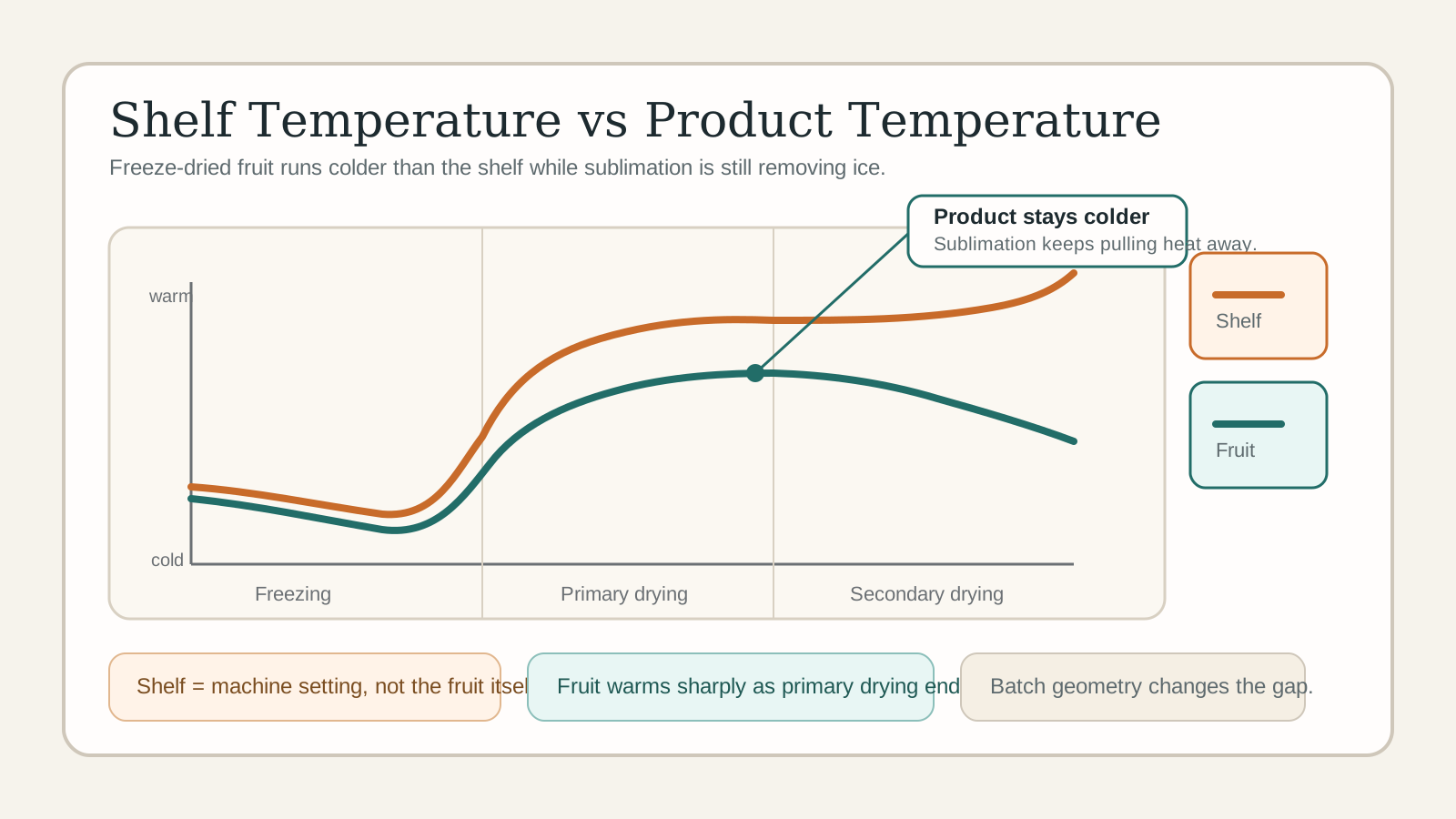
- Shelf temperature is a machine setting, while product temperature is the fruit's actual thermal condition inside the cycle.
- During primary drying, sublimation keeps freeze-dried fruit colder than the shelf because heat is being consumed to turn ice into vapor.
- Fruit geometry, chamber pressure, dry-layer resistance, and shelf position all affect how far product temperature can drift from the shelf setpoint.
- Operators and buyers should not read a high shelf setpoint as proof of overheating or a low shelf setpoint as proof of a safe cycle without product context.
Freeze-drying conversations often use the shelf setpoint as shorthand for what the fruit experienced.
That shortcut sounds tidy and usually tells only part of the story.
The direct answer
Shelf temperature and product temperature are not the same in freeze-dried fruit because the shelf is only the heat source. During primary drying, the fruit is still losing ice by sublimation, and that phase change continuously consumes energy. As long as that is happening, the product typically runs colder than the shelf.
That gap is one of the core mechanics of freeze-drying. If a team forgets it, cycle discussions become misleading fast.
What the shelf temperature actually means
The shelf setpoint is the dryer instruction. It tells the machine how much thermal drive to offer through the tray, shelf, or contact surface.
It does not tell you, by itself:
- the actual fruit temperature
- whether the fruit center is still frozen
- whether the batch is close to endpoint
- whether the fruit is safely below its critical structural limit
That is why a supplier can truthfully report a shelf setpoint that sounds warm while the fruit is still much colder.
Why the fruit stays colder during primary drying
Primary drying is a heat-and-mass-transfer balancing act. Heat flows in from the shelf. Water vapor escapes out of the fruit. The ice-to-vapor transition consumes energy the entire time.
That energy draw acts like a cooling load. The shelf may be warm enough to drive drying, but the product temperature lags because the fruit is still paying the energy cost of sublimation.
The result is the pattern operators expect:
- shelves move first
- product responds more slowly
- product stays below the shelf while sublimation is active
- product temperature rises toward the shelf only when the ice burden is mostly gone
This is also why the end of primary drying is often discussed in temperature terms. Once the cooling effect from sublimation fades, the fruit temperature starts catching up.
Why the temperature gap changes from run to run
The shelf-to-product offset is not fixed. It widens or narrows depending on the product and the cycle.
Major drivers include:
- chamber pressure
- shelf setpoint
- piece thickness
- sugar and solids content
- dry-layer resistance as drying progresses
- contact quality between tray and product
- location in the dryer
A thin apple slice and a thick mango cube should not be expected to carry the same thermal profile. Neither should edge positions and center positions in a commercial load.
The shelf temperature is a setting. Product temperature is a result. Freeze-drying decisions should be made from the result, not from the setting alone.
Why this matters for freeze-dried fruit quality
In fruit systems, temperature control is not only about drying speed. It is also about preserving structure.
If product temperature rises too high for that fruit and format, the batch can drift into:
- collapse
- shrinkage
- sticky texture
- weak pore structure
- slower later-stage drying because the structure degraded early
If product temperature stays lower than needed for too long, the opposite problem appears: the cycle may be safe but inefficient, with unnecessary hours and avoidable cost.
That is why serious freeze-drying work tries to keep the product warm enough to dry efficiently but not so warm that the structure loses control.
Why buyers should care even if they do not run the dryer
This may sound like an operator-only topic. It is not.
Buyers hear cycle language all the time:
- "We run a conservative shelf program."
- "We can push a warmer shelf and still hold quality."
- "Our cycle is faster because our equipment runs hotter."
Those claims are hard to interpret without product-temperature logic behind them.
A better line of questioning is:
- How is endpoint validated?
- What evidence shows the fruit stayed inside its safe product-temperature window?
- How does the supplier handle different cut sizes or fruit formats?
- What changes when the product is thicker, sweeter, or more fragile?
Those questions reveal whether the cycle is being run as a controlled process or a hopeful recipe.
Why fruit pieces in one batch still vary
Even with a sound cycle, not every piece sees the same experience.
Variation can come from:
- uneven loading thickness
- piece-size spread
- local differences in heat transfer
- uneven vapor escape through the drying layer
- shifts in fruit composition from one tray zone to another
That is one reason endpoint discipline matters so much in freeze-dried fruit. The batch has to be released against the slowest or most difficult areas, not the prettiest early-drying pieces.
What a strong practical explanation sounds like
A strong supplier explanation usually sounds like process logic, not slogan language.
It connects:
- shelf setpoint
- chamber pressure
- fruit format
- product-temperature target
- endpoint check
- finished texture result
A weak explanation usually stops at the machine setting itself, as if the shelf were the product.
Bottom line
Shelf temperature and product temperature are different because freeze-dried fruit is not just being heated. It is also spending energy on sublimation. During primary drying, that keeps the fruit colder than the shelf.
For operators, that difference is basic process control. For buyers, it is a useful filter: trust suppliers who can explain the fruit temperature, not only the dryer setting.
Frequently Asked Questions
Why is freeze-dried fruit colder than the shelf during primary drying?
Because the energy coming from the shelf is being spent on sublimation. As long as ice is still leaving the fruit, the product temperature stays below the shelf setpoint.
Does shelf temperature tell me whether the fruit is being overheated?
No. Shelf temperature matters, but it is not the same as the fruit temperature. Overheating risk depends on what temperature the fruit itself reaches.
Why can two pieces of fruit in the same run dry differently?
They may differ in thickness, sugar load, contact with the tray, airflow exposure, or position in the dryer. Those differences change heat transfer and vapor escape.
When does product temperature move closer to shelf temperature?
Usually near the end of primary drying and into secondary drying, when less ice remains and sublimation cooling drops.
What is the practical buying lesson from this temperature gap?
Ask how the supplier validates endpoint and protects the product's critical temperature, rather than assuming the shelf recipe alone explains cycle quality.
Primary sources & further reading
- Practical Advice on Scientific Design of Freeze-Drying Process: 2023 Update PubMed Central / Pharmaceutical Research Referenced for the process-design principle that shelf temperature and chamber pressure together define product temperature, and that the product remains below shelf temperature during sublimation.
- Heat Flux Analysis and Assessment of Drying Kinetics during Lyophilization of Fruits in a Pilot-Scale Freeze Dryer PubMed Central / Foods Referenced for fruit-specific pilot-scale observations linking sample temperature profiles, heat flux, and the transition from primary to secondary drying.
- Determination of End Point of Primary Drying in Freeze-Drying Process Control PubMed Central / AAPS PharmSciTech Referenced for the common process-control observation that product temperature approaches shelf temperature as primary drying ends.
External links open in a new tab. We do not receive compensation from any organization listed; sources are referenced because they are primary, current, and publicly verifiable.