- Freeze-drying is capital-intensive and slow, so a dryer's fixed cost per batch is spread across whatever product fits in that cycle — utilization is a core price driver, not a footnote.
- Long cycles, partly loaded shelves, and short production runs all raise the machine cost carried by each kilogram of finished fruit.
- This is why high-sugar or thick-cut fruits, small custom lots, and off-season runs often price higher even when the raw fruit is cheap.
- Buyers can influence price by consolidating volume, accepting standard cuts and formats, and giving longer lead times that let a supplier schedule full, efficient cycles.
Most freeze-dried fruit price models start in the wrong place. They begin with the cost of the raw fruit, add yield loss, add labor and packaging, and finish with margin. That build-up is not wrong, but it buries the single largest structural cost driver in the category: the freeze dryer itself.
Freeze-drying is a slow, capital-heavy batch process. The machine is expensive to buy, expensive to run, and can only process one cycle at a time. How fully that machine is used — its capacity utilization — quietly sets a large part of the price. Buyers who understand this can read quotes more accurately and, in some cases, influence them.
The direct answer
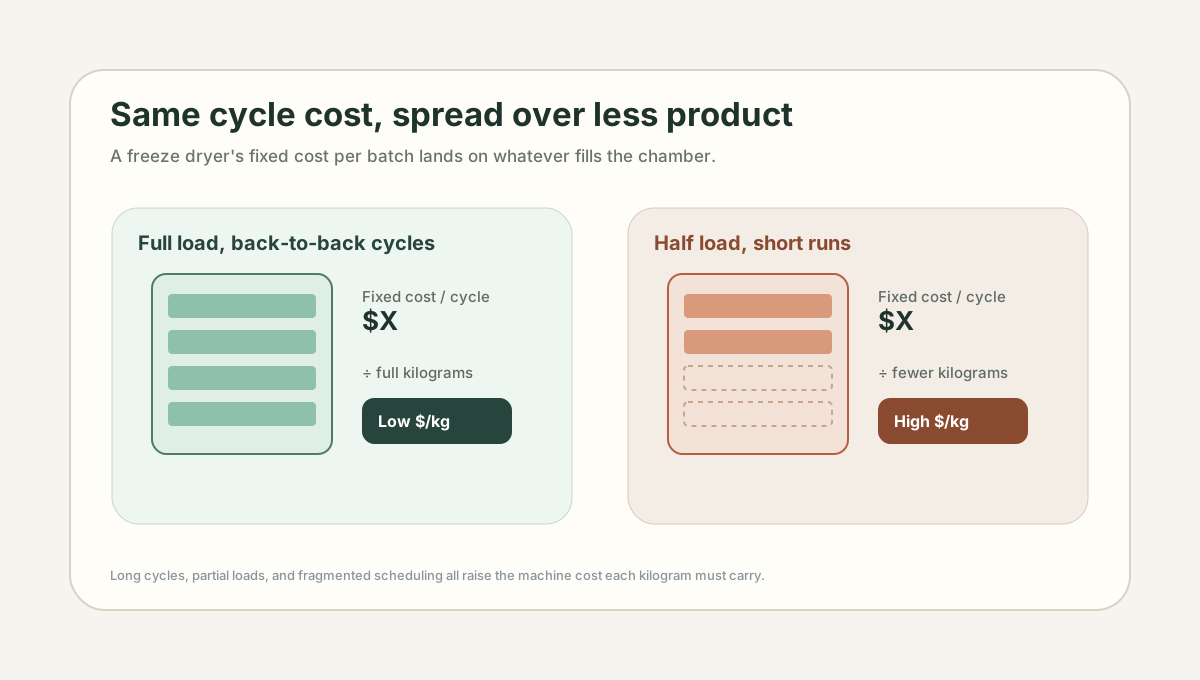
Capacity utilization drives freeze-dried fruit pricing because the dryer's fixed cost per cycle is spread across whatever sellable product comes out of that cycle. A full dryer running back-to-back cycles produces the lowest machine cost per kilogram. A half-loaded chamber, an extra-long cycle, or a machine idling between short runs produces a much higher machine cost per kilogram, even when the fruit going in is identical.
In other words, part of what a buyer pays for is not fruit at all. It is a share of the dryer's time and space.
Why the machine dominates the cost stack
Freeze-drying combines three things that make equipment cost unusually important. It is capital-intensive, it is energy-intensive, and it is slow.
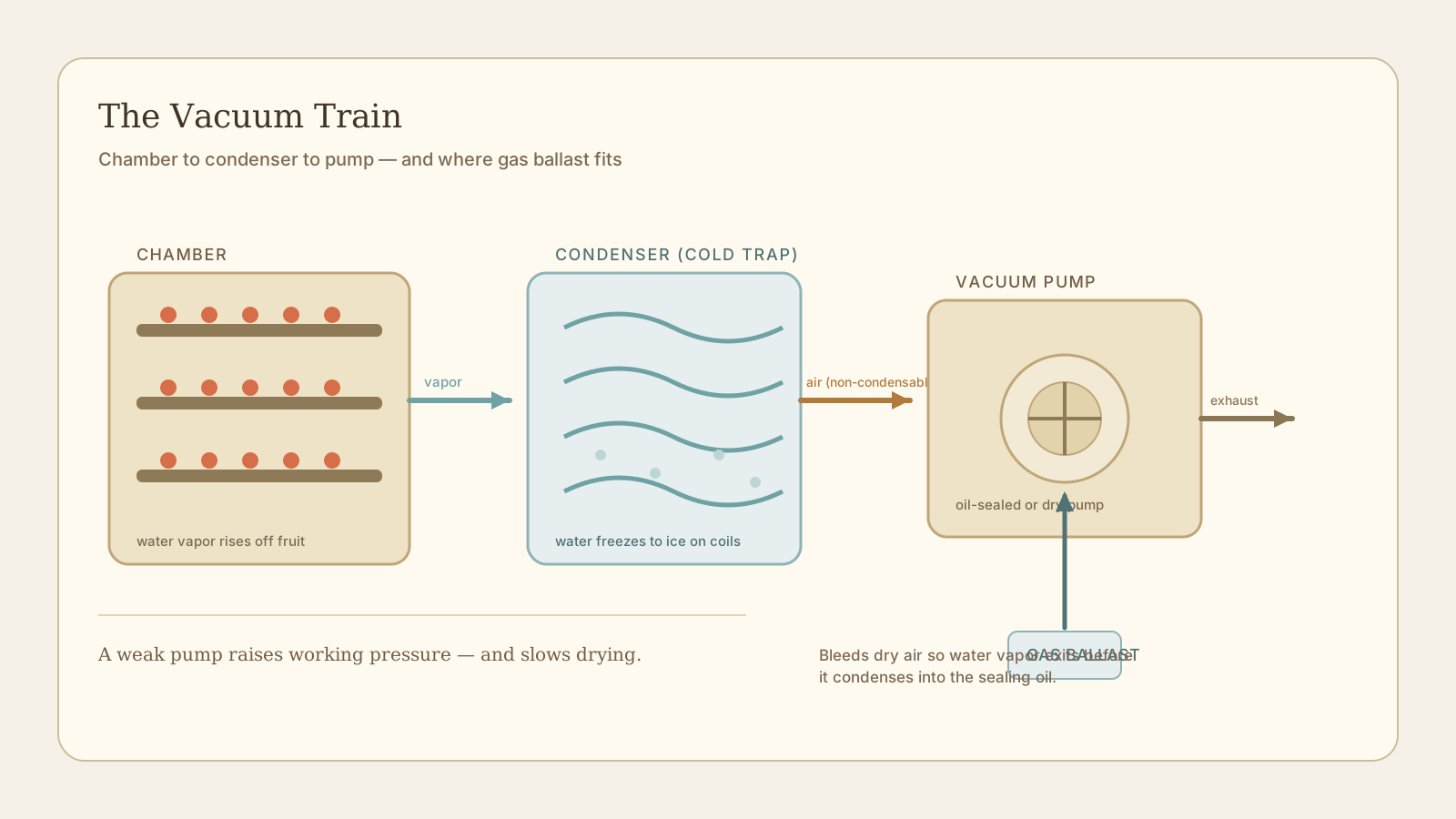
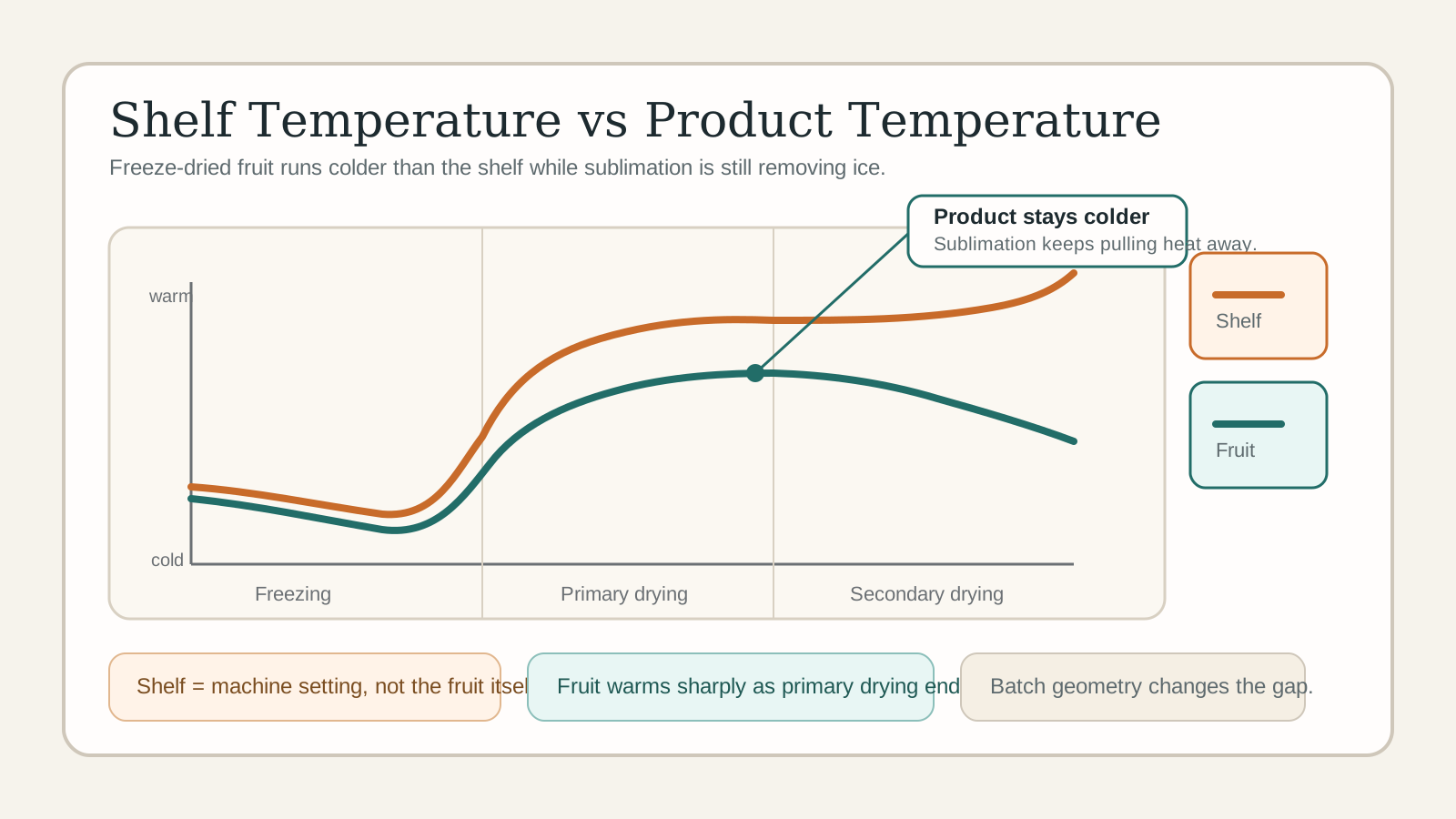
A freeze dryer freezes the product, pulls a deep vacuum, and then supplies heat carefully so ice sublimates directly to vapor. FDA's basic description of the process frames it as freezing plus vacuum plus controlled heat over a defined cycle, and food-focused reviews describe those cycles running for many hours, sometimes more than a day for difficult products. During that entire time, the machine is committed to one batch.
That combination means each cycle carries a substantial fixed cost — depreciation on the equipment, energy for refrigeration and vacuum, maintenance, and the labor to load, monitor, and unload. Those costs are largely there whether the chamber is full or half empty. So the number of sellable kilograms coming out of each cycle has an outsized effect on unit cost.
Three ways utilization leaks
Utilization rarely fails in one dramatic way. It usually erodes through three ordinary situations.
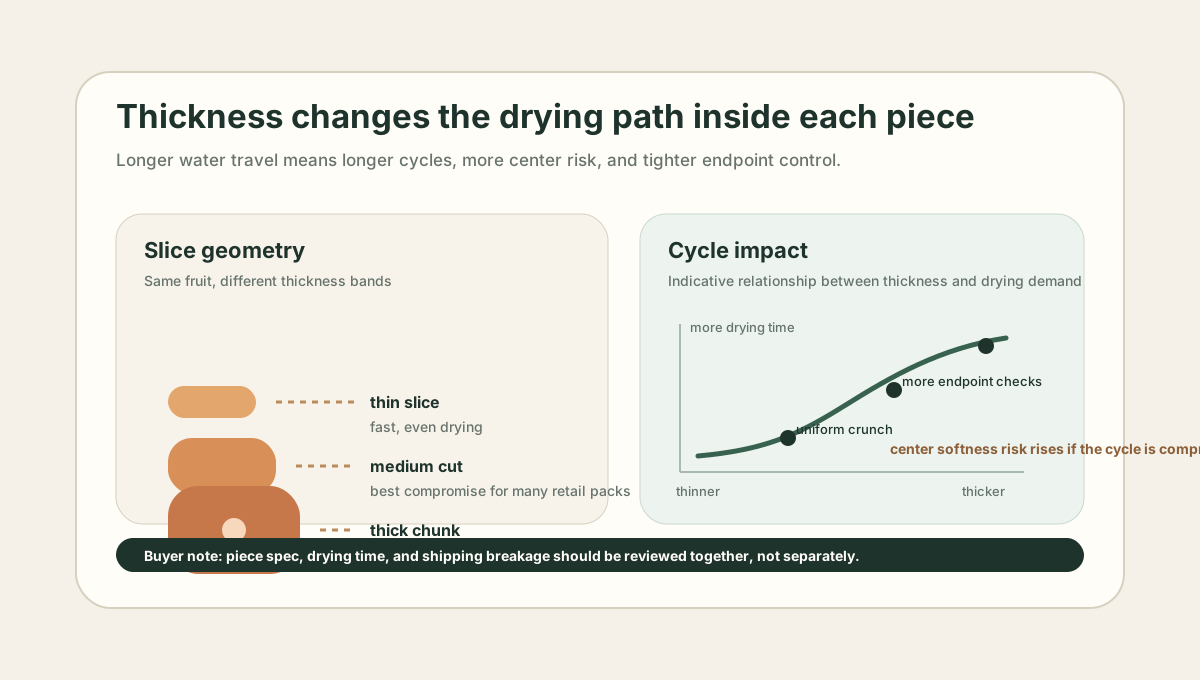
Long cycles. The slower a product dries, the fewer batches a machine can run in a week. High-sugar fruits, thick pieces, and dense tray loads all tend to need longer, more carefully controlled cycles to avoid collapse and soft centers. Fewer cycles per week from the same machine means each kilogram carries a bigger slice of fixed cost.
Partial loads. A chamber that runs with half its shelf area filled still incurs most of the same cycle cost. Small orders, odd formats, or a rush job that cannot wait for a full load all push cost per kilogram up because the fixed cost is divided across less product.
Fragmented scheduling. A machine that runs one product, gets cleaned and changed over, then runs a different small lot loses productive hours to setup and idle time. Frequent changeovers for many small custom runs use capacity less efficiently than long runs of the same product.
When a supplier quotes a surprisingly high price for a cheap raw fruit, the gap is often machine economics, not greed. Ask about cycle length and typical run size for that product. A long cycle or a small dedicated run explains a lot of the number.
Why cheap fruit can still cost a lot to freeze-dry
This is the point that most surprises buyers. The price of the incoming fruit and the cost of freeze-drying it are only loosely related.
A watery, high-sugar fruit might be inexpensive at the farm gate but expensive to freeze-dry, because it dries slowly and needs a conservative cycle to protect structure. A firmer, lower-sugar fruit in a thin, uniform cut might cost more per kilogram fresh but dry fast and load efficiently, giving a lower machine cost per finished kilogram.
So a low raw-material cost does not guarantee a low finished price. The dryer has its own opinion, expressed in cycle time and load efficiency.
Why custom and off-season orders price higher
The same logic explains two common buyer frustrations.
Custom cuts, unusual formats, and small trial lots price higher partly because they use capacity poorly. A short run with a changeover on either side leaves the machine less productive than a long standard run would. The premium is not only for the custom work itself; it is for the capacity the run consumes relative to the product it yields.
Off-season or rush orders price higher for a related reason. When a supplier cannot plan the run into an efficient schedule, they may have to accept a partial load or displace other work. Either way, utilization drops and cost per kilogram rises.
What buyers can actually do
Because utilization is a real cost driver rather than an arbitrary markup, buyers have genuine levers.
- Consolidate volume. Fewer, larger orders let a supplier fill full cycles and schedule long runs, which improves the machine economics behind the quote.
- Accept standard formats. Standard cuts and thicknesses that dry efficiently keep cycles shorter and loads denser than bespoke geometry.
- Give lead time. A longer planning horizon lets the supplier slot production into full, back-to-back cycles instead of squeezing in a partial load.
- Forecast honestly. Reliable forecasts let a supplier plan capacity rather than react, and planned capacity is cheaper capacity.
None of these guarantee a lower price, but they all improve the underlying economics that a competitive quote is built on.
What to ask suppliers
To understand the machine-cost portion of a quote, ask questions aimed at utilization:
- Roughly how long is the cycle for this fruit and cut?
- Does this product usually run as a full load or a partial one?
- How does run size affect the price you quoted?
- Would consolidating volume or extending lead time change the number?
- Is this a standard format for your line, or a custom run with changeover cost?
The answers turn an opaque price into something a buyer can reason about and, sometimes, improve.
Bottom line
Freeze-dried fruit pricing is shaped as much by the dryer as by the fruit. Because freeze-drying is slow, capital-heavy, and one batch at a time, the fixed cost of each cycle spreads across whatever comes out of it, so utilization sits near the center of the price. Buyers who consolidate volume, accept efficient formats, and plan ahead are not just being easy customers — they are directly improving the machine economics that decide the quote.
Frequently Asked Questions
What is capacity utilization in freeze-drying?
It is how fully a freeze-dryer's available hours and shelf area are used to produce sellable product. A dryer running full trays back-to-back has high utilization; one running half-loaded shelves or sitting idle between short runs has low utilization, which raises cost per kilogram.
Why does the machine matter so much in freeze-dried fruit cost?
Freeze dryers are expensive to buy, power, and maintain, and each batch takes many hours regardless of how full it is. That fixed cost per cycle is spread across the product in the chamber, so anything that reduces load or lengthens the cycle raises the cost each kilogram must carry.
Why do high-sugar fruits cost more to freeze-dry?
High-sugar and thick-cut fruits generally need longer, more carefully controlled cycles to dry without collapse. Longer cycles mean fewer batches per week from the same machine, so each kilogram carries a larger share of fixed cost even if the raw fruit is inexpensive.
Does a bigger order always get a lower price?
Not automatically, but volume that lets a supplier fill full cycles and schedule efficient runs usually improves the machine economics behind the quote. Consolidated, well-planned orders are easier to price competitively than scattered small custom lots.
How can buyers reduce the machine-cost portion of price?
Consolidate volume into fewer, larger runs; accept standard cuts and formats that dry efficiently; avoid last-minute rush orders that force partial loads; and give enough lead time for the supplier to slot production into full, back-to-back cycles.
Primary sources & further reading
- Lyophilization of Parenteral (7/93) U.S. Food & Drug Administration Referenced for the description of freeze-drying as a controlled, multi-stage batch process combining freezing, vacuum, and heat over an extended cycle.
- Freeze-Drying of Plant-Based Foods Foods / PubMed Central Referenced for cycle length, energy intensity, and the influence of sugar content and piece geometry on drying time.
- The Freeze-Drying of Foods Foods / PubMed Referenced for the process parameters that lengthen or shorten cycles and their effect on throughput.
External links open in a new tab. We do not receive compensation from any organization listed; sources are referenced because they are primary, current, and publicly verifiable.