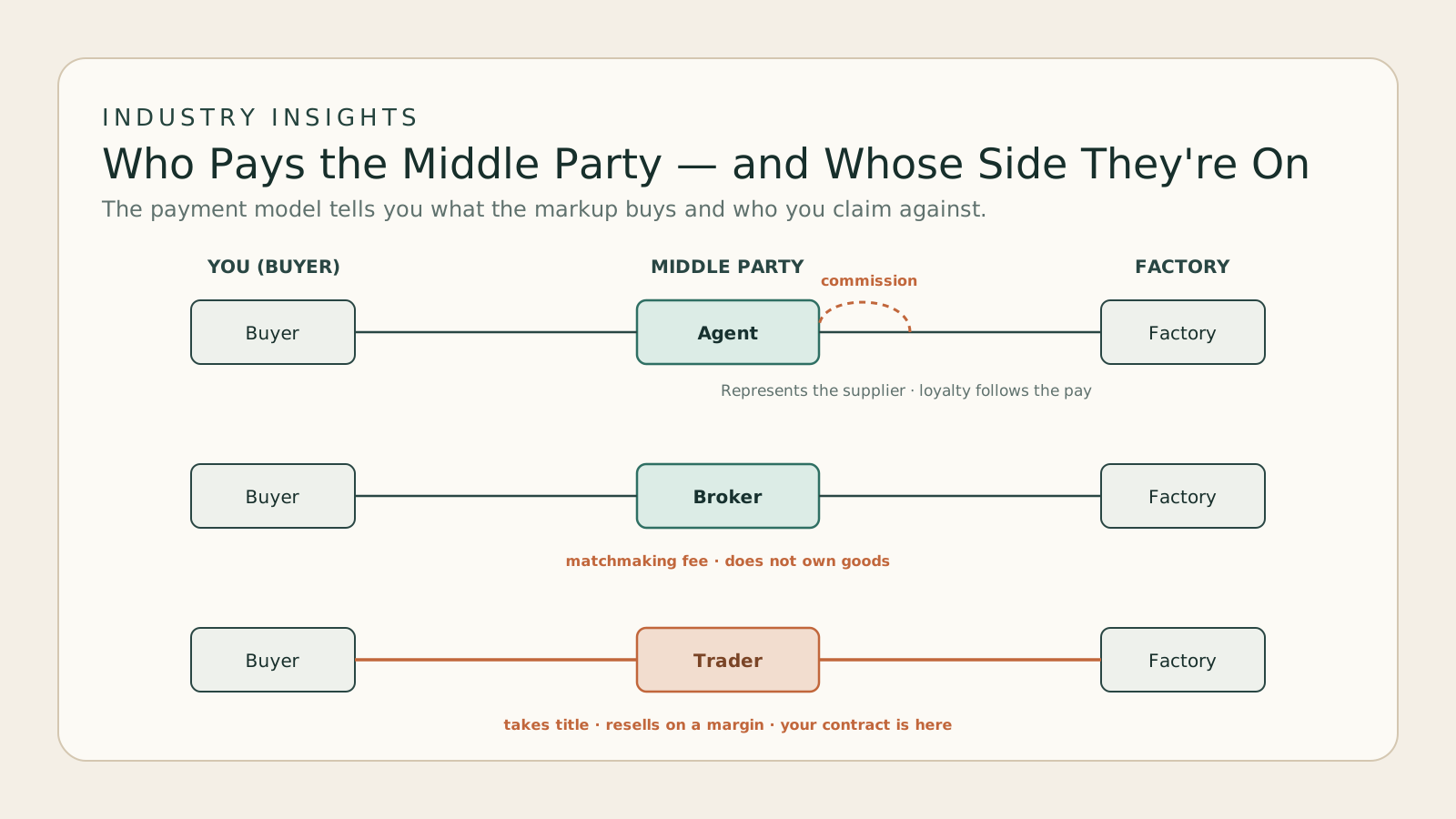
- There are three common middle roles: the agent paid a commission (often by the supplier), the broker who matches buyer and seller for a fee, and the trader who buys and resells on a margin — and the payment model tells you whose side they are really on.
- A commission or margin is not automatically bad; a good intermediary can earn it through access, quality oversight, and risk absorption. The problem is a hidden one, where you cannot see whether you are paying for real work or just a markup.
- Ask directly how a middle party is compensated, whether they take title to the goods, and who owns the supplier relationship — the answers change your leverage, your recourse if a lot fails, and your ability to go direct later.
The person emailing you a freeze-dried mango quote might be the factory, or they might be one of several kinds of middle party — and you often cannot tell from the email signature. Whether they are paid by you, by the supplier, or by the difference between the two changes what they are optimizing for, how much room there is to negotiate, and who you chase if a lot arrives soft or short. Understanding the payment models behind the quote is one of the more useful pieces of commercial literacy in this category, and it is rarely spelled out for buyers.
The direct answer
There are three common ways a middle party sits between you and the factory, distinguished by how they get paid. An agent represents the supplier and typically earns a commission on what they sell, so their pull is toward moving that supplier's fruit. A broker matches buyer and seller and takes a facilitation fee, usually without owning the goods. A trader buys the fruit outright, takes title, and resells it to you on a margin, carrying the inventory and risk in the middle. None of these is inherently good or bad — but the model tells you whose interests are being represented, and that should shape how you read the quote.
The agent: paid by the supplier
An agent, or sales representative, works on behalf of one or more suppliers and is generally compensated by commission on the business they bring in. In freeze-dried fruit this is common at origin: a factory that cannot staff a full export sales team relies on agents who know the buyers in a given market and speak the language.
The useful thing about an agent is access and continuity. A good one knows which factories can actually hit your spec, can walk a line during production, and can chase a delayed shipment because the relationship matters to their income. The thing to keep in mind is that their commission usually rides inside the supplier's price, and their loyalty runs to the supplier who pays them. That is fine when your interests align — you both want a clean lot delivered on time — but it means you should not expect an agent to tell you a competing factory would serve you better.
The broker: paid to make the match
A broker's product is the connection. They introduce a qualified buyer to a qualified seller, help structure the deal, and take a fee for doing so, typically without ever owning the fruit. In commodity-adjacent trades brokers can be paid by either side or split, and the arrangement is often more transactional than an ongoing agent relationship.
Brokers earn their keep when the match itself is hard: a specific fruit, a specific certification, a tight timeline, or an origin you have no contacts in. A capable broker has a mental map of who can do what and can save weeks of cold outreach. The caution is that a pure broker's involvement may end once the introduction is made, so you want to know how much deal support and quality oversight actually comes with the fee, and whether they stay involved if something goes wrong after the handshake.
Titles in this trade are loose. Someone who calls themselves a broker may take title on some deals and act as a pure matchmaker on others; an agent may also trade on their own account. Do not rely on the label — rely on the answers to two questions: how are you paid on this deal, and do you take ownership of the goods?
The trader: paid on the spread
A trader buys freeze-dried fruit and resells it. They take title — the goods legally become theirs — hold inventory, and sell to you at a price above what they paid, earning the margin in between. They are, in effect, a merchant rather than a facilitator, and the markup is the visible or invisible spread on the goods.
That spread pays for real things when the trader is good: they may hold stock so you can buy smaller quantities on shorter lead times, consolidate fruit from several origins into one order, pre-finance the factory, and absorb currency and crop risk that would otherwise land on you. For a buyer who cannot commit to a full container or wait out a production cycle, a trader's inventory can be worth the margin. The trade-off is that you are one step further from the factory, you may not know exactly where the fruit was made, and the trader's incentive is to maximize the spread — so the same lot can carry a wider or narrower markup depending on what the market will bear.
Why the payment model changes your position
Once you know how the middle party is paid, several practical things follow. Your negotiating leverage differs: with a commissioned agent there may be room to work on the supplier's underlying price; with a trader you are negotiating their margin, which they guard. Your recourse differs too. If a trader sold you the lot, your contract and your claim for an off-spec or damaged shipment usually run to the trader, not to a factory you may never have dealt with. With an agent or broker arrangement, your contract may be directly with the supplier, changing who you hold responsible.
Ownership of the relationship also matters for the long game. If you eventually want to buy direct, it helps to know who actually controls the supplier link and whether your terms will let you approach the factory later. Some intermediaries deliberately keep the factory's identity opaque precisely to protect their position — a reasonable business move on their part, but something you should recognize rather than discover after the fact.
Reading a quote with this lens
The point is not to cut out every middle party; a well-chosen agent or trader frequently delivers better landed cost and reliability than a smaller buyer could achieve alone, especially in a new origin. The point is to know what you are paying for. When a quote arrives, it is fair and normal to ask how the person is compensated, whether they take title to the goods, and who owns the supplier relationship. The answers turn an opaque number into a clear picture: whose side the quoter is on, what work the markup is buying, and where you stand if the lot disappoints. That clarity is worth asking for on every deal, and the parties worth working with will not mind the question.
Frequently Asked Questions
What is the difference between a broker, an agent, and a trader?
An agent represents one side — usually the supplier — and is typically paid a commission on sales they help close, so they are motivated to move that supplier's product. A broker introduces and matches buyers and sellers for a fee and generally does not take ownership of the goods; their value is the match and the deal facilitation. A trader actually buys the fruit, takes title, and resells it to you at a higher price, earning the spread and carrying the inventory and risk in between. The lines blur in practice, but the payment model is the clearest way to tell them apart.
Is it cheaper to skip the middle party and buy direct?
Sometimes, but not always, and the sticker price is only part of it. Going direct removes one markup, but you also take on everything the intermediary was doing: finding qualified factories, vetting quality, handling language and logistics, consolidating small orders, and absorbing some risk. For a large, experienced buyer with volume, direct often wins. For a smaller buyer, or one entering a new origin, a good agent or trader can deliver landed cost and reliability that beats a fumbled direct attempt. Compare total delivered cost and risk, not just unit price.
How do I find out how someone is being paid?
Ask plainly: 'How are you compensated on this — commission from the supplier, a fee from me, or a margin on the goods?' and 'Do you take title to the product?' A reputable intermediary will answer. If the question is dodged, that itself is information. You are not being rude; compensation structure is a normal part of understanding a supply relationship, and it directly affects whose interests are represented at the table.
Does a commissioned agent make the price higher for me?
Often the commission is built into the supplier's price, so you may not see a separate line for it, but you are paying it one way or another. That is not necessarily a problem if the agent is genuinely opening access to a factory you could not reach, managing quality on the ground, or smoothing logistics. It becomes a problem when the commission buys nothing you needed and simply pads the number. The test is what work is being done for the money, not whether a commission exists.
Who is responsible if a lot fails when I bought through a trader?
This is a key reason the model matters. When a trader takes title and sells to you, your contract is with the trader, so your recourse for an off-spec or damaged lot usually runs to them, not the factory you may never have met. With a pure broker or agent arrangement, your contract may be directly with the supplier, which changes who you claim against. Clarify the contractual chain and who holds title at each step before you place an order, and make sure your quality terms bind whoever you actually pay.