- Cut format—whole, sliced, diced, fines, or powder—affects yield, breakage, drying time, and unit cost, so it should be specified deliberately, not left to a default.
- Smaller and thinner cuts usually dry faster but generate more fines and handling loss, which suppliers price into the quote.
- A useful cut spec names a target size, an acceptable size range, and a tolerance for off-size pieces and fines, not just a single number.
- Whether fruit is cut before or after drying changes the texture and dust profile, and buyers should ask which approach a supplier uses.
When a buyer writes "freeze-dried strawberry" on a request, the supplier's first job is to translate that into a format. Whole berries? Halves? Quarters? A 6-millimeter dice? Slices for visible decoration? Granules for a cereal? Powder for a drink mix? Each answer leads to a different process path, a different yield, and a different price, and none of them is the obvious default.
Cut and dice specifications look like a detail. In practice they are one of the biggest levers on cost and quality that a buyer controls.
The direct answer
A cut specification defines the physical form of the finished fruit: its shape, its size, the spread of sizes that is acceptable, and how much dust or off-size material is tolerated. Suppliers set these specs around three pressures at once—what the customer's application needs, what the fruit will physically do during cutting and drying, and what the economics allow.
Get the format right and the fruit behaves well in the end product with little waste. Get it wrong and you pay for fruit that arrives too broken, too dusty, or the wrong size for the line it was meant to feed.
The common formats and what they are for
Most freeze-dried fruit ships in one of a handful of cuts, each tied to a use.
Whole and halved pieces suit snacking and any product where a recognizable, intact piece is the point—visible berries on top of a bar, a clean strawberry half in a bag. They show off appearance but are the most fragile to ship.
Slices give a flat, visible profile and are popular for decoration and for fruits like banana and strawberry where the cross-section is attractive.
Dice—large or small—are the workhorse for inclusions. Cereals, granolas, trail mixes, and baked goods usually call for dice because the pieces distribute evenly and hydrate predictably.
Fines and granules are small fragments, sometimes a deliberate product and sometimes a by-product of making cleaner cuts. They scatter through doughs and batters well and are often sold at a discount.
Powder is milled fruit for drinks, coatings, seasonings, and color. It is the most processed format and usually the most expensive per unit of fruit, and it demands the tightest moisture and handling control because fine particles pick up humidity fastest.
How size choices ripple through the process
Cut size is not just a finishing step; it interacts with drying itself.
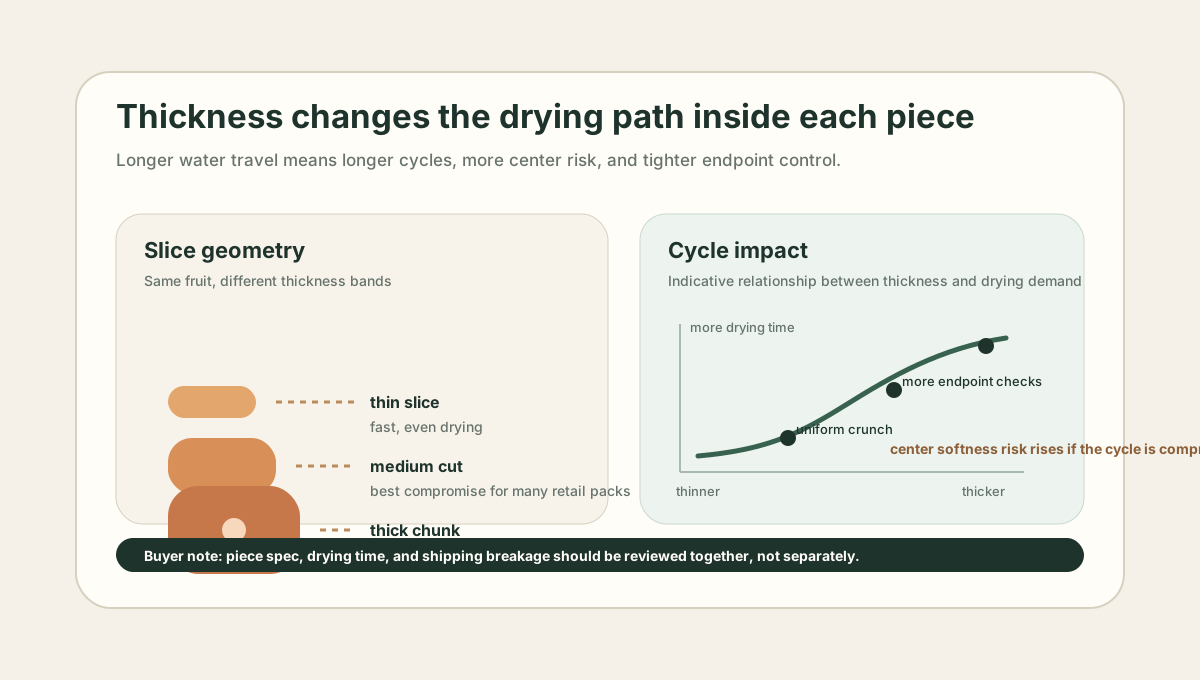
Thinner and smaller pieces tend to dry faster, because water has less distance to travel out of each piece. That can shorten cycles. But the same small, thin pieces are more fragile once dry, so they generate more fines during handling, screening, and packing. A supplier quoting a small, uniform dice is also quoting the cost of the fruit that turns to dust along the way.
Larger pieces dry more slowly and unevenly, raising the risk of soft centers if the cycle is not extended, but they hold together better and ship with fewer fines. Whole pieces sit at the fragile extreme for shipping even though they need no sizing.
Every gram that becomes dust is fruit the buyer paid for but may not be able to use in the intended format. Suppliers either screen fines out (and absorb or resell them) or leave them in (and the buyer absorbs them). Either way, a tighter size spec with a low fines allowance costs more than a loose one, because someone has to pay for the lost material and the extra screening.
Cut before drying, or after
A detail buyers often miss is when the fruit is cut. Cutting before freeze-drying produces clean, defined edges and a piece shaped the way the knife left it, but it means handling soft, wet fruit and managing how cut surfaces behave during freezing. Cutting or milling after drying is common for fines and powder and for some dice, but dry freeze-dried fruit is brittle, so post-drying size reduction tends to create more dust and irregular fracture edges.
Neither is wrong. They produce different looks and different dust profiles, and a buyer who cares about edge appearance or low dust should simply ask which the supplier uses.
What a usable cut spec looks like
The weakest specs name a single number—"6 mm dice"—and stop. That leaves both sides to argue at receiving about what counts as on-size. A workable spec names four things: a target dimension, an acceptable range around it, a limit on oversize and undersize pieces, and a maximum for fines or dust. For powders, the equivalent is a particle-size or sieve specification rather than a dice dimension.
With those four elements, a supplier can build a process that hits the target and a buyer can verify a lot objectively. Without them, the same "6 mm dice" order can produce two very different bags from two suppliers, both technically compliant.
Why identical-sounding quotes diverge
When two suppliers quote the same cut and the prices differ, the gap usually lives in the parts of the spec that are not in the headline. Different fruit grades, different yields after sizing, different fines rates, and different screening steps all move the real cost. One supplier may reach your size with less waste; another may simply count fines differently or use a cheaper input grade. Comparing fairly means matching the full specification—target, range, off-size limits, fines, and the cut-timing approach—not just the dice dimension.
The bottom line
Cut and dice format is a deliberate engineering and commercial choice, not a cosmetic one. It shapes drying behavior, breakage, fines, yield, and price all at once. Buyers get better fruit and cleaner comparisons by specifying a target size with a real tolerance and fines limit, asking whether fruit is cut before or after drying, and remembering that the cheapest format is often the one that needs the least sizing—not the one that sounds the most premium.
Frequently Asked Questions
What cut formats are common for freeze-dried fruit?
Whole or halved pieces, slices, large and small dice, granules or fines, and powder. Each serves a different use: whole pieces for snacking and visible inclusions, dice for cereals and bars, fines for baking distribution, and powder for drinks, coatings, and seasoning.
Does a smaller dice cost more or less?
It depends. Smaller and more uniform cuts often take more processing and screening and can generate more fines, which raises effective cost even when the raw fruit is the same. Powder can cost more again because it requires milling and tighter handling. The lowest-cost option is frequently whatever requires the least sizing and creates the least waste.
Should fruit be diced before or after freeze-drying?
Both are done. Cutting before drying gives clean, defined edges but means handling soft wet pieces; cutting or milling after drying is common for fines and powder but tends to create more dust and breakage. Ask the supplier which they use, because it affects edge appearance and the amount of fines in the bag.
What should a cut specification actually contain?
A target dimension (for example, 6 mm dice), an acceptable range around it, a maximum percentage of oversize and undersize pieces, and a limit on fines or dust. A single number with no tolerance leaves both sides guessing and invites disputes at receiving.
Why do two suppliers quoting the same dice size differ on price?
Different fruit grades, different yield after sizing, different fines rates, and different screening steps all move cost. One supplier may hit your size with less waste, or may simply count fines differently. Comparing requires matching the full spec, not just the headline dimension.
Primary sources & further reading
- Freeze Dried Fruit Specifications and Formats Van Drunen Farms Industry processor describing freeze-dried fruit formats including whole, sliced, diced, and powder, illustrating the range of cut options offered to buyers.
- Particle Size Reduction and Sieving U.S. Food and Drug Administration FDA guidance context on size reduction and sieving steps relevant to defining and verifying particle-size and dice specifications.
- Defects in Freeze-Dried Products Lyophilization World Background on how freeze-dried structure is fragile and prone to breakage, relevant to fines generation during cutting and handling.
External links open in a new tab. We do not receive compensation from any organization listed; sources are referenced because they are primary, current, and publicly verifiable.