- Metal detection and X-ray inspection are complementary, not interchangeable: one is tuned for metal, the other senses density differences.
- Freeze-dried fruit is low density and airy, which makes some contaminants easier to see and others harder.
- A reject system, verification routine, and record trail matter as much as the detector itself.
- Buyers should ask which system is used, how it is challenge-tested, and what happens when a pack is rejected.
A bag of freeze-dried strawberries can look spotless and still be sent through a metal detector or X-ray system before it ships. That is not theater. Foreign material is one of the most common reasons for food complaints and recalls, and freeze-dried fruit carries its own version of the risk: fruit arrives from fields and packhouses, moves across trays and conveyors, and passes through cutting, screening, and packaging equipment, any of which can introduce a fragment that does not belong.
The two technologies most processors rely on, metal detection and X-ray inspection, are often spoken about as if they were the same safeguard. They are not. They answer different questions, and for a low-density product like freeze-dried fruit, the differences are worth understanding before assuming a line is fully protected.
The direct answer
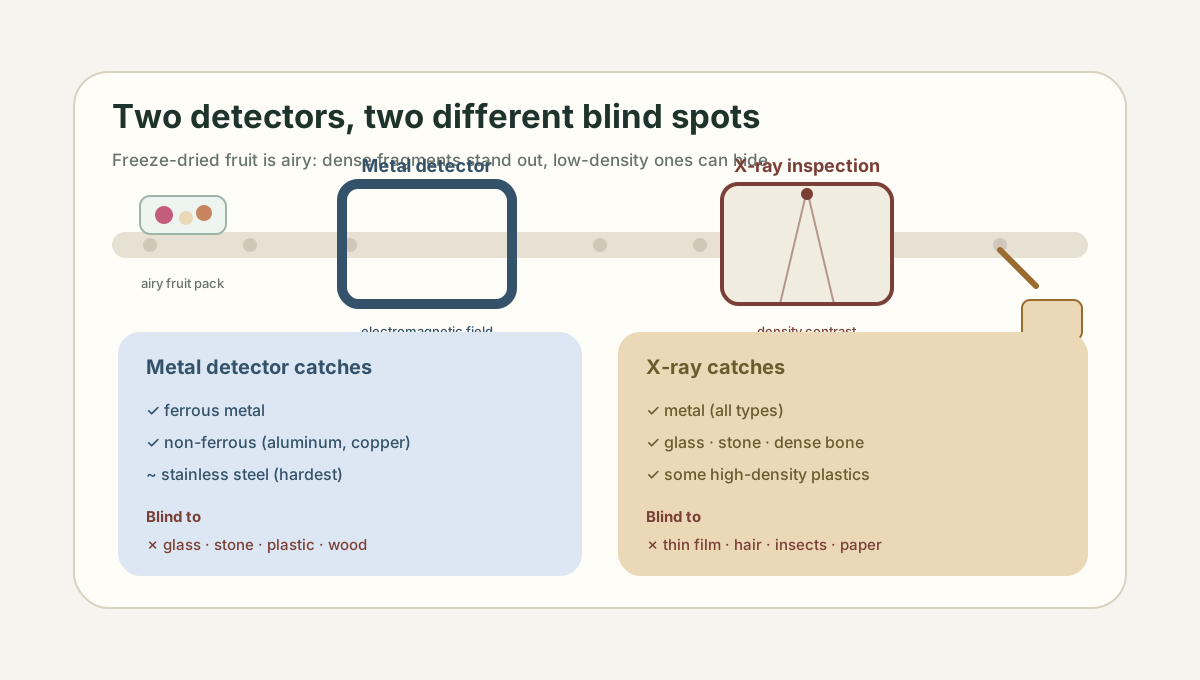
Metal detection finds metal by sensing its effect on an electromagnetic field. X-ray inspection finds density differences, so it can detect metal plus other dense materials such as glass, stone, or dense bone. Neither one catches everything. The strongest programs choose the technology that matches the most likely hazards, then back it with verification and a controlled reject system.
In other words, the detector is only half the control. The routine around it is the other half.
How a metal detector actually "sees"
A metal detector creates an electromagnetic field. When metal passes through, it disturbs that field, and the system signals a detection and triggers a reject. It responds to three categories: ferrous metal, non-ferrous metal such as aluminum or copper, and stainless steel, which is often the hardest to detect because it is less magnetic and less conductive.
For freeze-dried fruit, metal detection has real advantages. The product is dry and non-conductive, which keeps the so-called product effect low and lets the system run at tighter sensitivity than a wet or salty food would allow. Metal is also a plausible hazard: blades, screens, wire, and equipment wear are realistic sources on any line that cuts and screens fruit.
The limitation is in the name. A metal detector is blind to glass, stone, plastic, wood, and other non-metal contaminants. If the hazard analysis points to those, metal detection alone does not address them.
How X-ray inspection differs
An X-ray system passes the product under a low-dose beam and reads how much energy reaches a detector on the other side. Dense material absorbs more, showing up as a darker region in the image. Software flags regions that exceed a density threshold and triggers a reject.
Because it works on density rather than magnetism, X-ray detects a broader set of contaminants: metal of all types, glass, mineral stone, dense bone, and some high-density plastics. It can also perform secondary checks at the same station, such as catching gross fill errors or missing pieces, though those are bonus functions rather than the core safety purpose.
X-ray is not a universal answer. Low-density contaminants are its blind spot. Thin plastic film, paper, hair, insects, and soft wood often carry too little density contrast to separate from the product, especially against airy fruit. The system also costs more to buy, run, and maintain, and it requires trained handling because it is radiation-emitting equipment.
Why freeze-dried fruit changes the picture
Freeze-dried fruit is unusually low in density. Removing nearly all the water leaves a porous, lightweight matrix. That property cuts both ways for inspection.
On the helpful side, a dense contaminant stands out sharply. A metal sliver or a small stone is far denser than a freeze-dried raspberry, so the density contrast on X-ray is strong and the signal is comparatively clean. The lack of moisture also keeps metal-detector product effect low.
On the harder side, the same low density means low-density contaminants almost disappear. A shard of clear, thin packaging film has little to distinguish it from the fruit on a density basis. That is a reminder that inspection equipment is a backstop, not a license to relax upstream controls like screening, magnets, sieves, and good handling.
Format matters too. Powders, crumble, and whole pieces do not behave identically. A small fragment that is obvious in a single large slice can be harder to resolve when mixed into fine powder, and fill depth and pack geometry affect how clearly the system reads. Programs that simply copy settings from one SKU to another without re-validating are taking a quiet risk.
Finding a contaminant only matters if the pack is actually removed from the flow. The reject mechanism, a verified bin or air-blast diverter with a sensor confirming the reject fired, is part of the control. A detector that flags but fails to reject reliably has not protected anyone.
The routine that makes the equipment trustworthy
Inspection systems are only as good as the verification around them. Several practices separate a credible program from a box that is merely switched on.
Challenge testing is the core of it. Operators pass known test pieces of a stated size through the system on a defined schedule to confirm both detection and rejection at the claimed sensitivity. If a challenge test fails, the standard response is to hold and re-inspect product back to the last good test, which is why the test interval and record-keeping matter commercially as well as for safety.
Sensitivity needs to be set against realistic hazards, not an aspirational number. A stated sphere size for ferrous, non-ferrous, and stainless steel is meaningful; "we have a metal detector" is not. Reject confirmation, lockable reject bins, and clear procedures for handling and investigating rejected packs round out the system.
This is also where modern food-safety expectations live. Hazard-analysis frameworks treat physical hazards as something to identify, control, and verify, with foreign-material detection as one possible preventive control. The verification trail is what turns a piece of hardware into a defensible control point.
What buyers should ask
A buyer does not need to audit the electronics to evaluate the control. A few targeted questions reveal most of what matters:
- Which technology is in line for this product, metal detection, X-ray, or both, and why?
- What detection sensitivity is claimed, and for which contaminant types?
- How often are challenge tests run, and what happens when one fails?
- How are rejects physically separated, confirmed, and recorded?
- Do settings get re-validated when the format changes from pieces to powder?
The quality of the answers is informative. A supplier that can connect its inspection choice to a specific hazard analysis, and describe its verification routine without hesitation, is usually running a more reliable program than one that simply names a brand of equipment.
Bottom line
Metal detection and X-ray inspection both guard freeze-dried fruit, but they protect against different things. Metal detection is a strong, efficient control for metal-specific risk and benefits from the product's dryness. X-ray covers a wider range of dense contaminants but can miss low-density ones, and it sees freeze-dried fruit's airy structure as an advantage for spotting dense fragments. Neither replaces upstream handling controls, and neither is trustworthy without challenge testing, a verified reject system, and records. For a buyer, the useful question is not "do you inspect," but "what does your inspection actually catch, and how do you prove it still works."
Frequently Asked Questions
Do metal detectors and X-ray machines catch the same contaminants?
No. A metal detector responds to the magnetic and electrical conductivity of metal. An X-ray system senses density differences, so it can find dense non-metal items such as glass, stone, dense bone, or some hard plastics, in addition to metal. They overlap on metal but diverge elsewhere.
Is X-ray inspection always better than metal detection?
Not automatically. X-ray finds a wider range of dense materials, but it can struggle with low-density contaminants such as thin plastic film, hair, or insects, which carry little density contrast against airy fruit. Metal detection remains a strong, lower-cost control for metal-specific risk.
Why does freeze-dried fruit's low density matter for inspection?
Because freeze-dried fruit is porous and light, a dense contaminant such as a metal fragment or stone stands out clearly on X-ray. The flip side is that low-density contaminants blend in, so density-based detection is not a guarantee against every foreign object.
What is a challenge test?
It is a routine check where known test pieces, such as certified metal or other test cards of a stated size, are passed through the system to confirm it detects them and rejects the pack. It verifies the equipment is working at the claimed sensitivity, not just powered on.
What should a buyer ask a supplier about foreign-material control?
Ask which inspection technology is in line, the stated detection sensitivity, how often challenge tests run, how rejects are handled and recorded, and how the program changes for powders versus whole pieces.
Primary sources & further reading
- Hazard Analysis and Risk-Based Preventive Controls for Human Food (21 CFR Part 117) U.S. Food and Drug Administration Referenced for the regulatory framework requiring hazard analysis and preventive controls, which can include physical-hazard controls such as foreign-material detection.
- Foreign Objects in Food: Guidance for Detection and Control U.S. Food and Drug Administration Referenced for the treatment of hard or sharp foreign objects as a potential physical hazard in finished food.
- Codex Alimentarius General Principles of Food Hygiene (CXC 1-1969) FAO/WHO Codex Alimentarius Referenced for HACCP-based control of physical hazards and verification of control measures in food production.
External links open in a new tab. We do not receive compensation from any organization listed; sources are referenced because they are primary, current, and publicly verifiable.