- QUID (Quantitative Ingredient Declaration) is a labeling rule common on European-style packaging that shows the percentage of an emphasized or characterizing ingredient in the product.
- The percentage is generally measured at the point the ingredient was used in the recipe, so for a rehydrating or mixed product it may not equal what you pour out of the bag.
- QUID is most useful for comparing blends: a mix that is 60% mango versus one that is 25% mango tells you where the value sits before you taste anything.
- A QUID percentage is not a quality grade, a sugar disclosure, or an origin claim; read it alongside the full ingredient list and any spec sheet.
Pick up an imported bag of freeze-dried fruit and you may see something a domestic pack often lacks: a small percentage printed right after an ingredient name, like "Mango (55%)" or "Strawberry (40%), Raspberry (20%)." It looks like a precision the rest of the label is missing. It is useful, but it answers a narrower question than most people assume. That number is a QUID declaration.
The direct answer
QUID stands for Quantitative Ingredient Declaration. It is a labeling requirement, common on European-style packaging, to state the percentage of an ingredient that is named in or emphasized on the pack, or that consumers would associate with the food. The percentage generally reflects how much of that ingredient went into the recipe at the point it was added, expressed against the whole product. In plain terms, it tells you how much of the emphasized ingredient is in the formulation, not how good it is and not necessarily what you would measure after rehydrating.
For freeze-dried fruit, that makes QUID a composition tool. It is at its best when you are comparing blends and want to know where the value actually sits.
Why the percentage exists
The rule is a consumer-protection measure. If a product's name, picture, or prominent wording pushes one ingredient forward, the buyer deserves to know how much of it is really there. A pouch called "Berry Mix" with a big strawberry on the front invites you to assume strawberry dominates. QUID forces the maker to put a number on that assumption so a mostly-apple blend cannot hide behind a strawberry photo.
So QUID typically appears where an ingredient is characterizing or emphasized: blends, coated pieces, or packs that lead with one fruit visually or by name. A plain single-fruit bag often does not need it, because the ingredient and the product name are the same thing and there is nothing to disambiguate.
What "at the point of use" really means
The most misread part of QUID is the moment the percentage refers to. It is generally measured when the ingredient is incorporated into the recipe, relative to the total recipe. That has two practical consequences for freeze-dried fruit.
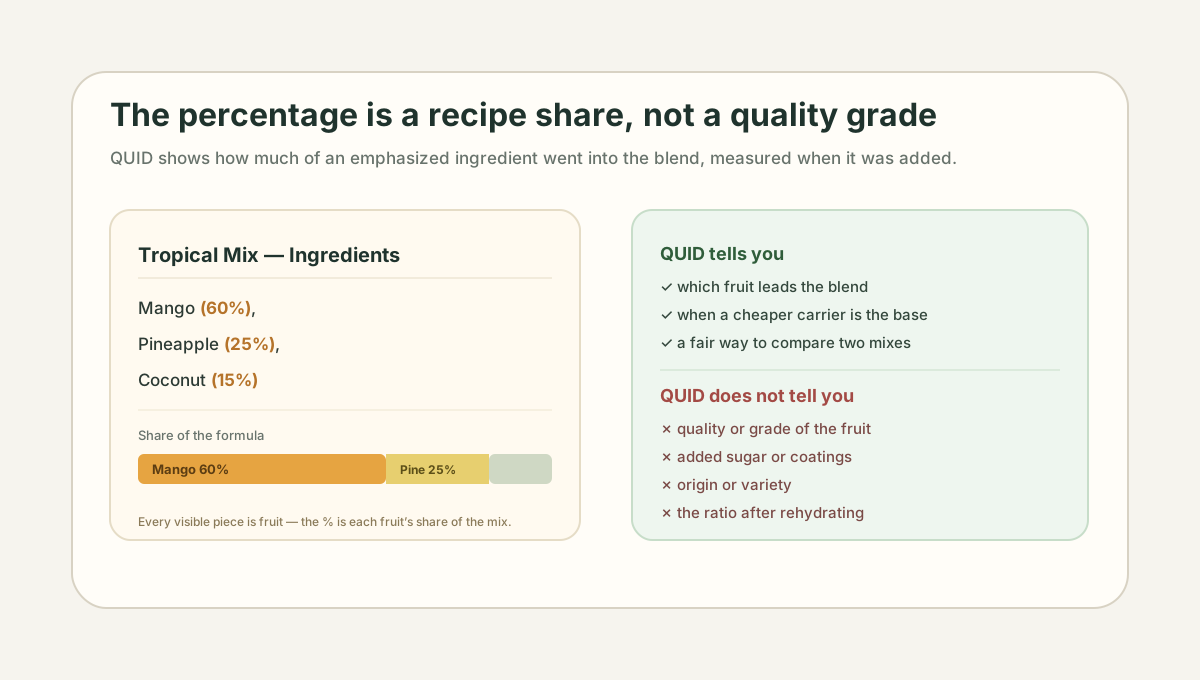
First, in a multi-fruit blend, one fruit being "40%" is completely normal even though every visible piece in the bag is fruit. The 40% is that fruit's share of the whole mix, not a statement that 60% of the bag is something other than fruit.
Second, for products designed to be rehydrated or combined with other components, the QUID figure describes the formulation, not the reconstituted serving. If you add water later, the ratios you experience on the plate are not what the label percentage was calculated against.
Treat a QUID number as "this ingredient's share of the formula," not "this fraction of what I pour out." For dry, ready-to-eat single blends the two are close; for rehydrating or heavily coated products they can differ.
Where QUID genuinely helps you
The best use of QUID is side-by-side blend comparison, and here it is excellent. Suppose two "tropical mix" pouches sit next to each other. One lists "Mango (60%), Pineapple (25%), Coconut (15%)." The other lists "Apple (45%), Mango (25%), Pineapple (20%), Banana (10%)." Before you taste anything, you already know the first is a mango-forward product and the second is built on apple as an inexpensive base with mango as an accent. If you are buying for mango flavor, the numbers just did your shortlisting for you.
That apple-as-a-base pattern is worth watching. Apple and banana are common, cheaper carriers in blends because they are mild and hold structure. There is nothing wrong with them, but if you are paying a premium expecting berries or mango, QUID reveals when the headline fruit is actually a minority partner.
What QUID does not tell you
It is just as important to know the questions QUID does not answer, so you do not lean on it for the wrong thing:
- Not a quality grade. A high percentage of a mediocre fruit is still mediocre fruit. QUID measures quantity, not color, aroma, breakage, or grade.
- Not a sugar disclosure. The percentage says nothing about added sugar or coatings; for that you read the ingredient list and any "no sugar added" or sweetener entries.
- Not an origin claim. "Mango (55%)" tells you how much mango, not where it grew or which variety it was.
- Not the rehydrated ratio. As above, it is a formulation figure, not a poured-out or reconstituted one.
The healthy habit is to use QUID as the first filter and then confirm with the full ingredient list, the nutrition panel, and, for commercial buyers, the spec sheet or certificate of analysis.
A quick way to use it
When you have a QUID number in front of you, run three checks. Ask what ingredient carries the percentage and whether it is the one you actually care about. Ask whether the base of the blend is a cheaper carrier like apple or banana that the front of the pack downplayed. And ask whether the product is meant to be eaten dry or rehydrated, because that decides whether the percentage roughly matches your experience or only describes the recipe. Those three questions turn a small printed number into a real comparison.
Bottom line
A QUID percentage is one of the more honest numbers on an imported freeze-dried fruit bag, but only if you read it for what it is: the recipe share of an emphasized ingredient, measured when it was added. Use it to compare blends and to catch cheaper carrier fruits hiding behind a premium photo. Do not use it as a proxy for quality, sugar, origin, or the ratio you will taste after adding water. Paired with the full ingredient list, it makes two similar-looking pouches easy to tell apart.
Frequently Asked Questions
What does QUID stand for?
Quantitative Ingredient Declaration. It is the requirement, common on European-style labels, to state the percentage of an ingredient that is named or emphasized on the pack or that a consumer would associate with the food's name.
Why does a bag say 40% strawberry if it looks like all strawberry inside?
Because the percentage generally reflects the amount of that ingredient relative to the whole recipe at the time it was added, including any other components in a blend. In a multi-fruit mix, one fruit being 40% is normal even though every visible piece is fruit.
Does a higher QUID percentage mean higher quality?
No. It tells you how much of that ingredient is present, not how good it is. A 70% mango blend made from lower-grade fruit is not automatically better than a 45% blend from better fruit. Use it for composition, not for quality.
Do all freeze-dried fruit bags have QUID percentages?
No. Single-ingredient bags of one fruit often do not need one because the ingredient and the product name are the same thing. QUID most often appears on blends, coated products, or packs that emphasize one ingredient visually or by name.
Is the percentage what I get after rehydrating?
Not necessarily. QUID generally refers to the ingredient as used in the recipe. For products designed to be rehydrated or combined with other ingredients, the figure describes the formulation, not the reconstituted serving.
Primary sources & further reading
- Food labelling: quantitative ingredient declarations (QUID) UK Food Standards Agency / GOV.UK Referenced for the general purpose of QUID and when a quantitative ingredient declaration is required.
- Regulation (EU) No 1169/2011 on the provision of food information to consumers EUR-Lex — Official Journal of the European Union Referenced for the general framework requiring quantity indication of certain ingredients on prepacked foods.
- Ingredients lists including QUID UK Food Standards Agency Referenced for the general guidance that emphasized or characterizing ingredients carry a stated percentage on the label.
External links open in a new tab. We do not receive compensation from any organization listed; sources are referenced because they are primary, current, and publicly verifiable.