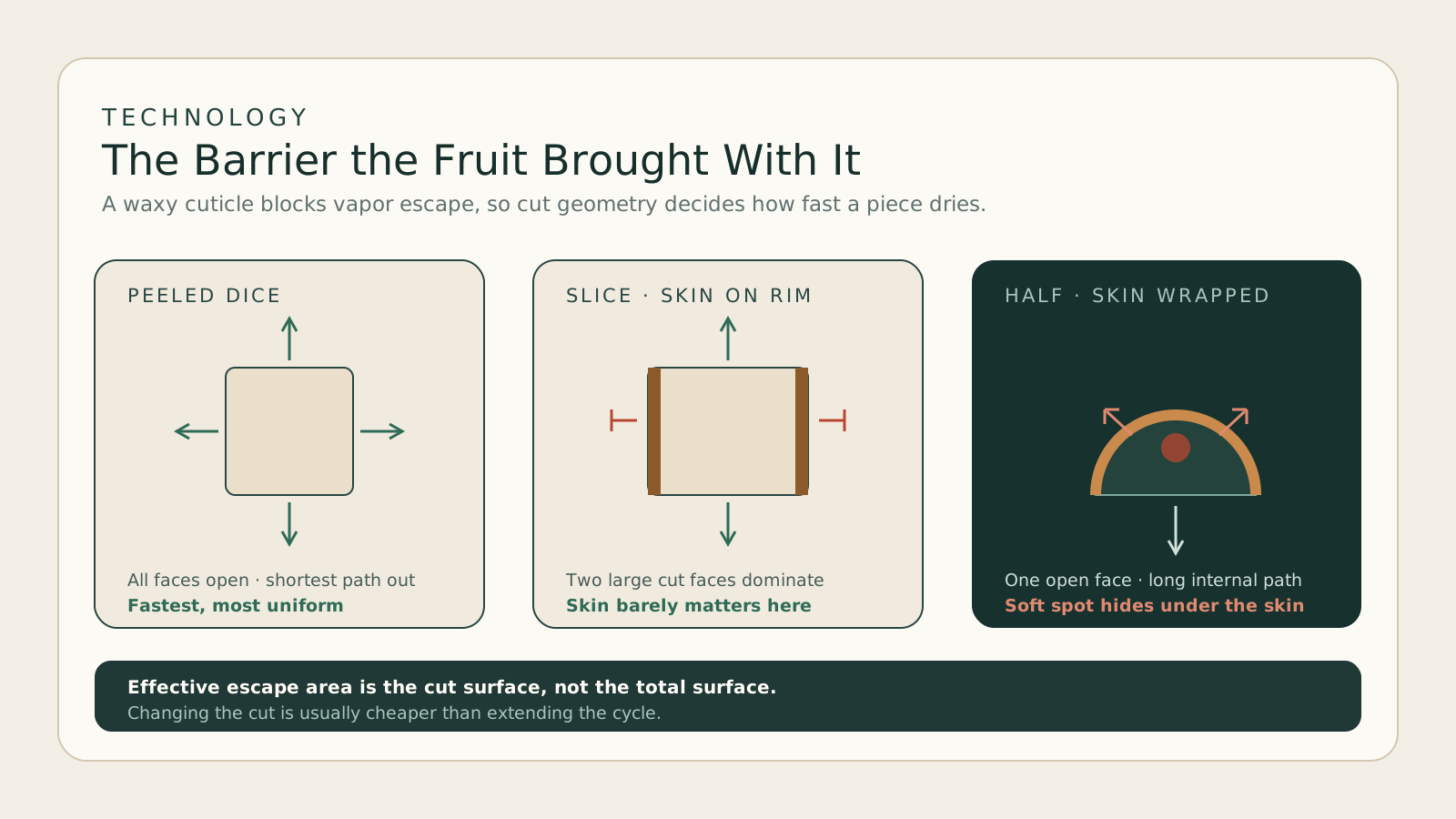
- The waxy cuticle on many fruits is a low-permeability layer, so vapor escaping a piece tends to leave through cut faces rather than through intact skin.
- Skin-on pieces usually need longer cycles or thinner cuts than peeled pieces of the same fruit, and mixing the two in one batch is a common source of uneven endpoint.
- Piece orientation matters: a slice with skin on one flat face dries differently from a half with skin wrapped around most of its surface.
- Perforating, scoring, or peeling speeds drying but costs yield and changes appearance — the choice is a spec decision, not just a process one.
Ask a processor why one lot of apple rings came out perfect and the next lot had chewy edges, and the answer is often not the cycle recipe. It is the fruit's own packaging. Skin, peel, and the waxy cuticle that sits on top of the skin are all barriers the plant built to keep water inside. During freeze-drying, that same barrier stands between the ice inside the piece and the condenser that is trying to collect it.
This is one of the more underappreciated variables in fruit freeze-drying, because it is invisible in a recipe. Two batches can run identical shelf temperatures and chamber pressures and still finish differently, purely because of how much intact skin each piece carries and where that skin sits.
The direct answer
Water vapor leaving a freeze-drying fruit piece has to travel out through the dried layer and then off the surface. Where the surface is a freshly cut face, the pore structure runs right up to open air and vapor leaves readily. Where the surface is intact skin topped with a waxy cuticle, that path is largely closed.
The practical consequence is that a piece's effective escape area is not its total surface area — it is the portion of its surface that is cut, broken, or otherwise permeable. Cover half a piece with intact skin and you have roughly halved the area doing the work, while the amount of ice to remove has not changed at all.
Why the cuticle is such an effective barrier
The cuticle is a thin hydrophobic layer of waxes and cutin that plants deposit on their outer surfaces. Its biological job is to slow water loss so the fruit does not desiccate on the tree. It does that job well, and it does not stop doing it after harvest.
Three things make it consequential in a freeze dryer:
- It is hydrophobic and low-permeability. It resists water movement in either direction, which is exactly the property you do not want during sublimation.
- It survives freezing largely intact. Ice formation inside the flesh disrupts cell walls and opens up internal pore structure, but the outer wax layer is not damaged the same way, so the internal path improves while the exit stays blocked.
- It varies enormously by fruit and by cultivar. A thin-skinned raspberry is a very different problem from a thick, heavily waxed apple or a plum with a pronounced bloom. Even within one fruit, cultivar and growing conditions shift cuticle thickness.
"Skin" covers a wide range. Berry skins are thin and often break during freezing anyway. Stone-fruit skins are thicker with a distinct cuticle. Citrus peel is a thick, spongy layer with its own structure. Melon rind is thicker still. Treating all of them as one variable is how cycle assumptions get transferred wrongly between fruits.
Geometry decides how much it matters
The same fruit and the same skin can produce very different drying behavior depending on how the piece is cut.
A peeled dice has cut faces on every side. Vapor leaves in all directions, and this is the easy case.
A slice with skin on the rim — an apple ring, a strawberry cross-section — has two large cut faces and a thin band of skin around the edge. The cut faces dominate, and the skin barely matters because the distance from the center to the nearest cut face is short.
A half with skin wrapped around the back — a halved apricot, a berry split once — is the difficult case. One face is open; the rest is sealed. Every molecule of vapor from deep in the flesh has to travel toward that single open face, through a longer path of dried layer, with no shortcut out the back.
A whole skin-on piece with only a small break in the skin is the extreme version, and it is why whole small fruits often need much longer cycles than their size alone would suggest.
This is why piece thickness is not a sufficient spec on its own. Two pieces of equal thickness can present very different escape geometry.
Where the trouble shows up
The failure mode is predictable once you know the mechanism: soft or chewy material directly beneath intact skin, while the rest of the piece is fully crisp.
That pattern is diagnostic. If a defect scorecard shows soft centers scattered randomly, look at tray loading, edge positions, and shelf contact. If the soft material is consistently on the skin side, the geometry is the cause.
The secondary problem is that these pieces often pass a spot check. Pull a sample, snap it across the cut face, and it reads crisp. The retained moisture sits in a small volume against the skin, and it will migrate through the piece during storage — which is when the whole piece goes soft and the complaint arrives weeks later.
Options, and what each one costs
There is no free fix. Each approach trades one thing for another.
- Peel it. Fastest drying, most uniform result, but you lose yield, add a processing step, and change the product's appearance. For a powder or an ingredient dice, this is often the right call. For a retail piece where skin is part of the look, it is not.
- Cut thinner. Reduces the distance vapor has to travel to reach an open face, which partly compensates for reduced escape area. Costs you piece integrity and raises breakage and fines.
- Cut differently. Choosing a slice orientation over a half, or dicing rather than halving, often solves the problem without peeling. This is usually the cheapest lever and the most overlooked one.
- Score or perforate. Adds exit points through the skin. Effective on thick-skinned fruit, cosmetically visible, and adds handling. Rarely worth it on thin-skinned berries.
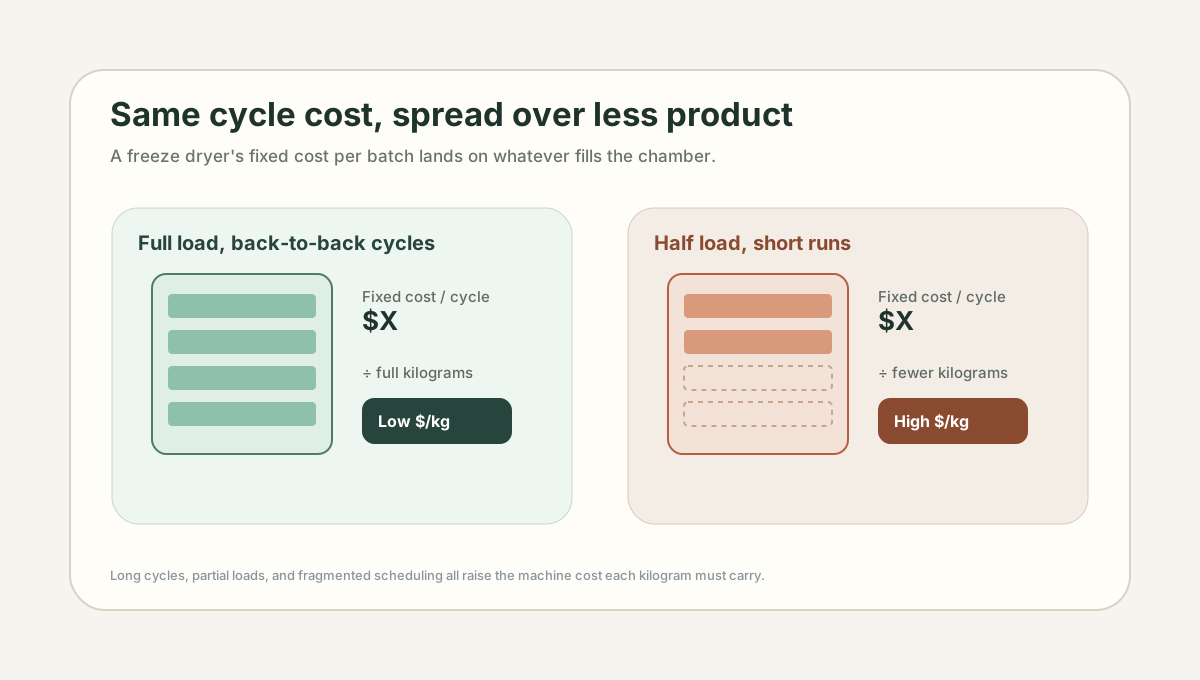
- Extend the cycle. Always available, always expensive. Longer cycles reduce throughput and drive up the per-kilogram cost of dryer time, which is one of the larger cost components in freeze-dried fruit.
- Segregate the batch. If skin-on and peeled material must both be produced, running them in separate cycles avoids the common problem of one endpoint being wrong for half the load.
What buyers should take from this
Most buyers never specify skin behavior directly, but it sits behind several things they do specify.
If a spec calls for skin-on pieces, expect either a longer cycle — reflected in price — or a thinner cut than the peeled equivalent. If a supplier quotes skin-on and peeled material at the same price with the same lead time and the same piece dimensions, it is worth asking how the cycle differs, because something has to give.
It is also worth asking how endpoint is confirmed on skin-on product specifically. A moisture result from a ground composite sample can average away a small amount of retained moisture sitting under skin. If the sampling and testing protocol does not account for the geometry, a lot can pass on paper and go soft in the bag.
The short version
Fruit skin is a moisture barrier by design, and freeze-drying does not switch it off. The amount of intact skin on a piece, and where it sits relative to the cut faces, changes how long the cycle needs to be and where residual moisture hides. Cut geometry is usually a more powerful lever than cycle time, and it is cheaper. When soft spots cluster under the skin rather than scattering randomly across the tray, the problem is the piece, not the dryer.
Frequently Asked Questions
Does skin-on freeze-dried fruit always take longer to dry?
Usually, for the same piece size and thickness. The intact cuticle blocks part of the surface that would otherwise release vapor, so the effective escape area shrinks. How much longer depends on how much of the piece is covered and how thick and waxy the cuticle is.
Why not just peel everything?
Peeling costs yield, adds labor, and changes the product. Skin carries color, texture contrast, and in many cases the visual identity buyers expect — a skin-on apple ring or a strawberry slice with its outer surface intact reads differently on shelf than a peeled one.
Can you tell from the finished product whether skin slowed the cycle?
Sometimes. Soft or chewy spots directly beneath intact skin, while the cut faces are fully crisp, point to vapor being trapped. If the whole piece is uniform, the cycle accommodated the skin.
Does scoring or perforating the skin actually help?
It can, by giving vapor additional exit points. The trade-off is cosmetic damage and extra handling, and the benefit is largest on fruits with thick, heavily waxed skins rather than on thin-skinned berries.
Primary sources & further reading
- Plant Cuticles and Their Barrier Function National Library of Medicine (PMC) Referenced for the general role of the plant cuticle as a hydrophobic barrier limiting water and vapor transport.
- Water Activity (aw) in Foods U.S. Food and Drug Administration Referenced for the significance of residual moisture and water activity in dried foods.
External links open in a new tab. We do not receive compensation from any organization listed; sources are referenced because they are primary, current, and publicly verifiable.