- A crop-year transition changes raw material before it changes price, so quality drift often arrives a lot or two ahead of the new quote.
- The most common visible shifts are color intensity, sugar level, and piece size distribution — all traceable to growing conditions rather than to processing.
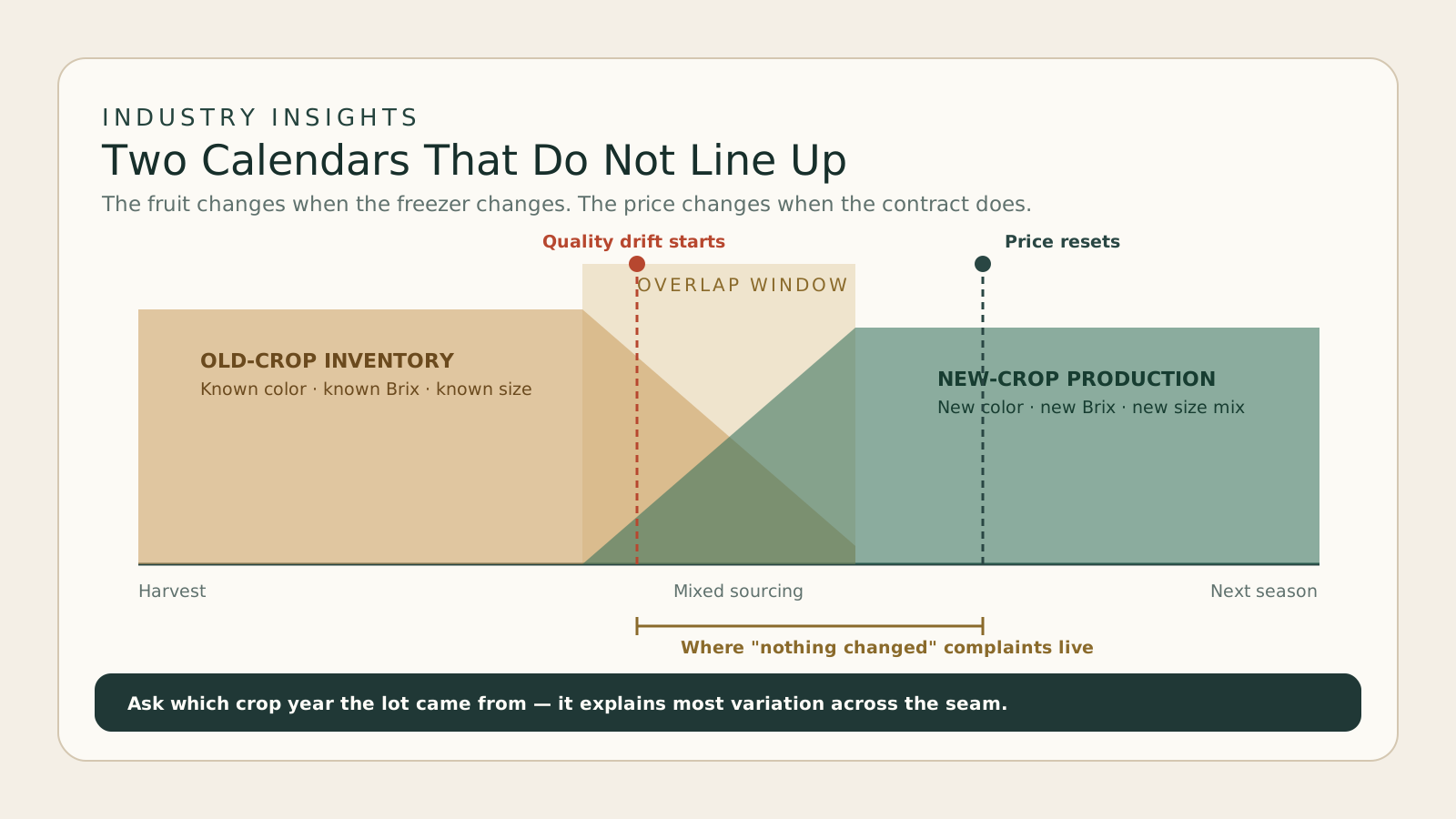
- Old-crop inventory and new-crop production usually overlap for weeks, and lots from each side of the seam can look meaningfully different in the same shipment window.
- Asking a supplier which crop year a lot came from is a simple, rarely-asked question that explains most unexplained variation across a season boundary.
Somewhere in most freeze-dried fruit programs there is a lot that nobody can explain. The color reads slightly lighter than the approval sample. The pieces run a little smaller. The bag tastes marginally less sweet. Process records look normal, the COA is in spec, and the supplier insists nothing changed.
Often nothing did change on their end. What changed was the fruit. The program crossed a crop-year boundary, and the raw material on the other side of that seam is not the same raw material.
The direct answer
Freeze-dried fruit is a manufactured product made from an agricultural input that resets once a year. Every lot traces back to a specific harvest in a specific region. When a supplier exhausts one season's raw material and begins running the next, the finished product inherits whatever that new season produced: different sugar levels, different color, different fruit size, different firmness.
Processing can compensate for some of this. It cannot compensate for all of it, because the process does not create color or sugar — it preserves what arrived.
The seam is not a clean line
The most useful thing to understand is that the transition is an overlap, not a switch.
A processor working from frozen raw material may hold several months of stock. New-crop material starts arriving while old-crop stock is still being drawn down. Depending on how the freezer is managed and how orders are scheduled, production during the overlap window can run:
- entirely old crop
- entirely new crop
- old crop for one fruit in a blend and new crop for another
- a deliberate blend of both to smooth the transition
All four are legitimate. All four can appear in shipments arriving within a few weeks of each other. This is why variation around a season boundary often looks erratic rather than like a single step change — because it is not one step, it is a period of mixed sourcing.
A multi-fruit mix can straddle two crop years at once. If the strawberry component switched to new crop and the mango did not, the blend shifts in a way that no single-fruit explanation will account for. When a blend drifts unexpectedly, ask about each component separately.
What actually shifts, and why
Four things move most often.
Color. Fruit pigment concentration varies with sunlight, temperature, water availability, and ripeness at harvest. A season with different weather produces measurably different color, and freeze-drying preserves that difference faithfully. Color is usually the first thing a buyer notices because it is the easiest to see side by side.
Sugar and acid. Brix and acidity shift with growing conditions and harvest timing. This changes perceived sweetness in the finished piece, and it also has a process consequence: higher-sugar material is harder to freeze-dry, sits closer to its collapse limit, and can require a more conservative cycle.
Piece size and size distribution. Fruit size in a given season affects what the cutting line produces. Smaller raw fruit yields more small pieces and more fines for the same cut spec, which shows up in a size-grading report and in how the bag looks when it is poured out.
Yield. Fresh-to-dried yield depends on incoming moisture and solids content. A wetter crop year means more water to remove per kilogram of finished product — longer cycles, more dryer time per kilo, and higher cost even before anyone renegotiates.
Why price and quality move out of sync
This is the part that confuses buyers most, and it has a straightforward explanation.
Raw material changes when the processor's freezer changes. Price changes when the contract changes. Those two events are rarely on the same date.
A supplier holding a fixed annual price may begin running new-crop material months before the pricing conversation happens. Conversely, a supplier who has already agreed new-season pricing may still be shipping old-crop stock for several weeks. Either sequence produces the sensation that "the price went up but the product got worse," or "the product changed and nobody told us."
Neither is necessarily bad faith. It is two calendars — the agricultural one and the commercial one — that do not line up.
What to do about it
The interventions are unglamorous and effective.
Ask which crop year a lot came from. This information exists. It is rarely on a COA and almost always available on request. Adding it to the incoming documentation you collect turns unexplained variation into explained variation, which is a large improvement even when you cannot prevent it.
Refresh approval samples across the seam. An approval sample from last season is a fair reference for last season's material. Carrying it forward unchanged into a new crop year builds a mismatch into your own quality process. Re-approving at the transition — and documenting what changed — prevents a series of avoidable nonconformances.
Set specs as ranges that a normal season can meet. A color or Brix spec written tightly around one exceptional season's material will fail in an average one. Ranges should reflect what the fruit actually does year to year, with the tolerance agreed rather than discovered.
Time your reorder around the overlap deliberately. If consistency within a production run matters more than freshness — a large retail run, a promotional pack — buying enough of one crop year to cover it is worth more than splitting the run across the seam. If color and aroma matter most, buying early in the new crop cycle is the better trade.
Ask about the season before you need to. Suppliers generally know the shape of the harvest well before buyers do. A short conversation around harvest time about volume, quality, and expected pricing direction is cheap and gives you months of lead time on decisions that otherwise get made under pressure.
The short version
A crop-year transition changes the fruit before it changes the invoice. The overlap between old-crop inventory and new-crop production means variation around the seam is mixed rather than stepped, and blends can straddle both at once. Color, sugar, piece size, and yield are the usual movers. Asking which crop year a lot belongs to, and re-approving samples across the boundary, resolves most of the confusion — and costs nothing but the question.
Frequently Asked Questions
What exactly is a crop year?
It is the harvest cycle for a given fruit in a given growing region — the window from that season's harvest until the next one. Freeze-dried fruit is made from frozen or fresh raw material drawn from a specific harvest, so every lot traces back to one crop year, even if it is processed months later.
Why doesn't the price change at the same time as the quality?
Because contracts and inventory move at different speeds. A supplier may start processing new-crop raw material while still honoring pricing agreed against the previous season, or hold old-crop pricing until existing frozen stock is exhausted. The material changes when the freezer changes; the price changes when the contract does.
Is new-crop material always better?
No. It is fresher, which generally helps color and aroma, but a poor growing season produces weaker new-crop material than a strong prior season held in good frozen storage. Freshness and quality are related but not the same thing.
How far in advance can a supplier tell me what the new crop looks like?
Broad direction — volume and general quality — is usually known around harvest. Specifics like color values, Brix ranges, and size distribution take longer, because they come from the material actually running through the line.
Primary sources & further reading
- USDA Foreign Agricultural Service — Production, Supply and Distribution U.S. Department of Agriculture Referenced for the concept of marketing/crop years and season-based production reporting for agricultural commodities.
- USDA Agricultural Marketing Service — Market News U.S. Department of Agriculture Referenced for the general practice of season-based commodity price reporting.
External links open in a new tab. We do not receive compensation from any organization listed; sources are referenced because they are primary, current, and publicly verifiable.