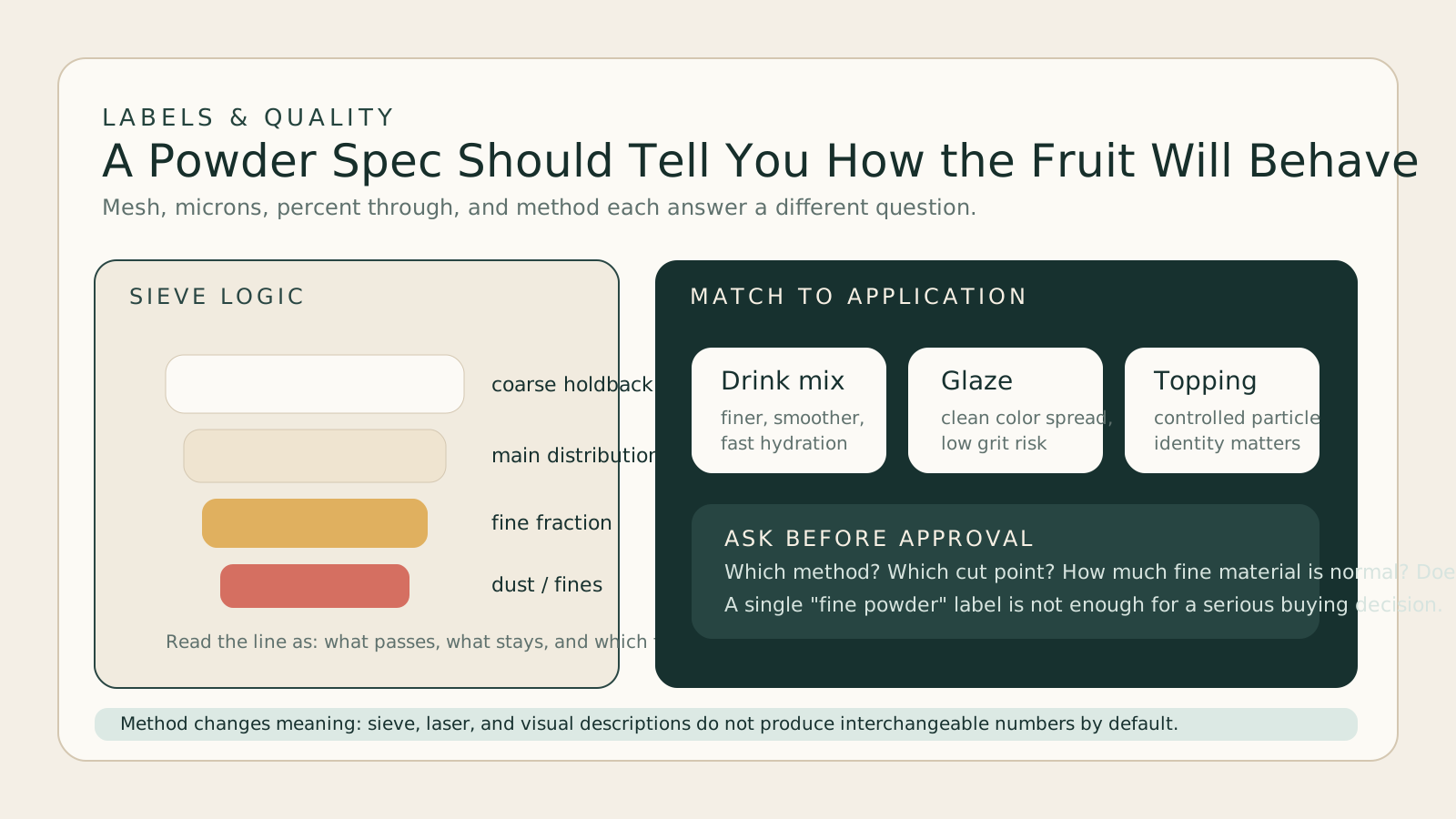
- Start with the format of the result: sieve number, mesh, micron, percent through, and percent retained do not all mean the same thing.
- A single particle-size line is incomplete unless it explains the method and whether the real concern is top size, fines, or overall distribution.
- The right powder spec depends on the application: drinks, coatings, bakery, toppings, and blends do not want the same particle profile.
- Ask for normal distribution and sample-prep details, not only one marketing-friendly 'fine powder' label.
Powder specifications often look more precise than they really are.
The line may say 80 mesh, under 300 microns, or 95 percent through a stated sieve. That feels exact. But unless you understand what the line is controlling, how it was measured, and what the powder is supposed to do next, the number can still be easy to misread.
The direct answer
Read freeze-dried fruit powder particle-size specs in five layers: the unit language, the control objective, the measurement method, the application fit, and the normal production range. A number is only useful when you know whether it is protecting against grit, dust, clumping, slow hydration, or some other real use-case problem.
The practical error is to treat "fine powder" as if it were self-explanatory.
1. Translate the language before you judge the powder
Start by decoding what the spec is actually saying.
Common expressions include:
- U.S. Standard sieve number
- mesh
- microns
- percent through
- percent retained
- top-size limit
These do not all describe the same thing in the same way. A sieve number describes a screen classification. A micron value describes a dimensional scale. A "percent through" line tells you how much material passes a stated opening. A "percent retained" line tells you how much stays behind.
USDA's freeze-dried fruit commodity language is useful here because it shows the logic clearly: size expectations become measurable when the spec states how much of a product may pass through a specific sieve. That same logic shows up in powder specifications even when the format is finer and the application is more technical.
2. Ask what the spec is trying to control
Not every particle-size line is solving the same commercial problem.
A powder spec may be trying to control:
- coarse particles that create grit
- excess fines that increase dusting
- flow behavior
- hydration speed
- visual texture in a topping or coating
That distinction matters because one cut point can hide the wrong risk. A powder can comply with a maximum top size and still carry too many fines. It can also comply with a fine average while still containing enough coarse fragments to feel sandy in a drink or filling.
The smart question is not only "how fine is it?" but "what failure is this line meant to prevent?"
3. Method matters more than the pretty number
NIST's particle-size guidance makes an important point: size-distribution results depend on the method used to measure them.
That matters a lot for freeze-dried fruit powders because the particles are irregular. They are not ideal spheres. They can fracture, agglomerate, hold static, or contain mixed shapes from fiber, skin, and pulp structure. A sieve analysis and an instrument method such as laser-based analysis do not always describe that same powder in identical terms.
For buyers, that means a usable spec should answer:
- what method was used?
- how was the sample prepared?
- was the powder dispersed or simply screened as received?
- was the result based on one test or routine production data?
Without that context, two suppliers can hand over particle-size numbers that look comparable but were produced through different logic.
4. Match the distribution to the job
The right powder is the one that behaves properly in the finished application.
Finer distributions often work better when the powder needs:
- rapid hydration
- smooth mouthfeel
- even color spread
- low visible particulate in a glaze, filling, or drink
Coarser or more controlled distributions may work better when the powder needs:
- visible fruit identity
- reduced dusting
- slower release in a topping
- more texture in a bakery or confectionery system
That is why asking for the finest possible powder can be a mistake. Finer is not automatically better. In many freeze-dried fruit systems, finer also means more surface area, more dust, more caking risk, and faster flavor release than the application wanted.
5. Ask for the normal distribution, not only a single cut point
One compliant sample is not the same thing as a stable powder program.
Ask suppliers for the normal production view:
- what is the usual range?
- what portion of the lot typically sits near the fine end?
- what portion tends to remain coarse?
- how much lot-to-lot movement is considered normal?
This matters because powder performance is rarely decided by one particle alone. It is decided by the distribution. A powder with a broad spread may behave unpredictably in blending or in the finished consumer use even if one sample technically passes the stated cut point.
A buyer's reading order
If the powder spec is short, read it in this order:
- What unit language is being used?
- Is the line controlling coarse particles, fines, or both?
- What method generated the result?
- Does that distribution fit the intended application?
- What does normal production look like outside the single sample?
That sequence turns the size line from background noise into a real buying tool.
Conclusion
Particle-size and sieve specs on freeze-dried fruit powders are not lab decoration. They are shorthand for how the powder will behave when it is poured, blended, hydrated, dusted, coated, or eaten.
The best reading habit is to stop asking whether the powder sounds fine and start asking what the distribution is protecting. That is where the useful answer usually begins.
Frequently Asked Questions
What does a sieve spec on a freeze-dried fruit powder mean?
It means the supplier is using defined openings to describe how much of the powder passes through or stays on a given screen size. It is a way to turn 'fine' or 'coarse' into a measurable acceptance line.
Is mesh the same thing as micron?
Not exactly. Mesh or sieve number refers to a screen classification, while micron is a dimensional unit. They can be related, but they should not be treated as automatically interchangeable without the actual method context.
Why does particle size matter so much in freeze-dried fruit powder?
Because particle size changes flow, dusting, hydration speed, mouthfeel, color spread, and caking risk. The same fruit can behave like two different ingredients at two different size distributions.
What is the biggest mistake when reading a powder spec?
Assuming one cut point tells the whole story. A powder can meet a top-size limit and still contain too many fines, or it can look fine on average while hiding a broad and unstable distribution.
Which applications usually want finer powder?
Drink mixes, smooth fillings, glazes, and some coatings often want finer powder. Bakery inclusions, crunchy toppings, and some seasoning blends may need a coarser or more controlled distribution instead.
Primary sources & further reading
- Fruits, Freeze Dried USDA Agricultural Marketing Service Referenced for USDA's use of sieve-based acceptance limits in freeze-dried fruit specifications and for its example of converting size expectations into measurable pass-through criteria.
- NIST Recommended Practice Guide: Particle Size Characterization National Institute of Standards and Technology Referenced for NIST's explanation that particle size results depend on the analytical technique used and on the strengths and limitations of each method.
- Some Issues in Particle Size and Size Distribution Characterization of Powders National Institute of Standards and Technology Referenced for the importance of sampling, dispersion, variation, and bias when interpreting powder size-distribution results.
External links open in a new tab. We do not receive compensation from any organization listed; sources are referenced because they are primary, current, and publicly verifiable.