- Warning letters and import alerts answer different questions: one signals significant observed violations, while the other can place future entries under detention without physical examination.
- FSMA-era supplier evaluation expects buyers and importers to review public compliance information such as warning letters, import alerts, and related FDA actions as part of documented due diligence.
- The strongest screen ties the public record back to product, facility, timing, closeout status, and whether the quoted freeze-dried fruit actually comes from the site in question.
- A single public action is not an automatic permanent disqualifier, but ignoring the record entirely is a weak buying habit.
A supplier profile can be tidy, current, and commercially persuasive while still leaving out one category of information buyers should not skip: public compliance history.
For freeze-dried fruit, that does not mean one FDA record should decide the supplier by itself. It does mean serious buyers should know how to read the records without flattening them into gossip or overreacting to them as permanent verdicts.
The direct answer
Use FDA warning letters and import alerts as documented risk inputs when screening freeze-dried fruit suppliers. Search the exact site, separate the two record types, check what product and time period were involved, review any response or closeout context, and connect the record back to the specific fruit and supply route you may actually buy.
The useful habit is documented interpretation, not dramatic yes-or-no reactions.
Start with the right site, not just the brand name
Public-record screening gets sloppy fast when buyers search only the brand or the sales company. Freeze-dried fruit often moves through a mixed structure:
- a processor that freeze-dries the fruit
- a packing site that fills the pouch
- a trading company that quotes the business
- an importer or distributor that handles the U.S. entry
Those are not always the same entity.
Before reading any FDA record, confirm:
- the legal supplier name
- the site address
- the country
- whether the quoted product is actually produced there
Without that step, buyers can either miss a relevant record or attach the wrong record to the wrong facility.
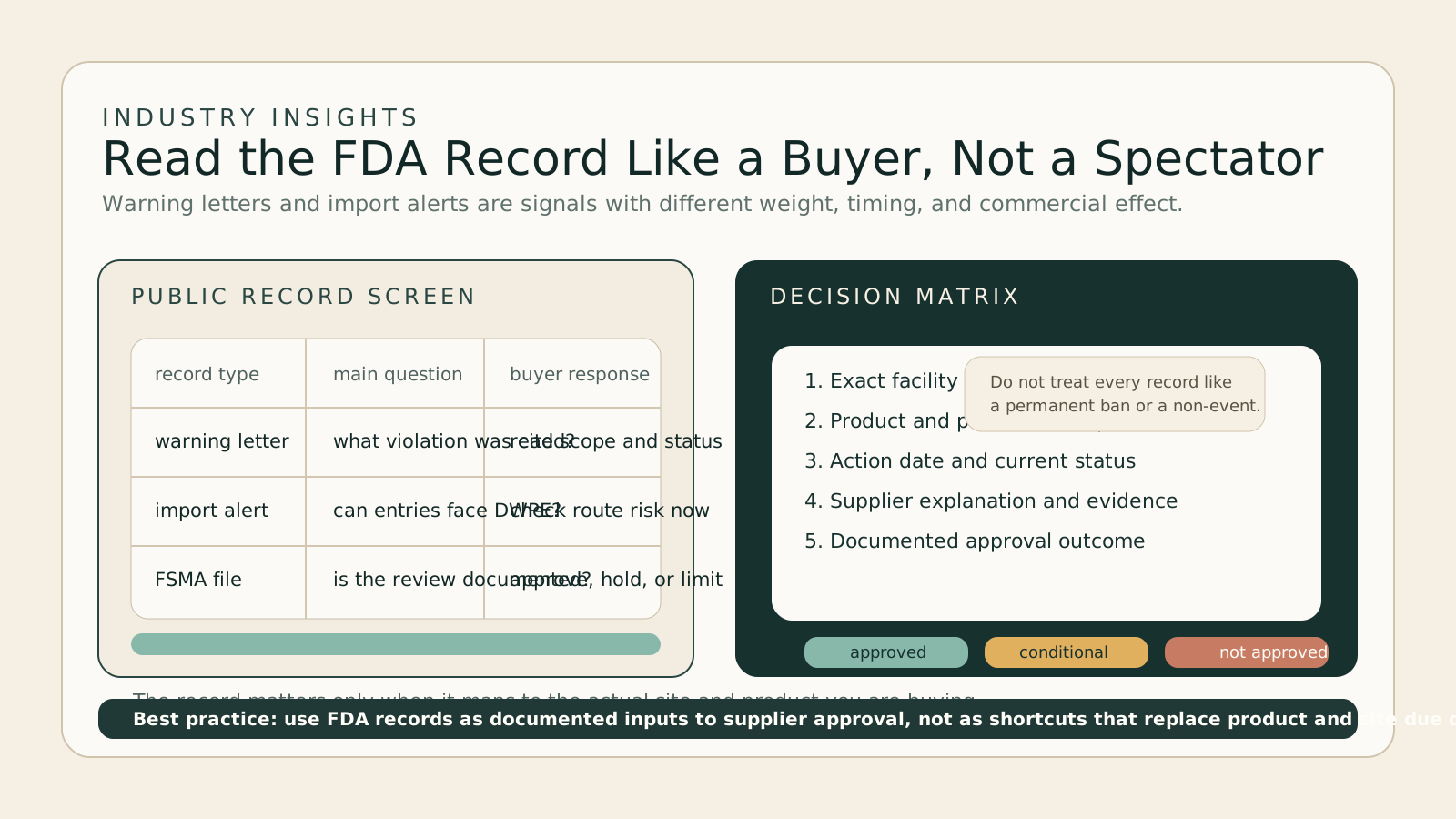
Warning letters and import alerts are not the same signal
This is the most important distinction.
FDA's food warning-letter pages describe warning letters as notices used when the agency finds significant violations. That makes a warning letter a serious signal, but it is still an advisory enforcement communication rather than the same thing as an automatic border hold.
FDA's import-alert page describes import alerts differently. They can place products or firms into detention without physical examination, often shortened to DWPE. In practical buying terms, that means a shipment can face immediate import friction unless the appearance of the violation is overcome.
So the records answer different questions:
- a warning letter asks, what serious violation did FDA document and how did the firm respond
- an import alert asks, what product or firm may now face border action and on what basis
Collapsing those into one generic "FDA issue" label loses useful detail.
Timing, scope, and status change the reading
FDA also cautions that the matters described in warning letters may later be affected by subsequent interaction with the recipient. That point matters because a public letter is a regulatory event, not a frozen biography.
When reviewing a record, ask:
- How old is it?
- What product or process did it involve?
- Was it food safety, labeling, importer controls, sanitation, or something else?
- Is there a posted response or closeout context?
- Is the cited operation the one currently quoting the freeze-dried fruit?
An older action with visible corrective follow-through does not read the same way as a recent unresolved action. The buyer still needs to judge it, but the judgment should be specific.
FSMA made this a documented supplier-evaluation habit
FDA's supplier-evaluation resources for the FSMA rules are especially useful because they make the point explicit: relevant compliance information includes whether the supplier is subject to a warning letter, import alert, or other FDA action related to food safety.
That means this is not just an optional internet search for cautious buyers. It is part of a more disciplined supplier-evaluation mindset.
For freeze-dried fruit importers, the practical implication is straightforward:
- check the public record
- keep evidence of the check
- document what conclusion you reached
That record is often more valuable than the search itself, because it shows the risk review was not improvised after a problem appeared.
The record only matters if it maps to the product you are buying
A site may have multiple product lines, multiple customers, or multiple roles. Buyers should resist the urge to either ignore a record because it feels inconvenient or exaggerate it because it feels dramatic.
Useful follow-up questions include:
- Did the action involve the same fruit or same product category?
- Was the issue at the manufacturing site, packing site, or importer?
- Is the quoted freeze-dried fruit exported under the same pathway?
- What changed after the action?
That mapping exercise often reveals whether the public record is central to the deal or only adjacent to it.
What buyers should ask the supplier after finding a record
If you find a warning letter or import alert, the next move is not silence. It is documented clarification.
Ask for:
- the supplier's explanation of the issue
- what corrective action was taken
- how the issue was verified closed or controlled
- whether the quoted product and site were involved
- what prevents recurrence now
The quality of the answer matters. A serious supplier usually explains the event in operational terms and shows what changed. A weak supplier often gives a defensive summary without connecting it to real controls.
What not to do
Three weak habits show up often:
- treating a single old letter as permanent disqualification without reading scope or status
- treating the absence of public records as proof the supplier is strong
- failing to document the review at all
The absence of a record is not the same as proof of excellence. The presence of a record is not the same as proof of permanent unfitness. What matters is whether the buyer can explain the relevance of the record to the real sourcing decision.
Document the screening result like a real risk decision
A useful supplier file should capture:
- what databases or FDA pages were checked
- which names and sites were searched
- what records were found
- what follow-up was requested
- what disposition was assigned
That disposition might be:
- approved
- approved with follow-up
- conditional pending clarification
- not approved
The key is that the decision is written down with reasons. That is far stronger than relying on memory when a shipment problem appears months later.
Bottom line
FDA warning letters and import alerts are valuable supplier-screening tools for freeze-dried fruit buyers because they place public regulatory facts into the approval process. But they are only useful when read carefully.
Search the right site, distinguish the record types, check timing and scope, map the record to the actual product, and document the conclusion. That is how a public compliance search becomes due diligence instead of theater.
Frequently Asked Questions
What is the difference between an FDA warning letter and an import alert?
A warning letter is an advisory enforcement communication describing significant violations that FDA expects the firm to correct. An import alert is a public tool FDA uses to identify products or firms that may be subject to detention without physical examination at the border.
Does one warning letter mean a freeze-dried fruit supplier should be rejected?
Not automatically. Buyers should check what the letter covered, how old it is, whether the site responded adequately, whether the issue was closed, and whether the quoted product actually comes from the affected operation.
Why do import alerts matter so much for import buyers?
Because import alerts can trigger detention without physical examination, creating immediate operational and commercial risk even before a buyer reaches the warehouse. That is a different level of friction than a general concern noted in a historical letter.
Does FSMA require importers to look at warning letters and import alerts?
FDA's supplier-evaluation resources for the FSMA rules say importers must evaluate compliance-related information relevant to the supplier, including whether the supplier is subject to an FDA warning letter, import alert, or other compliance action related to food safety.
What is the biggest mistake when using these records?
Treating the presence or absence of one record as the entire supplier decision. The better approach is to use the record as one documented input alongside scope, audit history, product fit, specification control, and corrective-action credibility.
Primary sources & further reading
- Firm/Supplier Evaluation Resources for FSMA Rules U.S. Food & Drug Administration Referenced for FDA's explanation that supplier evaluation should consider warning letters, import alerts, and other relevant compliance actions.
- Import Alerts U.S. Food & Drug Administration Referenced for FDA's explanation of detention without physical examination and the structure and purpose of import alerts.
- Warning Letters Related to Food, Beverages, and Dietary Supplements U.S. Food & Drug Administration Referenced for FDA's food-related warning letter search surface and for the agency's description of warning letters as significant violation notices.
- Warning Letters U.S. Food & Drug Administration Referenced for FDA's caution that matters described in warning letters may later be affected by subsequent interaction with the recipient.
External links open in a new tab. We do not receive compensation from any organization listed; sources are referenced because they are primary, current, and publicly verifiable.