- Sulfites on a freeze-dried fruit label usually mean a sulfiting agent was added and had to be declared under FDA labeling rules.
- The declaration matters especially for sulfite-sensitive consumers; FDA says sulfiting agents must be declared on food labels when present at 10 ppm or more total sulfites.
- A sulfite declaration does not automatically mean the product is poor quality or heavily formulated. It usually means the processor chose a color-protection or preservation strategy.
- Buyers should ask which sulfiting agent was used, why it was used, and whether the label strategy still fits the customer's expectation for plain or minimally treated fruit.
Sulfites can make a freeze-dried fruit label look more complicated than it first appears. For some shoppers, the word reads as a warning. For some buyers, it reads as a sign that the product is less "clean" than expected. Both reactions can miss the useful middle ground.
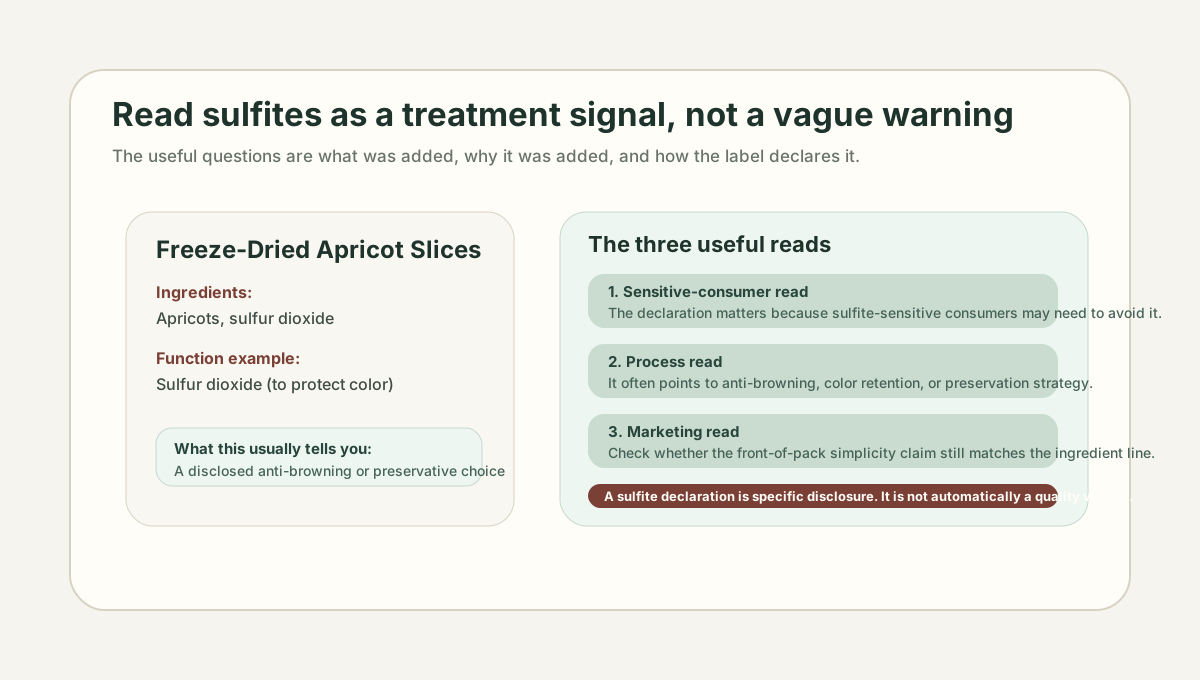
Sulfites are best read as a process signal. They usually tell you that the processor used a sulfiting agent to solve a real fruit problem, most often browning or color loss, and that the label had to carry that decision forward.
The direct answer
When sulfites appear on a freeze-dried fruit label, they usually mean sulfiting agents were added and had to be declared. FDA says sulfiting agents must be declared on food labels when present in food at 10 parts per million or more total sulfites, and preservative labeling rules can also require that the function be stated when the ingredient is being used as a preservative.
So the label is not vague marketing language. It is a specific signal about treatment and disclosure.
Why sulfites show up in fruit at all
Some fruits brown or lose visual appeal quickly once they are cut, exposed, and processed. That does not stop being true just because the final product will be freeze-dried rather than air-dried.
Sulfiting agents can be used to help manage:
- enzymatic browning
- color loss
- certain preservation objectives
That is why the declaration shows up more naturally on some fruit types than on others. Pale fruits and fruits with well-known browning issues usually create the hardest decisions.
This does not mean sulfites are the only treatment choice. Some processors use ascorbic-acid-based systems, some rely on faster handling, and some accept more natural color drift. The label tells you which route the supplier chose.
The FDA threshold is the practical anchor
FDA's food-allergy page states that sulfiting agents must be declared on food labels when they are present in food at 10 ppm or more total sulfites. That threshold matters because it turns the label from a preference issue into a disclosure issue.
In other words:
- some products will not use sulfites at all
- some may involve traces too low to trigger the same declaration logic
- products at or above the relevant threshold must be labeled accordingly
That is why buyers should not guess from appearance. Two bright-looking fruit products may have reached that color outcome through different treatment paths.
What the label does not mean
A sulfite declaration does not automatically mean:
- the fruit is poor quality
- the product is heavily sweetened
- the bag is highly processed in every other way
- the product is unsafe for the general population
It means a specific additive class was used and disclosed.
That distinction matters because some teams overread the label. They treat the presence of sulfites as proof that every other part of the product is compromised. That is usually too blunt.
Why sulfite-sensitive consumers still need to care
FDA's reason for requiring sulfite disclosure is not abstract. Sensitive individuals can react to sulfiting agents, and the label is there partly to give them a way to avoid exposure.
That makes sulfite language more important than a casual shopper convenience note. If a consumer is sulfite-sensitive, the declaration can be a meaningful yes-or-no filter.
This is also why the topic belongs in customer service and product-brief discussions, not only in regulatory files.
Sulfites are not the same as the major-allergen list
This is one of the most common labeling misunderstandings.
Sulfites are important, but they are not one of the major food allergens that drive the familiar Contains: statement. FDA treats them as a separate disclosure issue.
So if a buyer is scanning only for:
- milk
- egg
- soy
- tree nuts
- peanuts
- wheat
- sesame
- fish
- crustacean shellfish
that buyer can still miss a sulfite issue that matters to part of the customer base.
How preservative wording can change what you see
The label may show more than just the ingredient name. Under FDA preservative-labeling rules, when a chemical preservative is added, the common or usual name plus a description of its function can be required.
That means sulfites may appear in wording that signals not just presence, but purpose:
- preservative
- to help protect color
- to retard spoilage
The exact wording matters because it tells you what job the ingredient is being asked to do.
Why dried-fruit enforcement history still matters
FDA's import-alert material on undeclared added sulfites specifically references dried fruit among the product types where the issue has shown up in enforcement. Freeze-dried fruit is not automatically the same thing as conventional dried fruit, but the enforcement history is still useful because it shows how seriously sulfite disclosure is treated in fruit categories.
For buyers, that means sulfite review is not a stylistic label preference. It is a real compliance checkpoint.
The better buying question
Instead of asking only "Does it have sulfites?", ask:
- Which sulfiting agent was used?
- What problem was it solving?
- Is the treatment still active in the finished product?
- How is it declared on the label?
- Does that treatment fit the customer's expectation for the SKU?
Those questions make the label commercially useful.
If the front of pack is trying to position the fruit as plain, simple, or minimally treated, the sulfite declaration deserves extra scrutiny because the legal label and the marketing tone should not tell two different stories.
Bottom line
Sulfites on a freeze-dried fruit label usually mean the processor used a sulfiting agent for a real anti-browning or preservation purpose and had to declare it. The declaration matters most for sulfite-sensitive consumers and for buyers trying to understand how the product reached its final color and stability.
The strongest read is specific, not emotional: what was used, why it was used, how it is declared, and whether that still matches the product promise.
Frequently Asked Questions
What do sulfites mean on a freeze-dried fruit label?
It usually means sulfiting agents were added and had to be declared on the label. In fruit products, that often relates to anti-browning, color retention, or preservation logic.
Are sulfites the same thing as a major food allergen?
No. FDA monitors sulfites closely because sensitive individuals can react to them, but sulfites are not one of the major allergens that belong in a Contains statement under the main food-allergen law.
Do all freeze-dried fruits use sulfites?
No. Many do not. Sulfites are more relevant to certain fruits and color-protection strategies than to the whole category.
Why would a processor use sulfites on fruit?
Usually to help manage oxidation, browning, or color change. Some fruits are much more vulnerable to those defects than others, and suppliers use different treatment approaches.
Should buyers reject sulfites automatically?
Not automatically. The better question is whether the treatment fits the product brief, label promise, and customer expectation. For some buyers the answer is no; for others it is a rational process choice.
Primary sources & further reading
- Food Allergies U.S. Food & Drug Administration Referenced for FDA's statement that sulfiting agents must be declared when present in food at 10 ppm or more total sulfites.
- 21 CFR 101.100 — Food; Exemptions from Labeling Electronic Code of Federal Regulations Referenced for the FDA rule text defining when sulfiting agents count as present in an insignificant amount and how no-detectable-amount logic applies.
- 21 CFR 101.22 — Foods; Labeling of Spices, Flavorings, Colorings and Chemical Preservatives Electronic Code of Federal Regulations Referenced for preservative labeling language requiring the ingredient name plus a function statement when a chemical preservative is added.
- Import Alert 99-21 U.S. Food & Drug Administration Referenced for FDA enforcement framing around undeclared added sulfites and for the agency's examples involving dried fruit products.
External links open in a new tab. We do not receive compensation from any organization listed; sources are referenced because they are primary, current, and publicly verifiable.