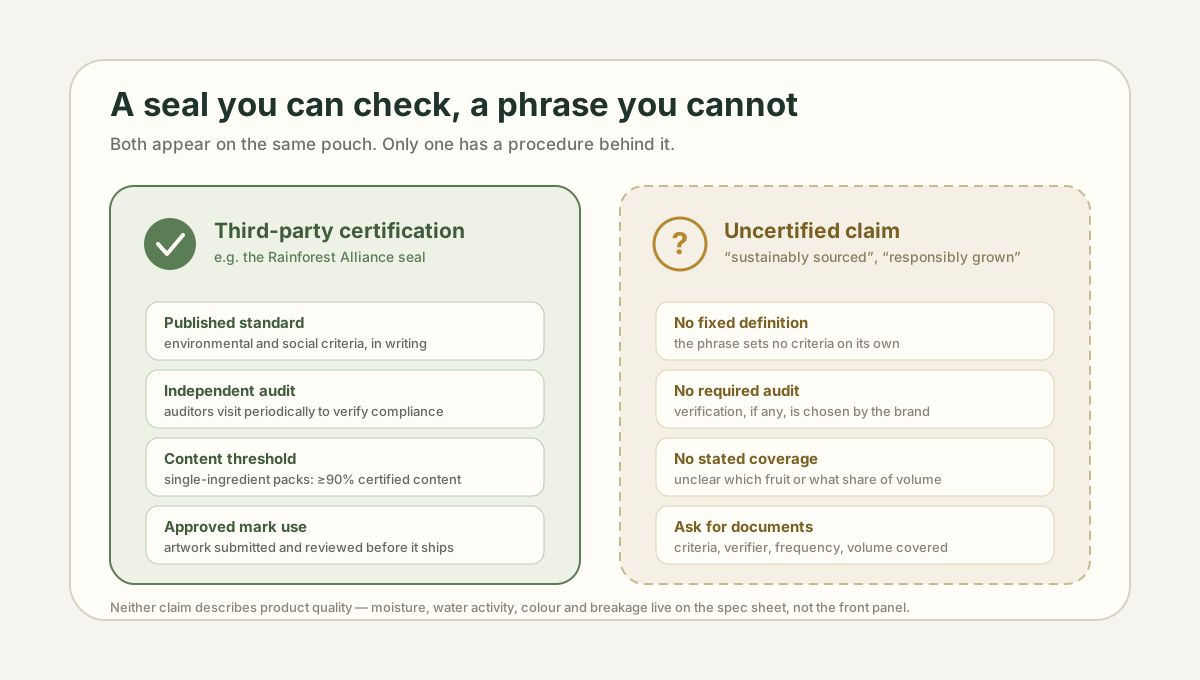
- The Rainforest Alliance frog seal is a third-party certification: farms are audited against a published standard, and use of the seal must be approved through the organisation's claims process.
- For a single-ingredient product, the seal generally requires at least 90 percent certified content through identity-preserved or segregated supply chains.
- 'Sustainably sourced', 'ethically sourced', and 'responsibly grown' have no fixed regulatory definition and no required audit behind them.
- On a multi-fruit blend, check whether the certification claim covers the whole product or one named ingredient — the accompanying text, not the seal, tells you.
Sustainability language on a freeze-dried fruit pouch tends to arrive in two forms. One is a seal — a small green frog, or a similar third-party mark. The other is a sentence somewhere on the back panel about sourcing responsibly, working closely with farmers, or caring about the land.
They look like the same category of claim. They are not. One has a published standard, an auditor, a content threshold, and an approval process behind it. The other has a copywriter.
The direct answer
The Rainforest Alliance Certified seal is a third-party certification. Farms and companies are assessed against a published standard covering environmental and social criteria, independent auditors verify compliance periodically, and only certified operations may display the seal. Use of the mark on a package must additionally be submitted for review and approval.
"Sustainably sourced" and its relatives are marketing claims. They may describe a serious internal program. They may describe nothing in particular. The phrase itself carries no defined criteria and no required verification, so it cannot be evaluated from the package alone.
What sits behind the frog seal
The Rainforest Alliance standard covers a set of criteria designed to conserve wildlife, safeguard soils and waterways, protect workers and local communities, and support farmer livelihoods. Certification is not self-declared: independent auditors visit periodically to confirm that farms and companies continue to meet the requirements of the standard they are certified against.
Two operational details matter more than the general description.
There is a content threshold. For a single-ingredient product, on-pack use of the seal generally requires that the product physically contain at least 90 percent Rainforest Alliance Certified content, supplied through identity-preserved or segregated chains — that is, the certified material is kept physically separate rather than only balanced on paper.
Seal use is controlled. A company cannot simply add the mark to artwork. It must meet the criteria in the Labeling and Trademarks Policy and submit each use for review and approval through the claims platform. This is why a seal on a legitimate pack is usually accompanied by specific text about what is certified.
On a multi-fruit blend, the accompanying statement is the part that tells you scope — whether the certification covers the whole product or one named fruit. A seal with no qualifying text on a five-fruit blend is worth a question to the brand.
What "sustainably sourced" tells you
Very little, on its own — which is not the same as saying it is dishonest.
Unlike "organic", which is tied to a defined certification framework with legal force behind the term, phrases like sustainably sourced, ethically sourced, and responsibly grown have no fixed definition for food labelling. A brand using one may have a genuinely rigorous supplier program with defined criteria and regular verification. Another may have a good relationship with one exporter and an appealing turn of phrase.
The label does not distinguish between them. The only thing that does is documentation.
What this looks like on freeze-dried fruit specifically
A few complications are particular to this category.
The supply chain is long. Freeze-dried fruit typically passes from farm to a freezing or processing step, then to a freeze-drying facility, then to a packer, then to a brand. A certification claim has to be traceable across all of those handoffs, which is what chain-of-custody rules exist to handle.
Blends dilute scope. A tropical blend may contain fruit from four origins with four different sourcing situations. A single certification mark rarely covers all of them equally, and the pack should say which parts it covers.
Certification says nothing about product quality. This is the point most often confused. A certified farm can produce fruit that arrives with poor colour retention, high breakage, or moisture out of spec. Sustainability certification addresses how the fruit was grown and how people were treated. It does not address water activity, defect rate, or whether the freeze-drying cycle was properly validated. Those are separate documents entirely.
Questions a buyer should ask
For a certified claim:
- The certificate itself, with the certified entity, the standard version, the scope, and the expiry date.
- Which specific ingredient and what volume the certification covers.
- The chain-of-custody model in use, and whether the material is physically segregated.
- Confirmation that the on-pack mark use has been approved.
For an uncertified sustainability claim:
- What the criteria actually are, in writing.
- Who verifies them, and whether that party is independent.
- How often verification happens, and what happens when a supplier fails.
- What share of the volume in this specific product the program covers.
If the answer to the first question is a paragraph of aspirational language rather than a criteria list, that is your answer.
For consumers reading a bag in a store
A seal is checkable and a phrase generally is not. If the sustainability of the sourcing matters to you, the mark with a named standard behind it gives you something you can look up. The sentence about caring deeply about farmers gives you something you have to take on trust.
Neither tells you how the fruit will taste, how crisp it will be, or whether it is worth the price. For that, the ingredient list, the net weight, and the price per gram of actual fruit remain more useful than anything on the front of the pack.
Frequently Asked Questions
What does the Rainforest Alliance frog seal actually certify?
It indicates that farms or companies in the supply chain have been certified against the Rainforest Alliance standard, which covers environmental criteria such as wildlife conservation and protection of soils and waterways, alongside social criteria covering workers, their families, and local communities. Independent auditors visit periodically to verify compliance.
Does the seal mean 100 percent of the fruit is certified?
Not necessarily. For a single-ingredient product, the seal is generally available when the product physically contains at least 90 percent Rainforest Alliance Certified content through identity-preserved or segregated supply chains. Multi-ingredient products follow different rules, and the on-pack text should specify what the claim covers.
Can a company just print the seal on a bag?
No. Use of the marks requires meeting the criteria in the Labeling and Trademarks Policy, and each use must be submitted for review and approval through the organisation's claims platform. An unapproved seal is a trademark problem, not just a credibility one.
Is 'sustainably sourced' regulated?
There is no fixed legal definition of the phrase for food labelling in the way there is for 'organic'. It can be backed by a real internal program with real criteria, or it can mean very little. The phrase alone does not tell you which.
What should a buyer ask a supplier about a sustainability claim?
Ask for the certificate itself with its scope and expiry, the certified entity and its identifier, which specific ingredient or volume is covered, and evidence of the chain of custody model used. For uncertified claims, ask what the criteria are, who verifies them, and how often.
Primary sources & further reading
- What Does Rainforest Alliance Certified Mean? Rainforest Alliance Referenced for the environmental and social criteria behind the seal and the role of periodic independent audits.
- Policy: Labeling and Trademarks Rainforest Alliance Referenced for the requirement that mark use meet defined criteria and be submitted for review and approval through the claims platform.
- Using Our Logo and Seal Rainforest Alliance Referenced for on-pack seal eligibility, including the certified-content threshold for single-ingredient products.
External links open in a new tab. We do not receive compensation from any organization listed; sources are referenced because they are primary, current, and publicly verifiable.