- Nutrient content claims such as good source, excellent source, and high are regulated terms tied to a percentage of the Daily Value per serving, not free-form marketing language.
- The claim is always per labeled serving, so an unusually small serving size can technically support a claim while a realistic portion tells a different story.
- A claim about one nutrient says nothing about the rest of the panel, including sugars and calories, which can run high in concentrated freeze-dried fruit.
- Treat a nutrient content claim as a prompt to check the serving size and the full Nutrition Facts panel, not as a verdict on overall healthfulness.
Walk down a snack aisle and the front of freeze-dried fruit bags is full of confident phrases: good source of fiber, excellent source of vitamin C, high in potassium. These are not loose marketing words. Most are regulated nutrient content claims with specific rules behind them. Understanding those rules, and the role serving size plays, turns a front-panel slogan into useful information rather than a vague positive impression.
This article explains what these claims actually mean, why serving size can quietly change the story, and how to read a claim against the rest of the label.
The direct answer
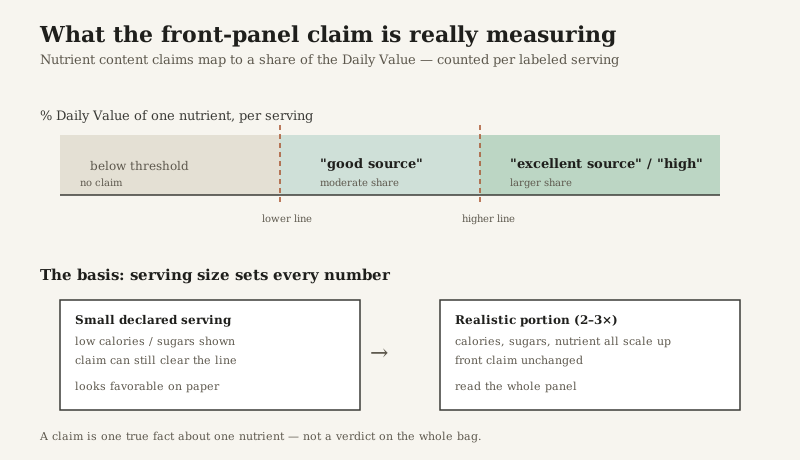
A nutrient content claim describes the level of a single nutrient in the food, and the common ones are tied to thresholds expressed as a percentage of the Daily Value per serving. Good source means a serving delivers a moderate share of the Daily Value for that nutrient; excellent source, high, or rich in means it delivers a larger share. The exact percentages are defined by labeling rules rather than chosen by the brand.
The critical detail is the phrase per serving. Every claim is calculated against the labeled serving size, so the claim is only as meaningful as the portion it is based on.
How the thresholds work
The logic behind these claims is consistent even if the precise numbers vary by regulatory system.
Each nutrient has a Daily Value, a reference amount used on the Nutrition Facts panel. A nutrient content claim then maps to how much of that Daily Value a serving provides. A moderate share earns the good source language. A higher share earns the stronger excellent source, high, or rich in language. There are also claims like more or added, which compare the product to a reference food rather than to an absolute threshold.
For freeze-dried fruit, the nutrients that most often appear in these claims are fiber, vitamin C, and sometimes potassium, because fruit naturally contributes to them and concentration during drying can raise the amount per gram.
A nutrient content claim tells you a serving crossed a defined line for one nutrient. It does not tell you that nutrient is the most important thing about the food, or that the rest of the panel is favorable. It is a precise statement about a narrow fact.
Why serving size is where claims can mislead
Because the claim is calculated per serving, the declared serving size is the lever that matters most.
Freeze-dried fruit is light and concentrated, so the gram weight of a serving is small, and the brand has some latitude in how it presents a serving on the panel. A smaller declared serving lowers the calories and sugars shown, which looks favorable, while the product can still be formulated or portioned to clear a nutrient threshold. If the realistic amount a person eats is two or three times the labeled serving, then the calories, sugars, and the nutrient itself all scale up together, even though the front-of-pack claim stays the same.
This is not necessarily deceptive. It is a structural feature of how panels and claims work. The defense is simple: when you see a claim, look immediately at the serving size and ask whether it matches how much you would actually eat.
One nutrient is not the whole panel
A nutrient content claim is deliberately narrow. It describes one nutrient and is silent on everything else.
A freeze-dried fruit bag can be an honest excellent source of vitamin C and still carry meaningful sugars per realistic portion, because the sugars in fruit concentrate as water is removed. Calories per gram also look higher than fresh fruit for the same reason, which is why freeze-dried fruit calories can surprise people. None of that contradicts the claim; the claim was only ever about vitamin C.
The practical move is to read the claim as a pointer, not a conclusion. It tells you one true thing and invites you to check the rest of the Nutrition Facts panel and the ingredient list for the fuller picture.
How to read a claim in practice
A quick, reliable routine handles most labels.
First, identify the claim and the nutrient it names. Second, find the serving size and compare it to how much you would realistically eat, scaling the numbers up if your portion is larger. Third, scan the rest of the panel, especially sugars and calories, so the single highlighted nutrient is seen in context. Fourth, check the ingredient list to confirm the product is what the front panel implies, since added ingredients can change the comparison.
That sequence takes seconds and keeps a true-but-narrow claim from standing in for an overall judgment it was never meant to make.
What buyers and brands should keep in mind
For shoppers, the takeaway is that these phrases are trustworthy as far as they go but limited in scope, and serving size is the fine print that decides how the claim lands on a real portion.
For brands and private-label buyers, the lesson is that nutrient content claims are governed by defined thresholds and serving-size declarations, and stretching a claim with an unrealistically small serving invites both consumer distrust and regulatory attention. A claim that holds up at a realistic portion is more durable than one that only works on paper.
Bottom line
Nutrient content claims like good source of fiber and excellent source of vitamin C are regulated statements tied to a share of the Daily Value per serving, not free marketing language. They are reliable for the single nutrient they name, but they are calculated per labeled serving and say nothing about sugars, calories, or the rest of the panel.
Read each claim as a prompt: check the serving size, scale to your real portion, and look at the full Nutrition Facts panel before treating the claim as a verdict on the product as a whole.
Frequently Asked Questions
What is a nutrient content claim?
A nutrient content claim is a regulated statement that describes the level of a nutrient in a food, such as good source of fiber, excellent source of vitamin C, high in, or low in. These terms are defined by food labeling rules and tied to specific amounts, usually expressed as a percentage of the Daily Value per serving, so they are not free-form marketing phrases.
What does good source mean versus excellent source?
Under standard labeling definitions, good source generally means a serving provides a moderate share of the Daily Value for that nutrient, while excellent source, high, or rich in means it provides a larger share. Excellent source represents a higher threshold than good source. Both are measured per labeled serving.
Why does serving size matter so much for these claims?
Because the claim is calculated per serving. A small declared serving size lowers the calories and sugars shown on the panel but can still be engineered to clear a nutrient threshold. If you eat more than the labeled serving, every number on the panel scales up, even though the front-of-pack claim does not change.
Does a vitamin C claim mean the freeze-dried fruit is healthy overall?
No. A nutrient content claim describes one nutrient only. A bag can be an excellent source of vitamin C and still be high in sugars or calories per realistic portion. The claim is a single data point, not an overall health rating, so the full Nutrition Facts panel and ingredient list still matter.
Are these claims the same everywhere?
The general concept is similar across major markets, but the exact thresholds, wording, and reference values differ by regulatory system. The practical reading is the same: treat the claim as a defined statement about one nutrient per serving and verify it against the panel rather than assuming it describes the whole product.