- Fair Trade certification is a sourcing and social-standards claim about how growers were paid and treated, not a food quality, organic, or safety claim.
- Different seals (Fairtrade International, Fair Trade USA, and others) have different rules, and the same word on a label can mean different programs, so the specific mark matters.
- Check what share of the product is actually certified and whether the seal is third-party verified, since partial or vague 'fair trade' wording is not the same as a certified mark.
A bag of freeze-dried mango carries a small seal with the words "Fair Trade." It feels like a signal of a better product, and for many shoppers it tips the decision. But it is worth being precise about what that seal actually promises, because it is easy to read it as a quality or health mark when it is neither.
Fair Trade is a sourcing claim. It is about the people who grew the fruit and the terms they were paid under, not about how the fruit tastes, how dry it is, or how carefully it was processed. Both things can matter to a buyer, but conflating them leads to disappointment, and sometimes to paying a premium for the wrong reason.
What the seal actually certifies
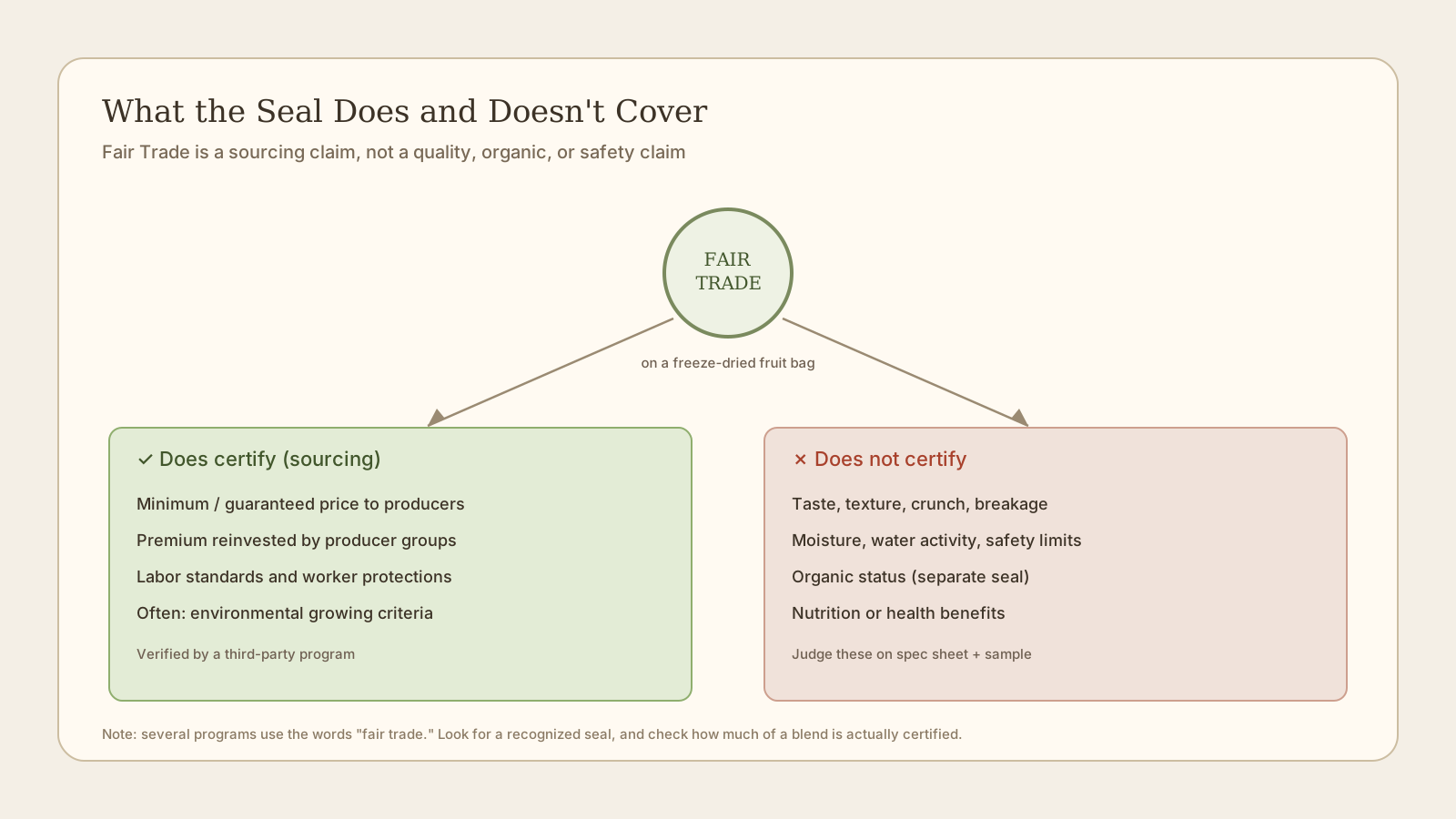
At its core, a Fair Trade certification is about the conditions and economics of production. The exact rules vary by program, but the common threads are a guaranteed or minimum price to producers intended to cover sustainable production costs, an additional premium that producer groups invest in community or business projects, and standards covering labor conditions, often including limits on forced and child labor and basic worker protections. Many programs also include environmental criteria for how the crop is grown.
The important word is sourcing. A certified product is making a verified claim about the chain behind the fruit: who grew it, how they were organized, and on what terms they were paid. For a shopper who cares about the livelihoods of growers, that is a meaningful thing to verify, and the seal is a reasonable shortcut to it.
A Fair Trade mark is a claim about how the fruit was sourced and the conditions under which it was grown, not a claim about the eating quality, dryness, or safety of the finished freeze-dried product.
What it does not tell you
Because the seal lives in the sourcing world, there is a long list of things it deliberately says nothing about.
It is not a quality grade. A Fair Trade certification does not promise good texture, full color, low breakage, or a clean crunch. Those come from the fruit selection and the freeze-drying process, which the sourcing seal does not govern. A certified product can be beautifully processed or poorly processed.
It is not an organic claim. Fair Trade and organic are separate certifications with different aims. Organic is about growing inputs like synthetic pesticides; Fair Trade is about sourcing terms and social standards. Seeing one tells you nothing about the other. If both matter to you, look for both seals.
It is not a food-safety mark. The seal does not speak to moisture, water activity, microbiological limits, heavy metals, or any of the specifications that determine whether the product is safe and stable. Those are governed by the supplier's food-safety program and spec sheet, not by a sourcing certification.
And it is not a health claim. Fair Trade says nothing about nutrition, sugar content, or any benefit of eating the fruit.
The same word, different programs
A practical wrinkle is that "Fair Trade" is not a single, uniform thing. More than one organization runs a certification, and their seals look different and mean different things. The FAIRTRADE Mark from Fairtrade International and the Fair Trade Certified seal from Fair Trade USA are the most common, but there are others, and some companies run their own in-house "fair trade" sourcing programs that are not third-party certified at all.
This matters for two reasons. First, the standards behind each seal differ in their pricing rules, their certified product lists, and how they handle products made from multiple ingredients. Second, and more importantly for a careful reader, an uncertified phrase like "fair trade sourced" printed in plain text on the bag is a much weaker claim than a recognized, third-party-verified seal. The phrase can mean whatever the brand wants it to mean; the seal is tied to an external standard.
Look for an actual certifier's seal, not just the words "fair trade." Then, if it matters to you, identify which program it is. The specific mark tells you which standard was met; the bare phrase does not.
Reading the fine print on blends
Freeze-dried fruit is often sold as a blend, and certification on a multi-ingredient product is rarely all-or-nothing. Programs set minimum thresholds for how much of a product must be certified before it can carry the seal, and some allow mass-balance accounting, where certified and uncertified volumes are tracked through the supply chain rather than physically separated.
The result is that a blend carrying a Fair Trade mark may have only some ingredients certified, or only a percentage of the total. Labels often disclose this with phrasing like "contains certified ingredients" or an asterisk pointing to which components qualify. If you are buying the product specifically because of one fruit in the mix, it is worth checking whether the certified claim actually covers that fruit or just part of the blend.
What this means for buyers
For a shopper or a brand buyer, the sensible way to treat a Fair Trade seal is as one verified piece of information, valuable on its own terms, but not a substitute for the others. If sourcing ethics are part of your decision, the seal is a reasonable shortcut, provided it is a real third-party mark and you have checked what share of the product it covers.
But quality, organic status, and food safety each have to be evaluated on their own evidence: the spec sheet and a real sample for quality, an organic seal for organic, and the supplier's documentation for safety. The Fair Trade mark answers one question well. It does not answer the others.
Bottom line
A Fair Trade certification on freeze-dried fruit is a sourcing and social-standards claim: it tells you something verified about how growers were paid and treated, and sometimes how the crop was grown. It does not tell you the fruit is tastier, drier, organic, or safer.
Read it for what it is. Confirm it is a genuine third-party seal rather than a loose phrase, check how much of the product it actually covers, and keep evaluating quality, organic status, and safety on their own separate evidence. The seal answers a real question, just not the ones about what is inside the bag and how well it was made.
Frequently Asked Questions
Does a Fair Trade label mean the freeze-dried fruit is higher quality?
Not directly. Fair Trade is a claim about how the fruit was sourced, including grower payment, labor standards, and sometimes environmental practices. It says nothing on its own about texture, moisture, crunch, or how carefully the fruit was freeze-dried. A Fair Trade product can be excellent or mediocre on quality; the seal does not speak to that.
Is Fair Trade the same as organic?
No. They are separate certifications with different aims. Organic governs how the crop was grown and processed with respect to inputs like synthetic pesticides. Fair Trade governs sourcing terms and social standards. A product can carry one, both, or neither. Seeing a Fair Trade mark tells you nothing about organic status unless an organic seal is also present.
Why are there several different Fair Trade seals?
Because more than one organization runs a program, including Fairtrade International (the FAIRTRADE Mark) and Fair Trade USA (Fair Trade Certified), among others. Their standards, certified product lists, and rules about partial-ingredient certification differ. That is why the specific seal matters more than the general phrase, and why an uncertified 'fair trade' claim in plain text is weaker than a recognized mark.
What does 'contains certified ingredients' mean on a multi-fruit blend?
It usually means only some of the ingredients, or some percentage of them, are certified, not the whole product. Programs set minimum thresholds and sometimes allow mass-balance sourcing. For a freeze-dried fruit blend, it is worth checking whether the certified claim covers the named fruit you care about or just part of the mix.
Primary sources & further reading
- Fairtrade International standards Fairtrade International Referenced for the scope of the FAIRTRADE Mark, including producer standards, pricing, and the Fairtrade Premium.
- Fair Trade Certified Fair Trade USA Referenced for the existence of a separate U.S. certification program with its own standards and seal.
- Trade Practices and 'Made in USA' / endorsement guidance U.S. Federal Trade Commission Referenced for the general principle that certification and endorsement claims should be substantiated and not misleading.
External links open in a new tab. We do not receive compensation from any organization listed; sources are referenced because they are primary, current, and publicly verifiable.