- Freeze-dried fruit is often marketed as a year-round category, but raw-fruit cost and quality still move with harvest windows and carryover inventory.
- Cold storage and IQF buffer supply, yet they do not erase storage costs, quality drift, grade sorting, or the risk of short crops.
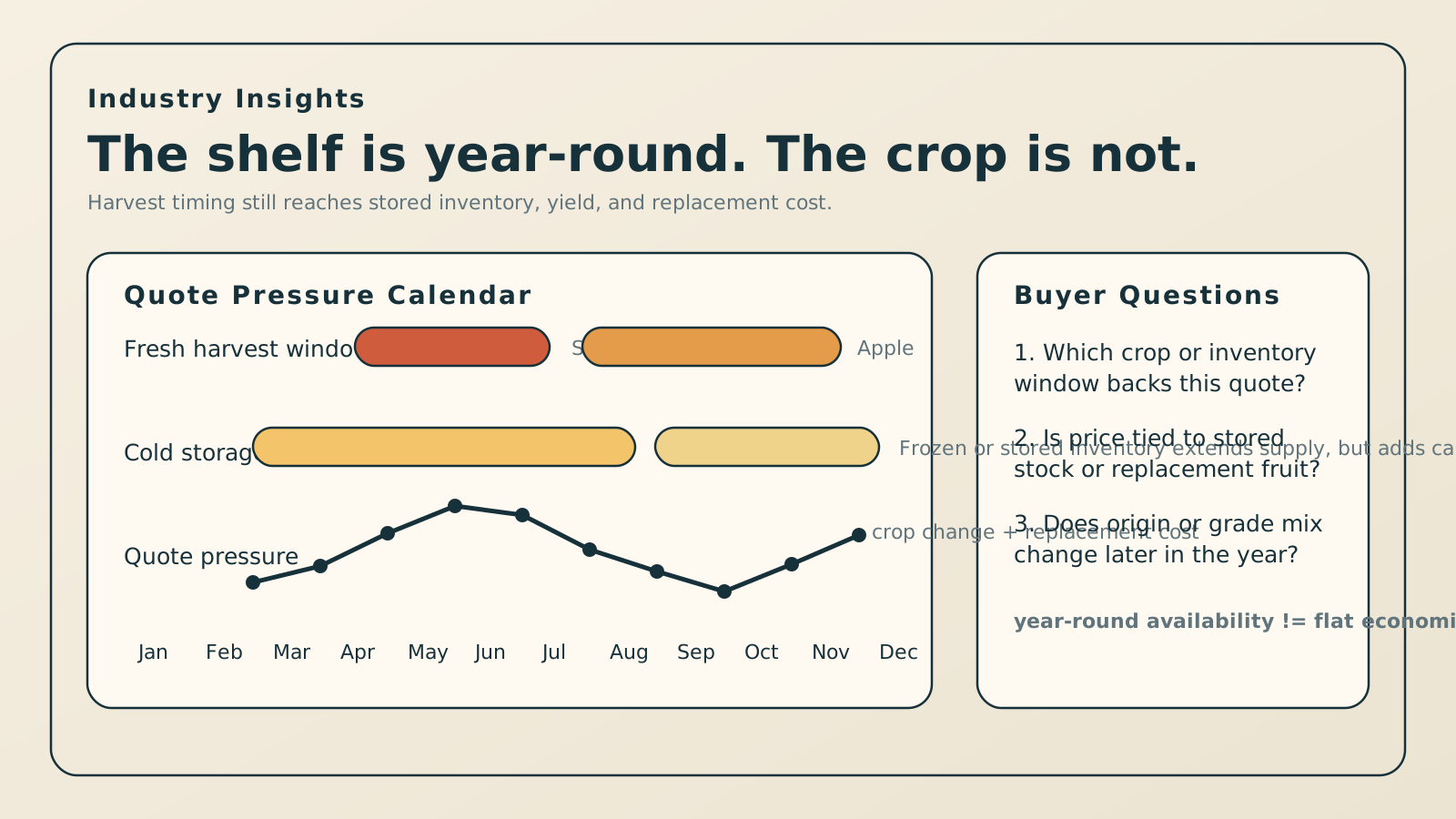
- The fruits that store smoothly, such as apples, behave differently from fruits that rely more heavily on frozen inventory or rolling multi-origin harvests, such as strawberries and mango.
- Buyers should ask whether a quote is tied to current inventory, a new crop, or a forward raw-fruit position before comparing suppliers on price alone.
Freeze-dried fruit can look like a permanently available category. Bags stay on shelf. Ingredient buyers can quote year-round. Suppliers talk about frozen inputs, global origin options, and steady programs.
All of that is real. None of it means seasonality disappeared.
The direct answer
Seasonality still shapes freeze-dried fruit quotes because the product inherits the timing, quality, and inventory economics of the raw fruit behind it. Cold storage, IQF supply, and multi-origin sourcing can smooth availability, but they do not erase harvest-driven shifts in input cost, grade mix, storage carry, or the urgency created by a weak crop.
The category may sell all year. The fruit economy underneath it still moves in waves.
Year-round availability is not the same thing as year-round cost
This is the first distinction buyers should keep clear. A supplier can offer strawberry, apple, mango, or blueberry in every month of the year. That does not mean the supplier is buying the underlying fruit on identical terms every month.
USDA ERS notes that fresh fruit prices often move with seasonal supply. Freeze-dried fruit does not escape that reality just because the finished product is shelf-stable. It usually absorbs it later through:
- raw-fruit purchase timing
- cold-storage or IQF carrying cost
- replacement cost when inventory runs short
- grade sorting when the best lots are already committed
That is why a quote can change even when the SKU and the pack size do not.
Cold storage helps, but it is not free
USDA's cold-storage survey exists because stored inventory matters. Apples, berries, and frozen fruit reserves extend supply windows and make the market feel smoother than the harvest calendar alone would suggest.
But stored fruit adds its own pressures:
- warehouse cost
- capital tied up in inventory
- older stock competing with fresh crop timing
- quality drift risk depending on fruit and format
For freeze-dried fruit, that means "we can still supply it" is a different claim from "we can still supply it at the same cost and with the same finished result."
Different fruits carry seasonality differently
Not every fruit moves through the system the same way.
Apples can be buffered relatively well by cold storage, which helps flatten the commercial story. Strawberries can also be supplied year-round, but the path often leans more heavily on frozen inventory, staggered regions, and tighter quality selection. Mango supply may look continuous because origins rotate, yet each origin shift can change variety mix, color, fiber, sweetness, and price logic.
That matters because buyers sometimes ask a single question: "Can you quote this year-round?" The better question is: "What changes underneath the year-round program?"
Useful follow-ups include:
- Is the fruit from stored fresh inventory, IQF inventory, or a new harvest?
- Is the quote tied to one origin or a rolling origin program?
- Does the fruit profile change as the crop year ages?
- Is the price being held against current stock or against expected replacement cost?
Seasonality reaches the quote through yield and grade, not only price
Raw-fruit timing is not only a budget issue. It can show up in the finished product itself.
Later-season inventory, weaker lots, or replacement fruit from a different origin can affect:
- sugar concentration
- color intensity
- piece integrity
- usable yield after screening
- powder generation during handling
That is why two suppliers can both be "in stock" and still not be offering the same commercial reality. One may be quoting fruit from cleaner current inventory; another may be protecting a thinner position with broader quality tolerance.
IQF and frozen fruit reduce risk, but they also move the negotiation
Frozen starting material is one of the reasons freeze-dried fruit programs can exist at scale. It gives processors more calendar flexibility, evens out plant scheduling, and makes year-round production possible for many fruits.
But once the system leans on frozen inventory, the negotiation changes. Buyers are no longer only discussing harvest timing. They are also discussing:
- whose inventory was committed first
- how long it has been carried
- what grade was reserved
- whether the quote assumes a normal crop or a replacement buy
That is one reason a surprisingly low quote late in the cycle deserves scrutiny. It may reflect a great inventory position. It may also reflect a broader spec.
What buyers should ask before comparing seasonal quotes
A serious quote review should pin down timing, not just price.
Ask:
- what crop or inventory window the quote is based on
- whether the supplier is quoting against current stock or future replacement
- whether quality tolerances change if the crop tightens
- whether alternate origins are already approved
- how much notice is needed before the supplier reprices
Those questions often explain more than a spreadsheet full of case prices.
USDA sources establish that fruit supply, pricing, and cold-storage availability are seasonal and inventory-driven. The article's freeze-dried buying implications are an editorial inference from that supply structure: storage can smooth supply, but it cannot make crop timing irrelevant.
Bottom line
Seasonality still shapes freeze-dried fruit quotes because shelf-stable fruit is still built on seasonal agriculture. Storage, freezing, and global sourcing make the category more available, not more seasonless.
For buyers, the practical move is to ask what timing sits behind the quote. That is where the real price logic usually begins.
Frequently Asked Questions
If freeze-dried fruit is available all year, why does seasonality still matter?
Because the fruit still has to come from somewhere. Year-round availability is often supported by cold storage, IQF inventory, imports, or staggered harvests, and all of those carry cost, quality, and timing consequences.
Does frozen inventory remove seasonality risk?
It reduces immediate availability risk, but it does not remove it. Carry costs, inventory age, grade mix, and crop-shortfall replacement still affect quotes.
Which fruits tend to feel seasonality most clearly?
It depends on the sourcing model. Apples can be smoothed by storage more easily than delicate berries, while tropical fruits often rely on shifting origins and harvest timing rather than one static annual stock.
What should buyers ask suppliers about a quote?
Ask whether the price is tied to current frozen or stored inventory, a new crop commitment, a spot purchase, or an origin switch. Also ask how the supplier handles grade drift and yield changes late in the season.
Is seasonality only a pricing issue?
No. It can also affect color, flavor, breakage, sugar level, usable yield, and how repeatable the finished product feels from lot to lot.
Primary sources & further reading
- Seasonal Food Prices USDA Economic Research Service Referenced for USDA ERS's explanation that fresh fruit and vegetable prices usually move up or down with seasonal supply conditions.
- Cold Storage USDA National Agricultural Statistics Service Referenced for NASS cold-storage reporting on frozen fruit and stored produce inventories as of January 31, 2026.
- About the Cold Storage Survey USDA National Agricultural Statistics Service Referenced for USDA's explanation that the cold-storage survey measures reserve food supplies held in refrigerated warehouses.
- Seasonal Produce Guide USDA SNAP-Ed Referenced for general harvest-window examples that help explain why raw-fruit timing remains uneven across fruits.
External links open in a new tab. We do not receive compensation from any organization listed; sources are referenced because they are primary, current, and publicly verifiable.