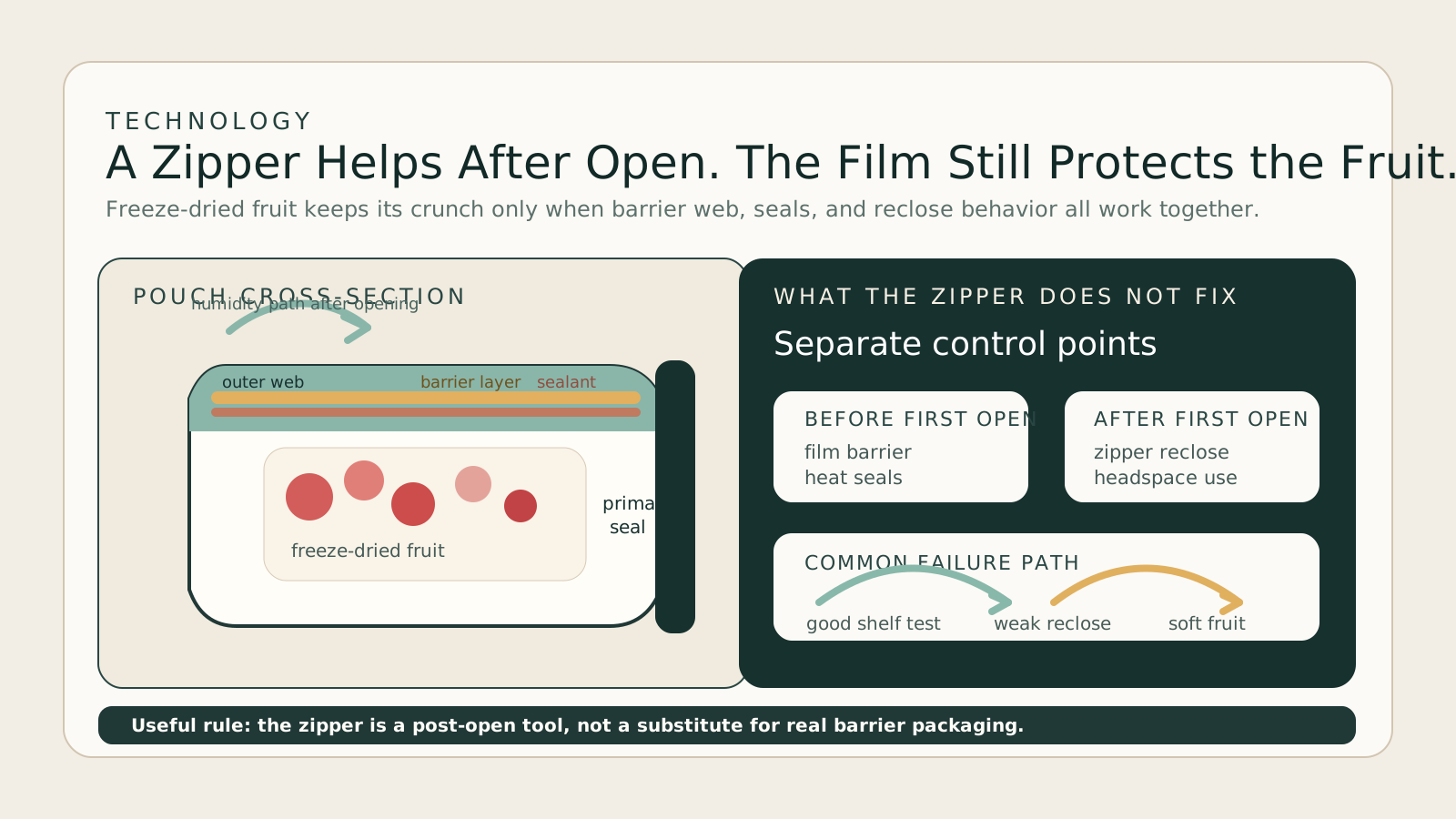
- The primary barrier job belongs to the pouch structure and factory seal, not the consumer-facing zipper.
- A strong zipper cannot rescue weak WVTR performance, poor seal integrity, or excess humid headspace.
- Buyers should evaluate film, heat seal, zipper reclose performance, and leak testing as separate control points.
- The most common failure pattern is a pouch that tests well unopened but softens quickly after repeated consumer use.
Freeze-dried fruit buyers often talk about the pouch as if one feature explains the whole protection story. A matte finish, a foil look, or a resealable zipper becomes the shortcut.
That shortcut breaks down quickly once the fruit starts losing crunch.
The direct answer
A resealable zipper helps protect freeze-dried fruit only after the original seal has been broken. It does not replace the barrier film, the factory heat seal, or the package-validation work that keeps humidity out before first open. If those upstream layers are weak, the zipper is not a rescue system. It is only a convenience feature added to a pouch that may already be under-built.
The pouch has two closure jobs, not one
Freeze-dried fruit packaging usually has to do two separate things:
- survive distribution and shelf life while unopened
- survive repeated consumer opening and reclosing after purchase
Those are related problems, but they are not the same problem.
The unopened problem is mostly about barrier structure, seal quality, and leak control. The pouch has to resist water vapor, protect against oxygen where relevant, and remain closed through warehousing, freight, and shelf handling.
The opened problem is mostly about how much moisture enters during each use cycle, how well the zipper re-engages, how much humid air stays trapped in the headspace, and how quickly the consumer finishes the bag.
When teams say "the bag has a zipper, so it should be fine," they are collapsing those two jobs into one.
The film still does the heavy lifting
Before a consumer ever touches the zipper, the product is living inside the barrier web and the factory seals. That is the real preservation system.
For freeze-dried fruit, the barrier film controls how aggressively outside humidity can migrate toward the product over time. The primary heat seals control whether the pouch begins life as a closed system. If those layers are underspecified, the fruit may already be moving toward softness while the zipper is still untouched.
That is why a zipper should never be read as a substitute for:
- a low enough WVTR for the intended shelf life
- a sealing process that produces repeatable closure
- leak checks that confirm the package actually stayed closed
- a headspace plan that does not carry unnecessary humid air
The zipper enters the story later.
The zipper is a post-open control point
Once the consumer tears open the pouch, the protection logic changes. The barrier film is still important, but now the product is exposed to repeated cycles of open air, kitchen humidity, partial consumption, and imperfect reclosing.
This is where the zipper matters. A weak zipper can create a pouch that performs well in distribution but poorly in real use. That failure pattern is common enough to recognize:
- the first serving feels crisp
- the second or third serving is less lively
- the bottom of the pouch softens first
- complaints show up as "stale" or "went soft too fast" rather than "opened damaged"
That is not always a dryer issue. Often it is a post-open package-system issue.
Why the zipper alone is not enough
A zipper can only reclose the opening line it is designed to manage. It cannot correct the rest of the system.
If the film is too open to water vapor, the entire pouch wall is still the problem. If the top seal geometry is weak, the pouch may leak around the zipper zone. If the headspace is oversized, each opening brings a new charge of humid air into the pack. If the fruit sits open on the counter while the bag is passed around, even a good zipper is working from behind.
The useful engineering question is not "Does it have a zipper?"
It is:
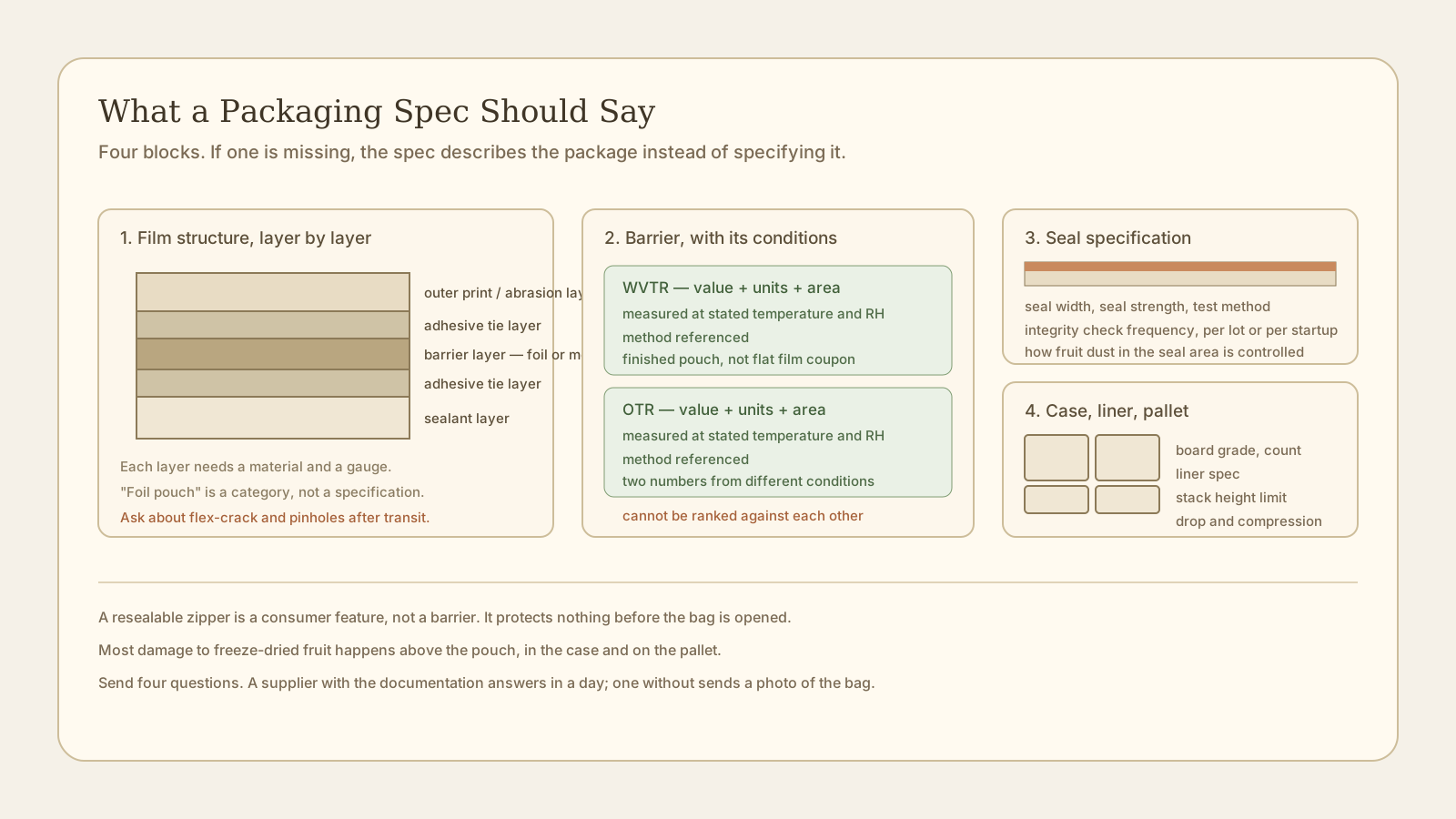
- What is the film structure?
- How was the seal process validated?
- How is seal integrity checked?
- How consistently does the zipper reclose in real use?
- What is the expected open-life behavior once the bag leaves the shelf?
Those are different questions, and they should stay separate.
Testing should separate seal strength, seal integrity, and reclose performance
ASTM packaging methods are useful here because they frame packaging as a testable system rather than a visual impression. Seal-strength work, visual seal inspection, and leak-focused methods each answer different risk questions.
For freeze-dried fruit buyers, that means a clean packaging review should distinguish between:
- seal strength: whether the package-making process is producing consistent bonded seals
- seal integrity: whether defects or discontinuities are visible or likely
- gross leak risk: whether the package can hold its closed state under test conditions
- reclose usability: whether the zipper keeps working after repeated opening
Not every buyer runs all of those tests personally, but serious suppliers should understand the difference.
The consumer experience depends on the full moisture path
The most practical way to think about a zipper is that it sits inside a longer humidity pathway:
- room humidity during filling
- barrier-film protection during storage
- seal integrity during freight and retail handling
- first opening behavior
- reclose quality across the rest of the bag's life
If any earlier step is weak, the zipper is inheriting a problem that already exists. If the earlier steps are strong, the zipper still has to perform because freeze-dried fruit is unusually unforgiving once opened.
That is why a "premium resealable pouch" can still disappoint. The phrase describes only one visible feature, not the entire moisture-control chain.
What buyers should ask suppliers
For retail or direct-to-consumer freeze-dried fruit, ask packaging questions in four layers:
- What barrier structure is being used, and what shelf-life target is it meant to support?
- How are the primary seals validated and monitored?
- What checks are used for seal integrity or leak detection?
- What evidence supports the zipper's real performance after repeated opening?
That last question is the one many teams skip. They verify transit and shelf stability, then assume the consumer reclose experience will take care of itself.
For a moisture-sensitive product, that assumption is weak.
Bottom line
Resealable zippers matter in freeze-dried fruit packaging, but they do a different job from the barrier film and the primary seals. The film and factory closure protect the fruit before first open. The zipper helps limit damage after that point.
Treating the zipper as the whole package system is a category mistake. For freeze-dried fruit, crunch survives only when the full barrier chain works together.
Frequently Asked Questions
Does the zipper matter on a freeze-dried fruit pouch?
Yes, but not in the way many people assume. The zipper matters after first open because it controls repeated home exposure. It does not replace the barrier film or the factory seal that protect the product before that.
Can a good zipper make up for weak barrier film?
No. If the film structure or seal system is weak, the pouch is already vulnerable before the zipper ever gets used. A good zipper helps only after opening.
Why do some pouches feel crisp on day one and soft a few days later?
That usually means the unopened package was acceptable but the reclose system, headspace plan, or consumer handling window was not strong enough to control moisture pickup after opening.
Should buyers ask for zipper testing separately from film specs?
Yes. Film barrier, seal strength, visual seal integrity, and reclose performance answer different questions. Treating them as one packaging claim hides useful risk.
Is the bottom heat seal still more important than the zipper?
For unopened shelf life, usually yes. The heat seal and the barrier web define whether the pouch starts life closed and protected. The zipper mainly governs what happens next.
Primary sources & further reading
- 21 CFR 117.80 - Processes and Controls Electronic Code of Federal Regulations Referenced for FDA requirements that food-packaging materials be safe and suitable and that quality-control operations protect food during packing and holding.
- F88/F88M Standard Test Method for Seal Strength of Flexible Barrier Materials ASTM International Referenced for the role of seal-strength testing in validating and controlling flexible-package sealing performance.
- F1886/F1886M Standard Test Method for Determining Integrity of Seals for Flexible Packaging by Visual Inspection ASTM International Referenced for visual seal-defect inspection as an early signal of packaging-process variation and integrity risk.
- Technical Committee F02 on Primary Barrier Packaging ASTM International Referenced for ASTM's packaging-test landscape, including leak and seal methods commonly applied to flexible barrier systems.
External links open in a new tab. We do not receive compensation from any organization listed; sources are referenced because they are primary, current, and publicly verifiable.