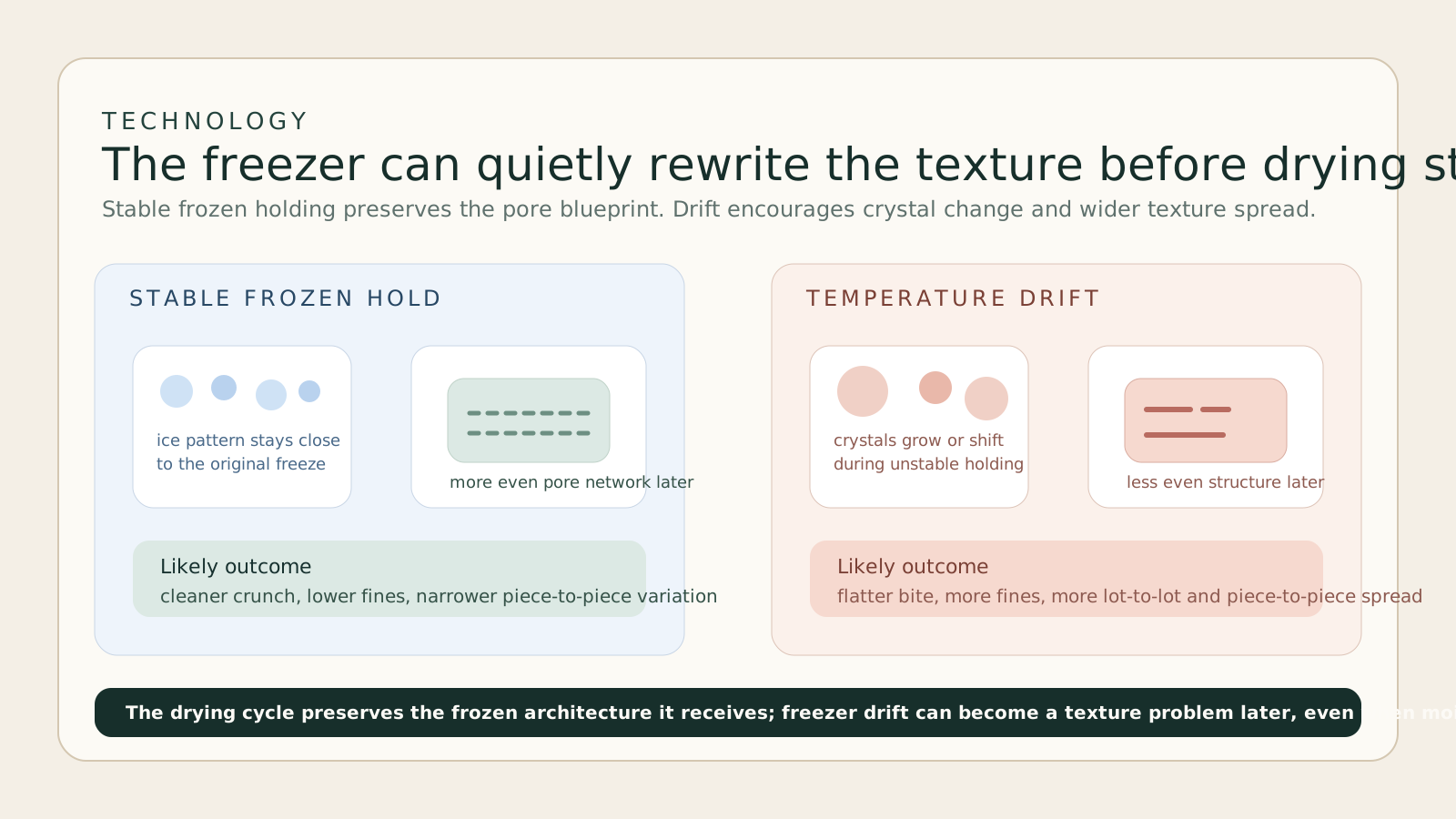
- Stable frozen holding helps preserve the ice-crystal pattern that the final freeze-dried pore structure depends on.
- Repeated temperature drift can encourage recrystallization, which changes tissue stress, pore geometry, and final breakage behavior.
- The first symptoms are often commercial, not dramatic: flatter crunch, more fines, softer pockets, or wider lot-to-lot texture spread.
- Buyers should ask how long fruit is held frozen before drying, what temperature band is controlled, and how excursions are handled.
When a freeze-dried fruit lot feels weaker than the approval sample, the conversation often jumps to endpoint control, packaging, or post-pack humidity.
Sometimes the damage started earlier, in the freezer.
The direct answer
Frozen storage temperature drift shows up later in freeze-dried fruit texture because the fruit's frozen structure is not perfectly static. When the storage condition moves up and down enough to encourage crystal change, the fruit tissue can experience more internal stress before the drying cycle even begins. Once sublimation removes that ice, the altered structure may translate into flatter crunch, more breakage, or wider texture variation.
In plain terms, the dryer can only preserve the frozen architecture it receives.
Why the frozen holding period is part of the process
Freeze-drying is often described as if the important structure decisions happen only at freezing and drying:
- fruit is frozen
- ice is removed under vacuum
- the empty spaces become the pore network
That sequence is real, but it leaves out the waiting period in between.
If fruit sits frozen before drying, the freezer is not just parking inventory. It is holding the product in the exact state the dryer will inherit. Stable frozen storage helps preserve that state. Temperature drift can slowly reshape it.
The practical implication is that a good initial freeze does not fully protect a lot if the holding condition is unstable afterward.
What temperature drift does inside the fruit
The most useful way to think about frozen drift is not "the fruit thawed" versus "the fruit stayed frozen."
The more common problem is subtler:
- ice crystals can grow or redistribute
- local tissue stress can increase
- the original pore blueprint becomes less uniform
- different pieces in the same lot can begin the cycle from slightly different structural states
That matters because freeze-dried fruit texture depends on the pore network left behind when ice exits. If the ice geometry changes during storage, the final structure can change too.
This is why frozen-state instability may later appear as:
- a less airy bite
- more powder or fines
- uneven crispness from piece to piece
- more fragile edges
- a sample that passes moisture targets but still feels commercially weaker
Why this is different from the original freezing rate
Freezing rate and frozen storage stability are related, but they are not the same control point.
The original freezing step shapes the first crystal pattern. Frozen holding determines how faithfully that pattern survives until drying. A supplier can freeze fruit well on day one and still erode some of that advantage if freezer management later drifts.
That distinction matters in sourcing conversations because many teams ask only:
- Was the fruit frozen fresh or IQF?
They ask less often:
- How long was it held frozen before drying?
- How tightly was that freezer condition controlled?
- What happens when storage temperature moves outside the normal band?
Those questions often explain repeatability better than the fresh-versus-frozen label by itself.
Fruit type changes how the risk shows up
Not every fruit reveals frozen-storage drift in the same way.
High-water fruits, delicate berry tissues, and formats with thin walls or fragile edges may reveal structural change as breakage or flattening first. Denser fruits may hide the issue longer and show it later as mixed crunch or inconsistent drying behavior. A powder program may tolerate some of that drift. A premium whole-piece snack program usually does not.
That is why the business impact depends on the use case:
- retail snack pouches care about visible integrity and clean crunch
- topping programs care about spoonable structure and reduced dust
- ingredient programs may care more about flow, color, and particle behavior
The same frozen-storage problem can therefore be minor in one channel and expensive in another.
Where buyers usually miss the clue
Frozen-storage drift rarely announces itself with one dramatic visual defect.
More often, the clues are cumulative:
- one lot is slightly flatter than the approval sample
- breakage slowly trends higher
- the bag still feels dry, but not as lively
- a supplier's texture spread widens during longer inventory periods
That pattern is easy to misread as random variability. In reality, it can reflect a frozen-state management issue upstream.
For buyers, this is a useful reminder that moisture release data alone does not fully describe product quality. The lot still has to eat like the intended product.
Questions worth asking suppliers
You do not need a supplier's exact freezer map to pressure-test this topic intelligently.
Useful questions include:
- How long is this fruit typically held frozen before drying?
- What temperature range is used for frozen storage?
- How are storage excursions handled and documented?
- Are long-held frozen lots dried under the same assumptions as short-held lots?
- Which finished-product metrics usually move first when frozen holding has been imperfect?
Those are process-discipline questions, not trade-secret questions.
The sources below explain frozen-food structure, crystal behavior, and stable frozen handling. The article's specific buying implications for freeze-dried fruit are an editorial application of those well-established frozen-state principles.
Bottom line
Frozen storage temperature drift matters because the freeze dryer inherits the structure created and preserved before the cycle starts. If that frozen state has drifted, the final texture can drift with it.
For freeze-dried fruit, stable frozen holding is not background warehousing. It is part of texture control.
Frequently Asked Questions
Why does frozen storage matter if the fruit is going to be dried anyway?
Because the frozen state is part of the structure the dryer works with. If the fruit changes while it is held frozen, the pore network created during sublimation can change too.
What does temperature drift do to frozen fruit?
Drift can promote ice-crystal growth and structural stress inside the fruit tissue. That can later show up as weaker texture, more breakage, or less even drying.
Is this the same thing as the original freezing rate?
No. Freezing rate shapes the first crystal pattern. Frozen storage stability determines how much of that pattern stays intact before the drying cycle begins.
Can buyers see frozen-storage problems in the finished bag?
Sometimes indirectly. Higher fines, flatter crunch, odd density differences, or inconsistent bite from piece to piece can all point to upstream frozen-state instability.
What should a supplier be able to explain about frozen holding?
At minimum: typical hold time before drying, temperature-control range, what happens during freezer excursions, and whether fresh and long-held frozen fruit are run under the same drying assumptions.
Primary sources & further reading
- Ice Crystal Formation in Freezing of Foods Institute of Food Technologists - Journal of Food Science Referenced for freezing-rate, crystal-growth, and recrystallization fundamentals that determine later food structure.
- Recommendations for the Processing & Handling of Frozen Foods International Institute of Refrigeration Referenced for frozen-storage handling guidance and the practical importance of holding products at stable low temperatures.
- Freezing and Food Safety USDA Food Safety and Inspection Service Referenced for USDA's explanation that freezing preserves food by holding it in a stable frozen state rather than improving quality after temperature abuse.
External links open in a new tab. We do not receive compensation from any organization listed; sources are referenced because they are primary, current, and publicly verifiable.