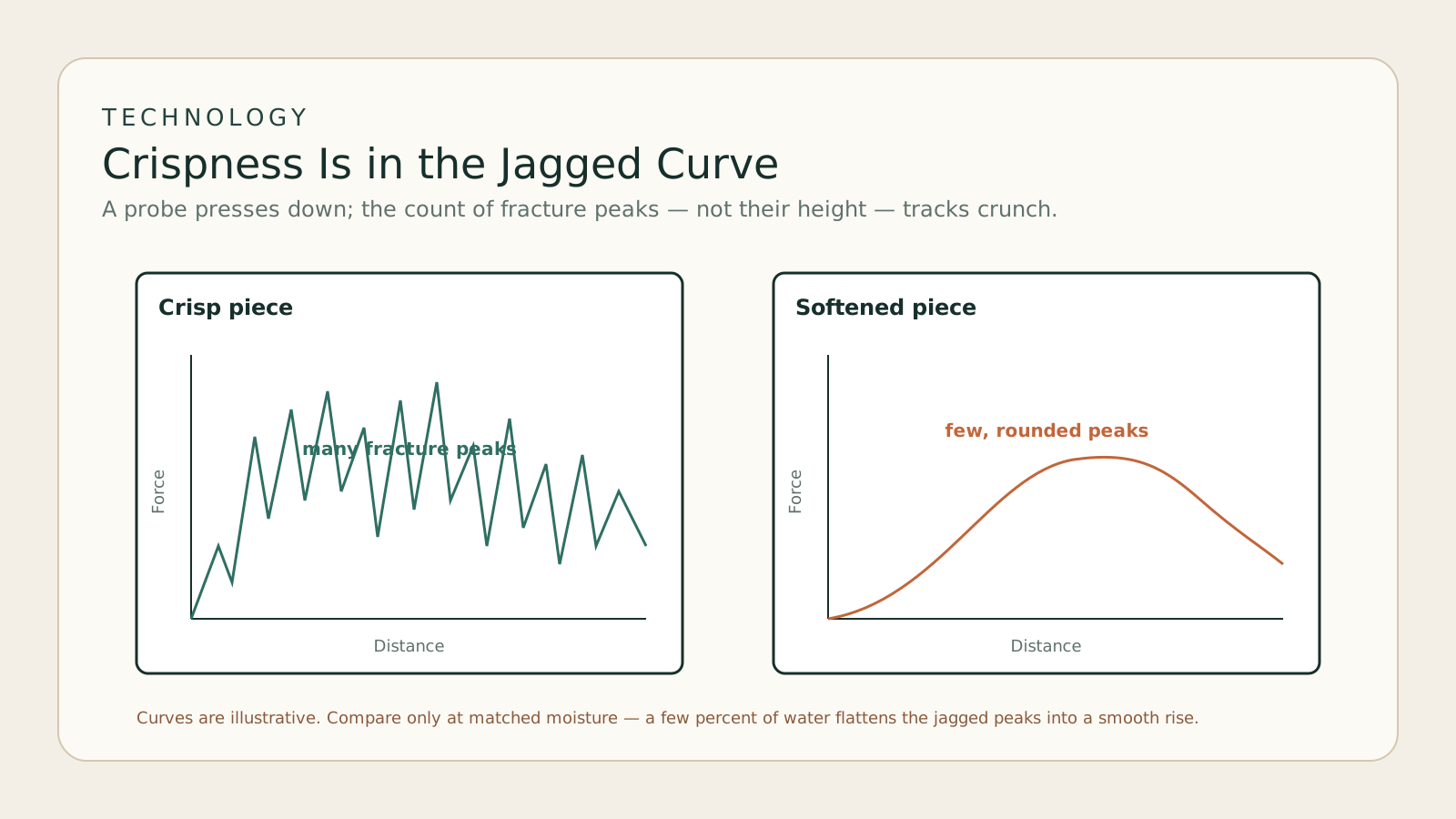
- A texture analyzer presses a probe into a piece and records force against distance; a crisp freeze-dried piece produces a jagged curve with many small fracture peaks, while a stale or moisture-softened piece produces a smooth, rounded curve with few peaks.
- The count and spacing of fracture events — often summarized as a number of peaks or a jaggedness index — tracks perceived crispness better than the single maximum force, which mostly reflects how hard the piece is rather than how crisply it breaks.
- Texture results are only comparable when moisture, piece geometry, probe type, and test speed are held constant, so an in-house method needs fixed conditions and matched samples before the numbers mean anything.
Crispness is one of the first things anyone notices about freeze-dried fruit and one of the hardest to put a number on. It is easy to feel the difference between a piece that shatters cleanly and one that has gone slightly leathery in a humid room, but "crisp" resists definition. A texture analyzer is the instrument that comes closest, and it works by turning that moment of fracture into a curve you can measure.
The direct answer
A texture analyzer presses a probe into a piece at a fixed speed and records the force required against how far it has traveled. For a brittle food, the resulting curve is jagged: force builds, the structure fractures, force drops, then builds again as the probe meets the next bit of structure. A crisp freeze-dried piece produces many of these small fracture peaks in a ragged sawtooth; a softened or stale piece produces a smooth, rounded curve with few peaks. The property that tracks perceived crispness is the number and spacing of those fracture events — not the single tallest force reading, which mostly reflects hardness.
What the curve looks like
Imagine pushing a cylindrical probe down onto a freeze-dried strawberry slice. In the first fraction of a millimeter the porous structure resists, force climbs, and then a cell-wall region collapses and force falls away sharply. The probe keeps descending, meets the next region, and the pattern repeats. Plotted out, this is a series of spikes — each rise-and-drop a discrete fracture. The more brittle and porous the piece, the more of these events happen and the more jagged the trace becomes.
Contrast that with a piece that has absorbed a little moisture. Instead of shattering, it bends and compresses. The curve becomes a smooth ramp with only a few rounded bumps. The maximum force might not even be much lower — a rubbery piece can resist a probe stubbornly — but the character of the curve has changed completely. That change in character is exactly what your mouth registers as the loss of crunch.
Why peak count beats peak height
The intuitive metric is maximum force: how hard do you have to push before the piece breaks? It has its uses, but it measures hardness, not crispness. A dense, tough piece and a crisp, airy piece can require similar peak force for very different reasons. What separates crisp from not-crisp is fragmentation — a crisp piece breaks into many pieces through many small fracture events, and each of those events shows up as a peak on the curve.
So the metrics that matter are things like the number of peaks above a threshold, the average drop in force per fracture, or a "jaggedness" index that sums how much the curve zigzags over the test distance. These fracture-based measures line up with what trained sensory panelists call crispness far more reliably than peak force alone. It is a useful reminder that the interesting information is in the shape of the signal, not its height.
Unlike an extruded chip, freeze-dried fruit varies piece to piece in thickness, curvature, and internal void structure. A single measurement can be misleading. Sound method design tests a substantial number of pieces and reports the spread — a mean plus a measure of variation — rather than a single hero number. High variability is itself information: it can flag inconsistent drying or moisture pickup across a lot.
Moisture is the variable that ruins comparisons
Nothing moves a texture result faster than water. Freeze-dried fruit is crisp because its structure is in a glassy, brittle state; as it picks up moisture and crosses its glass transition, the structure turns rubbery and yields instead of shattering. On the force curve, jagged fracture peaks smooth into a gentle rise. A change of only a few percent moisture can carry a sample from unmistakably crisp to clearly leathery.
The practical consequence is that a texture number means nothing on its own. It is only interpretable next to the sample's moisture content or water activity, measured at the same time, and it is only comparable to other samples held at the same moisture. Compare a freshly opened lot against one that sat out during testing and the difference you record may be humidity in the lab, not a real difference between lots.
Sound, and the limits of the machine
Because crisp foods are audibly crisp, some setups add a microphone and record the crackle while the probe descends. Counting acoustic bursts, or measuring their loudness, can tighten the link between the instrument and what people perceive, since fracture and sound are related. It also adds cost and complexity, and many operations get all the discrimination they need from the force curve alone.
Either way, the instrument is a proxy. It correlates with a trained panel; it does not replace one, and the correlation has to be established for each product using matched samples before the numbers can stand in for human judgment. Used that way — as a fast, consistent check once it has been anchored to sensory results — texture analysis is a strong quality tool. It lets a supplier or buyer catch a lot that has drifted toward softness before it reaches a panel or a customer, provided everyone remembers that the number is only as trustworthy as the moisture control and the method behind it.
Frequently Asked Questions
What does a texture analyzer actually measure?
It drives a probe into the sample at a fixed speed while a load cell records the force needed, producing a curve of force against distance (or time). For a brittle food like freeze-dried fruit, that curve is not a smooth hill — it is a series of sharp rises and sudden drops, each drop marking a moment when part of the structure fractured. The shape of that curve, not a single reading, is what carries the texture information.
Why is the number of peaks more useful than the maximum force?
Maximum force tells you roughly how hard the piece is — how much load it takes before it gives way. But crispness, as people perceive it, is about breaking into many pieces with many small fracture events rather than yielding in one soft bend. A crisp piece shatters progressively, generating a jagged curve with dozens of small peaks; a softened piece deforms and yields with few, rounded peaks even if its peak force is similar. Counting fracture events, or measuring how jagged the curve is, lines up with sensory crispness far better than peak height alone.
Does moisture change the reading?
Strongly. Water acts as a plasticizer: as freeze-dried fruit picks up moisture and crosses its glass transition, the brittle cell-wall structure becomes rubbery, so it bends and yields instead of shattering. On the curve, jagged fracture peaks flatten into a smooth rise. Because a few percent of moisture can move a sample from crisp to leathery, texture testing is only meaningful when moisture content or water activity is measured alongside it and samples are compared at the same moisture.
Can a machine replace a taste panel?
Not entirely. Instrumental texture is a proxy — it correlates with what trained panelists report, but it does not capture the full mouth experience, and the correlation has to be established for each product with matched samples. The practical value is consistency and speed: once you have shown that a jaggedness or peak-count metric tracks your panel's crispness scores, the analyzer can screen lots quickly and flag drift without convening people every time. It supplements sensory work rather than retiring it.
What is acoustic testing and does it help?
Some setups add a microphone to record the sound of fracture while the probe presses down, because crisp foods are audibly crisp — the crackle is part of how we judge them. Pairing the force curve with sound (counting acoustic bursts, or their loudness) can sharpen the correlation with perceived crispness, since sound emission and mechanical fracture are related but not identical. It adds equipment and complexity, so many operations get acceptable results from the force curve alone.
What conditions have to be fixed for results to compare?
At minimum: probe type and size, the test speed, the distance or force trigger, how the piece is presented (single piece, a bed of pieces, or a confined cell), and the moisture of the sample. Freeze-dried fruit is irregular, so piece-to-piece variation is large; that usually means testing many pieces and reporting a distribution rather than trusting one run. Change any of these variables and the numbers stop being comparable to earlier data, even for the same fruit.