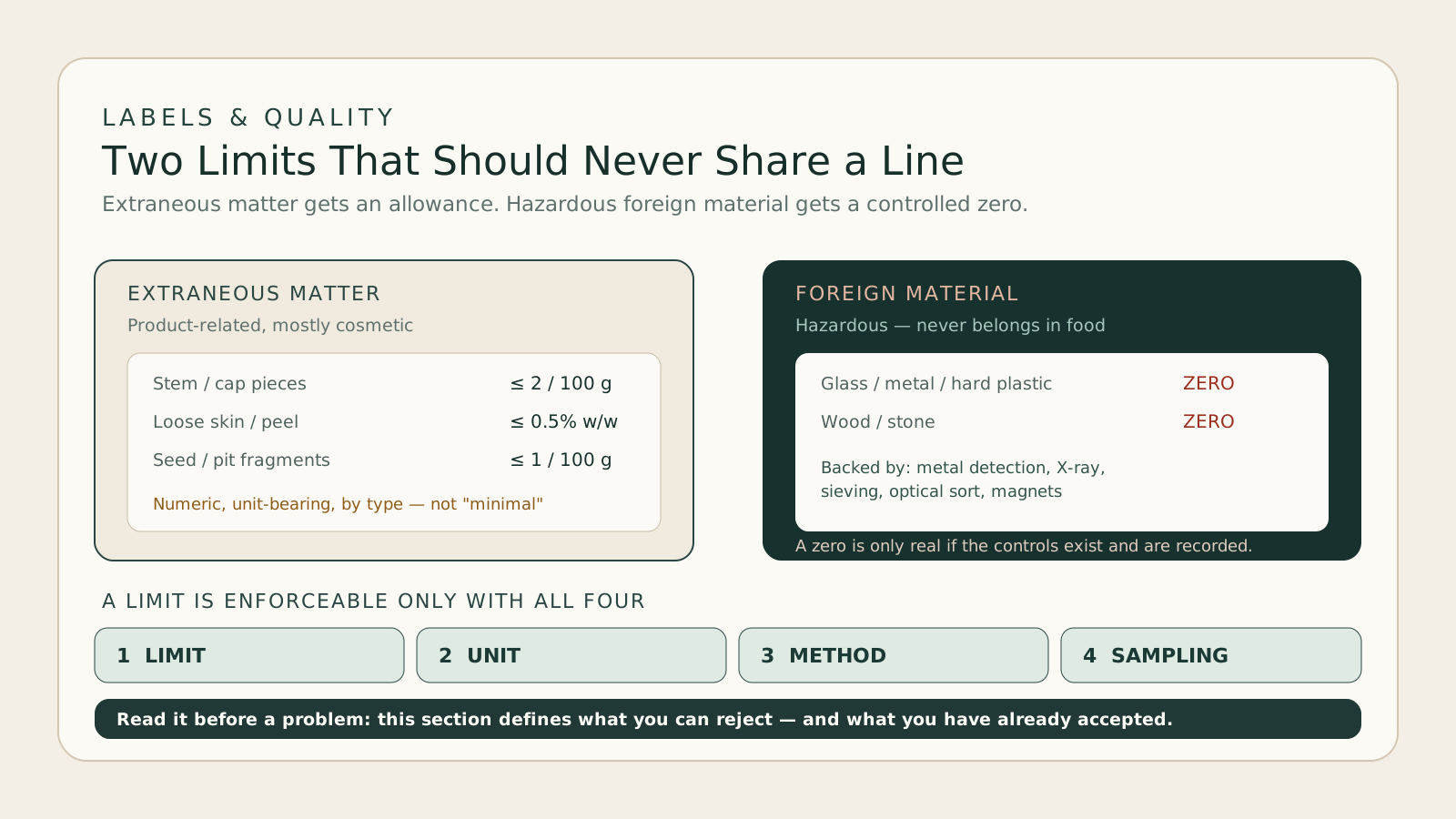
- Foreign material limits separate 'extraneous matter' (product-related bits like stems or skin) from true 'foreign material' (glass, metal, plastic), and the two carry very different limits.
- Hard and sharp foreign material is usually specified as a zero or near-zero tolerance, backed by metal detection or X-ray, while cosmetic plant matter gets a numeric allowance.
- A useful spec states the limit, the unit, the inspection method, and the sampling basis together — a number with no method behind it is hard to enforce.
- Read this section before a problem, not after: it defines your grounds for rejection and where liability sits.
Most of a freeze-dried fruit spec sheet gets read carefully — moisture, water activity, color, piece size. The foreign material section tends to get skimmed, because it is short and reads like boilerplate. That is a mistake. This is the part of the spec that defines what counts as a defect you can reject for, and what you have quietly agreed to accept.
Read well, it protects you. Read carelessly, it can leave you holding a lot you dislike with no contractual grounds to send it back.
The direct answer
A good foreign material section does two things. It separates extraneous matter — product-related bits like stems, skin, or seeds — from true foreign material like glass, metal, and plastic. And for each, it states a limit, a unit, an inspection method, and a sampling basis.
The pattern to expect: cosmetic plant matter gets a small numeric allowance, because perfect separation of an agricultural product is not achievable at scale. Anything hard, sharp, or hazardous gets a zero or near-zero tolerance, backed by detection controls. When you read the section, you are checking that this split is drawn clearly and that each limit is actually enforceable.
Extraneous matter: the allowed imperfections
Extraneous matter is material that comes from the fruit or its harvest but is not the intended edible piece. In freeze-dried fruit that usually means stem fragments, bits of leaf, skin or peel where it should have been removed, occasional seeds or pit fragments, and cap or calyx pieces on berries.
Because this material originates with the crop, a spec sheet gives it a defined allowance rather than demanding zero. What you want to see is that the allowance is:
- Numeric and unit-bearing, for example a maximum number of pieces per unit weight or a percent by weight, not a vague word like "minimal."
- Specific about type, so "stem/cap material" and "loose skin" are not lumped into one catch-all number that hides a real problem.
Extraneous matter is mostly a quality and appearance issue, not a safety one — a stem fragment is unpleasant, not dangerous. Keep that framing in mind. The allowance exists because these defects are cosmetic and hard to eliminate, which is exactly why they should never be conflated with hazardous foreign material in the same line.
Foreign material: the near-zero line
Foreign material is the category that should never appear in food: glass, metal, hard or brittle plastic, wood splinters, stones, and similar hazards. For these, a credible spec does not offer an allowance. It states zero or near-zero tolerance.
But a zero on paper is only as good as the controls behind it. The spec — or the supplier's supporting documents — should point to the detection and prevention steps that make that zero achievable:
- Metal detection on the finished product, with stated sensitivity for ferrous, non-ferrous, and stainless.
- X-ray inspection where used, which catches denser contaminants metal detection can miss.
- Sifting, sieving, and optical sorting to remove particulate and off-color matter.
- Magnets in the process flow.
If a supplier claims zero tolerance but cannot describe the controls or show the records, treat the number as aspirational. The controls are what turn it into something you can rely on.
The four things that make a limit enforceable
Whether the line is an allowance or a zero, a limit you can actually hold a supplier to needs four elements together. Missing any one weakens your position in a dispute.
First, the limit itself — the threshold. Second, the unit — per kilogram, per 100 grams, percent by weight, pieces per sample. A number with no unit is not measurable. Third, the method — how it is inspected or tested, whether by visual inspection against a standard, metal detection, X-ray, or sieve analysis. Fourth, the sampling basis — how much is inspected and how the sample is drawn, since a limit means nothing without knowing what portion of the lot it applies to.
When all four are present, you and the supplier are measuring the same thing the same way, and a rejection stands on defined grounds. When they are not, every complaint becomes an argument about interpretation.
Reading it before you need it
The reason to work through this section on a calm afternoon rather than during a complaint is that it defines your rights in advance. If a customer finds a stem in a pouch, the spec tells you whether that was within an agreed allowance or a breach. If a metal fragment turns up, the zero-tolerance line and the detection records determine whether the lot is rejectable and where liability sits.
A short checklist when you review a new supplier's spec:
- Are extraneous matter and hazardous foreign material clearly separated, not merged?
- Does each limit carry a unit and a method?
- Is there a stated sampling plan so the limit applies to a defined portion?
- For hazardous material, are the detection controls named and verifiable?
The takeaway
Foreign material limits are small print that carries real weight: they decide what you can reject, what you have accepted, and who pays when something turns up in the bag. The pattern to expect is a defined allowance for cosmetic plant matter and a controlled zero for anything hazardous — each stated with a limit, a unit, a method, and a sampling basis. Read it before a problem, and it becomes a tool. Read it after, and it is usually too late to change what you agreed to.
Frequently Asked Questions
What is the difference between extraneous matter and foreign material?
Extraneous matter usually means product-related material that is not the intended edible part — stems, leaves, skin fragments, pits, or seeds. Foreign material means things that should never be in food, such as glass, metal, hard plastic, wood, or stones. Spec sheets typically give extraneous matter a numeric allowance and hold hard or sharp foreign material to zero or near-zero tolerance.
Why is there any allowance for stems or skin at all?
Because fruit is an agricultural product and perfect separation is not physically achievable at scale. A small, defined allowance for cosmetic plant matter is normal. What should not be open-ended is anything hard, sharp, or hazardous.
What backs up a zero-tolerance foreign material limit?
Detection and control steps: metal detection, X-ray inspection, sifting or sieving, optical sorting, and magnets. A zero limit is only meaningful if the supplier can show the controls that make it achievable and the records that prove they ran.
How do I make a foreign material limit enforceable?
Make sure the spec states the limit, the unit of measure, the inspection or test method, and the sampling plan. A number without a method or a sampling basis is difficult to hold a supplier to when a dispute arises.
Primary sources & further reading
- 21 CFR 117.80 — Processes and Controls (Current Good Manufacturing Practice) U.S. Government (eCFR) Referenced for the CGMP requirement to protect against contamination and foreign material during food processing.
- Defect Levels Handbook U.S. Food and Drug Administration Referenced for how natural or unavoidable defects and extraneous matter are treated as distinct from hazardous foreign material.
- United States Standards for Grades of Freeze-Dried Fruits USDA Agricultural Marketing Service Referenced for how grade standards account for defects and extraneous plant material in freeze-dried fruit.
External links open in a new tab. We do not receive compensation from any organization listed; sources are referenced because they are primary, current, and publicly verifiable.