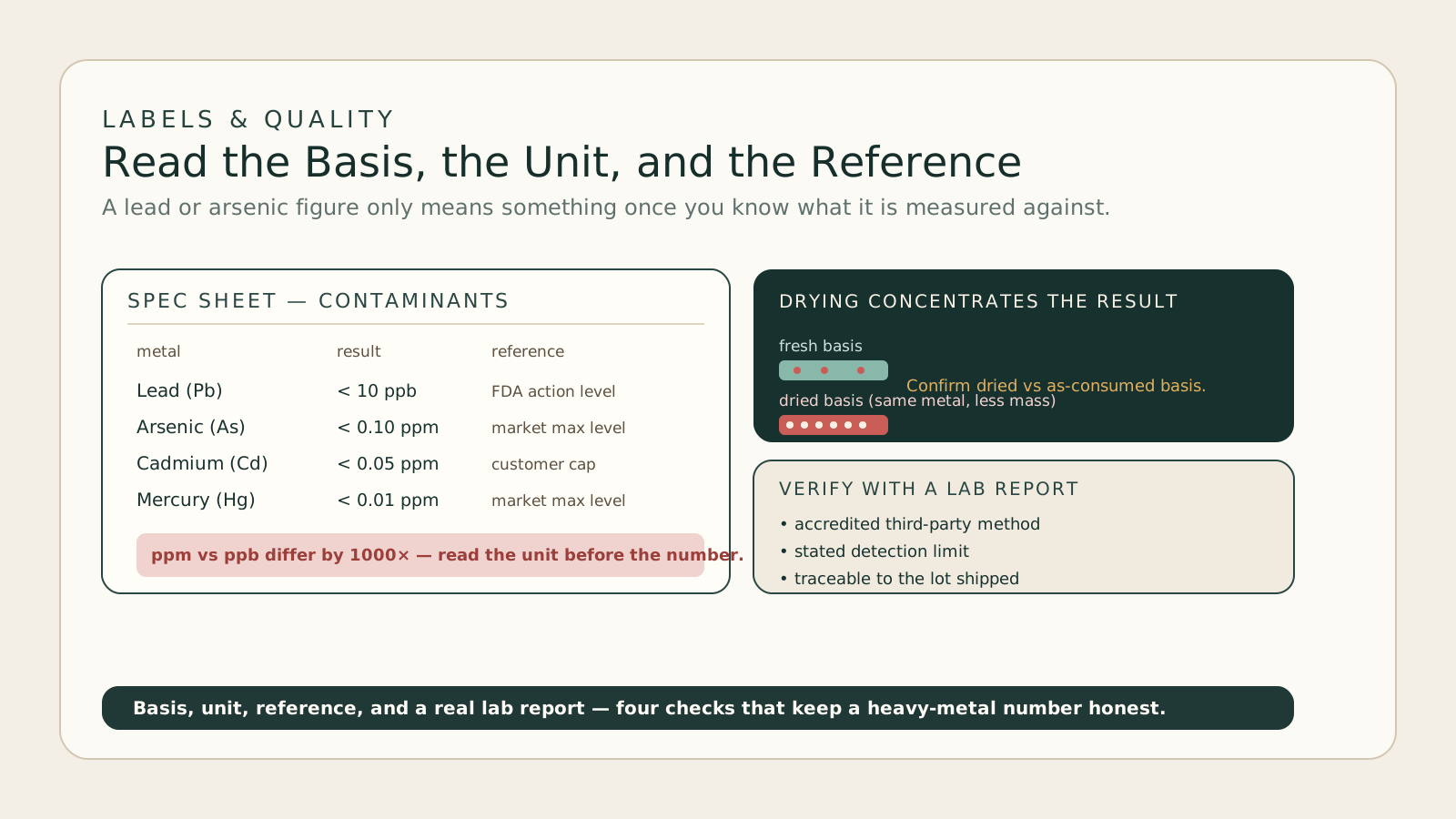
- Heavy metal limits cover lead, arsenic, cadmium, and mercury, usually expressed in parts per million or parts per billion of the dried product.
- Because freeze-drying concentrates solids, a dried-basis result can read several times higher than the same fruit fresh, so always confirm whether a limit is on a dried or as-consumed basis.
- A spec is only meaningful next to a reference: FDA action levels, an importing country's limit, or a customer's tighter internal cap.
- Ask for a recent third-party lab report with method and detection limits, not just a number on a one-page spec, before treating a result as verified.
Heavy metal rows are easy to skim past on a spec sheet. They are usually four short lines near the bottom, each with a small number, and the reflex is to glance, see that the number looks low, and move on. That reflex is where buyers get caught. A heavy metal result only means something once you know what basis it is on, what unit it uses, and what reference it is being judged against. Get any of those wrong and a perfectly fine number can look alarming, or a marginal one can look safe.
The direct answer
Heavy metal limits on a freeze-dried fruit spec sheet set maximum allowable concentrations for the contaminants regulators care about in food — primarily lead, arsenic, cadmium, and mercury. They are normally expressed in parts per million (ppm, the same as milligrams per kilogram) or parts per billion (ppb, micrograms per kilogram), measured on the finished dried product.
To read one correctly you need three things: the basis (dried weight versus as-consumed), the unit (ppm versus ppb), and the reference level the limit is meant to satisfy. A number without those three pieces is not really a spec; it is a digit.
Why these metals are there at all
Lead, arsenic, cadmium, and mercury are not added to fruit. They are environmental contaminants that fruit can pick up from soil, water, and air as it grows. Because they occur naturally, no real-world fruit is perfectly free of them, and regulators have accepted that the goal is to keep exposure as low as reasonably achievable rather than to demand zero.
That framing matters when you read a spec. A non-zero lead or arsenic figure is expected and is not evidence of contamination by itself. What matters is whether the figure sits comfortably below the relevant reference for how the product will be used.
The concentration trap
The single biggest mistake in reading heavy metals on a freeze-dried product is forgetting what drying does. Freeze-drying removes almost all the water and leaves the solids — including any metals — behind. The total amount of metal does not change, but it is now packed into a much smaller mass.
If a fruit loses about 90 percent of its weight as water, the metal that was spread through the fresh fruit is now concentrated into roughly a tenth of the mass. A dried-basis result can therefore read several times higher than the same fruit measured fresh, with nothing wrong and nothing added. The number went up because the water went away.
This is why basis is non-negotiable. A lead result on a dried basis cannot be compared directly to a fresh-fruit limit, and a result that looks high on the dried product may be entirely in line once you account for how it will actually be consumed or reconstituted. Always confirm whether the spec value, and the reference it is compared to, are on the same basis.
Units: where a thousandfold error hides
Heavy metal limits use two units that look similar and differ by a factor of a thousand. Parts per million (ppm) equals milligrams per kilogram. Parts per billion (ppb) equals micrograms per kilogram. Lead is frequently quoted in ppb because the meaningful levels are low — recent FDA action levels for lead in processed fruits and vegetables for young children sit at 10 ppb. Arsenic and cadmium may appear in either unit depending on the product and market.
Read the unit before the number every time. A value of "0.05" means something completely different at ppm than at ppb, and a spec sheet that lists some rows in one unit and some in another is an easy place to misjudge a result by three orders of magnitude.
A limit needs a reference
A maximum on its own answers nothing. The question is always: maximum relative to what? Three reference points come up most often.
The first is regulatory action or maximum levels in the destination market. In the United States, FDA sets action levels for these metals in specific food categories under its Closer to Zero program; the European Union and other markets set their own maximum levels, which sometimes differ from the U.S. figures. A product compliant in one market is not automatically compliant in another.
The second is the intended use. Limits for foods aimed at babies and young children are far tighter than general food limits, because the same exposure matters more for small bodies. If your freeze-dried fruit might go into a children's product, the relevant reference is the stricter one.
The third is your own customer's internal cap. Many brands and retailers set private limits below the regulatory line to build in margin. When that is the governing number, a result that passes the legal threshold can still fail your specification.
A well-built spec sheet states which reference each limit is meant to meet. If it does not, ask.
Verify, do not just read
Finally, treat the number on the spec as a claim that needs backing. The spec sheet is a summary; the evidence is the laboratory report. Ask for a recent report from an accredited third-party lab, and look at three things on it: the test method used, the detection limit (a "not detected" is only as meaningful as the limit it was detected against), and the lot the sample came from. A current, sensitive, lot-traceable report turns a spec value into something you can actually rely on. A number floating on a one-page sheet with no method behind it does not.
The takeaway
Reading heavy metal limits well is mostly about refusing to read the number in isolation. Confirm the basis, because drying concentrates results. Check the unit, because ppm and ppb differ by a thousand. Pin the limit to a reference, because lead at 10 ppb for a children's product and a general-food limit are different worlds. And back the spec with a real lab report before you trust it. Do those four things and the heavy metal rows stop being a place to get fooled.
This article explains how to interpret specification documents and is not regulatory or legal advice. Confirm the limits that apply to your product and market with the relevant authority or a qualified specialist.
Frequently Asked Questions
Which heavy metals appear on a freeze-dried fruit spec sheet?
Most commonly the four that regulators track in foods: lead, arsenic, cadmium, and mercury. Fruit specs usually emphasize lead and arsenic, since those are the most relevant contaminants for fruit-based products and the focus of recent regulatory attention.
Why can a dried result look higher than the fresh fruit?
Freeze-drying removes almost all the water but leaves the metals behind in the solids. The same total amount of metal is now packed into a much smaller mass, so the concentration on a dried-weight basis is several times higher even though nothing was added.
What units should I expect?
Parts per million (ppm, equal to milligrams per kilogram) or parts per billion (ppb, micrograms per kilogram). Lead in particular is often quoted in ppb because the relevant levels are low. Mixing up ppm and ppb is a thousand-fold error, so check the unit carefully.
What do I compare the number against?
A limit needs a reference. Common ones are FDA action levels for the relevant food category, the maximum levels set by the destination market such as the EU, and any tighter internal cap your own customers require. A number with no stated reference is hard to judge.
Is a number on the spec sheet enough?
Treat the spec value as a claim, not proof. Ask for a recent accredited third-party laboratory report showing the test method, the detection limit, and the lot tested. That tells you whether the result is current, sensitive enough, and traceable to real product.
Primary sources & further reading
- Closer to Zero: Reducing Childhood Exposure to Contaminants from Foods U.S. Food and Drug Administration Referenced for FDA's framework of setting action levels for lead, arsenic, cadmium, and mercury in foods, and its acknowledgment that these metals occur naturally in the environment.
- Action Levels for Lead in Processed Food Intended for Babies and Young Children (Final Guidance) U.S. Food and Drug Administration Referenced for the 2025 final action levels for lead, including 10 ppb for fruits and most vegetables in processed foods for young children.
- FDA Finalizes Action Levels for Lead in Processed Food Intended for Babies and Young Children Covington & Burling LLP Referenced for a legal summary of the finalized lead action levels and which food categories they apply to.
External links open in a new tab. We do not receive compensation from any organization listed; sources are referenced because they are primary, current, and publicly verifiable.