- USDA Commercial Item Descriptions are procurement tools that define the important characteristics of a product in concrete terms.
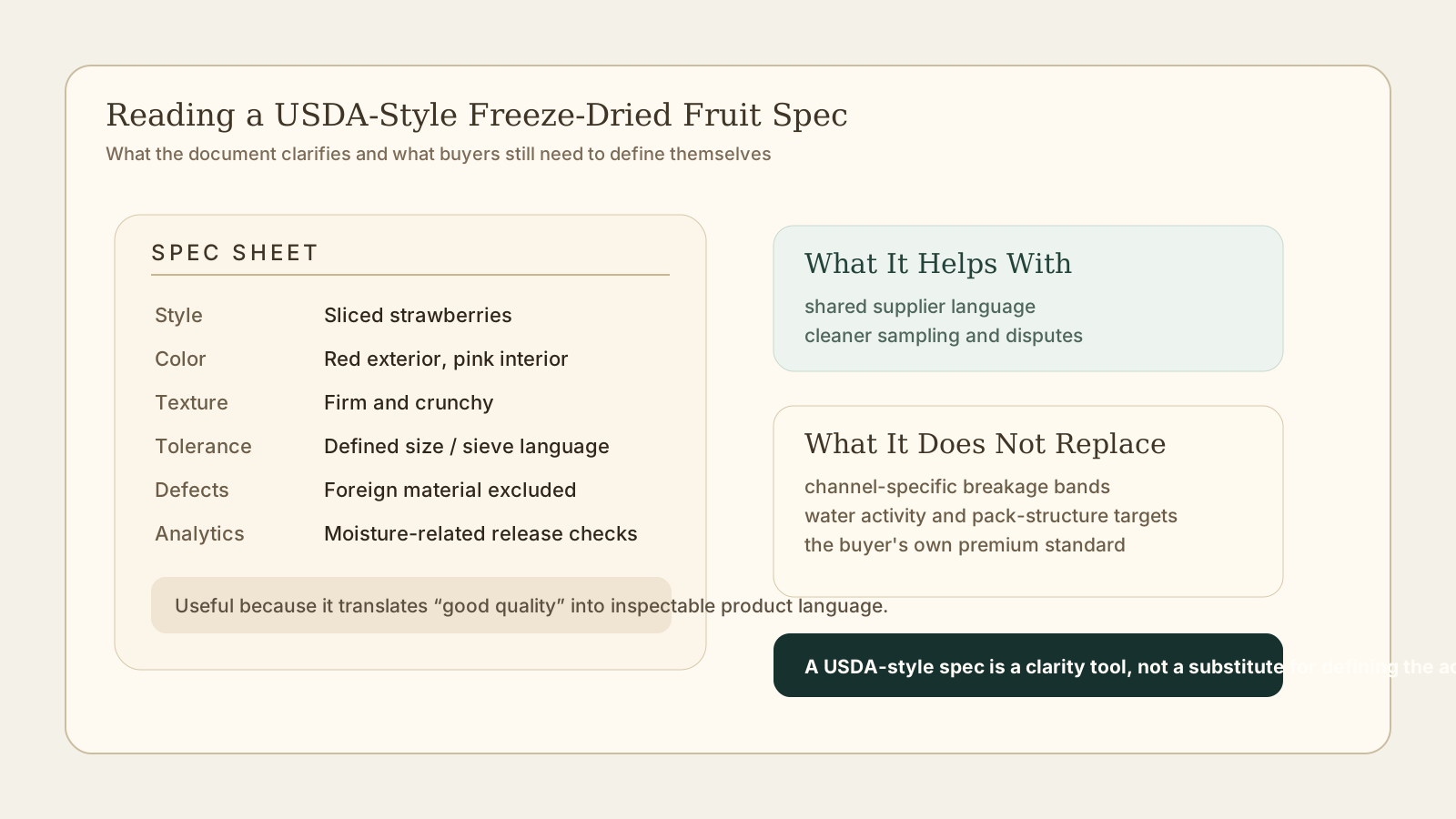
- For freeze-dried fruit, those specs can clarify shape, size tolerance, color, texture, defects, and analytical requirements.
- A USDA-style spec is more useful than vague premium language, but it still does not replace a buyer's own application-specific requirements.
- Retail front-of-pack claims and procurement specs do different jobs and should not be confused.
Freeze-dried fruit quality often gets described with words like premium, crunchy, real fruit, or clean label.
Those phrases may be directionally useful, but they are weak buying tools unless somebody translates them into specific product language.
The direct answer
USDA freeze-dried fruit specs are useful because they convert general quality talk into defined product characteristics such as shape, color, texture, defect tolerance, and analytical requirements. They help buyers and suppliers talk about the same product in the same terms.
What they do not do is guarantee that the fruit is automatically excellent, modern, or perfectly matched to your application.
They are a floor for clarity, not the whole ceiling for quality.
What the USDA document is for
USDA's Agricultural Marketing Service describes Commercial Item Descriptions as official procurement documents used to summarize the important characteristics of commercial products.
That purpose matters.
The document is not mainly trying to:
- sell the fruit
- market the fruit
- impress a consumer at shelf
It is trying to define what the product is in purchasing language.
That makes it valuable because it pushes the conversation away from vague claims and toward observable requirements.
What the freeze-dried fruit spec actually covers
The freeze-dried fruit Commercial Item Description is useful because it gets concrete.
Depending on the fruit and style, it can define:
- whether the product is whole, sliced, diced, or mixed
- expected piece shape
- size tolerance and sieve performance
- typical color expectations
- flavor and odor expectations
- texture expectations
- foreign-material limits
- analytical requirements
That is a much stronger starting point than a supplier simply saying the fruit is good quality.
For example, the USDA freeze-dried fruit description does not stop at naming diced fruit. It also gives size logic and tolerance language. That matters because "diced" can mean something very different from one supplier to another unless the tolerance is written down.
Why this is better than front-of-pack language
Retail labels and procurement specs do different jobs.
FDA's Food Labeling Guide is useful here because it reminds buyers what the retail label is built to communicate: identity, ingredients, net quantity, and other required consumer-facing information.
That is important information, but it is not the same thing as a full commercial quality spec.
A consumer label may tell you:
- what the product is called
- how much is in the package
- which ingredients are present
It may not tell you:
- the allowed breakage band
- the acceptable fines tolerance
- the expected size distribution
- the target texture standard
- the exact analytical release criteria
That is why smart buyers do not confuse a clean-looking pouch with a complete quality definition.
What the USDA-style spec still does not solve
A USDA-style spec improves clarity, but it is not automatically enough for every program.
Most serious buyers still need to add details such as:
- origin or origin policy
- water activity target
- breakage bands by channel
- packaging structure
- lot-release logic
- application-specific sensory expectations
The reason is simple: a retail snack pouch, a bakery inclusion, and a bulk topping format may all be freeze-dried strawberry, but they are not the same commercial product.
The USDA description gives a shared language base. The buyer still has to decide how tight the working spec should be for the real application.
How to use the document well
The strongest reading habit is to treat the USDA-style description as a translation tool.
Ask:
- Which parts of this description match our actual use case?
- Which limits are still too generic for our program?
- Where do we need tighter tolerances?
- Which product attributes are important to us but not fully spelled out here?
That approach turns the spec into something practical instead of ceremonial.
It also helps in supplier comparison. Two suppliers may both promise diced mango or whole blueberry. The useful comparison starts when both are forced into the same language for size, defects, texture, and analytical checks.
Bottom line
USDA freeze-dried fruit specs actually tell you something valuable: they turn loose quality language into defined product characteristics that can be discussed, sampled, inspected, and disputed more cleanly.
They do not replace the buyer's own commercial judgment. But they are far better than trusting premium-sounding words to do the work of a real specification.
Frequently Asked Questions
What is a USDA Commercial Item Description?
It is an official U.S. Government procurement description that summarizes the important characteristics of a commercial product in standardized language.
Does a USDA-style spec mean the fruit is automatically premium?
No. It means the specification language is clearer. The product can still be average or excellent depending on the actual limits, raw material, and process control behind it.
What does the freeze-dried fruit spec usually cover?
It can cover product identity, style, shape, size tolerance, color, flavor and odor, texture, foreign material limits, and analytical requirements such as moisture-related controls.
Is this the same as what shoppers see on the front label?
No. A procurement spec is an internal buying and supply document. Consumer labeling is a separate retail communication layer.
What should buyers add beyond a generic USDA-style spec?
Usually origin, cut tolerance, breakage bands, water activity target, packaging structure, channel-specific pack format, and any application-specific sensory expectations.
Primary sources & further reading
- Commercial Item Descriptions U.S. Department of Agriculture Agricultural Marketing Service Referenced for USDA's explanation that Commercial Item Descriptions are official procurement documents describing the most important product characteristics.
- FRUITS, FREEZE DRIED (A-A-20365) U.S. Department of Agriculture Agricultural Marketing Service Referenced for the freeze-dried fruit description's product requirements covering style, size tolerance, color, texture, foreign material, and analytical expectations.
- Food Labeling Guide U.S. Food & Drug Administration Referenced for the distinction between retail food-label communication, including net quantity and ingredient declarations, and separate procurement-spec language.
External links open in a new tab. We do not receive compensation from any organization listed; sources are referenced because they are primary, current, and publicly verifiable.