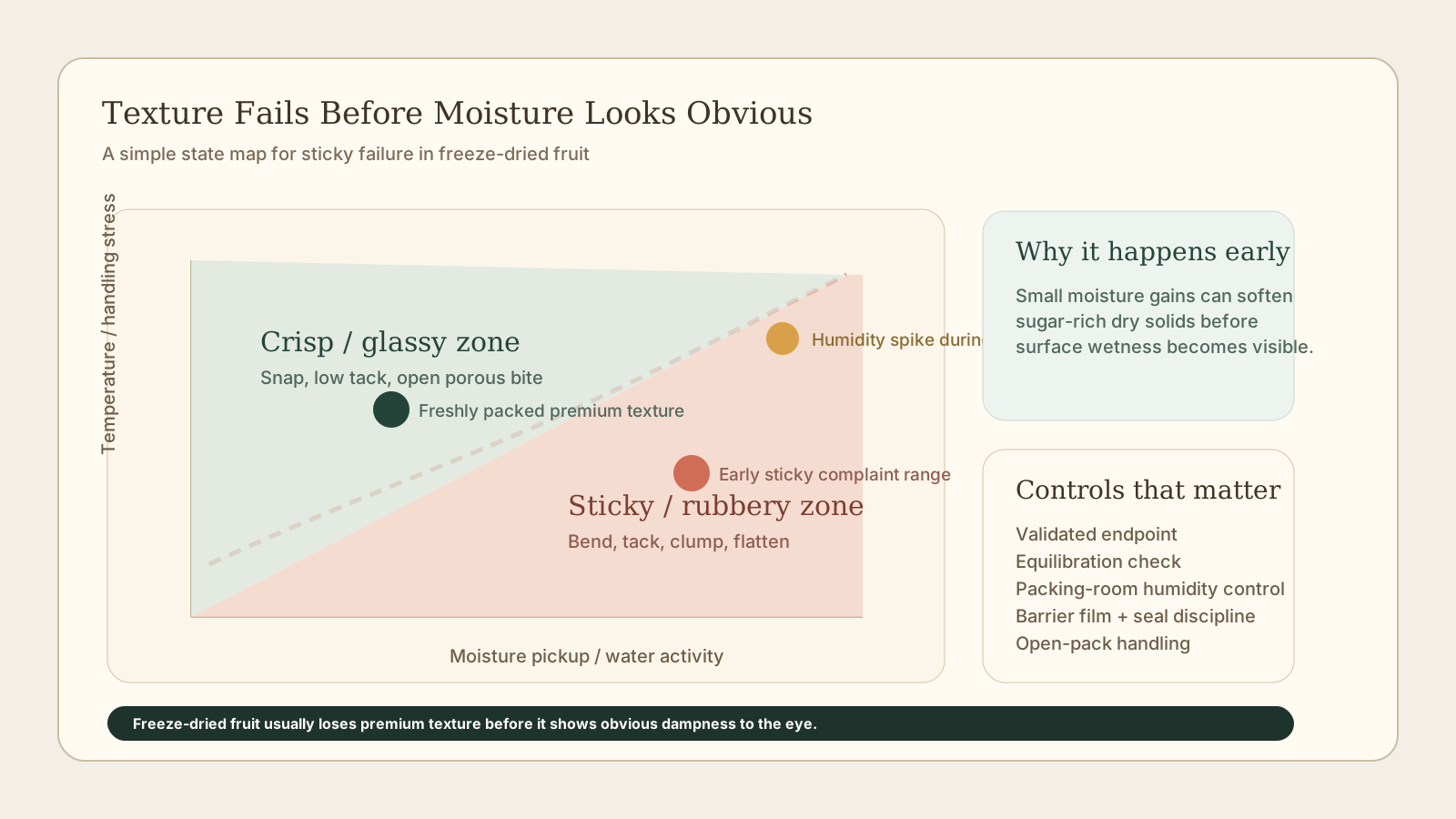
- Texture loss often starts as a physical-state change inside the fruit, not as visible surface wetness.
- Sugar-rich freeze-dried fruit can move from crisp and glassy toward soft and tacky as moisture and temperature rise.
- Thin pieces, powders, and high-sugar fruits usually show sticky failure faster than sturdier low-sugar formats.
- Water activity targets, packaging barrier, packing-room control, and open-pack handling matter more than a dry-looking sample.
Freeze-dried fruit often fails in a way that confuses nontechnical buyers: the bag still looks dry, but the bite has already changed. The fruit feels tacky, leathery, or oddly dense instead of crisp.
That is not a cosmetic mystery. It is usually a stability problem.
The direct answer
Freeze-dried fruit can turn sticky before it looks wet because a small amount of absorbed moisture can soften the dry fruit matrix before liquid water becomes visible. In practical terms, the product leaves a crisp, glassy state and moves toward a softer, more rubbery one.
That shift is especially relevant in freeze-dried fruit because the category is built on texture. Once the structure softens, the product stops eating like premium freeze-dried fruit even if it still appears saleable from the outside.
Why the texture warning arrives before the visual warning
Visible wetness is a late-stage clue. By the time droplets, clumping, or obvious surface darkening appear, the product may already have spent time outside its ideal texture window.
Earlier signs are subtler:
- pieces feel tacky on the fingertips
- powders lose free flow
- slices bend slightly instead of snapping
- the aroma seems flatter because the open structure is changing
The reason is that freeze-dried fruit is porous, low-density, and often rich in sugars and acids. Those solids do not need much extra water to behave differently. A little humidity pickup can change how the dry matrix moves long before the eye can see moisture.
The useful concept: glassy versus rubbery
Many freeze-dried fruit systems behave best when the dry solids are in a stable glassy state. That is the version people recognize as light, brittle, and crisp.
As moisture rises, the effective stability of that matrix drops. The same fruit that felt crisp at packout can become softer, tackier, or more collapse-prone at the same room temperature once it has picked up water. That is why a bag can fail on texture even though the product still looks dry enough to a casual observer.
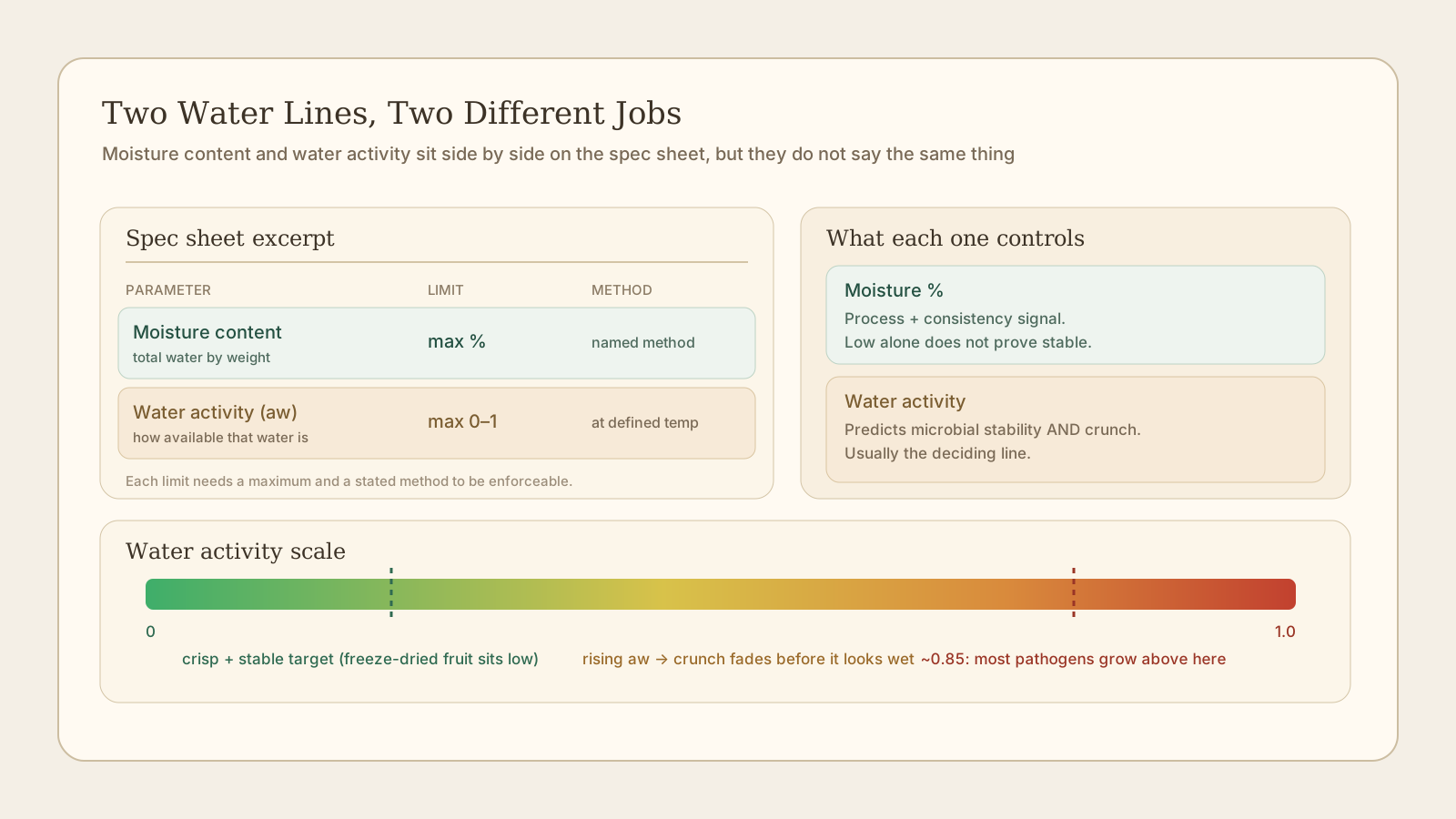
This is one reason moisture control conversations that stop at a single percent number are incomplete. Texture depends on composition, water activity, and storage conditions together, not on one dry-sounding spec line in isolation.
Why some fruits show the problem faster than others
Not every fruit shows sticky failure at the same speed.
Higher-risk formats usually include:
- sugar-rich fruits such as mango, banana, pineapple, and some tropical blends
- powders and fine crumble with high exposed surface area
- very thin slices that exchange moisture quickly
- products with weak barrier packaging or large repeated headspace exposure after opening
Lower-risk formats usually include:
- sturdier whole or chunk formats with less exposed surface
- fruits whose structure stays more rigid at the target dryness
- packs with stronger humidity control from film, seal, and desiccant strategy
This is why two technically "dry" products can behave very differently in storage. Fruit chemistry and structure matter.
Sticky does not always mean "underdried"
It is tempting to blame every sticky bag on an incomplete cycle. Sometimes that is correct. But not always.
Sticky texture can come from at least four different paths:
- The product left the dryer with too much residual moisture.
- The product equilibrated poorly and the center moisture migrated outward later.
- The product was dry enough at release, then picked up humidity during staging, packing, or storage.
- The product was packed in a system that protected safety but not premium texture.
That distinction matters for troubleshooting. If the real failure is packing-room exposure or weak pouch barrier, extending the drying cycle alone wastes energy without solving the complaint.
What buyers and operators should watch
A strong texture-control program looks beyond the first dry sample.
Useful checks include:
- moisture and, when possible, water activity targets tied to the intended use
- hold-and-recheck routines after the fruit has equilibrated
- packaging-room humidity control during transfer and pouching
- pouch barrier and seal validation that match the product's sensitivity
- open-pack checks, not just sealed-pack checks
For a buyer, one of the best practical questions is: What does this fruit feel like after the pouch has been open under normal use for a few days? That question often reveals more than a sales sample opened and eaten immediately.
Why powders and fragments get hit first
Powders, fines, and broken edges are usually the first places where sticky behavior shows up. They have more exposed surface, less structural support, and less tolerance for moisture variation.
That matters commercially because a pouch can fail at the bottom before the top looks bad. The top layer may still present as crisp while the fines layer has already compacted, clumped, or started to smear slightly.
For premium snack formats, that bottom-of-pouch behavior is a real quality signal. For ingredient formats, it may be acceptable only if the product was specified and sold that way.
If freeze-dried fruit feels tacky before it looks damp, treat that as an early stability warning rather than a minor cosmetic issue. The texture system is already drifting.
What actually prevents the problem
The prevention stack is usually straightforward:
- dry the fruit to a validated endpoint for that fruit and format
- let the product equilibrate appropriately before release decisions
- minimize humid air exposure between dryer discharge and final seal
- use barrier packaging matched to the fruit's sensitivity
- keep post-opening instructions realistic
No single layer carries the whole job. A strong cycle can still be defeated by sloppy staging. A strong pouch can still be asked to protect fruit that entered the bag already softened.
Bottom line
Freeze-dried fruit turns sticky before it looks wet because texture failure begins as a physical-state shift inside the dry fruit matrix, not as visible surface moisture. In a texture-led category, that early shift matters.
The practical lesson is simple: judge stability by how the fruit behaves, not only by how dry it appears. Crispness is a system outcome, not a visual guess.
Frequently Asked Questions
Why can freeze-dried fruit feel sticky without looking wet?
Because the fruit can absorb enough water to soften its dry sugar-rich structure before liquid moisture becomes visible on the surface. The texture shifts first; the obvious visual warning often comes later.
Is sticky texture the same as a microbial safety problem?
Not necessarily. A bag can lose crunch and become tacky well before it reaches a serious safety issue. Texture failure and microbiological failure are related to moisture, but they are not the same threshold.
Which freeze-dried fruits show sticky failure fastest?
Usually the more sugar-rich or fragile ones, plus powders and thin pieces with high exposed surface area. Mango, banana, pineapple, and some berry powders are common examples.
Does a lower moisture percentage guarantee crispness?
No. Moisture content helps, but the product's water activity, composition, storage temperature, and packaging protection still decide whether the fruit stays in a stable crisp state.
Can sticky freeze-dried fruit be fixed by re-drying?
Sometimes partially, but it is usually a rescue tactic rather than a quality system. Preventing moisture pickup is far more reliable than trying to reverse it later.
Primary sources & further reading
- Texture of Freeze-Dried Intact and Restructured Fruits: Formation Mechanisms and Control Technologies Tampere University repository / Trends in Food Science & Technology Referenced for the review's description of freeze-dried fruit texture as a porous scaffold held by a glassy amorphous matrix at sufficiently low water content.
- Phytochemical and Physical Properties of Blueberries, Tart Cherries, Strawberries, and Cranberries as Affected by Different Drying Methods NSF Public Access Repository / Food Chemistry Referenced for discussion of glass transition, surface morphology, and the physical-state behavior of dried fruit systems.
- The Effect of Composition, Pre-Treatment on the Mechanical and Acoustic Properties of Apple Gels and Freeze-Dried Materials National Library of Medicine / Foods Referenced for the relationship between water activity, glass-transition behavior, and the risk of rubbery texture in freeze-dried fruit systems.
External links open in a new tab. We do not receive compensation from any organization listed; sources are referenced because they are primary, current, and publicly verifiable.