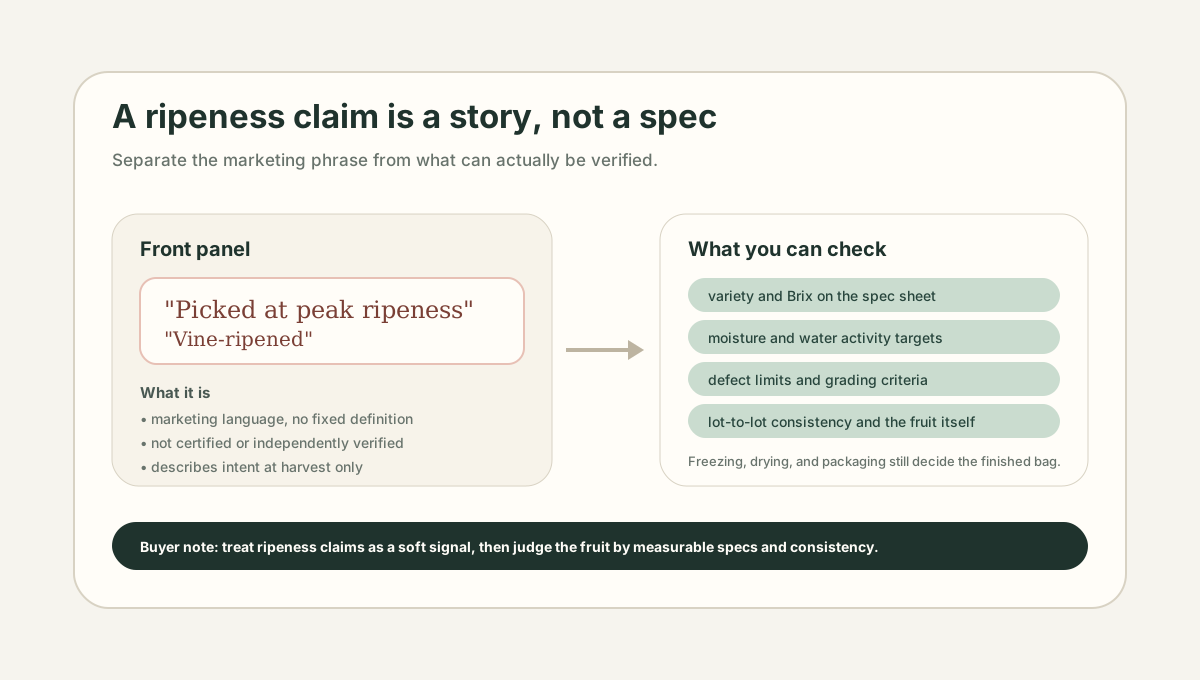
- Peak-ripeness and vine-ripened claims are marketing phrases with no fixed legal definition, so they are not independently verified by their wording alone.
- They can point to a real sourcing intent, but the label rarely provides evidence, and finished quality depends on far more than ripeness at harvest.
- Ripeness affects sugar, color, and flavor, but processing, freezing, drying, and packaging determine what actually ends up in the bag.
- Judge these claims by supplier specs, consistency, and the fruit itself rather than by the phrase on the front panel.
Ripeness claims are everywhere on freeze-dried fruit. "Picked at peak ripeness," "vine-ripened," "harvested at the perfect moment." They are appealing because ripeness maps neatly onto what shoppers want: sweet, flavorful fruit. But these phrases are among the least defined on the package, and reading them well means understanding what they can and cannot promise.
The direct answer
Peak-ripeness and vine-ripened claims are marketing language, not regulated terms. There is no fixed legal definition that a product must meet to use them, and the wording alone is not independently verified. A brand may genuinely source ripe fruit, but the phrase on the front panel is a statement of intent, not proof.
That does not make the claims meaningless. It means they should be weighed as marketing, and checked against the things that can actually be verified.
What the claims are trying to say
Ripeness genuinely matters for fruit. As fruit ripens, starches convert to sugars, acidity often softens, color develops, and aroma compounds build. Fruit harvested closer to full ripeness tends to be sweeter and more flavorful than fruit picked early for shipping durability.
So a ripeness claim is trying to communicate a real and reasonable idea: that the fruit was allowed to develop flavor before harvest rather than picked green. "Vine-ripened" specifically suggests the fruit ripened on the plant rather than being picked early and ripened in transit or storage.
The underlying idea behind these claims is sound. The problem is not that ripeness is unimportant, it is that the label rarely offers any evidence that the specific fruit in the bag was handled that way.
Why the wording is not a guarantee
The core issue is that these phrases have no standardized, enforceable definition. Unlike a term such as "organic," which is tied to a certification scheme, "peak ripeness" is not certified by anyone. There is no threshold a fruit must cross to earn the phrase.
That has a few consequences. Two brands can use nearly identical language while sourcing quite differently. The claim cannot be checked by a shopper from the label text. And because it is subjective, it is easy to apply broadly without saying anything false, since "peak" and "perfect" are not measurable words.
None of that means the claim is dishonest. It means the phrase carries less information than it appears to.
Ripeness is only one link in the chain
Even where a ripeness claim is completely accurate, it describes just one step: the condition of the fruit at harvest. For freeze-dried fruit, a lot happens after that, and those later steps often matter just as much.
How the fruit is frozen shapes texture. How it is dried and where the cycle ends determines crispness and stability. The final moisture and water activity decide whether it stays crunchy or drifts soft. Packaging and barrier protection decide how well quality survives to the shelf. A perfectly ripe berry can still finish sticky, collapsed, or faded if these steps are mishandled.
Peak ripeness at harvest is an input, not an outcome. It cannot rescue a poor drying endpoint or weak packaging. When judging finished freeze-dried fruit, ripeness is one factor among several, not the deciding one.
So a ripeness claim tells you something about intent at the start of the process, but very little about how the fruit was handled through the parts that most affect the finished bag.
How to read these claims well
For a shopper, the practical move is to treat ripeness claims as a soft signal rather than a hard fact. They may reflect genuine care, and there is nothing wrong with them, but they are not something to pay a premium for on the strength of the wording alone. Let the fruit itself, its flavor intensity, color, and consistency across bags, carry more weight than the phrase.
For a buyer evaluating a supplier, the claim is a starting point for questions, not an answer. Ask what harvest and grading criteria the supplier actually uses, whether ripeness or sugar content is measured and recorded, and how consistent incoming fruit is across the season. That moves the conversation from an unverifiable phrase to specifications you can compare.
The most reliable signals sit in the supplier's specs and in the fruit, not on the front panel. Variety, Brix, moisture and water activity targets, defect limits, and lot-to-lot consistency are all checkable in a way that "peak ripeness" is not.
The takeaway
Peak-ripeness and vine-ripened claims are appealing and often well-intentioned, but they are marketing phrases with no fixed definition and no verification built into the wording. They can hint at careful sourcing, yet they say nothing about the freezing, drying, and packaging steps that ultimately shape the product. Read them as a story about intent, then judge the fruit by the things that can actually be measured.
Frequently Asked Questions
Is 'peak ripeness' a regulated term on fruit labels?
No. There is no fixed regulatory definition of 'peak ripeness' or 'picked at the peak.' It is a marketing phrase describing an intended harvest condition, not a certified or independently audited standard, so the wording alone does not guarantee anything specific.
Does 'vine-ripened' mean the fruit is higher quality?
Not necessarily. 'Vine-ripened' generally suggests the fruit was left to ripen on the plant rather than picked early, which can affect sugar and flavor development. But it is not a guarantee of finished quality, and for freeze-dried fruit, processing steps after harvest matter just as much.
Why do ripeness claims appear so often on freeze-dried fruit?
Because ripeness is intuitively linked to sweetness and flavor, and it is an easy, appealing story to put on a front panel. It signals care in sourcing, but it is not something a shopper can verify from the label text itself.
Can ripeness at harvest be checked?
Ripeness at harvest can be measured with indicators like sugar content and firmness, but those measurements live in supplier records, not on the retail label. Buyers who care can ask suppliers for harvest and grading criteria rather than relying on the printed claim.
What matters more than ripeness for finished freeze-dried fruit?
The full chain matters: variety and Brix, how the fruit was frozen and dried, the moisture and water activity endpoint, and the packaging. A fruit picked ripe can still finish poorly if later steps are mishandled.