- Rambutan needs peel and seed removal, which raises labor and cost.
- The flesh can taste lychee-like but often milder and more grape-like.
- Seed membrane adhesion can create texture defects.
- It is best positioned as a specialty tropical fruit, not a commodity ingredient.
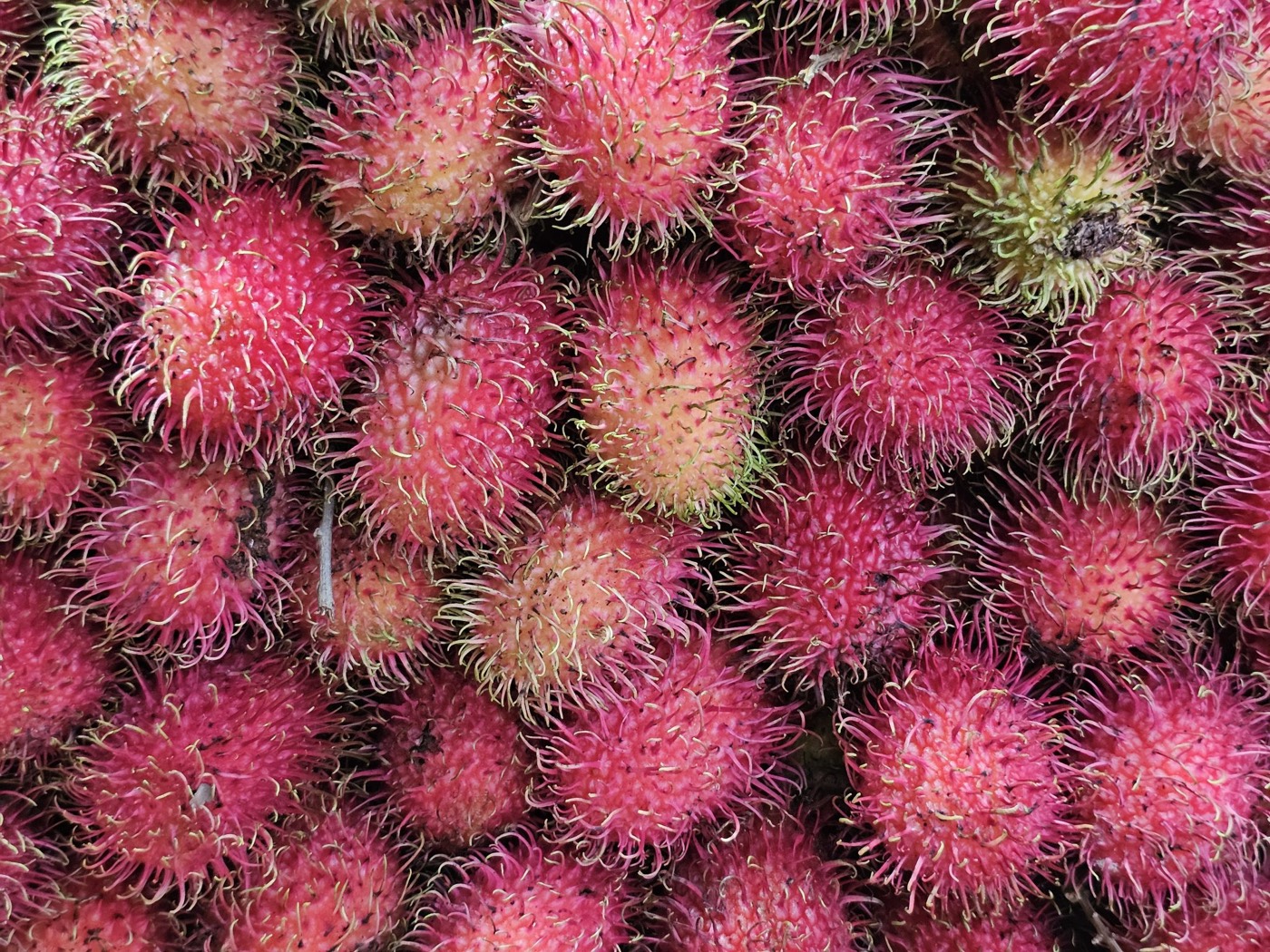
Rambutan has the visual drama of its hairy red peel, but freeze-dried buyers mostly care about the peeled flesh inside. For freeze-dried fruit buyers, rambutan is not just a flavor name. It is a set of decisions about raw material, cutting, drying behavior, sensory quality, packaging, and where the finished fruit actually belongs.
Use this guide as a working field note for buyers, product developers, snack founders, and curious consumers. The goal is not to rank every fruit in a vacuum. It is to understand how rambutan behaves after water is removed, what quality looks like in the bag, and which questions make a supplier conversation more useful.
Quick comparison: rambutan formats for freeze-drying
| Format | Freeze-dried personality | Risk | Best use |
|---|---|---|---|
| Whole peeled rambutan | Recognizable specialty fruit | Seed membrane and cost | Premium tropical packs |
| Halves | Better drying and inspection | Less dramatic identity | Desserts, snack blends |
| Rambutan powder | Mild sweet tropical note | Weak standalone flavor | Drinks, fillings |
| Rambutan-lychee blend | Familiar comparison | Identity blur | Asian fruit assortments |
Why rambutan behaves the way it does
Rambutan flesh is translucent and juicy, similar in broad structure to lychee and longan. The technical issue is the seed: some varieties cling to the flesh, leaving a papery membrane that becomes more obvious after drying. Freeze-drying can create a light, sweet piece, but only if seed removal is clean and the raw fruit has enough character.
Freeze-drying protects a fruit's original structure more than many consumers realize. It does not add aroma, fix weak ripeness, hide tough skin, or make low-flavor raw material suddenly taste premium. A good process can preserve quality; it cannot invent it from poor input.
What quality looks like in the finished bag
A strong freeze-dried rambutan product usually shows these signals:
- Clean translucent to pale color.
- No seed shell or membrane fragments.
- Light floral-grape aroma.
- Crisp bite without rubbery chew.
- Low syrupy or canned-fruit notes.
These signals should always be judged against the format. Whole pieces, slices, dices, crumbles, powders, and puree-derived pieces all have different expectations. The problem is not breakage or powder by itself; the problem is promising one format and delivering another.
Sourcing reality
Many buyers encounter rambutan through canned or syrup-pack channels, but that is not the same as clean freeze-dried fruit. Ask whether the input is fresh, IQF, or syrup-packed; whether sugar is added; and how seed membrane defects are controlled.
Ask for variety or type, origin, raw material state, cut format, added ingredients, moisture or water activity target, expected breakage rate, and the best-use application the supplier designed the product for.
Best-use formats
Rambutan works well in tropical snack assortments, dessert toppings, and premium gift packs. It is less suited to large-scale low-cost blends because its flavor is gentle and its processing cost is high.
The best format is the one that gives rambutan a clear job: add color, acid, aroma, crunch, sweetness, visual identity, or a more premium seasonal story. When the format and use case are aligned, freeze-dried rambutan can feel intentional rather than simply unusual.
How to read a rambutan label
A rambutan label should be clear about added sugar and source material. If the product comes from syrup-packed fruit, sweetness and texture expectations should be judged differently.
For buyers, the practical question is not simply whether freeze-dried rambutan is good. It is whether this version of rambutan fits the claim, price, and use case. That is what turns a fruit report into a sourcing tool.
How rambutan compares
A quick reference for how rambutan sits alongside the freeze-drying personalities of its closest siblings.
| Fruit | Brix | Fiber | Aroma | Color stability | Breakage risk | Typical format |
|---|---|---|---|---|---|---|
| Rambutanthis report | 16–21° | Medium | Moderate | Poor | Medium | Halves · pieces |
| Lychee | 16–20° | Low | Strong | Poor | Medium | Halves · whole · pieces |
| Longan | 15–22° | Low | Moderate | Poor | Medium | Halves · whole |
| Mangosteen | 15–20° | Low | Strong | Moderate | Medium | Segments · powder |
| Durian | 20–28° | Medium | Very strong | Moderate | Low | Pieces · powder |
| Jackfruit | 15–24° | Medium | Strong | Moderate | Medium | Pieces · slices · powder |
| Jujube | 18–28° | Medium | Moderate | Strong | Low | Halves · slices · powder |
| Soursop | 10–18° | Medium | Strong | Moderate | Medium | Pieces · powder |
| Sapodilla | 14–22° | Medium | Moderate | Moderate | Medium | Pieces · powder |
| Starfruit | 5–11° | Medium | Mild | Moderate | Medium | Slices · powder |
Values are typical industry ranges. Variety, origin, harvest window, and process all shift them.
Conclusion
Freeze-dried rambutan is most successful when the product respects the fruit's limits instead of forcing it into a generic snack template. Start with the fruit's structure, choose the format from the use case, and judge the finished bag by aroma, texture, color, and honesty of claim. That is the difference between a novelty sample and a product someone can buy with confidence.
Frequently Asked Questions
What does freeze-dried rambutan taste like?
Light, floral, grape-like — milder than lychee and warmer than longan. The flesh is translucent and juicy when fresh, and freeze-drying preserves a gentle sweetness with subtle tropical character. The distinctive hairy red peel is removed before processing, so the eating experience focuses entirely on the white interior flesh.
What's the difference between rambutan and lychee?
Both are related Sapindaceae fruits with translucent flesh wrapped around a hard seed. Rambutan has the dramatic hairy red peel (the name means hairy in Malay); lychee has a rougher pink-red peel. Flavor-wise rambutan is usually milder and more grape-like, while lychee is more floral and aromatic. Processing logic is similar.
Why is the seed membrane in rambutan a quality concern?
In some varieties the seed clings to the flesh, leaving a thin papery membrane attached when the seed is removed. Freeze-drying makes this membrane more obvious as a texture defect. Premium rambutan products use varieties where seed-flesh separation is clean, or invest in tighter post-pitting inspection.
What's wrong with freeze-dried rambutan made from syrup-packed fruit?
Canned or syrup-packed rambutan is a different starting material — sweetened, softer, often with reduced original aroma. Freeze-drying that material produces a sweeter, less authentic finished product than working with fresh or IQF rambutan. The label should disclose the input source so buyers can compare like with like.
What's the best format for freeze-dried rambutan?
Whole peeled rambutan is the recognizable specialty form for premium tropical packs — seed membrane risk and cost are the trade-offs. Halves dry better and allow visual inspection but lose some of the dramatic identity. Rambutan powder delivers a mild sweet tropical note for drinks and fillings. Rambutan-lychee blends create familiar comparison but identity blurs.
Is freeze-dried rambutan a mass-market ingredient?
No. The flavor is gentle, the processing cost is high (peel + seed removal), and consumer recognition is limited outside Southeast Asia. Rambutan works as a specialty tropical addition, gift assortment component, or discovery snack — not as a commodity ingredient for low-cost mass-market mixes.
What should buyers ask freeze-dried rambutan suppliers?
Ask raw material state (fresh, IQF, or syrup-packed), origin (Thailand, Vietnam, Indonesia, Malaysia), seed-membrane control practice, added sugar status, cut format (whole, halved, pieces), target moisture or water activity, expected breakage rate, and the intended product positioning.