- A backup freeze-dried fruit supplier should be qualified against the same written spec, packaging logic, and release decision framework as the primary supplier.
- The biggest failure mode is spec drift: different breakage, moisture behavior, color, format, or pack performance hidden behind the same SKU name.
- The right workflow compares retained samples, documents equivalence tolerances, and validates the backup before the business is under time pressure.
- Recommendations in this article are editorial operating guidance inferred from FDA supplier-evaluation expectations and written-spec discipline, not a single mandated federal template.
Many backup-supplier plans are really emergency-substitution plans wearing better language.
They sound prudent until the first actual switch happens. Then the product arrives slightly darker, slightly softer, more broken, packed in a lookalike pouch, and still somehow expected to count as the same SKU.
The direct answer
To qualify a backup freeze-dried fruit supplier without spec drift, define the current SKU in writing, compare the alternate source against that exact standard, validate multiple lots and packaging equivalence, and document when the switch is allowed. A backup source is useful only when it can preserve the commercial meaning of the product rather than forcing the buyer to quietly redefine it.
That operating logic is an editorial sourcing recommendation built from FDA supplier-evaluation expectations and written-spec discipline. It is not a single canned federal template, but it is a much stronger habit than approving a second source on urgency and price alone.
Start with the SKU definition, not the shortage
The most common mistake is beginning the backup-supplier exercise only after something has already gone wrong:
- the primary source goes long on lead time
- a crop window tightens
- a pouch run misses schedule
- landed cost jumps
At that point the team is tempted to ask, "Who else can ship?"
That is the wrong first question.
The first question is, "What exactly are we trying to keep constant?"
For freeze-dried fruit, that usually includes:
- fruit identity and format
- target piece size
- breakage tolerance
- moisture or water-activity range
- color and aroma expectation
- packaging structure and fill format
- release documents and coding requirements
Without that written definition, a second source is judged against memory, not against a standard.
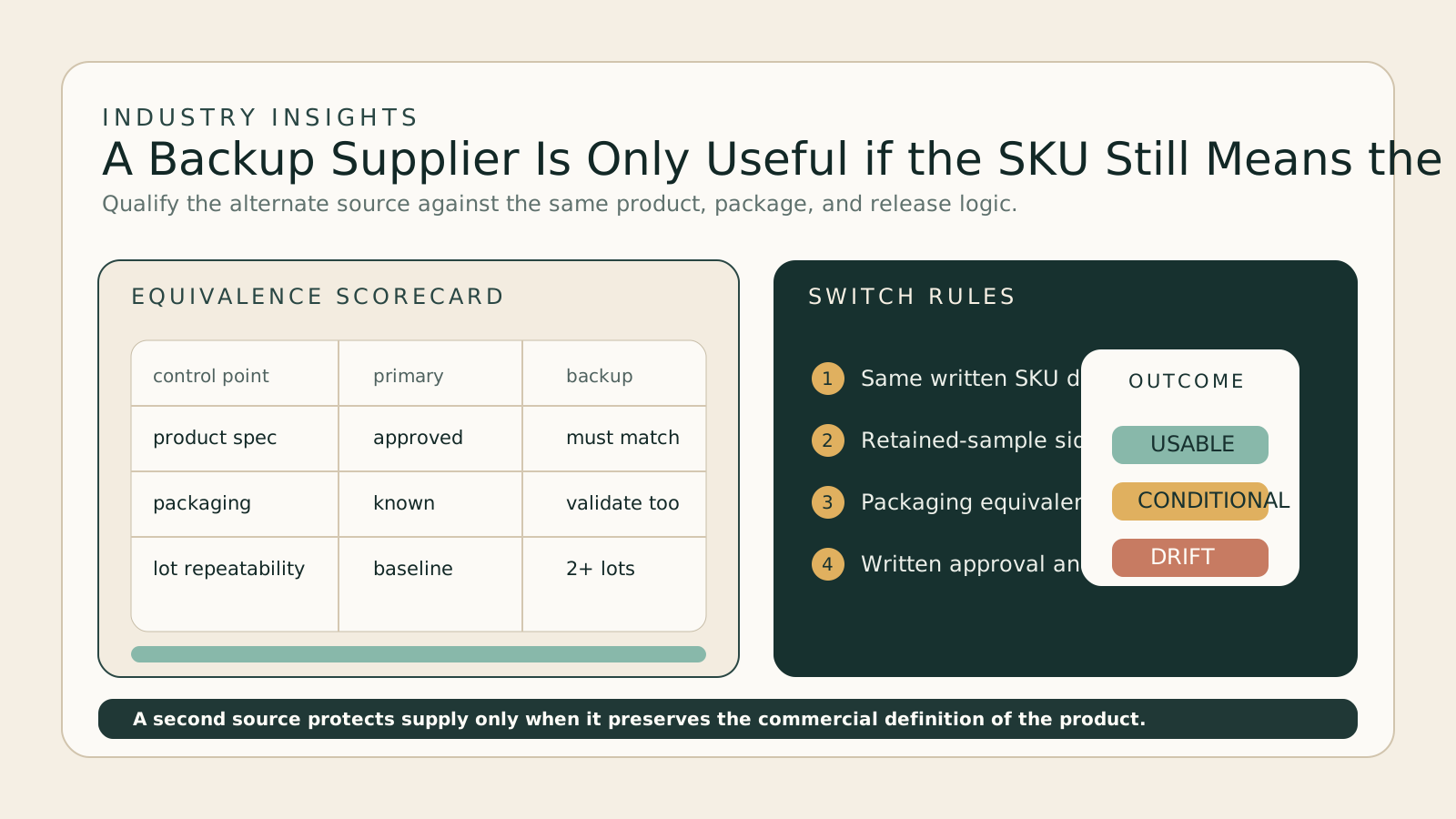
The backup needs the same scorecard
FDA's supplier-evaluation materials and FSVP framework are useful here because they reinforce a simple point: supplier approval is not just a name-collection exercise. Risk, performance, and documentation matter.
For a backup supplier, that means the evaluation scorecard should be the same one used for the primary source, not a watered-down version.
The alternate source should be reviewed for:
- technical fit
- product fit
- documentation fit
- packaging fit
- commercial reliability
If the primary supplier had to satisfy those gates, the backup should too. Otherwise the company has not built resilience. It has built a second exception.
Retained samples beat memory
One of the fastest ways spec drift enters a program is through sensory memory.
A buyer says the sample seems "close enough." Operations says the pouch looks fine. Sales says the customer will not notice. Then small differences compound:
- a little more powder
- a little weaker color
- a little more softness after opening
- a slightly different zipper feel
That is why retained approved samples matter. The better comparison is:
- current approved product
- alternate supplier lot one
- alternate supplier lot two
side by side, against a written scorecard.
More than one lot matters because one strong bag does not prove repeatability. Freeze-dried fruit varies with raw material, loading, cycle control, and post-drying handling. A backup source that looks acceptable once may still widen the SKU later.
Packaging equivalence is part of supplier equivalence
Freeze-dried fruit buyers sometimes validate the fruit and under-validate the pouch.
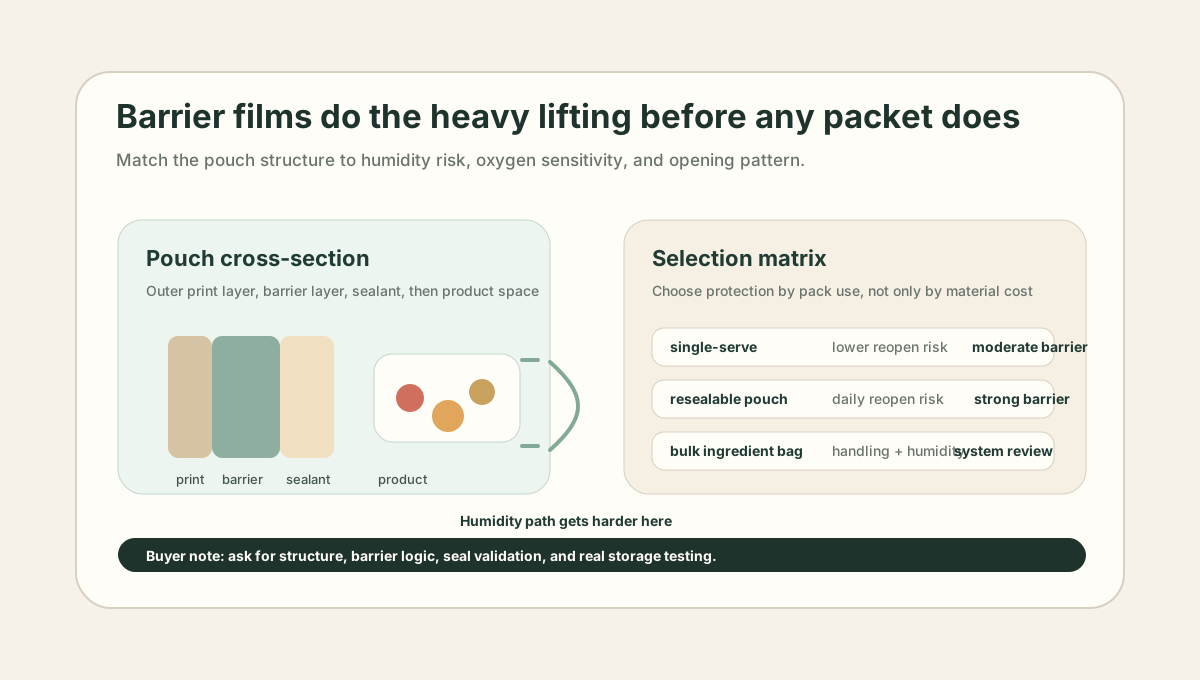
That is a mistake, because a backup source can match the fruit reasonably well while drifting at the packaging layer:
- weaker barrier structure
- different seal behavior
- looser coding
- changed case pack
- changed desiccant use
If the packout changes the way the SKU performs in the warehouse or after opening, the supplier is not truly equivalent in commercial terms.
USDA's freeze-dried fruit commercial description is helpful here because it treats product attributes and compliance checks as defined characteristics rather than vague impressions. That same mindset should extend to the package that protects the fruit.
The hidden cost of a rushed backup
Backup suppliers are often justified as a cost of risk reduction. That is sensible. But an underqualified backup can create a different category of cost:
- complaint handling
- customer confusion
- repack or relabel work
- write-offs from texture mismatch
- internal debate over whether the product is still the same SKU
Those costs rarely appear on the original quote sheet, which is why the rushed backup can look cheaper than it really is.
What good switch rules look like
A usable backup-supplier program does not stop at "approved."
It should also define:
- when the alternate source may be activated
- whether customer approval is needed first
- which release checks tighten during the switch
- which changes trigger requalification
For example, a business may allow a supply switch only if:
- the fruit format matches the written tolerance
- packaging structure is unchanged
- release paperwork matches the approved template
- recent comparison samples remain inside the defined range
That kind of rule prevents emergency sourcing from quietly rewriting the product.
What buyers should ask before calling a supplier "backup approved"
Useful questions include:
- Does the alternate source match the exact current written spec?
- Have at least two lots been reviewed, not just one?
- Is the pouch system commercially equivalent?
- Does the release package support the same lot-approval logic?
- Is there a written rule for when the source may be switched in?
If the answer to most of those questions is no, the supplier may still be promising, but it is not yet a reliable backup.
In freeze-dried fruit, the backup source often becomes the test of whether a company truly understands its own SKU. If the business cannot describe what must remain constant, it cannot qualify a substitute intelligently.
Approve the backup with switch rules, not just a name on a list
The strongest second-source programs are boring in a good way. They are documented early, maintained periodically, and activated without panic because the core equivalence work was already done.
The weakest programs are dramatic. They exist mostly in slide decks, then reappear during a shortage as justification for taking a looser product.
That difference is not about paperwork for its own sake. It is about whether the backup supplier preserves continuity or introduces a new, partially defined product under the old SKU name.
Bottom line
A backup freeze-dried fruit supplier should be qualified as a product-equivalence decision, not merely as an available factory. Match the source against the same written spec, validate more than one lot, include packaging in the comparison, and document the rules for switching.
That is how a second source protects continuity without quietly degrading what the SKU means.
Frequently Asked Questions
Why do backup supplier programs fail in freeze-dried fruit?
They often fail because the alternate source was approved only on price or one good sample, without matching the full written specification, packaging system, and release logic used for the main supplier.
What is spec drift in freeze-dried fruit buying?
Spec drift is the slow widening gap between what one SKU is supposed to be and what different suppliers actually deliver. In freeze-dried fruit that can show up in moisture, water activity, breakage, piece size, color, aroma, or pouch performance.
Does a GFSI certificate or FDA registration make a backup supplier equivalent?
No. Those are important gates, but they do not prove that the product matches your approved fruit format, your pack system, or your release tolerance.
When should a backup supplier be qualified?
Before the business is under pressure. Qualification done only after a crop problem, capacity shortage, or late shipment usually becomes a rushed substitution exercise rather than a controlled sourcing decision.
What is the practical proof that a backup source is really usable?
Comparable product from multiple lots, documented packaging equivalence, and a release routine that lets the buyer switch without rewriting the meaning of the SKU.
Primary sources & further reading
- Firm/Supplier Evaluation Resources for FSMA Rules U.S. Food & Drug Administration Referenced for FDA's explanation that supplier approval should consider compliance history, performance, and documented supplier-evaluation factors.
- FSMA Final Rule on Foreign Supplier Verification Programs (FSVP) for Importers of Food for Humans and Animals U.S. Food & Drug Administration Referenced for FDA's framework that importers must evaluate supplier risk and supplier performance, then approve suppliers accordingly.
- FRUITS, FREEZE DRIED (A-A-20365) U.S. Department of Agriculture Agricultural Marketing Service Referenced for the value of a written freeze-dried fruit product description covering characteristics, defects, and verification expectations.
- 21 CFR 117.80 - Processes and Controls Electronic Code of Federal Regulations Referenced for FDA's expectation that food manufacturing controls and conformance practices be adequate to ensure the food is manufactured under conditions that minimize risk and support consistency.
External links open in a new tab. We do not receive compensation from any organization listed; sources are referenced because they are primary, current, and publicly verifiable.