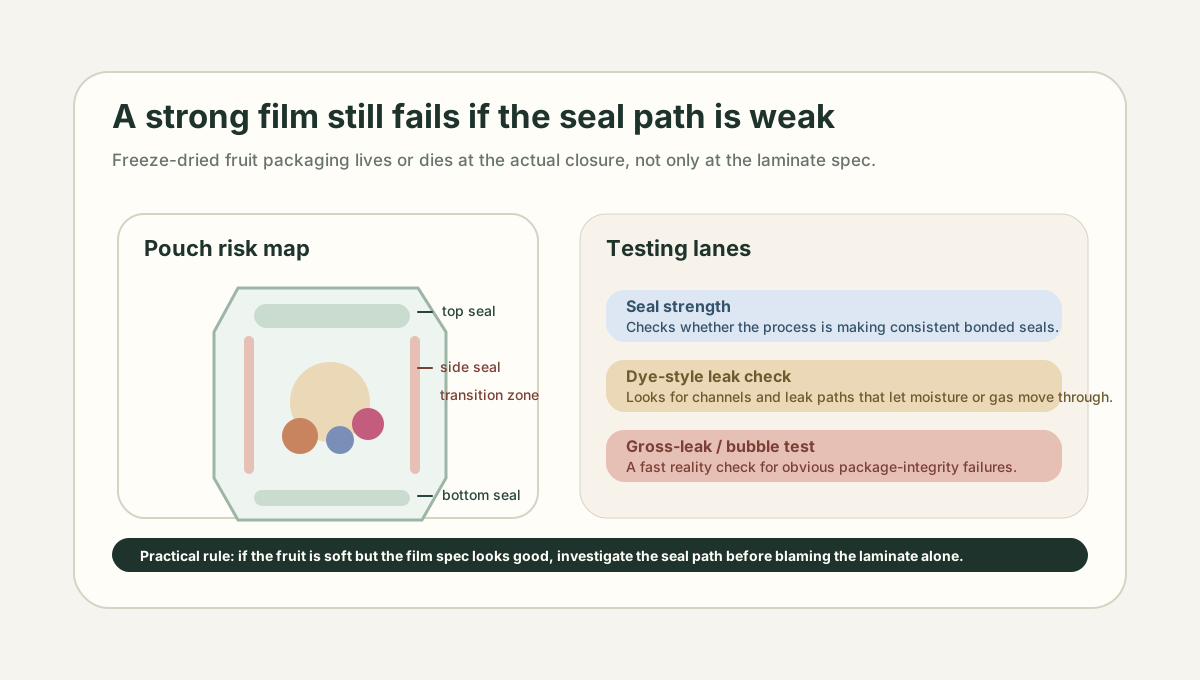
- Seal integrity is a separate control point from barrier-film selection.
- Leak paths at fin seals, top seals, corners, and zipper transitions can let humidity and oxygen reach a moisture-sensitive product quickly.
- Seal-strength, dye-penetration, and gross-leak tests answer different packaging questions and work best as a system rather than a single check.
- Buyers and co-packers should discuss seal validation before treating shelf-life complaints as only a desiccant or film problem.
A freeze-dried fruit pouch can have a respectable film spec and still fail the product if the seal area is weak. For a moisture-sensitive product, that distinction matters. When a bag goes soft earlier than expected, teams often debate water activity, desiccants, or laminate choice first. Sometimes the simpler answer is that the pouch was never closed consistently enough for the rest of the system to work.
The direct answer
Seal-integrity testing protects freeze-dried fruit pouches by checking whether the actual sealed package is strong enough and tight enough to keep ambient humidity and oxygen out. It matters because freeze-dried fruit loses texture through tiny, practical failures: powder in the seal area, weak corners, bad zipper transitions, or inconsistent heat-seal setup.
Barrier film is the wall. Seal integrity is whether the wall has holes.
Why the seal deserves its own conversation
Flexible-pack discussions often collapse into material shorthand: clear, metallized, foil, high barrier, premium pouch. Those choices matter, but they only describe the laminate. They do not prove that the top seal, bottom seal, fin seal, gusset transitions, or zipper path are performing consistently on the production line.
For freeze-dried fruit, that gap is especially important because the product is:
- dry enough to show texture loss quickly
- porous enough to pick up moisture fast
- fragile enough to generate fines and dust in the sealing zone
- often sold in resealable formats where geometry is more demanding than a plain pillow pouch
That combination means a small seal defect can become a texture complaint long before it becomes a visibly burst package.
What seal-integrity testing is actually trying to catch
The practical goal is not to prove that every bag is perfect in an abstract sense. It is to detect the defects that matter to a real packaged food:
- weak seals that peel too easily
- channels created by trapped powder or poor heat transfer
- pinholes or damaged substrate near the seal
- corner or zipper-transition failures
- lot-to-lot inconsistency after setup changes, material changes, or shift changes
For freeze-dried fruit, the commercial consequence is usually not immediate food spoilage drama. It is loss of crunch, faster aroma fade, and rising variability from one bag to the next.
The main test families answer different questions
Seal-integrity programs work better when teams stop treating one test as universal.
Seal-strength testing
Seal-strength testing answers whether the package-making process is producing a reasonably consistent bonded seal. ASTM F88/F88M frames seal strength as a quantitative tool for process validation, process control, and capability. That is useful for freeze-dried fruit because pouch performance is often less about one catastrophic miss and more about quiet drift.
If the average seal gets weaker after a material change, a jaw-temperature adjustment, or a faster line speed, that is packaging process information buyers should want before the shelf-life complaints arrive.
Dye-based leak detection
Dye-style leak testing is useful when the question is not only "Is the seal strong?" but also "Is there a leak path?" ASTM F3039 is designed around leak detection in nonporous packaging and flexible barrier materials. That makes it relevant to many snack-style pouches used for freeze-dried fruit.
This type of test is valuable because a seal can be present yet still have a channel. For a humidity-sensitive product, a tiny path matters more than a bag that merely looks neat.
Gross-leak testing
Gross-leak tests such as internal-pressurization bubble methods are blunt by design, but they are still useful. ASTM F2096 describes them as a practical way to examine packages for gross leaks. For pouch programs, that matters as a fast reality check when a team wants to know whether a bag is obviously failing package integrity.
Gross-leak tests do not replace more specific validation. They help reveal the failures that should never make it into distribution in the first place.
Where freeze-dried fruit programs usually get exposed
Seal problems often show up in predictable places:
- powder or small fragments trapped in the top seal
- resealable zipper transitions that are harder to seal than the flat center area
- aggressive fill weights that stress corners
- narrow process windows when the fruit format changes from pieces to crumble or powder
- film changes that alter seal behavior even when the nominal barrier story still sounds premium
This is why "same pouch, different SKU" is not always operationally the same pouch. A berry powder bag and a whole-piece mango pouch can behave very differently at the sealer.
What buyers and co-packers should ask
Useful packaging questions sound more like quality-system questions than design questions:
- Which seal areas are validated, and how often?
- Is seal strength trended over time or checked only at setup?
- How are leak paths checked on finished pouches?
- Do reject criteria change when the product format changes?
- How is powder in the seal area controlled?
- What happens if a zipper format is added to a previously non-zippered pouch?
The best suppliers can connect seal validation to the actual failure mode they are trying to prevent: soft fruit, faded aroma, or variable shelf performance.
If the conversation stays at laminate specs and never reaches seal validation, the packaging review is incomplete. For freeze-dried fruit, the seal is part of the moisture-control system, not just the way the bag gets closed.
Bottom line
Seal-integrity testing protects freeze-dried fruit pouches because the pouch must be truly closed, not just made from good material. Seal strength, leak detection, and gross-leak checks each answer different questions, and the most reliable programs use them to catch different failure modes.
For freeze-dried fruit, the point is simple: a high-barrier film cannot preserve crunch through a weak seal.
Frequently Asked Questions
What is seal-integrity testing for freeze-dried fruit pouches?
It is the set of tests used to confirm that the sealed areas of a pouch are strong and free of leak paths. For freeze-dried fruit, that matters because the product is highly sensitive to humidity pickup and can soften long before a pouch looks obviously damaged.
Is seal integrity the same thing as barrier-film quality?
No. Barrier film describes how well the pouch material resists water vapor and oxygen transmission. Seal integrity describes whether the pouch is actually closed consistently enough for that barrier to matter in use.
What tests are commonly used on flexible pouches?
Programs often combine seal-strength testing, leak-detection methods such as dye penetration for nonporous materials, and gross-leak checks such as bubble-style internal pressurization. Each test catches a different failure mode.
Can a zipper or powder in the seal area cause problems even if the film is good?
Yes. Weak zipper geometry, misalignment, or fruit dust trapped in the seal zone can create a path for air and moisture even when the base laminate has strong nominal barrier performance.
What should buyers ask suppliers about pouch validation?
Ask how seal strength is measured, how leak testing is performed, what the reject criteria are, whether testing covers zipper transitions and corners, and how the program changes when piece size, powder load, or pouch format changes.
Primary sources & further reading
- F88/F88M Standard Test Method for Seal Strength of Flexible Barrier Materials ASTM International Referenced for seal strength as a quantitative packaging-process control and validation measure.
- F3039 Standard Test Method for Detecting Leaks in Nonporous Packaging or Flexible Barrier Materials by Dye Penetration ASTM International Referenced for dye-based leak detection and the role of leaks in allowing contaminant or moisture ingress.
- F2096 Standard Test Method for Detecting Gross Leaks in Packaging by Internal Pressurization (Bubble Test) ASTM International Referenced for gross-leak detection on pouch-style packaging and for practical package-integrity checks.
External links open in a new tab. We do not receive compensation from any organization listed; sources are referenced because they are primary, current, and publicly verifiable.