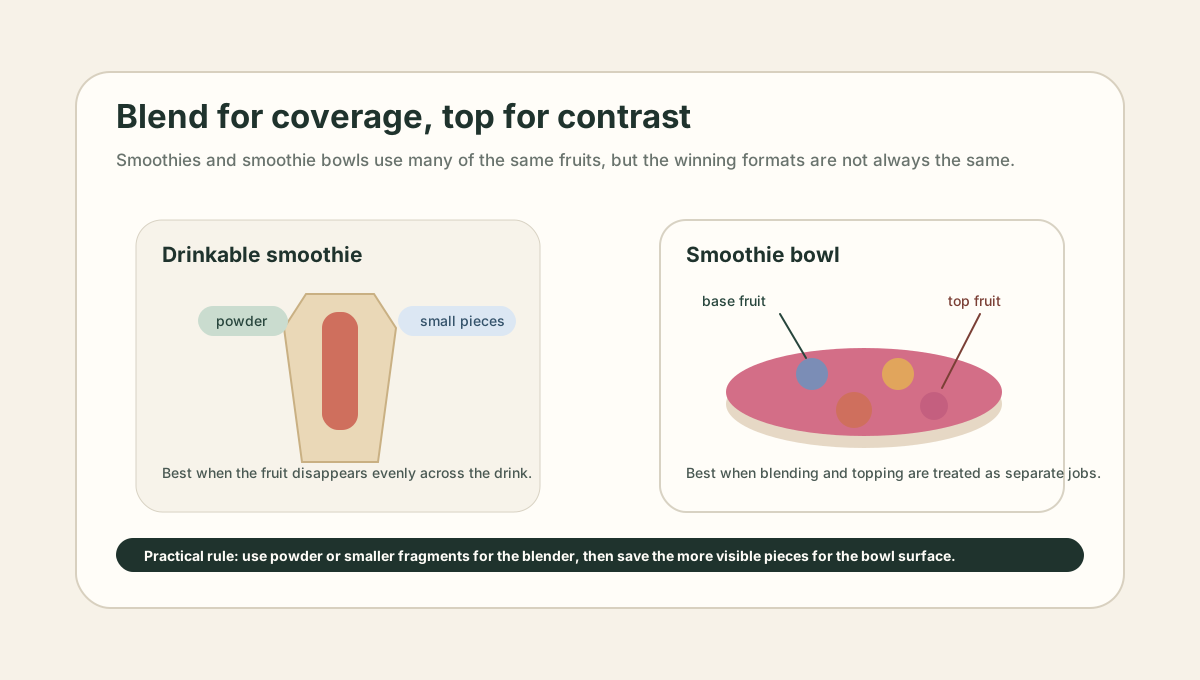
- For drinkable smoothies, powders and small broken pieces usually blend more predictably than large whole pieces.
- Strawberry, blueberry, banana, mango, and raspberry each solve a different smoothie problem: familiarity, color, sweetness, body, or tartness.
- Smoothie bowls often work best when blended fruit and topping fruit are treated as separate jobs.
- The smartest buying choice is to match the fruit format to whether you want full-bowl flavor coverage, bright color, or visible crunchy topping pieces.
A drinkable smoothie and a smoothie bowl may sit in the same breakfast category, but they do not ask the same thing from freeze-dried fruit. One wants even distribution through the whole drink. The other often wants a visible top layer, a stronger color story, or a small crunch window before the fruit softens.
That is why the best freeze-dried fruit depends as much on format as on fruit name.
The direct answer
For most drinkable smoothies, strawberry, banana, blueberry, mango, and raspberry are the most useful freeze-dried fruits because they each solve a common smoothie need: familiar berry flavor, sweetness, body, darker color, or tart lift. For smoothie bowls, the strongest results usually come from splitting the job: blend one fruit into the base, then use another fruit as a topping for color or texture.
The key decision is whether the fruit's job is to disappear evenly or to stay visible on purpose.
What makes freeze-dried fruit useful in smoothies
Freeze-dried fruit does three things especially well in smoothie formats:
- adds concentrated fruit flavor without bringing more liquid
- gives a cleaner pantry-stable format than fresh fruit at the moment of use
- lets you separate color work, sweetness work, and topping work more precisely
What it does not automatically do is blend perfectly in every form. Large whole pieces can take longer to break down, while powder and smaller crumble move through the blender more cleanly.
The best fruits for drinkable smoothies
Strawberry: the safest all-around choice
Strawberry is the easiest entry point because the flavor is familiar and clear. It works with yogurt smoothies, milk-based smoothies, and simple berry blends. Powder or small slices usually perform better than large decorative pieces when the goal is a fully drinkable texture.
Best for:
- classic berry smoothies
- family-friendly flavor
- blends where the fruit should read immediately
Banana: sweetness and body
Banana is less about dramatic color and more about body, sweetness, and familiarity. Freeze-dried banana helps a smoothie feel fuller even when the rest of the formula is tart or high-acid.
Best for:
- softening sharper berry blends
- breakfast-style smoothies
- blends that need sweetness without a tropical identity taking over
Blueberry: darker berry depth
Blueberry is useful when you want a berry smoothie to feel darker, less candy-like, and more concentrated. It often reads cleaner in powder or smaller-fragment form than in larger whole-berry formats for drinkable applications.
Best for:
- darker berry profiles
- yogurt-based smoothies
- blends that already include strawberry and need more depth
Mango: tropical sweetness
Mango is the easiest tropical freeze-dried smoothie fruit for most people. It works well when the smoothie should read sweet and soft rather than sharp and tart.
Best for:
- tropical smoothies
- coconut or vanilla bases
- softer flavor profiles that do not need aggressive acidity
Raspberry: tart lift
Raspberry is the useful contrast fruit. It brings concentrated tartness and color quickly, but it can also dominate if used as the main fruit in a very small formula.
Best for:
- brightening sweeter blends
- color-forward berry smoothies
- smaller accent usage where a little fruit should do a lot of work
Smoothie bowls need two fruit decisions, not one
A smoothie bowl usually works better when you stop treating it like a drink in a wider container.
There are often two separate fruit jobs:
- base fruit, blended into the bowl for sweetness, color, or flavor
- top fruit, used for visible identity and a short crunch window
That changes the best-use logic.
Strong base fruits
For a bowl base, mango, banana, strawberry, and blueberry are usually the most dependable because they create broad flavor coverage and a predictable color story.
Strong topping fruits
For the top of the bowl, strawberry pieces, blueberry pieces, raspberry crumble, and visually strong powders such as magenta dragon fruit can do more design work. They create contrast instead of disappearing.
The same fruit can fill both jobs, but it does not have to.
Powder versus pieces
This is often the real buying decision.
Choose powder when you want:
- even flavor through the whole smoothie
- fast blending
- stronger color dispersion
- less concern about visible fruit identity
Choose pieces when you want:
- topping visibility on a smoothie bowl
- distinct fruit bites
- a more premium-looking surface
- flexibility to use the same bag for both snacking and bowls
For many households and cafes, the most practical setup is one powder for blending and one piece-format fruit for topping.
Simple matching rules
Use these shortcuts:
- For classic berry smoothies: strawberry + blueberry
- For sweet breakfast smoothies: banana + strawberry
- For tropical bowls: mango in the base, strawberry or raspberry on top
- For vivid color: berry powder or magenta dragon-fruit powder in the base
- For tart contrast: raspberry as the accent rather than the whole formula
Those pairings are usually more useful than asking for one universally best fruit.
What to check when buying
When choosing freeze-dried fruit for smoothies, check:
- whether the bag is powder, crumble, slices, or whole pieces
- how much bottom-of-bag dust is acceptable for your use
- whether you need the fruit to blend or to stay visible
- whether the ingredient list is plain fruit or a more formulated product
A topping bag and a blending bag can be different products on purpose. That is not a compromise. It is often the smarter setup.
Bottom line
The best freeze-dried fruit for smoothies depends on the job. Strawberry and banana are the easiest all-around base choices. Blueberry adds darker berry depth. Mango handles tropical sweetness. Raspberry brings tart lift and color.
For smoothie bowls, the best results usually come from separating base fruit from topping fruit. Blend one for coverage, then top with another for contrast.
Frequently Asked Questions
What is the best freeze-dried fruit for smoothies?
For most smoothies, strawberry and banana are the easiest all-around starting points because they blend into familiar flavor profiles quickly. Blueberry works well when you want darker berry flavor, mango for sweeter tropical smoothies, and raspberry when you want sharper tartness.
Is powder or pieces better for smoothies?
Powder is usually easier for fully blended smoothies because it disperses quickly and gives full-drink flavor coverage. Pieces are more useful when you want topping identity on a smoothie bowl or when the blender is strong enough to handle larger fruit fragments cleanly.
Are smoothie bowls different from drinkable smoothies?
Yes. A drinkable smoothie rewards fast dispersion and even flavor. A smoothie bowl often needs two layers of fruit logic: one fruit blended into the base and another used on top for visible color, crunch, or larger bites.
Which freeze-dried fruit is best for color?
Raspberry, blueberry, strawberry, and magenta dragon-fruit powder are the strongest choices when visual color matters. Mango and banana help sweetness and body more than dramatic bowl color.
When should freeze-dried fruit be added?
For drinkable smoothies, add the fruit during blending. For smoothie bowls, blend the base fruit first, then add topping pieces just before eating if you want visible contrast and any remaining crunch.