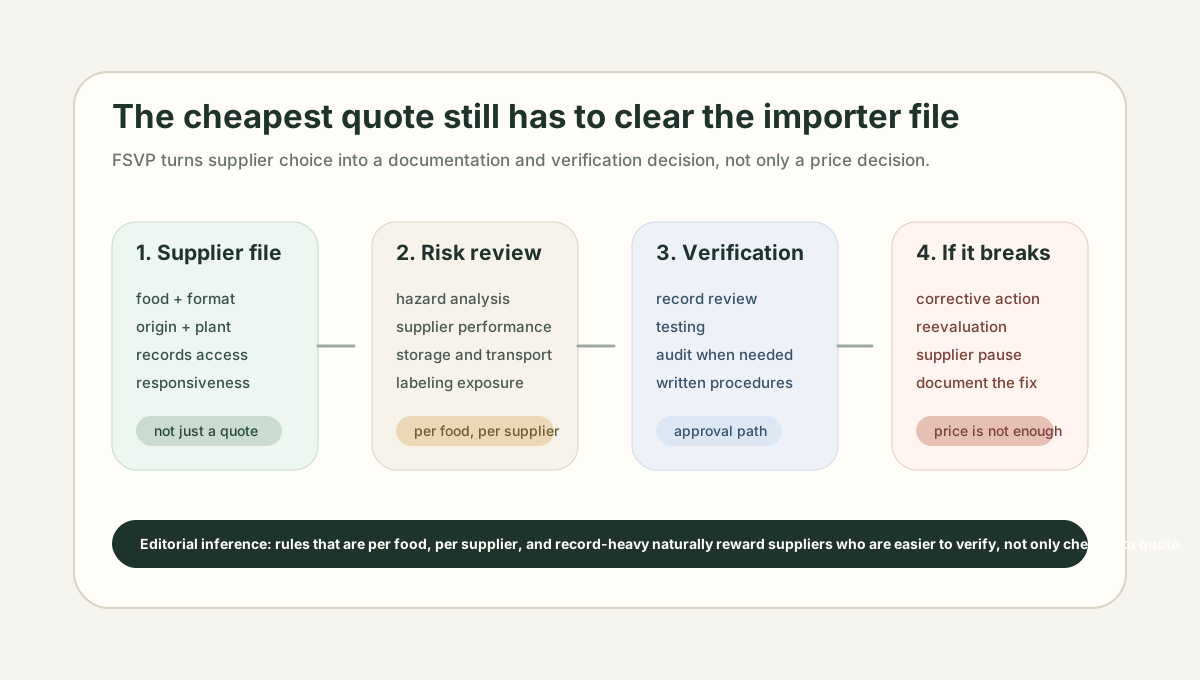
- FSVP places risk-based verification duties on the U.S. importer, not only on the foreign supplier.
- The program is built per food and per foreign supplier, which makes casual multi-origin switching harder than many first-time importers expect.
- Supplier approval under FSVP can involve audits, testing, record review, and corrective-action decisions depending on the food risk and supplier performance.
- In practice, U.S. buyers tend to value cleaner documentation, faster responsiveness, and easier record access more than a slightly lower unit price.
For U.S. buyers importing freeze-dried fruit, FSVP is not clerical background noise. It changes who has to prove what, how quickly a new supplier can be approved, and how much friction sits behind a seemingly simple origin switch.
That matters because freeze-dried fruit buying often looks flexible from a commercial distance. One season you are quoting Chile, the next Peru, Poland, China, or Turkey. On paper, that can look like normal sourcing optionality. Under FSVP, it becomes a documentation and verification problem that has to be solved deliberately.
The direct answer
FSVP changes freeze-dried fruit import buying by making the U.S. importer responsible for a documented, risk-based supplier-verification program for each food and each foreign supplier. In practice, that means supplier choice is not only about price, yield, or lead time. It is also about how cleanly the importer can evaluate hazards, review supplier performance, document verification activities, and take corrective action if something goes wrong.
The lower the paperwork confidence, the less useful the cheap quote becomes.
Why this matters for freeze-dried fruit specifically
Freeze-dried fruit is often bought across borders in multiple forms:
- whole snack pieces
- diced or sliced retail fruit
- crumble or powder for ingredients
- private-label finished goods
- bulk industrial packs for further packing in the U.S.
Those forms may look commercially related, but FDA frames FSVP around each food and each foreign supplier. That creates more administrative friction than buyers sometimes expect when they try to treat a new origin as a quick backup.
FSVP is an importer duty, not only a supplier promise
The first practical shift is ownership. A foreign supplier may provide strong technical files, certifications, and testing. That helps, but FDA places the FSVP obligation on the importer. The importer has to evaluate known or reasonably foreseeable hazards, assess supplier performance, determine appropriate verification activities, and maintain records.
That changes the buying conversation in two ways:
- suppliers who document cleanly become easier to buy from
- buyers who depend on informal assurances create work for themselves later
For commercial teams, this is where compliance starts influencing supplier preference even before quality or price differences become dramatic.
One backup supplier is not just one more name in a spreadsheet
FDA states that the importer must develop, maintain, and follow an FSVP for each food and each foreign supplier. That has a practical implication: backup supply is real only when the file is real.
If a buyer says there is a secondary strawberry supplier ready to go, useful follow-up questions are:
- Has that supplier already been evaluated?
- Is the hazard analysis complete for that product form?
- Are the verification activities defined?
- Are the needed records actually available and reviewable?
If the answer is no, then the backup is commercial theory, not operational readiness.
Verification activity changes how easy a supplier is to use
FDA allows different verification approaches depending on the food risk and supplier performance. Those can include:
- on-site audits
- sampling and testing
- review of relevant food-safety records
That flexibility is useful, but it also means the importer has to justify the approach. For some buyers, this pushes sourcing toward suppliers who already have organized record systems, responsive QA teams, and a track record of answering follow-up questions quickly.
That is the operational reason documentation quality can outweigh a modest unit-price advantage.
Why supplier responsiveness becomes a commercial variable
FSVP is not only about setting up the file once. FDA says importer evaluations must be revisited at least every three years or sooner when new information appears about a hazard or a supplier's performance.
That makes responsiveness part of supplier quality. If a supplier is slow to produce updated records, unclear about preventive controls, or casual about corrective-action follow-through, the issue is no longer only annoying. It can interrupt the importer's ability to defend continued approval.
This is one reason mature buyers often narrow to fewer, better-documented suppliers even when more origin options exist in the market.
What this changes in day-to-day buying
For freeze-dried fruit teams, FSVP tends to reshape the workflow in practical ways:
- new suppliers take longer to onboard than the sales conversation suggests
- alternate origins need documentation before they are urgently needed
- QA and regulatory teams get pulled into sourcing earlier
- "same fruit, different supplier" is not an automatic substitution
- emergency spot buying becomes less attractive if the records are weak
That last point matters. In fast-moving markets, a buyer may still decide to switch. FSVP does not forbid switching. It does make undocumented switching harder to defend.
Questions buyers should settle before the PO
Before treating an imported freeze-dried fruit supplier as truly approved, the buyer should know:
- who the FSVP importer is for the transaction
- which exact food and format the approval covers
- what hazard analysis supports the approval
- which verification activities are being relied on
- how supplier records will be accessed and updated
- what would trigger corrective action or supplier suspension
Those questions are not legal decoration. They change whether the source is usable under pressure.
FDA's rule defines the compliance framework. The article's sourcing implications are an editorial inference from those requirements: the more documentation, review, and reevaluation a supplier demands, the more buyers will naturally favor suppliers that are easier to verify and defend.
Bottom line
FSVP changes freeze-dried fruit import buying by moving supplier approval beyond quote comparison. The U.S. importer has to document hazard review, supplier evaluation, verification activity, and corrective action in a way that stands up over time.
For buyers, that means the best import supplier is not only the one with the sharpest price. It is the one whose records, responsiveness, and risk profile make the purchase workable.
Frequently Asked Questions
What is FSVP in freeze-dried fruit importing?
FSVP stands for Foreign Supplier Verification Programs. For food imported into the United States, FDA requires the FSVP importer to verify that the foreign supplier is producing the food in a way that meets applicable U.S. safety standards and that the food is not adulterated or misbranded with respect to allergen labeling.
Who counts as the importer for FSVP purposes?
FDA says the FSVP importer is the U.S. owner or consignee of the food offered for import into the United States. If there is no U.S. owner or consignee at the time of entry, a U.S. agent or representative may fill that role under the rule.
Is one FSVP file enough for every freeze-dried fruit supplier?
No. FDA states that the importer must develop, maintain, and follow an FSVP for each food and each foreign supplier. That means strawberry from one supplier and mango from another are not automatically covered by the same approval file.
Does a supplier certificate alone satisfy FSVP?
Not by itself. Certificates can be part of the supplier-performance picture, but the importer still has to evaluate hazards, supplier performance, and the appropriate verification activities for that food and supplier combination.
Does FSVP always require an annual on-site audit?
Not always. FDA allows different verification activities based on risk. Annual on-site audits are generally expected when there is a serious hazard controlled by the foreign supplier, but other combinations may rely on testing, record review, or other documented verification activities.
Primary sources & further reading
- FSMA Final Rule on Foreign Supplier Verification Programs (FSVP) for Importers of Food for Humans and Animals U.S. Food & Drug Administration Primary FDA rule page for importer responsibilities, hazard analysis, supplier evaluation, verification activities, corrective actions, and compliance status.
- FDA Issues the Foreign Supplier Verification Programs for Importers of Food for Humans and Animals Final Guidance U.S. Food & Drug Administration FDA announcement summarizing the January 10, 2023 final guidance and its clarification of scope, required information, and who performs FSVP activities.
- Importing Human Foods U.S. Food & Drug Administration FDA import overview emphasizing importer accountability for foods entering the U.S. market.
External links open in a new tab. We do not receive compensation from any organization listed; sources are referenced because they are primary, current, and publicly verifiable.