- Soursop is part of the wider Annona fruit world, alongside cherimoya, sugar apple, atemoya, custard apple, and related fruits.
- Commercial soursop is often discussed by origin, pulp quality, seed content, and acidity rather than named consumer cultivars.
- The fruit is usually a pulp and seed-management challenge before it becomes a drying challenge.
- Freeze-dried soursop can be exciting in powders, pieces, and tropical blends when acidity and aroma are preserved.
Soursop is often described by comparison because it refuses to sit neatly in one flavor box: pineapple, strawberry, citrus, banana, custard, and something green all show up at once.
So how many types of soursops are there? The useful answer depends on how you count: by cultivar, by species, by regional market name, by commercial grade, or by processing behavior. For consumers, the question is usually about flavor. For buyers and processors, the question is about repeatability.
This guide treats soursop variety as a practical map: what names matter, what differences change the eating experience, and what those differences mean for freeze-dried fruit, powders, toppings, and ingredient sourcing.
Quick answer: how many soursop varieties are there?
There is no single clean number that works across every country and market. A better way to think about it is by commercial layers.
| Layer | What it means |
|---|---|
| Market names | Soursop, guanabana, graviola in some wellness contexts |
| Related fruits | Cherimoya, sugar apple, atemoya, custard apple, pond apple relatives |
| Key differences | Acidity, pulp fiber, seed load, aroma, creaminess, and fruit size |
| Freeze-dried relevance | High for tropical powders, sour-creamy blends, and specialty snack pieces |
The most important point is that variety is not trivia. It changes flavor, texture, cost, yield, and how confidently a brand can describe what is inside the package.
Why soursop variety is complicated
Soursop variety is hard to discuss because global retail rarely uses cultivar names. Instead, markets talk about origin, pulp, fruit size, seed load, and whether the fruit is headed to juice, puree, frozen pulp, or fresh eating. Add related Annona fruits and the conversation gets even blurrier.
That is why variety guides can be more useful than simple lists. A list may tell you names. A good sourcing guide tells you which differences actually change the product.
Types and market groups to know
Soursop or guanabana
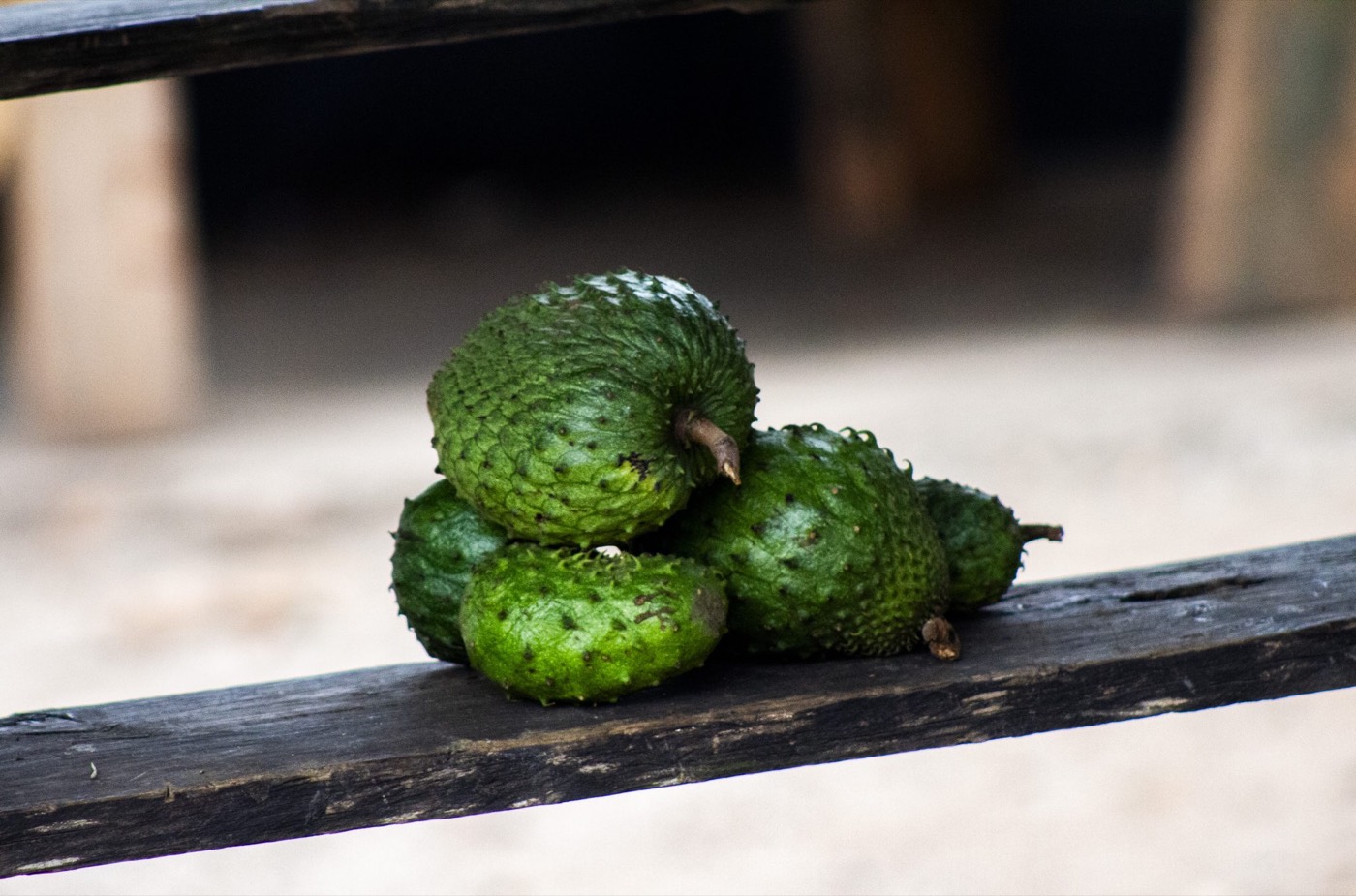
The main fruit in this guide: large, green, spiny, creamy, acidic, and aromatic. It is commonly processed into pulp, juice, desserts, and frozen products.
Cherimoya
A related fruit with a smoother, custard-like reputation. It is often sweeter and less sharply acidic than soursop.
Sugar apple and sweetsop
Segmented, sweet, and aromatic, with a different seed and flesh structure. It is not a direct substitute for soursop.
Atemoya
A hybrid between cherimoya and sugar apple, often bred for improved eating quality and commercial handling.
What this means for freeze-dried fruit
Freeze-dried soursop depends on pulp management. Whole-piece fantasy often collides with seed removal and fibrous texture. Powders, clusters, puree-derived pieces, or small irregular pieces may be more honest and more useful than trying to force perfect cubes.
For freeze-dried fruit, variety affects more than flavor. It can change cut yield, drying time, breakage, color stability, aroma retention, and whether the final product feels like a premium snack or a generic ingredient.
A practical buyer should evaluate:
- raw fruit identity and origin
- ripeness at processing
- seed, pit, peel, or membrane management
- piece format and size tolerance
- sweetness and acidity range
- color after drying
- breakage and powder percentage
- whether the product will be eaten directly or used as an ingredient
Why labels often hide the variety
A label should be clear about soursop versus related Annona fruits. Buyers should ask pulp percentage, seed removal, fiber level, Brix-acid balance, origin, and whether the raw material starts as fresh pulp, frozen pulp, or puree.
There is also a commercial reason for broad labels: flexibility. A brand that prints a specific variety name has to keep that promise across seasons. A brand that prints only the fruit name can adjust sourcing more easily. Neither choice is automatically wrong, but the level of detail should match the price and positioning.
Ask what the fruit really is, where it comes from, whether the lot is single-origin or blended, how the edible portion is prepared, and which quality traits are guaranteed in writing. Variety only helps if it survives into the finished product.
How soursop compares
A quick reference for how soursop sits alongside the freeze-drying personalities of its closest siblings.
| Fruit | Brix | Fiber | Aroma | Color stability | Breakage risk | Typical format |
|---|---|---|---|---|---|---|
| Soursopthis report | 10–18° | Medium | Strong | Moderate | Medium | Pieces · powder |
| Lychee | 16–20° | Low | Strong | Poor | Medium | Halves · whole · pieces |
| Longan | 15–22° | Low | Moderate | Poor | Medium | Halves · whole |
| Rambutan | 16–21° | Medium | Moderate | Poor | Medium | Halves · pieces |
| Mangosteen | 15–20° | Low | Strong | Moderate | Medium | Segments · powder |
| Durian | 20–28° | Medium | Very strong | Moderate | Low | Pieces · powder |
| Jackfruit | 15–24° | Medium | Strong | Moderate | Medium | Pieces · slices · powder |
| Jujube | 18–28° | Medium | Moderate | Strong | Low | Halves · slices · powder |
| Sapodilla | 14–22° | Medium | Moderate | Moderate | Medium | Pieces · powder |
| Starfruit | 5–11° | Medium | Mild | Moderate | Medium | Slices · powder |
Values are typical industry ranges. Variety, origin, harvest window, and process all shift them.
Conclusion
Soursop is not just another tropical fruit. It is a texture project, an aroma project, and a naming project. That complexity is exactly what makes it interesting.
For consumers, variety explains why two products with the same fruit name can taste surprisingly different. For the freeze-dried fruit industry, it explains something even more important: a fruit name is not a finished specification. It is the start of one.
Frequently Asked Questions
How many types of soursops are there?
Commercial soursop is usually discussed by origin, pulp quality, seed content, and acidity rather than named consumer cultivars. The fruit also sits in a wider Annona family that includes cherimoya, sugar apple, atemoya, custard apple, and pond apple — related but distinct fruits often grouped together at the species level rather than the cultivar level.
Is soursop the same as guanábana or graviola?
Yes — all three names refer to Annona muricata. Guanábana is the Spanish-language commercial name dominant in Latin American supply. Graviola is the Portuguese name and the term most commonly used in wellness-product positioning. Soursop is the standard English horticultural name. Same fruit, three marketing contexts.
What's the difference between soursop and cherimoya?
Both are Annona fruits but distinct species. Soursop (Annona muricata) is larger, greener, spinier, with creamy acidic flesh and a tart-tropical profile. Cherimoya (Annona cherimola) is smaller, smoother-skinned, with a custard-like sweeter character — sometimes called custard apple in some markets. They are not direct substitutes.
What is atemoya?
Atemoya is a hybrid of cherimoya and sugar apple (sweetsop), bred for improved eating quality and commercial handling. It carries some of the sweetness and aroma of both parents while being more durable in the supply chain. Atemoya is more commercially viable for export than pure cherimoya or sugar apple in many markets.
Which soursop variety freeze-dries best?
Variety matters less than pulp management. Whole-piece fantasy often collides with seed removal and fibrous texture. Powders, clusters, puree-derived pieces, or small irregular pieces are usually more honest and useful than trying to force perfect cubes. Buyers should ask pulp percentage, seed removal, fiber level, Brix-acid balance, and whether the raw material starts as fresh pulp, frozen pulp, or puree.
Why are soursop seeds a safety concern?
Soursop seeds contain compounds (annonacin and related alkaloids) that should not be consumed. Premium freeze-dried soursop has complete seed removal documented in writing. Even small seed fragments are a concern — buyers should confirm seed-removal practice and not assume it from a verbal commitment, particularly given soursop's wellness-product positioning.
What should buyers ask freeze-dried soursop suppliers?
Ask species (soursop vs cherimoya vs sugar apple vs atemoya), naming preference (soursop, guanábana, graviola), raw material state, seed-removal completeness in writing, fiber control practice, origin, pulp percentage, added sugar or carrier, target moisture or water activity, and the intended product positioning (tropical blend, dairy-style, dessert, or wellness/supplement context).