- Longan varieties are usually discussed through origin and cultivar names in producing regions, not through broad Western retail labels.
- Fresh longan, dried longan, canned longan, and freeze-dried longan are different eating experiences and should not be treated as one format.
- Key differences include fruit size, flesh thickness, seed size, sweetness, floral aroma, and harvest timing.
- For freeze-dried longan, peeled flesh quality and seed removal matter more than dramatic visual variety.
Longan is often introduced as lychee’s quieter cousin, but that undersells it. Its variety story is warmer, more tea-like, and deeply connected to Asian fruit markets.
So how many types of longans are there? The useful answer depends on how you count: by cultivar, by species, by regional market name, by commercial grade, or by processing behavior. For consumers, the question is usually about flavor. For buyers and processors, the question is about repeatability.
This guide treats longan variety as a practical map: what names matter, what differences change the eating experience, and what those differences mean for freeze-dried fruit, powders, toppings, and ingredient sourcing.
Quick answer: how many longan varieties are there?
There is no single clean number that works across every country and market. A better way to think about it is by commercial layers.
| Layer | What it means |
|---|---|
| Main commercial idea | Fresh longan varieties grown across China, Thailand, Vietnam, Taiwan, and nearby regions |
| Useful differences | Flesh thickness, sugar, seed size, peel color, aroma, and storage life |
| Common confusion | Traditional dried longan is not the same as freeze-dried longan |
| Freeze-dried relevance | Good for tea, desserts, premium Asian snack mixes, and light tropical blends |
The most important point is that variety is not trivia. It changes flavor, texture, cost, yield, and how confidently a brand can describe what is inside the package.
Why longan variety is complicated
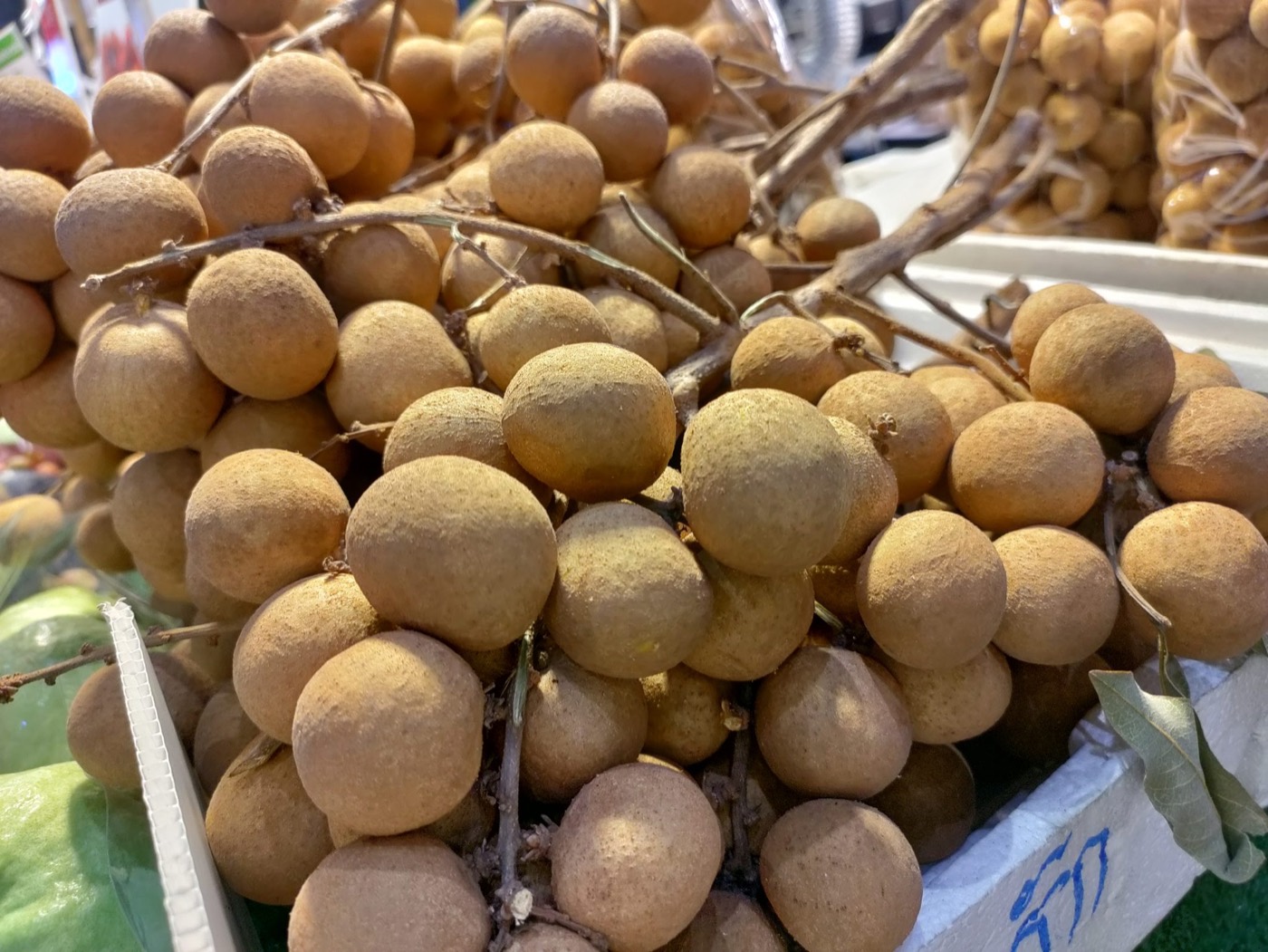
Longan variety is hard to see from a distance because the fruit is usually sold in clusters of small brown spheres. Unlike apples or mangoes, where color and shape advertise difference, longan keeps its variety story under the peel. The practical differences appear when the fruit is peeled: flesh thickness, translucency, seed size, and aroma.
That is why variety guides can be more useful than simple lists. A list may tell you names. A good sourcing guide tells you which differences actually change the product.
Types and market groups to know
Thai commercial longans
Often associated with strong export infrastructure and recognizable seasonal supply. Buyers may see origin more clearly than cultivar name.
Chinese longan selections
Important across fresh fruit and traditional dried longan markets, with regional naming and quality grades that may not translate cleanly into export labels.
Vietnamese and Taiwanese longans
Can be meaningful in regional trade and specialty sourcing, especially where fresh eating quality and local season matter.
Dried longan market types
Traditional dried longan has a dark, warm, honeyed character. Freeze-dried longan should be positioned separately because it preserves a lighter fruit identity.
What this means for freeze-dried fruit
For freeze-dried longan, the best raw material has thick flesh, clean sweetness, and a floral note that survives drying. Thin flesh around a large seed gives poor yield. Overripe or weak fruit becomes sweet but anonymous. Whole peeled pieces can look premium, but fragments and halves may be more realistic for cost control.
For freeze-dried fruit, variety affects more than flavor. It can change cut yield, drying time, breakage, color stability, aroma retention, and whether the final product feels like a premium snack or a generic ingredient.
A practical buyer should evaluate:
- raw fruit identity and origin
- ripeness at processing
- seed, pit, peel, or membrane management
- piece format and size tolerance
- sweetness and acidity range
- color after drying
- breakage and powder percentage
- whether the product will be eaten directly or used as an ingredient
Why labels often hide the variety
Most Western labels say longan because cultivar names are not widely recognized by consumers. For ingredient work, ask for origin, peeled yield, seed-removal method, Brix range, sulfur or additive status, and whether the flavor target is fresh-light or dried-longan-warm.
There is also a commercial reason for broad labels: flexibility. A brand that prints a specific variety name has to keep that promise across seasons. A brand that prints only the fruit name can adjust sourcing more easily. Neither choice is automatically wrong, but the level of detail should match the price and positioning.
Ask what the fruit really is, where it comes from, whether the lot is single-origin or blended, how the edible portion is prepared, and which quality traits are guaranteed in writing. Variety only helps if it survives into the finished product.
How longan compares
A quick reference for how longan sits alongside the freeze-drying personalities of its closest siblings.
| Fruit | Brix | Fiber | Aroma | Color stability | Breakage risk | Typical format |
|---|---|---|---|---|---|---|
| Longanthis report | 15–22° | Low | Moderate | Poor | Medium | Halves · whole |
| Lychee | 16–20° | Low | Strong | Poor | Medium | Halves · whole · pieces |
| Rambutan | 16–21° | Medium | Moderate | Poor | Medium | Halves · pieces |
| Mangosteen | 15–20° | Low | Strong | Moderate | Medium | Segments · powder |
| Durian | 20–28° | Medium | Very strong | Moderate | Low | Pieces · powder |
| Jackfruit | 15–24° | Medium | Strong | Moderate | Medium | Pieces · slices · powder |
| Jujube | 18–28° | Medium | Moderate | Strong | Low | Halves · slices · powder |
| Soursop | 10–18° | Medium | Strong | Moderate | Medium | Pieces · powder |
| Sapodilla | 14–22° | Medium | Moderate | Moderate | Medium | Pieces · powder |
| Starfruit | 5–11° | Medium | Mild | Moderate | Medium | Slices · powder |
Values are typical industry ranges. Variety, origin, harvest window, and process all shift them.
Conclusion
Longan has fewer famous variety names in global retail, but it has plenty of meaningful variation. The trick is knowing where to look: not at the peel, but at flesh thickness, seed ratio, and aroma.
For consumers, variety explains why two products with the same fruit name can taste surprisingly different. For the freeze-dried fruit industry, it explains something even more important: a fruit name is not a finished specification. It is the start of one.
Frequently Asked Questions
How many types of longans are there?
Longan varieties are usually discussed through origin and cultivar names in producing regions — China, Thailand, Vietnam, and Taiwan — rather than through broad Western retail labels. The practical commercial layers are fresh longan, dried longan, canned longan, and freeze-dried longan, each with its own cultivar selections and quality grades.
Why are longan varieties so much less famous than apple or grape varieties?
Longan variety stays hidden under the peel. Unlike apples or mangoes where color and shape advertise difference, longan is sold in clusters of small brown spheres that look identical from the outside. The practical differences appear when peeled — flesh thickness, translucency, seed size, aroma — which is why cultivar branding rarely reaches consumers.
What's the difference between fresh longan and dried longan?
Fresh longan tastes floral, tea-like, gently sweet — eaten as a delicate seasonal fruit. Dried longan (often called dragon eye in English) is sun-dried or heat-dried, producing chewy dark intensely sweet pieces with caramelized notes used in Chinese soups, teas, and traditional medicine. Freeze-dried longan is a third product — closer to fresh than to traditional dried.
Which longan variety freeze-dries best?
The best raw material has thick flesh, clean sweetness, and floral aroma that survives drying. Thin flesh around a large seed gives poor yield; overripe or weak fruit becomes sweet but anonymous. Whole peeled pieces look premium but cost more; halves and fragments are more realistic for many applications. Origin and ripeness matter more than chasing famous cultivar names.
Where is longan grown commercially?
China (especially Fujian, Guangdong, and Guangxi provinces) has the deepest cultivar diversity. Thailand has strong export infrastructure and recognizable seasonal supply. Vietnam, Taiwan, and parts of India and Australia also produce commercial longan. Season is short — typically late summer — and origin shapes both flavor and price.
Is dried longan a substitute for freeze-dried longan?
No — they are different products. Traditional dried longan has a dark warm honeyed character with chewy texture, suited to traditional soups and teas. Freeze-dried longan is lighter, crisper, and reads closer to fresh fruit, suited to modern snack mixes and dessert toppings. Brands selling one should not position it as the other.
What should buyers ask freeze-dried longan suppliers?
Ask origin (China, Thailand, Vietnam, Taiwan), cultivar where available, raw material state (fresh, IQF, reworked from traditional dried), peeled yield, seed-removal completeness, sulfur or additive status, Brix range, size grade, target moisture or water activity, and whether the flavor target is fresh-light or dried-longan-warm.