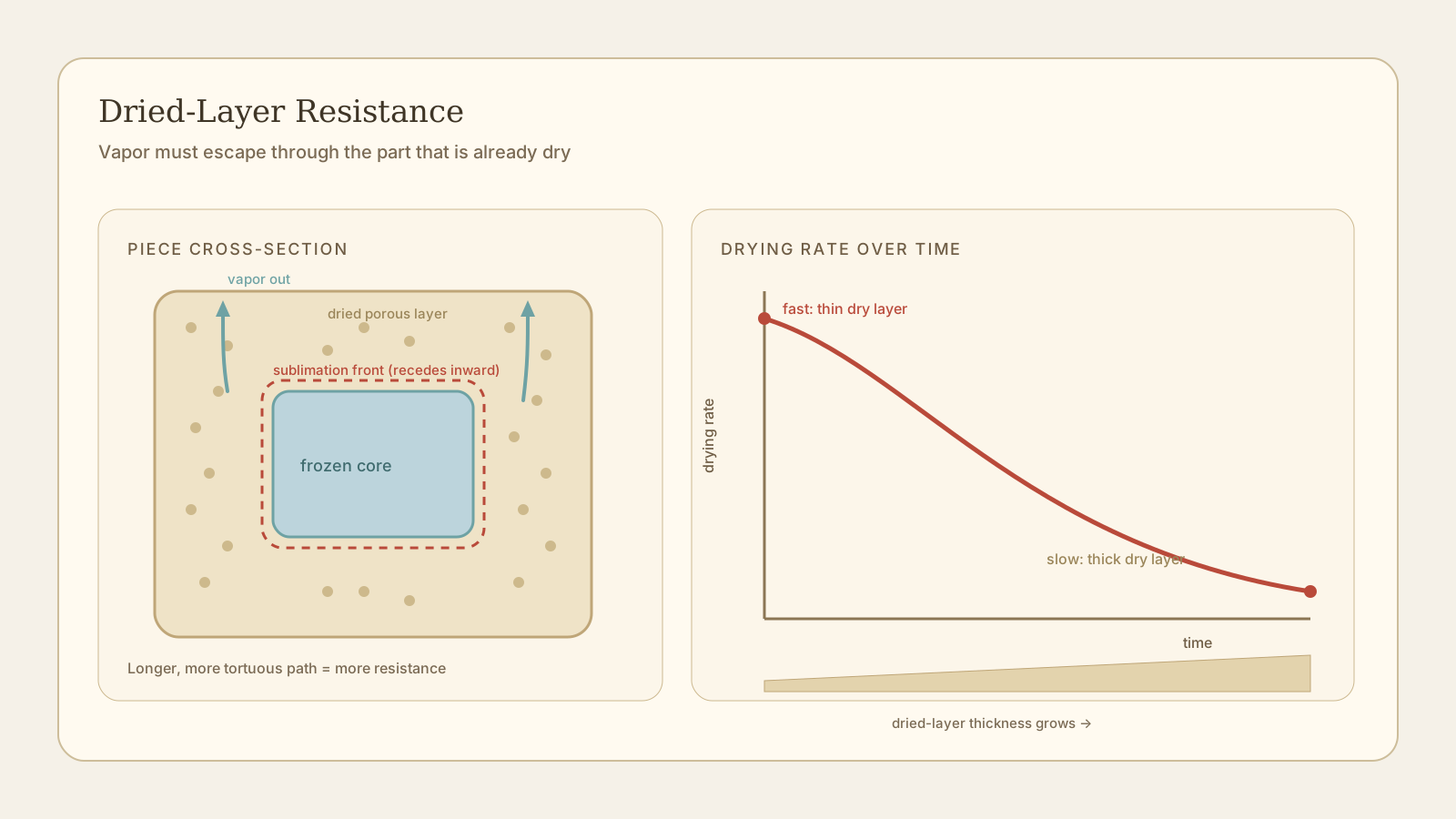
- Freeze-dried fruit dries from the surface inward, so the frozen sublimation front sits deeper in the piece as drying progresses.
- Water vapor leaving that front must diffuse out through the already-dried layer above it, and that layer adds flow resistance that grows as it thickens.
- Rising dried-layer resistance is a big reason primary drying slows toward the end and why thick, dense pieces finish last.
- Pore structure set during freezing, not just piece size, decides how open or restrictive that escape path is.
Primary drying in a freeze dryer looks like it should be a steady process. The shelf temperature holds, the vacuum holds, and ice turns to vapor hour after hour. But if you watch the drying rate of a single batch of fruit, it does not hold steady. It is fastest early and slowest at the end, and the gap is large.
The main reason is something that is easy to overlook because it is invisible from the outside: as the fruit dries, the water vapor has to escape through the part that is already dry, and that dried layer fights the vapor on its way out.
The direct answer
Freeze-dried fruit dries from the outside inward. The boundary where frozen water is actively turning to vapor, called the sublimation front, starts at the surface and moves deeper into each piece as the cycle runs. Above that front sits a layer that has already given up its ice and is now dry and porous.
Every bit of vapor produced at the front has to travel up through that dried layer to reach the chamber and the condenser. The dried layer is not a clear, open channel. It is a maze of pores, and pushing vapor through it takes a pressure difference. The thicker the dried layer gets, the longer and more tortuous that path becomes, so the same driving force moves vapor more slowly.
That growing restriction is called dried-layer resistance, and it is one of the central reasons primary drying slows as a piece approaches done.
Why the rate starts fast and ends slow
Early in primary drying, the front is just under the surface. Vapor has almost no dried layer to cross, so it leaves easily and the drying rate is high.
As the front recedes, three things happen at once:
- The escape path gets longer, because the dried layer above the front is thicker.
- The path stays just as twisting, so each added millimeter of dry material adds real resistance.
- The frozen core that remains is the densest, hardest-to-reach part of the piece.
The result is a drying-rate curve that falls off over time. The last fraction of removable ice can take a disproportionate share of the total primary-drying hours. An operator who assumes drying runs at a constant pace will consistently underestimate how long the finish takes.
Resistance is structure, not just size
It is tempting to treat this as a thickness story: thicker pieces, longer path, slower drying. Thickness matters, but it is only half of it. The other half is what the dried layer is actually made of.
A piece frozen quickly into many small ice crystals leaves behind small, tight pores. A piece frozen slowly into fewer, larger crystals leaves a more open, channel-like structure. Open structure lets vapor out more freely, so for the same thickness it has lower resistance and dries faster.
This is why the freezing step casts such a long shadow over primary drying. The pore network that the vapor has to travel through is set before primary drying even begins, when the fruit freezes. Sugar makes this sharper still: high-sugar fruit is prone to softening and partial collapse at the front, and a collapsed layer is denser and far more restrictive than an intact porous one.
Cycle speed is a tug-of-war between heat getting in and vapor getting out. Early on, getting heat to the front tends to be the limit. Later, getting vapor out through the thick dried layer tends to be the limit. A cycle tuned only for the early phase will stall in the late phase.
Why heat alone does not fix it
The obvious lever is heat. Warm the shelves more, raise the vapor pressure at the front, and push harder against the resistance. That works within limits.
The limit is collapse. The dried layer and the front can only get so warm before the structure starts to soften and slump. When that happens the pores close, the dried layer gets denser, and its resistance goes up rather than down. The cure becomes the disease. This is why aggressive heating to "catch up" a slow cycle can backfire, leaving a denser crust that traps moisture in the core.
The practical path is balance: enough heat to keep the front subliming, but not so much that the escaping vapor's own path collapses behind it.
How it shows up in the finished bag
Dried-layer resistance is an engineering idea, but it has plain consequences in the product:
- The thickest and densest pieces in a load are the last to finish, because they build the longest, most restrictive escape path.
- A cycle that ends on the clock rather than on a real endpoint check tends to shortchange exactly those pieces.
- The result is a lot that looks dry and crisp on the outside but hides a few chewy or soft centers.
That extra residual moisture in the slowest pieces is then handed off to the packaging to manage. It narrows the margin that barrier film, desiccants, and headspace control are supposed to protect, and it is a common root cause behind a bag that softens earlier than expected.
What operators do about it
There is no single setting that removes dried-layer resistance, but good operations manage around it:
- Cut for uniformity, so one slab is not three times thicker than its neighbor and dragging out the whole cycle.
- Control the freezing step, since pore structure decides how open the escape path will be.
- Verify the endpoint with pressure-rise or product-temperature checks instead of trusting a fixed recipe clock, because the slow tail is where pieces get left behind.
- Resist the urge to fix a slow cycle with heat alone, which risks collapse and a worse, denser layer.
What buyers can take from it
A buyer does not need to model vapor flow to use this. The takeaway is that piece size and uniformity are not cosmetic. They drive how evenly a lot dries and how likely the densest pieces are to carry hidden moisture.
Useful questions follow naturally: How tightly is cut size controlled? How is the endpoint confirmed for the thickest pieces, not the average? Does the supplier treat a long cycle as a signal to investigate or as something to push through with more heat? Answers framed in those terms usually point to an operation that understands why the back half of drying is the hard half.
Bottom line
Freeze-dried fruit dries from the outside in, and the vapor it releases has to climb back out through the layer that already dried. As the sublimation front recedes, that dried layer thickens and its resistance grows, which is why primary drying starts fast and finishes slow, and why thick, dense, or partly collapsed pieces are the ones that finish last. Managing it is about uniform cuts, good freezing structure, real endpoint checks, and heat held in balance rather than pushed to the edge.
Frequently Asked Questions
What is the sublimation front in freeze-dried fruit?
It is the moving boundary inside a piece where frozen water turns directly to vapor. It starts at the surface and recedes deeper into the piece as drying continues, leaving a dried, porous layer behind it.
Why does drying slow down as a piece gets closer to done?
The vapor released at the front has to travel out through the dried layer above it. As that layer thickens, the path gets longer and more restrictive, so the same driving pressure moves vapor more slowly. The rate falls even though nothing about the recipe changed.
Is dried-layer resistance the same as piece thickness?
They are related but not identical. A thicker piece builds a longer escape path, but pore structure matters just as much. A dense, collapsed, or sugary layer resists vapor flow more than an open, well-frozen one of the same thickness.
Can you just add more heat to speed it up?
Only up to a point. More heat raises the front's vapor pressure and helps, but if the surface or the front gets too warm the structure can collapse, which makes the dried layer denser and the resistance worse. Heat and resistance have to be balanced.
Why does this matter to a buyer rather than just an operator?
It explains why the thickest or densest pieces in a lot are the ones most likely to carry extra moisture if a cycle is rushed. Knowing that helps frame questions about cut size, uniformity, and endpoint checks.