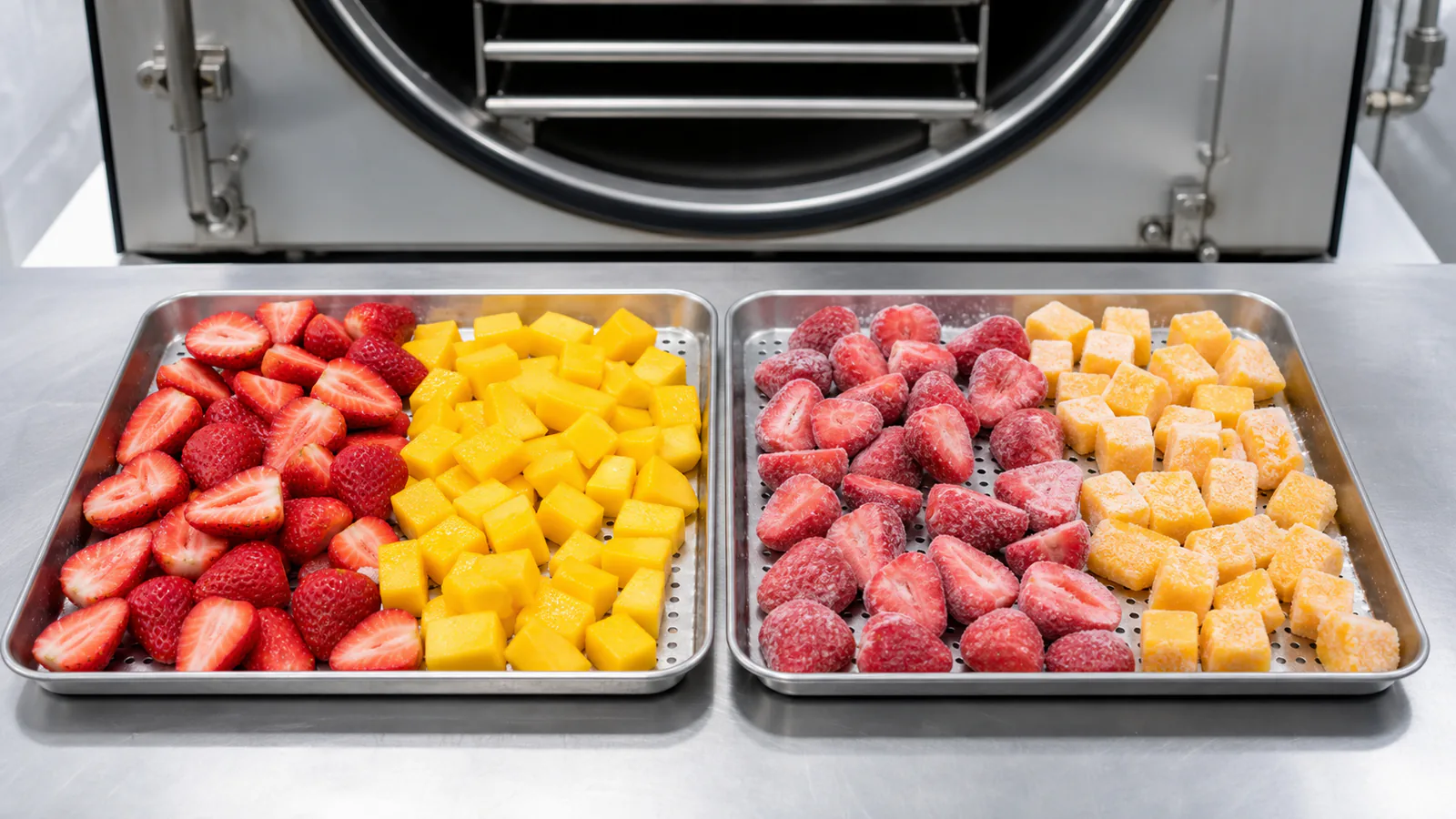
Not all freeze-dried fruit starts the same way. Some producers use fresh fruit, while others use frozen fruit or IQF (individually quick-frozen) fruit as the starting material. The better question is not simply "fresh or frozen?" It is whether the raw material, pre-treatment, and freeze-drying process are matched to the fruit and the final product format.
Fresh fruit
Fresh fruit can offer strong aroma and a clean structure, particularly when the variety, ripeness, and harvest timing are right. The trade-off is sourcing reliability — fresh fruit is seasonal, perishable, and sensitive to logistics.
Frozen and IQF fruit
Frozen fruit lets producers run year-round and standardize specifications. The freezing process itself, however, creates ice crystals that can rupture fruit cell walls. Whether that matters depends on the format: a powder or crumble may not show it, but a whole-piece premium snack might.
The right starting material is the one that fits the format, the price point, and the production cadence — not the one that sounds best on a label.
What this means for buyers
When evaluating samples, ask about the source material and the freezing method. Pair that with the format you actually want to ship. The mismatch between raw material and end format is often where quality slips — quietly.
Frequently Asked Questions
Is fresh fruit always better than frozen fruit for freeze-drying?
No. The better question is whether the raw material, pre-treatment, and freeze-drying process are matched to the fruit and the final product format. Well-handled frozen fruit can outperform poorly-handled fresh fruit, and the reverse is also true.
What does IQF mean in freeze-dried fruit production?
IQF stands for individually quick-frozen. The fruit is frozen piece by piece at low temperature before entering the freeze dryer, which lets producers run year-round and standardize specifications.
Why do some producers prefer frozen or IQF fruit?
Frozen fruit lets producers run year-round and standardize specs, which is harder with seasonal fresh sourcing. It also reduces logistics risk from perishable raw material.
Does freezing fruit before drying damage the final product?
The freezing process creates ice crystals that can rupture cell walls. Whether that matters depends on the format — a powder or crumble may not show the damage, but a whole-piece premium snack might.
When does fresh fruit give the best result?
Fresh fruit can offer strong aroma and a clean structure when the variety, ripeness, and harvest timing are right. The trade-off is sourcing reliability — fresh fruit is seasonal, perishable, and sensitive to logistics.
What should buyers ask suppliers about raw material?
Ask about both the source material and the freezing method, then pair that with the format you actually want to ship. Mismatch between raw material and end format is often where quality slips quietly.
Primary sources & further reading
- Preserving Locally Harvested Produce in School Meals USDA Food and Nutrition Service Explains how freezing creates ice crystals, why crystal size changes cell-wall damage, and distinguishes individual quick freezing from bulk freezing.
- Recent developments in freezing of fruits and vegetables: Striving for controlled ice nucleation and crystallization with enhanced freezing rates Journal of Food Science Peer-reviewed review of freezing-rate, ice-crystal, and texture considerations in fruits and vegetables.
- Commodity Specifications for Frozen Fruit USDA Agricultural Marketing Service Example federal purchasing specification that defines individually quick frozen fruit and ties frozen-fruit quality to documented grade and condition requirements.
External links open in a new tab. We do not receive compensation from any organization listed; sources are referenced because they are primary, current, and publicly verifiable.