- Raw fruit cost matters, but dry yield and usable yield usually change the quote more than buyers expect.
- Breakage tolerance, piece-size targets, and powder loss affect the real cost of what can actually be sold or used.
- Packaging format, freight density, duties, and handling can shift landed cost even when the ex-works price looks attractive.
- The best quote is the one that matches the application without hiding cost in waste, repacking, or complaint risk.
Two freeze-dried fruit quotes can look close on paper and still land at very different real costs once yield, spec tolerance, and logistics are counted. That is one reason first-time buyers sometimes approve the cheapest offer and then wonder why the product still feels expensive by the time it reaches the warehouse, line, or finished consumer pouch.
In freeze-dried fruit, the invoice price is only one layer of the cost structure.
The direct answer
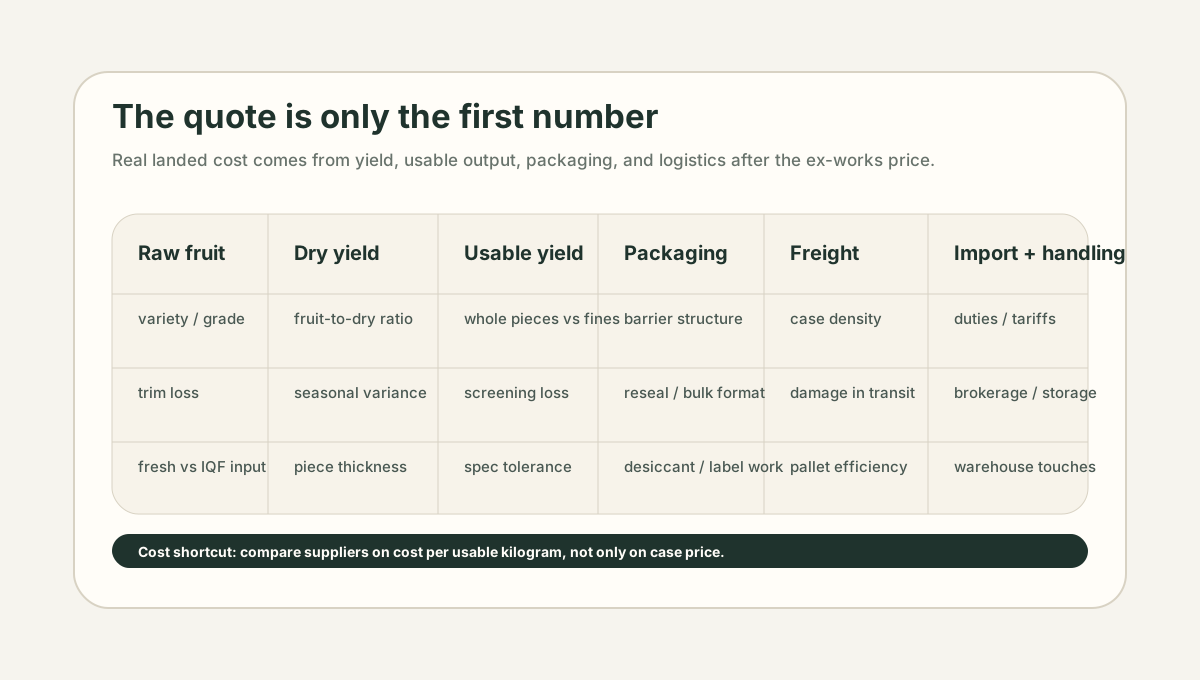
Freeze-dried fruit landed cost is driven by six major buckets: raw fruit value, dry yield, usable yield after breakage and screening, packaging format, freight and import costs, and the buying spec itself.
If a quote looks unusually low, one of those buckets is usually being carried somewhere else in the system.
Raw fruit is only the beginning
Buyers often start with the fruit itself: mango, strawberry, blueberry, banana, apple. That makes sense, but it does not finish the job.
The raw-material side includes more than market price per kilogram. It also includes:
- variety or grade choice
- ripeness window
- trim loss
- seed or peel removal burden
- fresh versus frozen starting format
- seasonal sourcing pressure
Two suppliers can both be buying "strawberry" and still be working from very different raw-material realities. That difference shows up later in color, breakage, sweetness, and effective yield.
Dry yield changes the math quickly
Freeze-drying removes most of the water, so the starting fruit-to-finished-fruit conversion matters a great deal. A fruit with high incoming water and fragile structure may produce a very different dry yield than a denser fruit or a format optimized for powder.
That means the buyer should not only ask, "What is the case price?"
The better questions are:
- What fruit input does this format require?
- What finished yield is typical?
- How much variation appears across season or origin?
- Is the quote based on whole pieces, slices, crumbs, or powder?
If those questions stay fuzzy, the quote often hides assumptions that become visible only after production.
Usable yield matters more than theoretical yield
Dry yield tells you how much product comes out of the process. Usable yield tells you how much of that product still matches the application you are paying for.
For example:
- a topping application may accept smaller fragments
- a premium snack pouch may need much tighter whole-piece performance
- a blending or bakery use may tolerate powder that would be rejected elsewhere
This is why a low quote on "freeze-dried strawberry" can be misleading. The product may technically be strawberry, but if the bag delivers too many fines, too much breakage, or too broad a size spread, the usable yield for your application drops.
In other words, cheap product becomes expensive when a meaningful share is unsellable or needs rework.
Tight specs can raise cost, but vague specs raise risk
There is a predictable tension here.
Tighter requirements on:
- piece size
- breakage tolerance
- color
- aroma
- moisture or water activity
- foreign-material controls
usually make the quote rise. That does not automatically mean the supplier is overpriced. It may simply mean the quote reflects real selection, screening, and packaging discipline.
The mistake is to compare a tightly specified quote with a loosely defined quote as if they represent the same product. They often do not.
Packaging can move cost more than expected
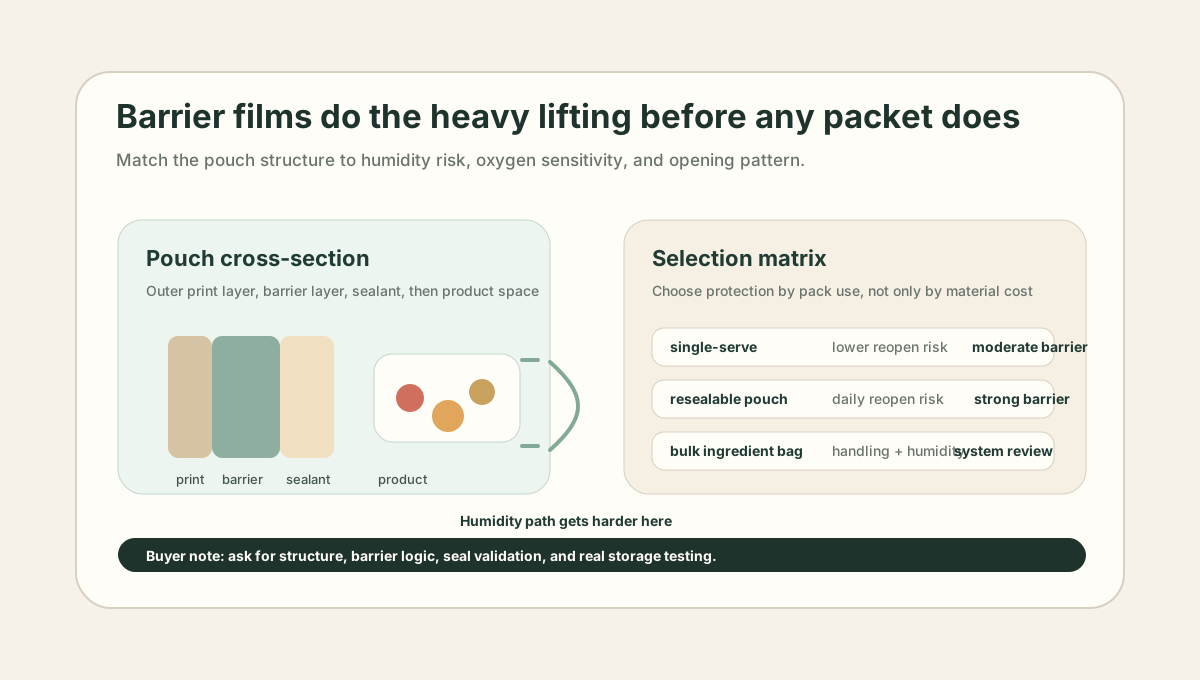
Packaging is easy to underestimate because it arrives late in the conversation. In practice, pack format can reshape landed cost significantly.
Cost drivers include:
- pouch structure and barrier level
- resealable versus non-resealable formats
- bulk liner and outer case design
- fill weights and case density
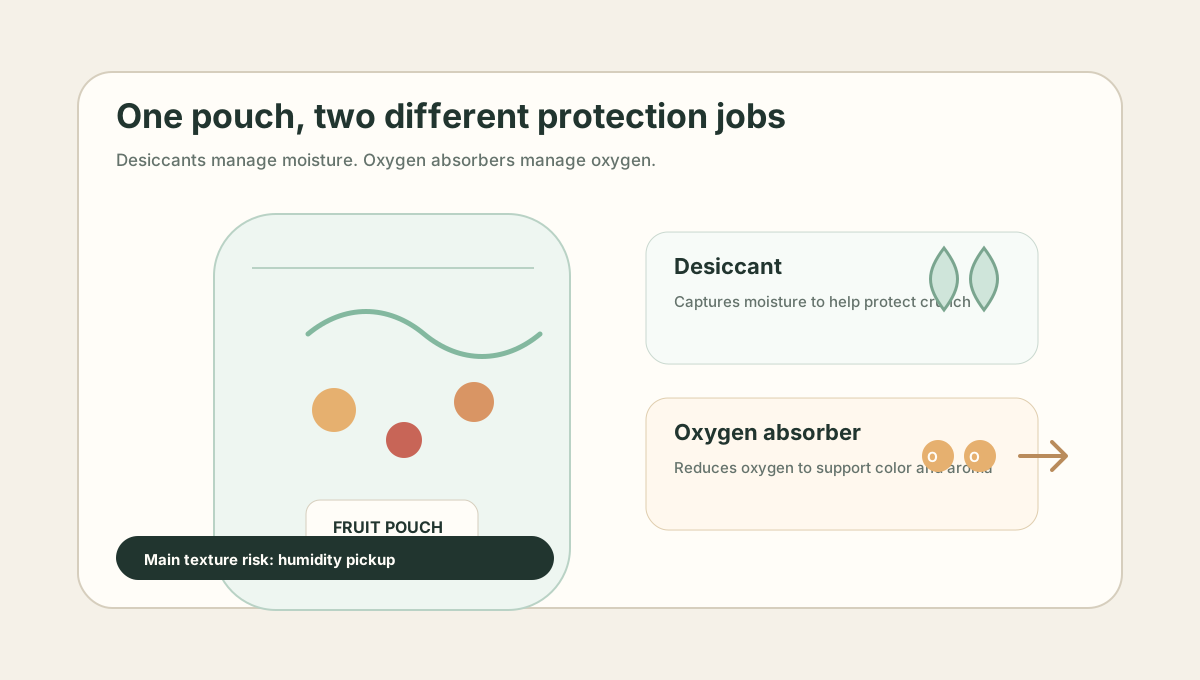
- desiccant inclusion where needed
- labeling and private-label complexity
A quote for bulk ingredient bags may look more attractive than a consumer-ready pouch, but that does not help much if the buyer later has to repack, relabel, or absorb higher quality risk after opening.
Freight, duties, and handling are not side notes
Once the product leaves the factory, several more cost layers begin:
- ocean or air freight
- inland transport
- import duties or tariff exposure when applicable
- customs brokerage
- warehousing
- damage or compression loss in transit
Freeze-dried fruit is light but bulky, which creates a distinctive logistics problem. The case is not especially heavy, yet it takes up space and can be fragile. Freight efficiency depends not just on weight but on how well the format uses carton and pallet volume.
That is one reason a denser, better-packed case can sometimes outperform a cheaper but less efficient quote.
Why the cheapest quote often disappoints later
The lowest ex-works price can hide cost in several ways:
- lower usable yield
- broader particle-size spread
- more breakage during transit
- weaker packaging protection
- inconsistent lot behavior
- more complaints or slower replenishment
None of those costs appear neatly on the quote sheet. They appear later as write-offs, rework, margin loss, or quality arguments.
This is why landed cost should be reviewed as an operating number, not only a procurement number.
A practical worksheet for quote comparison
When comparing suppliers, build the worksheet around common units and real use:
- Quote price by delivered format.
- Record expected dry yield or format yield assumptions.
- Record usable yield after breakage and screening.
- Add packaging and freight costs.
- Add duties, handling, and warehouse assumptions.
- Convert the result into cost per usable kilogram or cost per sellable serving.
This forces the quote back into business reality. It also makes it harder for one supplier to look cheaper just because the spec is looser.
What buyers should ask before approving price
Useful questions include:
- What breakage level is built into this quote?
- What size distribution is typical and what is guaranteed?
- Is this based on one origin, blended origin, or seasonal substitution?
- What package structure is included?
- What transit loss or dusting is normally expected?
- Which cost assumptions change if the buyer tightens specs?
A supplier who can answer those questions clearly is usually easier to work with after the first order too.
Bottom line
Freeze-dried fruit landed cost is shaped by much more than the quoted case price. Dry yield, usable yield, breakage, packaging, freight, and duties often decide the real number that matters.
The best quote is not the lowest-looking quote. It is the quote that matches the application without pushing cost into waste, repacking, or preventable quality problems later.
Frequently Asked Questions
What actually drives freeze-dried fruit landed cost?
Landed cost is driven by six major buckets: raw fruit value, dry yield, usable yield after breakage and screening, packaging format, freight and import costs, and the buying spec itself. If a quote looks unusually low, one of those buckets is usually being carried somewhere else in the system.
What is the difference between dry yield and usable yield?
Dry yield is how much product comes out of the freeze dryer. Usable yield is how much of that product still matches the application you are paying for. A topping format may accept fragments that a premium whole-piece pouch would reject.
Why does the cheapest freeze-dried fruit quote often disappoint later?
The lowest ex-works price can hide cost in lower usable yield, broader particle-size spread, more breakage during transit, weaker packaging, and inconsistent lot behavior. Those costs appear later as write-offs, rework, margin loss, or quality arguments — not on the quote sheet.
Do tighter specifications always make freeze-dried fruit more expensive?
Tighter requirements on piece size, breakage tolerance, color, aroma, moisture, water activity, and foreign-material controls usually raise the quote. That does not automatically mean the supplier is overpriced — it may mean the quote reflects real selection, screening, and packaging discipline.
How does packaging affect freeze-dried fruit landed cost?
Pouch structure, barrier level, resealable format, bulk liner design, fill weights, case density, desiccant inclusion, and private-label complexity all shift cost. A cheaper bulk bag may not help if the buyer later has to repack, relabel, or absorb higher quality risk after opening.
Why is freight different for freeze-dried fruit than for other dried goods?
Freeze-dried fruit is light but bulky. A case is not especially heavy, yet it takes up space and can be fragile. Freight efficiency depends on how well the format uses carton and pallet volume, not just total weight.
How should buyers compare quotes from different suppliers?
Build the worksheet on common units. Record format yield assumptions, usable yield after breakage and screening, packaging and freight, duties and handling, then convert the result into cost per usable kilogram or per sellable serving. That forces the quote back into business reality.