- Puncture resistance is a separate packaging control from WVTR, OTR, and seal integrity.
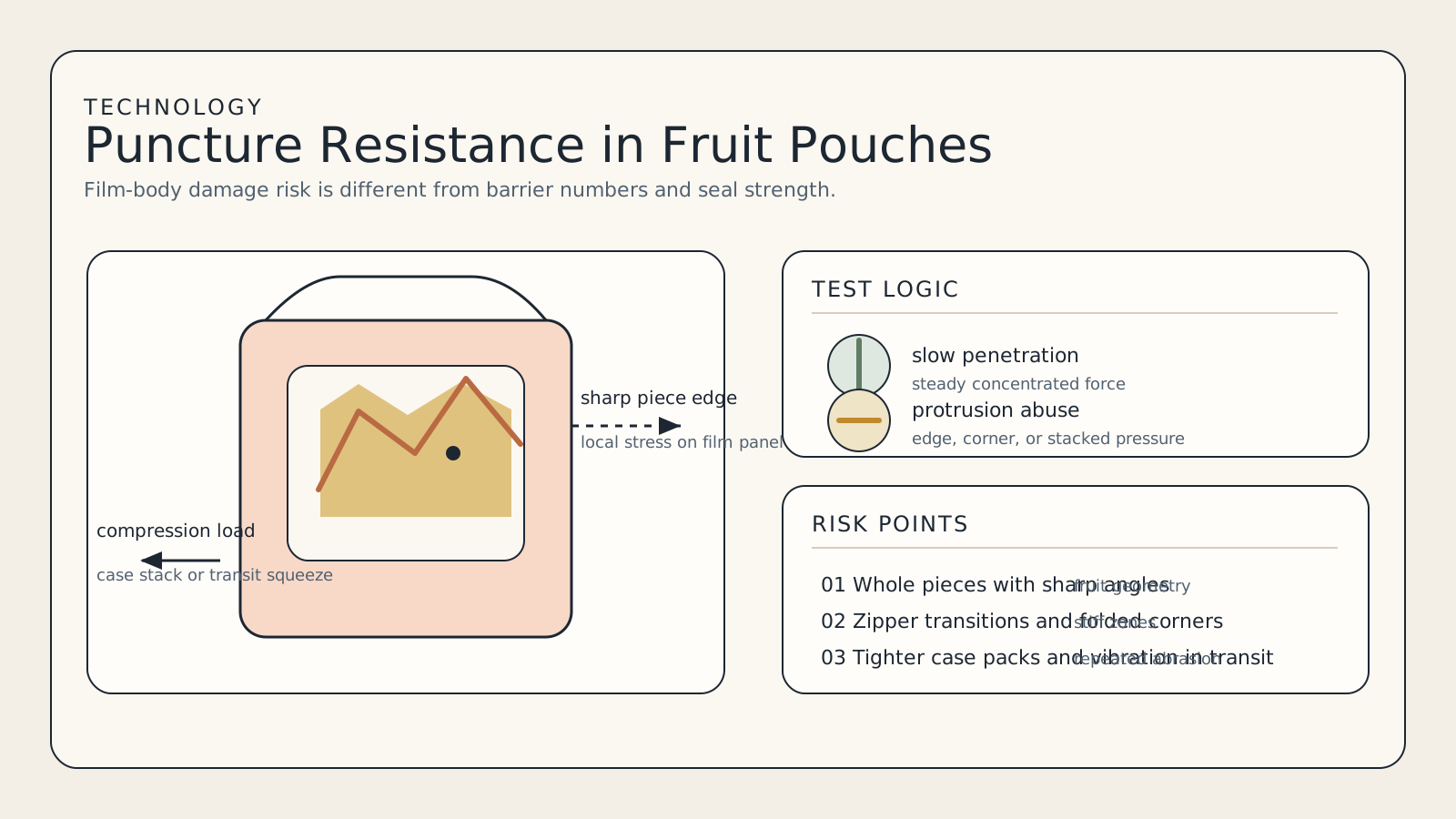
- Sharp fruit edges, internal fragments, zipper geometry, case compression, and rough handling can all create puncture risk in flexible pouches.
- Slow puncture resistance and protrusion-style puncture resistance answer different packaging questions and should not be treated as interchangeable.
- Whole-piece snack pouches and bulk ingredient bags often need different puncture-safety margins even when they use the same fruit.
Freeze-dried fruit buyers often learn to ask about barrier film, WVTR, OTR, and seal validation.
Those are the right questions. They are not the only ones.
The direct answer
Puncture resistance matters in freeze-dried fruit pouches because the package has to remain physically intact, not just theoretically high-barrier. A pouch can have respectable barrier numbers and a decent seal, but still fail if the film is too vulnerable to concentrated stress from sharp fruit edges, fragments, compressed case packs, or rough handling.
If the film is pierced or abraded, the barrier story is over.
Barrier, seal, and puncture are three different packaging questions
These packaging topics are often blended together in practice, which makes troubleshooting slower.
- Barrier performance asks how quickly water vapor or oxygen can move through the material.
- Seal integrity asks whether the pouch has been closed consistently at the bonded areas.
- Puncture resistance asks whether the film body survives mechanical stress once the package is filled and moving through the world.
A freeze-dried fruit pouch needs all three.
This distinction matters because the complaint can look similar from the outside. The fruit may arrive soft, faded, or stale. But the root cause may be very different:
- a weak laminate choice
- a poor seal
- a zipper transition
- a puncture path through the film body
That is why a package review that stops at WVTR or seal strength is still incomplete.
Where puncture risk actually comes from
Puncture damage in freeze-dried fruit packs is rarely one dramatic event. More often it is a local stress problem that accumulates during filling, case packing, stacking, and transport.
Common risk points include:
- larger fruit pieces with sharp edges
- broken fragments that press into one area of the pouch
- powder and crumble concentrated near folds or corners
- zipper geometry that stiffens one section of the pack
- aggressive fill weights that reduce free space
- tightly packed cases that compress pouches against each other
- transit vibration that repeatedly rubs one stress point
Whole-piece strawberry, apple, pineapple, and mango programs can be especially exposed because the product shape is less forgiving than a fine powder or controlled small dice.
Why puncture resistance is not one single number
Mechanical damage does not happen in only one way.
That is why puncture testing methods answer different questions.
Slow-rate penetration testing is useful when the question is how the film behaves under a steadily applied concentrated force. It helps teams compare materials when the concern is localized push-through rather than dramatic impact.
Protrusion-style puncture thinking becomes useful when the concern is a more practical packaging abuse pattern: a stress point, edge, or concentrated object pressing into film as the package is squeezed, stacked, or shifted.
For freeze-dried fruit, both ideas matter because the package may face:
- concentrated local pressure during filling
- repeated compression during warehousing
- protruding internal product geometry during shipping
So the useful buyer question is not "Did you test puncture?"
It is:
Which puncture-type risk did you test, and does it match this pouch and fill format?
Why whole-piece snack bags and ingredient bags behave differently
The same fruit does not create the same packaging risk in every commercial format.
Retail whole-piece snack pouches are often exposed to:
- more visible fruit geometry
- more consumer squeezing and handling
- repeated opening and reclosing
- more retail-facing appearance pressure, which can encourage tighter, fuller packs
Bulk ingredient bags may expose the package differently:
- heavier total fill weights
- more case stacking load
- larger-format bag corners and folds
- more warehouse handling before the product is consumed
This is why a pouch structure that behaves adequately for one SKU may not be adequate for another even inside the same brand.
What puncture weakness looks like commercially
Not every puncture failure produces an obviously torn bag.
Sometimes the first clue is only indirect:
- a pouch that feels slightly under-vacuum or loosely filled
- isolated softening rather than full-bag failure
- accelerated staling in one lane of distribution
- complaints that rise after freight-heavy seasons
- more trouble on larger-piece SKUs than on powder or crumble lines
That pattern is easy to misread as a moisture, shelf-life, or raw-material problem when the real issue is mechanical package resilience.
Questions worth asking suppliers
Buyers usually do not need the converter's full lab workbook to pressure-test this topic well.
Useful questions include:
- Which puncture or package-abuse tests are used on this pouch?
- Were the tests run on the actual commercial fill weight and fruit format?
- Does validation differ for whole pieces, small dice, crumble, and powder?
- Where do failures usually appear: panel, corner, fold, zipper transition, or seal edge?
- What changed the last time puncture complaints rose: fruit format, case density, film structure, or handling conditions?
Those questions often reveal whether the supplier treats puncture risk as a real packaging variable or as an afterthought.
The sources below define packaging test methods and material-selection principles. The article's freeze-dried-fruit-specific buying implications are an editorial application of those packaging fundamentals to a brittle, moisture-sensitive food.
Bottom line
Puncture resistance matters because a freeze-dried fruit pouch has to survive real mechanical abuse, not just look good in a barrier-data table. Barrier, seal, and puncture are different control points, and all three shape whether the fruit stays crisp.
For moisture-sensitive products, a tiny puncture can do more damage than a team expects.
Frequently Asked Questions
What does puncture resistance mean for a freeze-dried fruit pouch?
It means how well the pouch material resists being pierced or damaged by a concentrated force. For freeze-dried fruit, that matters because brittle pieces, internal fragments, and rough handling can stress the film in specific spots.
Is puncture resistance the same thing as barrier performance?
No. Barrier performance describes how well the material resists moisture vapor or oxygen transmission. Puncture resistance describes whether the film stays physically intact when the package is filled, packed, shipped, and handled.
Is puncture resistance the same as seal integrity?
No. Seal integrity is about whether the pouch is closed consistently at the seal area. Puncture resistance is about whether the film body survives mechanical abuse away from the seal.
Why are whole-piece freeze-dried fruit packs more exposed?
Larger, sharper, or more irregular pieces can create higher local stress against the film than fine powder or small crumble formats. The damage risk often rises further when the bag is tightly packed or shipped in compressed case counts.
What should buyers ask suppliers about puncture risk?
Ask which puncture or abuse tests are used, whether the validation matches the actual pouch format and fill weight, how whole-piece and powder SKUs differ, and what failure points show up most often in transit testing or complaint review.
Primary sources & further reading
- F1306 Standard Test Method for Slow Rate Penetration Resistance of Flexible Barrier Films and Laminates ASTM International Referenced for slow-rate penetration testing used to compare how flexible barrier films resist concentrated puncture forces.
- D5748 Standard Test Method for Protrusion Puncture Resistance of Stretch Wrap Film ASTM International Referenced for protrusion-style puncture testing concepts that help explain how packaging can fail under concentrated mechanical contact.
- Food Packaging - Roles, Materials, and Environmental Issues Institute of Food Technologists - Journal of Food Science Referenced for general packaging-material selection tradeoffs, including the fact that barrier and mechanical performance have to be balanced rather than assumed from one property.
External links open in a new tab. We do not receive compensation from any organization listed; sources are referenced because they are primary, current, and publicly verifiable.