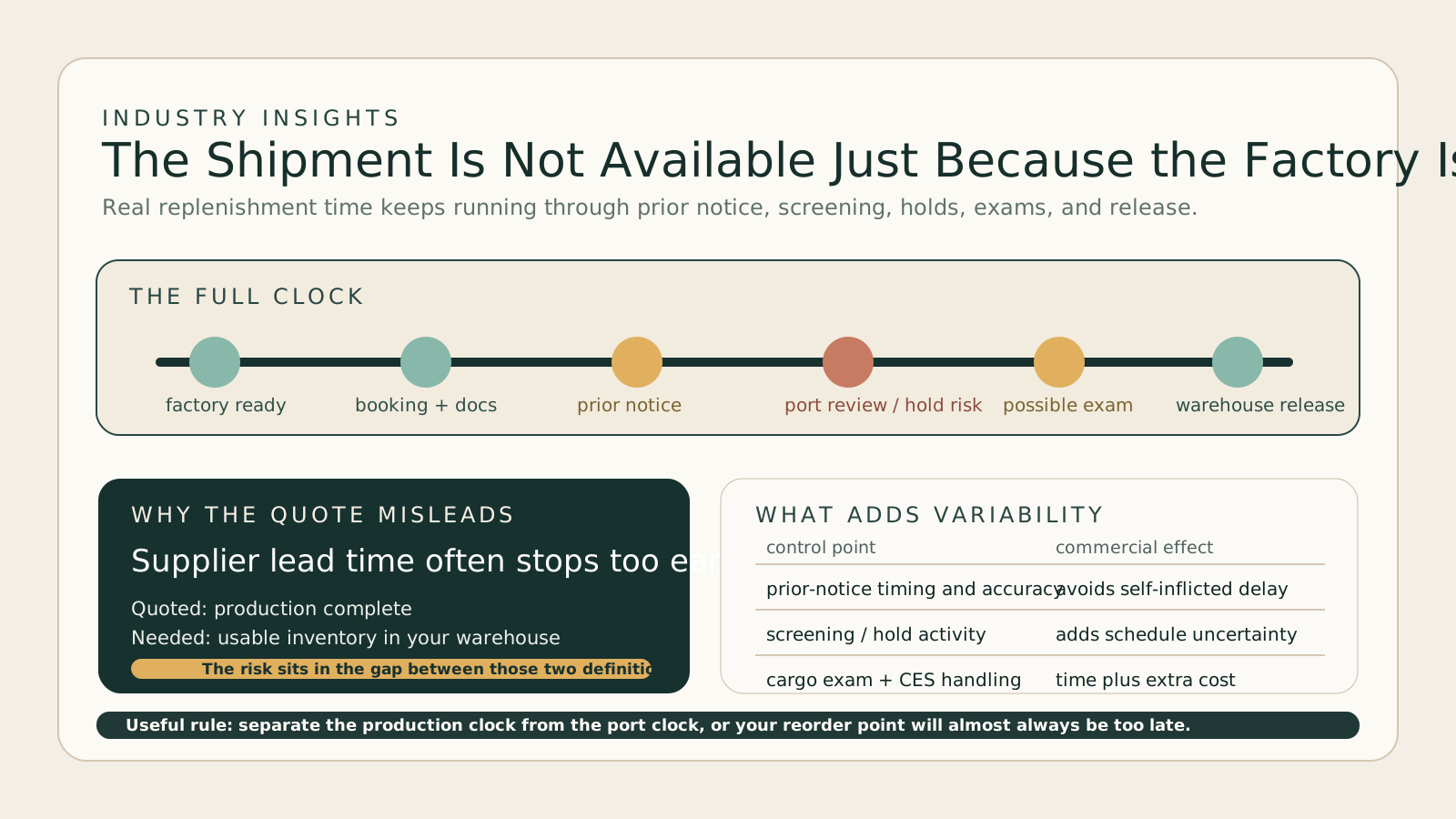
- Quoted supplier lead time and actual warehouse-available lead time are different numbers once imported freeze-dried fruit enters FDA and CBP screening.
- Prior notice timing, document accuracy, and entry quality can affect whether a shipment moves cleanly or gets slowed by review and hold activity.
- CBP can examine cargo and the importer may bear the related handling and examination costs, even when the shipment itself is legitimate.
- The smarter buying habit is to build time buffers and stock logic around variability at the port, not just around factory production.
Import lead time gets discussed as if it were a clean factory number.
For freeze-dried fruit, that shortcut breaks down the moment the shipment enters the U.S. import system.
The direct answer
Port holds and customs exams distort freeze-dried fruit lead times because the buyer's real clock does not stop when production finishes or when the shipment sails. It continues through prior notice, import screening, document review, and possible examination activity at the port. Even when the goods are compliant, that process introduces variability the supplier's quoted lead time usually does not capture.
That matters less for product spoilage than it does for inventory timing, launch promises, and service levels.
The supplier lead time is not the warehouse lead time
A freeze-dried fruit supplier may quote six weeks, eight weeks, or twelve weeks. That number usually describes production readiness, not the full time until the goods are saleable in the buyer's warehouse.
For imported product, the fuller sequence is closer to:
- production slot and packout
- export booking and document handoff
- prior notice and entry filing
- arrival and screening
- release, hold, or exam activity
- final inland delivery
If a buyer collapses all of that into one factory lead-time number, the replenishment model becomes too optimistic.
Prior notice is required, but it is not a clearance promise
FDA's prior-notice guidance is useful because it makes one thing very clear: notice has to reach FDA within mode-specific timing windows before arrival, and the deadlines differ by road, rail, air, and water.
That means the import timeline already has a compliance clock inside it before the shipment even lands.
More importantly, prior notice is not the same thing as FDA approving the load in advance. FDA states that imported human foods are still verified at import for applicable requirements, and the agency specifically notes that it does not pre-approve individual shipments or labels before importation.
So the correct mental model is:
- prior notice is mandatory
- it supports screening
- it reduces avoidable failure points
- it does not erase entry-review variability
That distinction is where many first-time buyers get misled.
Why freeze-dried fruit still feels the delay
Freeze-dried fruit is not refrigerated produce. A port delay usually does not turn it into instant waste.
But shelf stability should not be confused with zero commercial risk.
The real exposures are often:
- missing a retail reset or launch date
- arriving after promotional inventory was needed
- forcing expensive airfreight or emergency domestic buys
- compressing the remaining shelf-life window for a customer commitment
- leaving a brand with too little stock to bridge to the next order
In other words, the product may remain usable while the commercial plan around it breaks.
Holds and exams add variability even on legitimate shipments
CBP explains that cargo entering the United States is subject to examination to verify compliance with U.S. laws and partner-agency requirements. FDA likewise explains that imported foods are screened when offered for import.
That means a legitimate shipment can still be slowed by review activity without anyone having "done something wrong" in the dramatic sense buyers imagine.
CBP's importer guidance also matters here because it states that the importer bears the expenses involved in making goods available for examination, and that selected shipments may be moved to a Centralized Examination Station.
That creates two separate costs:
- time variability
- exam-related handling cost
When buyers model only case price and ocean freight, they often miss both.
The document set influences the odds of a clean move
FDA notes that correct compliance information can reduce the likelihood that a shipment will be held for further entry review.
For freeze-dried fruit, that makes the document set more than paperwork theater. It is part of lead-time management.
Practical control points include:
- accurate product description
- clean prior-notice filing
- correct compliance and facility information
- label accuracy in English where required
- consistency between commercial docs and the actual packed SKU
This is one reason buyers who treat documentation as an afterthought often experience "mysterious" import variability that is not really mysterious at all.
The smarter planning model is a two-clock model
One useful buying habit is to separate:
- supplier production lead time
- port-to-warehouse variability
Those are different clocks and should be planned differently.
For example:
- the production clock is managed with forecasts, MOQs, artwork control, and slot booking
- the port clock is managed with entry quality, buffers, brokerage discipline, and inventory policy
If those two clocks are merged into one average, the reorder point usually ends up too late.
If imported freeze-dried fruit is business-critical, plan to the slow end of clearance variability and celebrate the fast release when it happens.
When domestic stock or distribution becomes the better answer
This is exactly why some buyers stay with domestic stock positions or distributors longer than spreadsheet logic suggests they should.
The per-kilogram price may be higher, but the replenishment risk may be lower when:
- launch dates are tight
- promo windows are fixed
- the team is not yet strong on import administration
- the SKU is too important to expose to a thin buffer
That is not a failure of direct importing. It is a recognition that logistics variability is part of landed cost.
Bottom line
Port holds and customs exams distort freeze-dried fruit lead times because the real replenishment clock includes import compliance and inspection variability, not just factory completion. Prior notice, document quality, screening, and possible examination activity can all change when product becomes available for sale.
Freeze-dried fruit may be shelf-stable, but the inventory consequences of a slow port move are still very real. Buyers who plan to the full clock usually make better sourcing decisions than buyers who plan only to the quote.
Frequently Asked Questions
Why is a freeze-dried fruit shipment late even after the factory finished on time?
Because factory readiness is only one part of the clock. Import screening, prior notice timing, document issues, holds, and possible cargo exams can add variability after the goods leave the plant.
Does prior notice guarantee that a shipment will clear without delay?
No. Prior notice is required, but it does not mean FDA pre-approves the shipment. FDA still screens imported food and may review or hold shipments when needed.
Who pays when CBP examines cargo?
CBP states that the importer must bear the expenses involved in making goods available for examination, and shipments selected for exam are often moved to a Centralized Examination Station.
Is this mainly a problem for perishable fruit?
The spoilage profile is worse for perishable goods, but shelf-stable freeze-dried fruit still faces real business risk when launch dates, promotions, or tight inventory windows depend on clean clearance timing.
How should buyers plan around exam and hold risk?
Use buffer stock, cleaner document control, realistic reorder points, and buying models that distinguish supplier lead time from port-to-warehouse variability.
Primary sources & further reading
- Importing Human Foods U.S. Food & Drug Administration Referenced for FDA's explanation that imported foods are screened at import and that correct compliance information can reduce the likelihood of further entry review.
- Guidance for Industry: What You Need to Know About Prior Notice of Imported Food Shipments U.S. Food & Drug Administration Referenced for FDA's prior-notice timing requirements by transport mode and the distinction between notice timing and actual entry movement.
- Cargo Examination U.S. Customs and Border Protection Referenced for CBP's explanation that cargo can be examined to enforce U.S. laws and partner-agency requirements.
- Tips for New Importers and Exporters U.S. Customs and Border Protection Referenced for CBP's statement that importers bear the costs associated with making cargo available for examination and that selected shipments may move to a Centralized Examination Station.
- Frequently Asked Questions & Answers Regarding CBP Procedures under the Bioterrorism Act (BTA) U.S. Customs and Border Protection Referenced for CBP's explanation that food shipments are covered by prior-notice enforcement at U.S. ports of entry.
External links open in a new tab. We do not receive compensation from any organization listed; sources are referenced because they are primary, current, and publicly verifiable.