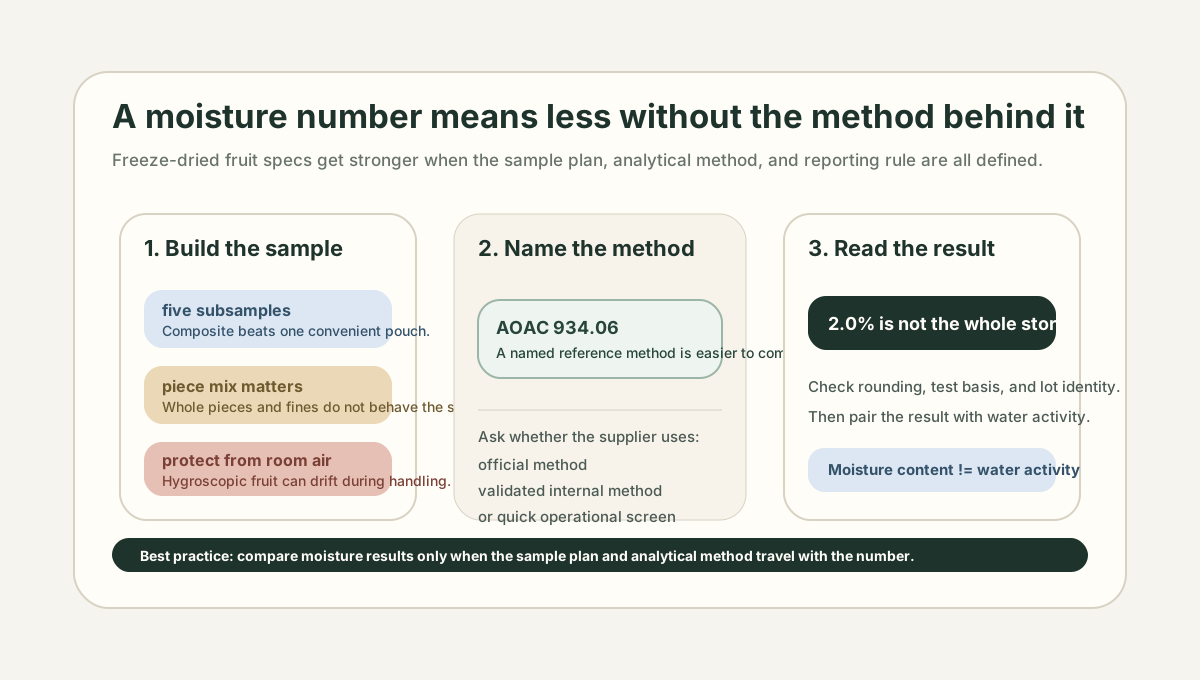
- A moisture spec without a named test method and sampling plan is only partial information.
- USDA's commercial item description for freeze-dried fruits pairs a default moisture tolerance with a composite-sample approach and an AOAC method reference.
- Piece size mix, fines, and time spent exposed to room air can all change what a lab sample actually represents.
- Moisture content and water activity answer different questions and should be reviewed together rather than treated as interchangeable.
Freeze-dried fruit is one of the least forgiving food categories for casual moisture talk. The product is light, porous, brittle, and quick to pick up room humidity once the pack is open. That means a moisture number can be useful, but only if everyone is talking about the same thing in the same way.
The direct answer
Moisture test methods matter in freeze-dried fruit because the number on the certificate is not self-explanatory. To compare one lot to another, or one supplier to another, buyers need three things together:
- the moisture target
- the test method
- the sample plan
Without that full set, two results that look identical on paper may not describe the same product condition in the bag.
The number is only the end of the story
A moisture result sounds precise. In reality, the number comes after several practical decisions:
- which pieces were sampled
- whether fines were included
- how many subsamples were composited
- how quickly the sample was protected from ambient humidity
- which analytical method the lab followed
- how the result was rounded and reported
For freeze-dried fruit, those decisions are not small details. They shape the meaning of the result.
This is why a buyer should be cautious when a supplier offers a tight moisture claim without saying how the claim is generated.
What the USDA specification gets right
USDA's commercial item description for freeze-dried fruits is helpful here because it does not stop at a target number. It gives a default analytical tolerance of not more than 2.0 percent moisture unless the buyer specifies otherwise. More importantly, it also defines how USDA verification sampling is composited and points to AOAC Method 934.06 for the analysis.
That matters for two reasons.
First, the spec treats the moisture number as part of a system rather than a floating claim.
Second, it recognizes that the sample itself must be defined before the lab result becomes trustworthy.
In the USDA document, the verification sample is built from multiple randomly selected subsamples rather than one convenient pouch. That is a disciplined approach because freeze-dried fruit often varies within a lot more than buyers expect.
Why the sample can change the answer
Consider how different these samples can be:
- mostly intact whole pieces from the top of a case
- a pouch with visible fines and bottom-of-bag dust
- a composite of multiple pouches from the same lot
- a retention sample opened, handled, and resealed earlier in the day
All are technically freeze-dried fruit. None necessarily represents the lot in the same way.
This is especially important when a product sits near the line between premium crunch and slight softness. A few tenths of a percent can matter operationally even if it sounds minor in conversation.
Fines, powders, and piece mix need their own attention
Moisture discussions often assume a uniform product. Many freeze-dried fruit SKUs are not uniform at all.
A bag may contain:
- large whole or sliced pieces
- smaller broken fragments
- powder generated by handling or shipping
Those fractions do not always behave identically. The more surface area a sample has, the more quickly it can exchange moisture with room air during handling. That means a fine-heavy sample may not describe the same pack condition as a whole-piece sample from the same finished lot.
For buyers, the practical lesson is simple: if the finished spec cares about piece integrity, the moisture discussion should acknowledge the format mix too.
Method names are not paperwork clutter
AOAC matters in this conversation because it provides official analytical methods that food labs use as reference points. When a freeze-dried fruit spec cites a named AOAC method instead of a vague in-house moisture check, the result becomes easier to interpret across suppliers and quality teams.
That does not mean every valid program must look identical. It does mean buyers should know whether the supplier is using:
- a recognized official method
- a validated internal method tied back to an official method
- or a quick internal screen that is useful for operations but weaker for external comparison
Those are not the same level of evidence.
Room air can distort a low-moisture sample fast
Freeze-dried fruit is hygroscopic. Once exposed, it starts pulling moisture from surrounding air. That makes sample handling unusually important.
If the lab sample is:
- left open too long during prep
- milled without exposure control
- taken from a pouch that was already opened for sensory review
- built from non-random hand-picked pieces
the moisture result may still be numerically tidy while being operationally less useful.
FDA's CGMP framework is relevant here not because it prescribes one freeze-dried fruit moisture number, but because it expects disciplined production and process controls. Sampling and handling are part of that discipline.
If a supplier can state the moisture result but cannot explain the sample plan behind it, the spec conversation is not finished.
Moisture content still does not replace water activity
This is where many teams flatten the conversation too much. Moisture content and water activity are related, but they are not interchangeable.
Moisture content asks:
- how much water is present
Water activity asks:
- how available that water is
For freeze-dried fruit, that difference matters because texture complaints and storage behavior do not always track perfectly with a single moisture percentage. A buyer reviewing shelf-life risk should still ask for both measurements when possible.
The stronger reading order is:
- confirm how moisture was tested
- confirm how the sample was built
- review water activity alongside the moisture result
That sequence produces a more usable quality picture than any standalone dryness claim.
What buyers should ask suppliers
Useful questions are concrete:
- What exact method is used for the moisture result?
- Is the result based on one pouch or a composite sample?
- Are fines included in the tested sample?
- How quickly is the sample protected from ambient humidity after opening?
- What rounding rule is used on the certificate?
- Is water activity measured on the same lot?
Good suppliers usually answer these questions cleanly because their quality teams already use them internally.
Bottom line
Moisture testing in freeze-dried fruit is not just about reaching a low number. It is about making that number interpretable. A named method, a credible sample plan, and disciplined handling turn a dryness claim into usable quality information.
For buyers, the practical rule is clear: do not compare moisture percentages unless the method and sampling logic travel with the number.
Frequently Asked Questions
Why does the moisture test method matter for freeze-dried fruit?
Because a moisture number is only meaningful when you know how the sample was taken and how the water was measured. A specification that says only 2.0% moisture leaves too much room for different labs or suppliers to reach that result in different ways.
What does USDA's freeze-dried fruit specification use as a default moisture requirement?
USDA's commercial item description for freeze-dried fruits lists a default analytical tolerance of not more than 2.0 percent moisture unless a buyer specifies otherwise. It also defines how a USDA verification sample is composited and points to AOAC Method 934.06.
Can two labs report the same moisture number but mean slightly different things?
Yes. Differences in sample preparation, how much fines are included, how quickly the sample is protected from room humidity, and what method the lab is following can all shift the result enough to matter in a brittle, low-moisture product.
Is moisture content the same as water activity?
No. Moisture content tells you how much water is in the product. Water activity tells you how available that water is. Freeze-dried fruit quality decisions are stronger when both are reviewed together.
What should buyers ask for on a moisture spec?
Ask for the target range, the named method, how the sample is composited, whether results are reported on a lot basis or a retention sample, and whether water activity is tracked alongside moisture.
Primary sources & further reading
- FRUITS, FREEZE DRIED (A-A-20365) U.S. Department of Agriculture Agricultural Marketing Service Referenced for the default moisture tolerance, composite-sampling instructions, and AOAC 934.06 method reference in USDA's commercial freeze-dried fruit description.
- Official Methods of Analysis, 22nd Edition (2023) AOAC INTERNATIONAL Referenced for AOAC's role in publishing validated official analytical methods used across food testing.
- Current Good Manufacturing Practices (CGMPs) for Food and Dietary Supplements U.S. Food & Drug Administration Referenced for FDA's production and process control framework that supports disciplined sampling, handling, and documentation.
External links open in a new tab. We do not receive compensation from any organization listed; sources are referenced because they are primary, current, and publicly verifiable.