- Domestic and imported freeze-dried fruit are different sourcing systems, not simple quality rankings.
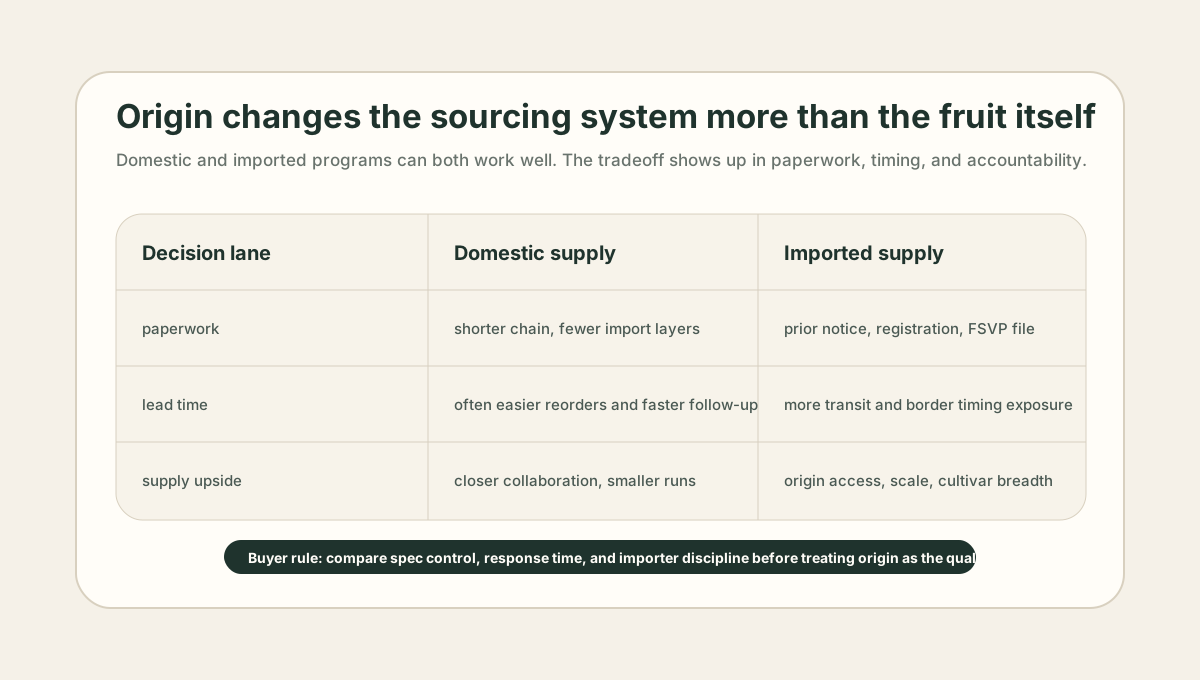
- Imported product adds prior-notice, registration, and FSVP responsibilities that domestic buying usually does not carry in the same way.
- Domestic supply can simplify communication and shorter replenishment loops, but imported programs may offer stronger cultivar access, scale, or cost position.
- The better comparison is spec control, response time, documentation discipline, and buffer-stock planning rather than origin alone.
The domestic-versus-imported debate in freeze-dried fruit gets simplified too quickly. Buyers are often pushed toward one of two slogans:
- domestic is safer and easier
- imported is cheaper and more scalable
Neither slogan is reliable enough to make a purchasing decision.
The direct answer
Domestic and imported freeze-dried fruit are different sourcing systems, not automatic quality tiers.
Domestic supply often reduces logistical friction, shortens some communication loops, and can make complaint follow-up easier. Imported supply can open access to specific fruits, cultivars, capacities, or cost structures that are hard to reproduce domestically. The correct comparison is not origin pride. It is how the supply program handles:
- paperwork
- lead time
- quality accountability
- buffer stock
- change management
What domestic supply can simplify
Domestic buying can be operationally lighter in a few practical ways.
It may reduce:
- importer coordination
- customs timing uncertainty
- cross-border documentation load
- time-zone lag during quality escalations
That can matter when the product is moving fast, the order sizes are smaller, or the buyer needs tighter replenishment cycles.
Domestic supply can also make rework, replacement, or investigative sampling easier simply because the chain of communication is shorter. When a pouch issue appears, fewer organizational handoffs usually mean a faster answer.
None of that guarantees better fruit. It means the operating model can be easier to manage.
What imported supply can do better
Imported supply becomes attractive when the fruit itself, the supplier base, or the economics favor a foreign program.
Common reasons include:
- access to fruit origins not available domestically at meaningful scale
- access to cultivars tied to certain regions
- larger production runs
- stronger existing infrastructure for a given fruit type
- cost structures that work better at the desired format
For some freeze-dried fruits, the real commercial supply base is naturally global. Pretending those products should always be bought domestically can narrow the buyer's options without improving the end result.
The paperwork difference is real
This is where imported buying stops being a simple commercial quote and becomes a compliance system.
FDA states that imported human foods are subject to import controls that include prior notice and food facility registration, and FDA verifies applicable requirements at the time of importation. CBP's commercial-use guidance also points buyers toward prior-notice and registration expectations for food imports.
Then there is FSVP.
FDA's FSVP framework makes the importer responsible for verifying that a foreign supplier is producing food in a way that meets applicable U.S. requirements. That is not a cosmetic obligation. It means imported freeze-dried fruit should arrive inside a documented supplier-verification program, not just a trading relationship.
For buyers, that changes the question from:
- "Can this supplier make the fruit?"
to:
- "Who owns the compliance file, and how strong is it?"
Lead time is more than transit time
Buyers often compare origin choices as if they are just comparing shipping days. That is too narrow.
Useful lead-time thinking includes:
- production queue time
- packaging-material readiness
- port or customs delay risk
- inland delivery timing
- lot release timing
- buffer stock strategy
A domestic program may still feel slow if the supplier runs infrequent campaigns or custom packaging changeovers. An imported program may still feel manageable if the importer keeps local inventory and has disciplined reorder planning.
This is why buyers should ask for:
- first-order lead time
- reorder lead time
- emergency replenishment reality
- average inventory position in-country
Those answers matter more than a vague promise of "faster domestic service."
Complaint handling changes with geography
When a bag arrives soft, dusty, or out of spec, origin affects how the issue gets resolved.
Domestic programs often make it easier to:
- secure quick replacement stock
- collect retention samples
- run follow-up discussions with plant personnel
- inspect or audit the operation
Imported programs can still do these things well, but the response quality depends heavily on who sits between the buyer and the actual plant:
- direct importer
- broker
- trading company
- co-packer using imported bulk product
The more layers involved, the more buyers should insist on clarity about who owns each decision.
Specification discipline matters more than national location
A weak domestic supplier is still a weak supplier. A strong imported supplier with disciplined verification can outperform a nearby plant that runs loose specs.
The real comparison should cover:
- moisture and water activity targets
- breakage tolerance
- origin policy
- packaging structure
- lot traceability
- complaint response
- document turnaround
Origin affects how these are managed. It does not replace them.
If the origin conversation gets emotional before the spec conversation gets specific, the sourcing review is off balance.
When domestic programs usually make the most sense
Domestic buying is often strongest when the buyer needs:
- shorter replenishment loops
- smaller or more flexible runs
- simpler quality escalation
- lower documentation friction
- closer collaboration on packaging changes
This is especially useful for newer brands, unstable demand, or launches where the cost of delay is higher than the cost of a somewhat higher unit price.
When imported programs usually make the most sense
Imported programs often make the most sense when the buyer needs:
- a fruit or origin not easily available domestically
- larger stable volumes
- specific cultivar access
- a cost structure domestic production cannot match
- year-round multi-origin continuity
In those cases, the right imported program can be excellent. But it needs stronger paperwork, supplier verification, and inventory planning discipline to stay excellent.
Questions worth asking before choosing either path
- Who is the legal importer and who owns the FSVP file?
- Is stock held domestically or only made to order?
- What happens if a lot is delayed, rejected, or soft on arrival?
- Can the supplier support multiple lots for validation?
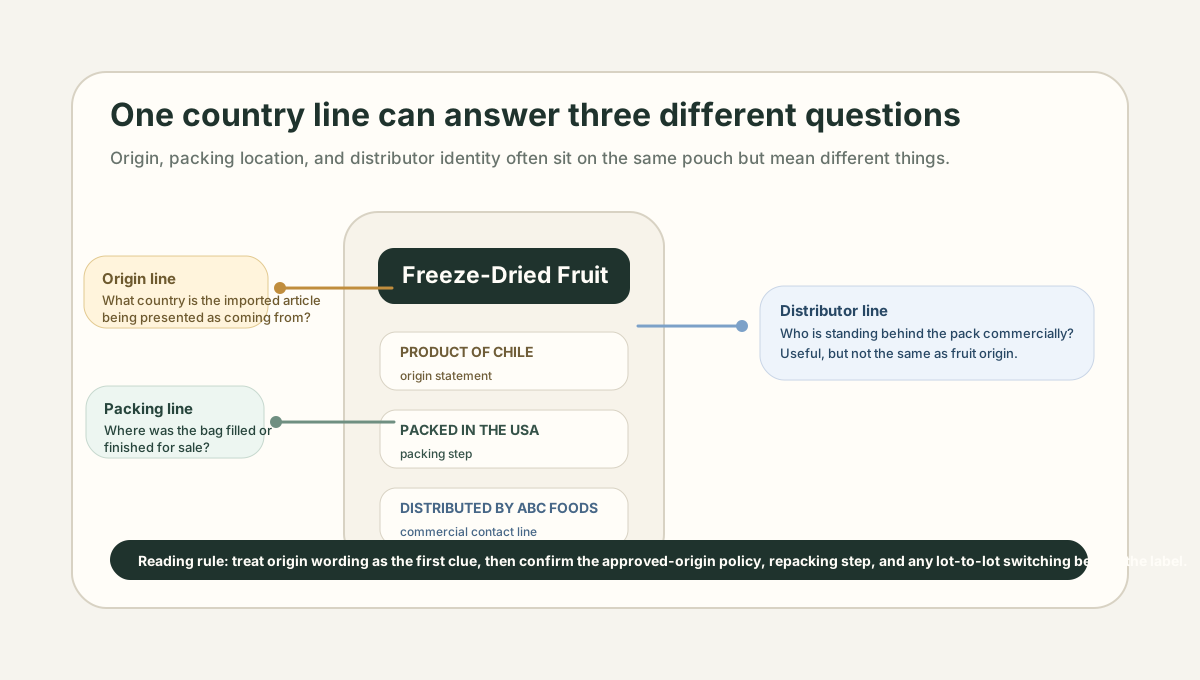
- Is the fruit truly domestic in origin, or only domestically packed?
- What part of the cost difference comes from freight, compliance, or packaging rather than fruit quality?
These questions reveal more than general claims about domestic convenience or imported value.
Bottom line
Domestic versus imported freeze-dried fruit is not a moral choice. It is an operating-model choice.
Domestic supply can simplify response time and buying friction. Imported supply can widen fruit access, scale, and cost options. The stronger program is the one that can prove specification control, documentation discipline, and realistic replenishment logic under the model it uses.
Buy the system, not just the origin story.
Frequently Asked Questions
Is domestic freeze-dried fruit always better than imported product?
No. Domestic supply can reduce some communication and logistics friction, but imported supply may offer better fruit access, broader origin options, or stronger economics for certain formats. The better question is how well the supplier can hold the spec and support your operating model.
What extra paperwork comes with imported freeze-dried fruit?
Imported food shipments face FDA import controls such as prior notice, food facility registration requirements, and foreign supplier verification responsibilities. Those layers do not make imported product bad, but they do make the buying system more documentation-heavy.
What does FSVP change for a freeze-dried fruit buyer?
FSVP makes the importer responsible for verifying that the foreign supplier is producing food in a way that meets applicable U.S. safety standards. That means imported supply should be reviewed as a documented compliance program, not only as a price quote.
Does domestic buying always mean shorter lead times?
Often, but not automatically. A domestic packer can still be capacity-constrained or dependent on imported raw material, while a well-run imported program with stock on the ground can sometimes replenish faster than expected. Buyers should ask about actual reorder timing, not assume.
When does imported freeze-dried fruit make the most sense?
Usually when the buyer needs access to specific origins, cultivars, or cost structures that domestic production cannot match easily, and when the importer has the paperwork, verification, and buffer-stock discipline to manage the program well.
Primary sources & further reading
- Importing Human Foods U.S. Food & Drug Administration Referenced for FDA import requirements including prior notice, food facility registration, food labeling, and ingredients and packaging oversight.
- Guidance for Industry: Foreign Supplier Verification Programs for Importers of Food for Humans and Animals U.S. Food & Drug Administration Referenced for the importer obligation to establish and follow an FSVP that verifies foreign suppliers meet applicable U.S. requirements.
- Importing Food for Commercial Use (Resale) U.S. Customs and Border Protection Referenced for CBP's commercial-food import overview, including prior notice and FDA registration expectations.
- FSMA Final Rule on Foreign Supplier Verification Programs (FSVP) for Importers of Food for Humans and Animals U.S. Food & Drug Administration Referenced for the requirement that importers approve foreign suppliers and conduct appropriate verification activities.
External links open in a new tab. We do not receive compensation from any organization listed; sources are referenced because they are primary, current, and publicly verifiable.