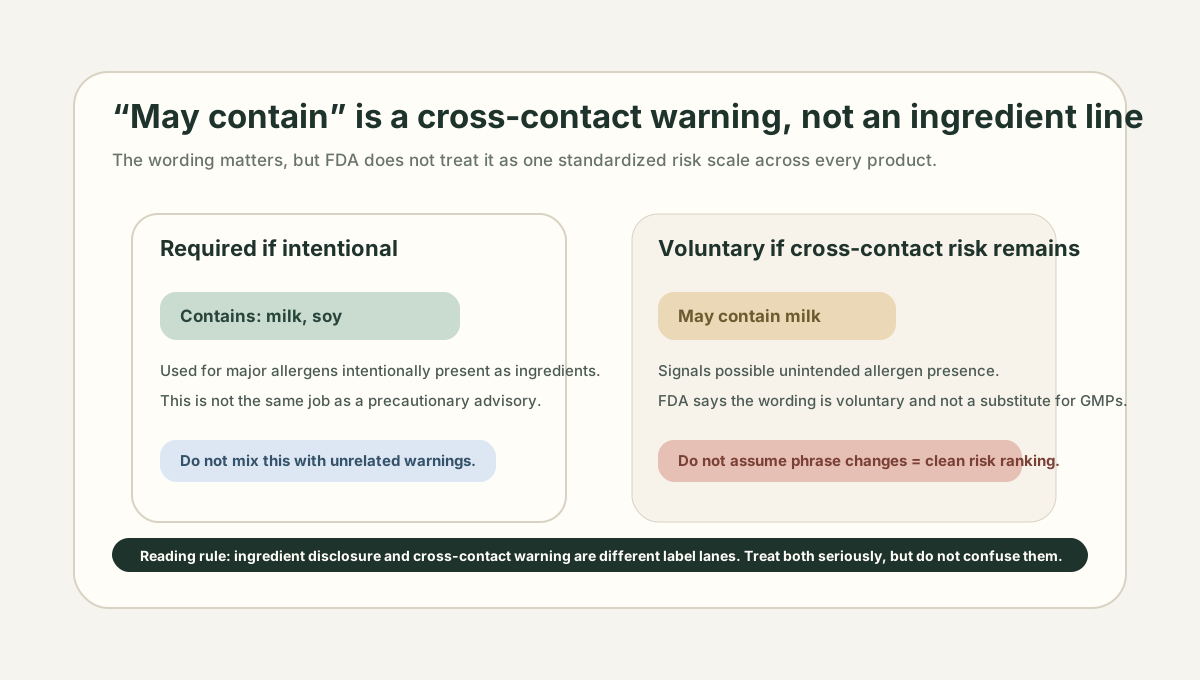
- `Contains` statements are for major allergens intentionally present as ingredients; `may contain` statements are voluntary allergen advisories about possible cross-contact.
- FDA says precautionary allergen labeling is not a substitute for good manufacturing practices or allergen preventive controls.
- A `may contain` statement does not carry one standardized risk meaning across brands or facilities.
- If allergy safety matters, the strongest reading habit is to treat any allergen advisory as meaningful rather than trying to rank wording styles casually.
Freeze-dried fruit often looks like one of the simplest aisles for ingredient reading. Many bags are fruit-only. Some have sugar, acid, or flavor systems. Then there are the products that seem ingredient-simple but still carry an allergen advisory such as may contain milk or may contain peanuts.
That is where shoppers and buyers often misread the label.
The direct answer
On a freeze-dried fruit label, may contain usually signals a voluntary allergen advisory about possible cross-contact. It is not the same as a required Contains statement used for major allergens intentionally present as ingredients.
The practical reading rule is:
Containsmeans the allergen is in the formula.May containmeans the manufacturer is warning about possible unintended presence.
Those are different label jobs.
Why the distinction matters
Some readers see any allergen statement and assume the product definitely contains the allergen. Others do the opposite and assume may contain is just legal over-caution with no real meaning.
Both shortcuts are weak.
FDA explains that the required allergen labeling rules focus on major allergens intentionally used as ingredients. Advisory statements such as may contain are separate, voluntary statements often used to address possible cross-contact.
That makes may contain neither a formal ingredient declaration nor an empty decorative line. It is a caution about how the product may have been exposed in the manufacturing environment.
Contains is for intentional ingredients
Under FDA's allergen-labeling framework, the Contains statement is reserved for declaring major food allergens intentionally present in the food.
That is why a freeze-dried fruit bag with a flavor system, coating, yogurt inclusion, or other formulated component might properly say:
Contains milkContains soy
if those allergens are part of the actual formula.
The statement is meant to be clear and direct. FDA guidance specifically warns against cluttering the Contains statement with other kinds of information because doing so would make the mandatory allergen message harder to read.
May contain is about cross-contact risk
Cross-contact is different from formulation. It means an allergen may be unintentionally introduced into a food that is not intended to contain it.
FDA's allergen Q&A guidance gives common examples such as:
- shared equipment
- product carry-over
- production sequencing
- allergenic product above exposed lines
In the freeze-dried fruit world, that can matter most in plants that run multiple product families:
- fruit-only items
- yogurt-coated or chocolate-containing snacks
- nut-and-fruit mixes
- cereal or dessert inclusions
The plain fruit SKU may not be formulated with the allergen. The environment may still create a cross-contact question.
The phrase is voluntary, and that is the hard part
FDA has been explicit that precautionary allergen labeling is voluntary and does not come with one uniform rule that tells consumers exactly how to rank one advisory phrase against another.
That means:
may contain milkprocessed in a facility that also uses milkmade on shared equipment with milk
should not be casually treated as precise risk tiers just because they sound different.
FDA has also said the wording style does not reliably correlate with allergen presence or absence in a simple way. So shoppers trying to decode subtle phrase differences like a scoring system are usually over-reading the language.
Advisory wording is not a substitute for control
This is the most important point for manufacturers and buyers.
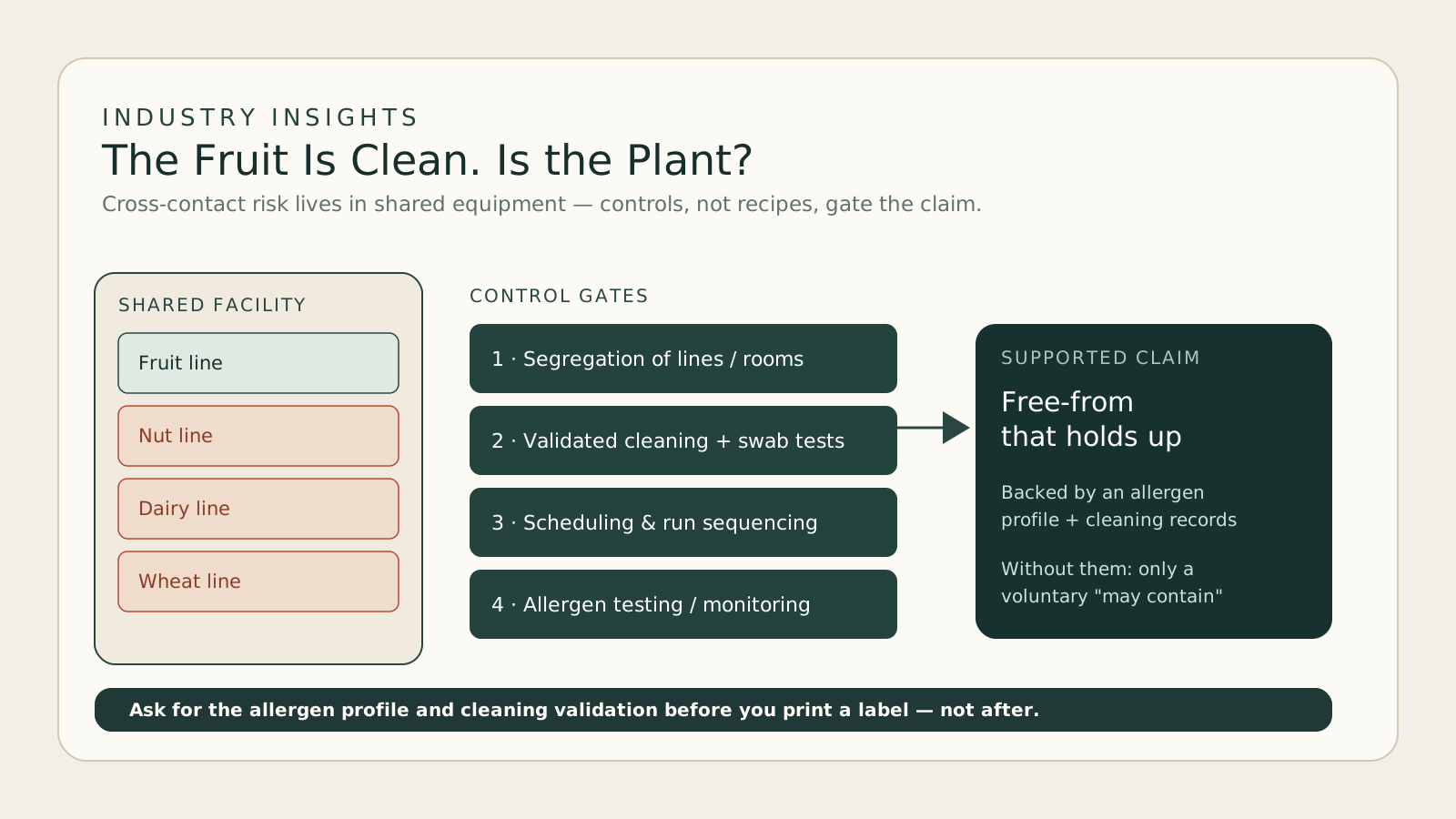
FDA says allergen advisory statements are not a substitute for current good manufacturing practices or allergen preventive controls. In other words, a plant is not supposed to skip cleaning discipline or line-separation work and then solve the problem with a broad may contain warning.
The label can communicate residual risk. It is not supposed to replace the risk-reduction program itself.
For private-label buyers, that means advisory language should trigger manufacturing questions:
- What else runs on the line?
- How is scheduling managed?
- What cleaning verification is used?
- When does the plant decide an advisory is needed?
Those questions matter more than the wording alone.
Why freeze-dried fruit readers get confused
The category itself creates a trap. Consumers often expect freeze-dried fruit to mean:
- simple
- natural
- fruit-only
Often that expectation is reasonable. But not every product in the category is a single-ingredient fruit-only item. Once a line expands into sweetened crisps, coated products, mixed snacks, or flavored pieces, the allergen profile can widen quickly.
That is why a bag that still looks minimal on the front panel may deserve a more careful allergen read on the back.
What not to do with a may contain statement
There are two common mistakes:
1. Treating it as meaningless
Because the statement is voluntary, some readers assume it carries no information. That is risky. The manufacturer is flagging a possible cross-contact condition that matters to allergy-sensitive households.
2. Treating it as identical to a declared ingredient
The other mistake is reading may contain milk as if the product definitely contains milk in the formula. That is also inaccurate. The phrase is warning language, not an ingredient declaration.
The label needs to be read in the right category.
A practical reading framework
For freeze-dried fruit, the cleanest reading order is:
- Read the ingredient list first.
- Check the
Containsstatement, if one is present. - Then review any precautionary advisory such as
may contain. - If allergy safety is important, do not try to invent your own precise risk ranking from minor wording changes.
That sequence preserves the difference between intentional ingredients and possible unintended presence.
If the allergy matters medically, treat an allergen advisory as meaningful information. Do not downgrade it just because the product is otherwise plain fruit.
One wording combination to watch for
FDA guidance also says it is not appropriate for a product to declare an allergen as an intentional ingredient and also carry a precautionary advisory for that same allergen. A label that effectively says both Contains milk and may contain milk is not communicating clearly.
That is worth remembering when comparing premium snack brands, especially in mixed or coated products that try to sound cleaner than they are.
Bottom line
May contain on a freeze-dried fruit label is a voluntary allergen advisory about possible cross-contact, not the same thing as a required Contains statement for intentional ingredients.
The phrase matters, but it does not come with one universal risk meaning. The strongest reading habit is to separate ingredient disclosure from cross-contact warning, then treat both seriously in their own lane.
Frequently Asked Questions
What does 'may contain' mean on a freeze-dried fruit label?
It usually means the manufacturer is warning about the possible presence of a major allergen due to cross-contact rather than because that allergen is an intended ingredient. FDA treats this kind of statement as voluntary precautionary allergen labeling.
Is 'may contain' the same as a 'Contains' allergen statement?
No. A Contains statement is used to declare major food allergens that are intentionally present as ingredients. A may contain statement is a separate voluntary advisory about possible unintended allergen presence.
Does 'may contain' follow one standard risk level across products?
No. FDA says precautionary allergen statements are voluntary and there is no uniform rule governing what different advisory phrases mean. One brand's wording does not automatically translate into a lower or higher practical risk than another's.
Can a company use 'may contain' instead of controlling allergens well?
No. FDA says advisory statements are not a substitute for current good manufacturing practices or allergen preventive controls. The statement is supposed to sit on top of controls, not replace them.
Can a label say both 'Contains milk' and 'may contain milk'?
FDA guidance says that is not appropriate. If milk is already an intentional ingredient and declared as such, using a precautionary advisory for the same allergen would be misleading.
Primary sources & further reading
- Food Allergies U.S. Food & Drug Administration Referenced for the difference between required major-allergen labeling and voluntary advisory statements used to address possible cross-contact.
- Guidance for Industry: Questions and Answers Regarding Food Allergens, Including the Food Allergen Labeling Requirements of the Federal Food, Drug, and Cosmetic Act (Edition 5) U.S. Food & Drug Administration Referenced for FDA's explanation that allergen advisory statements are not addressed by section 403(w), must be truthful and not misleading, and cannot replace CGMPs or preventive controls.
- The Current Food Allergen Landscape U.S. Food & Drug Administration Referenced for FDA's statement that precautionary allergen labeling is voluntary and does not carry a uniform meaning across phrases such as `may contain` and `produced in a facility`.
- What is a 'Major Food Allergen'? U.S. Food & Drug Administration Referenced for FDA's definition of major food allergens under the FD&C Act.
External links open in a new tab. We do not receive compensation from any organization listed; sources are referenced because they are primary, current, and publicly verifiable.