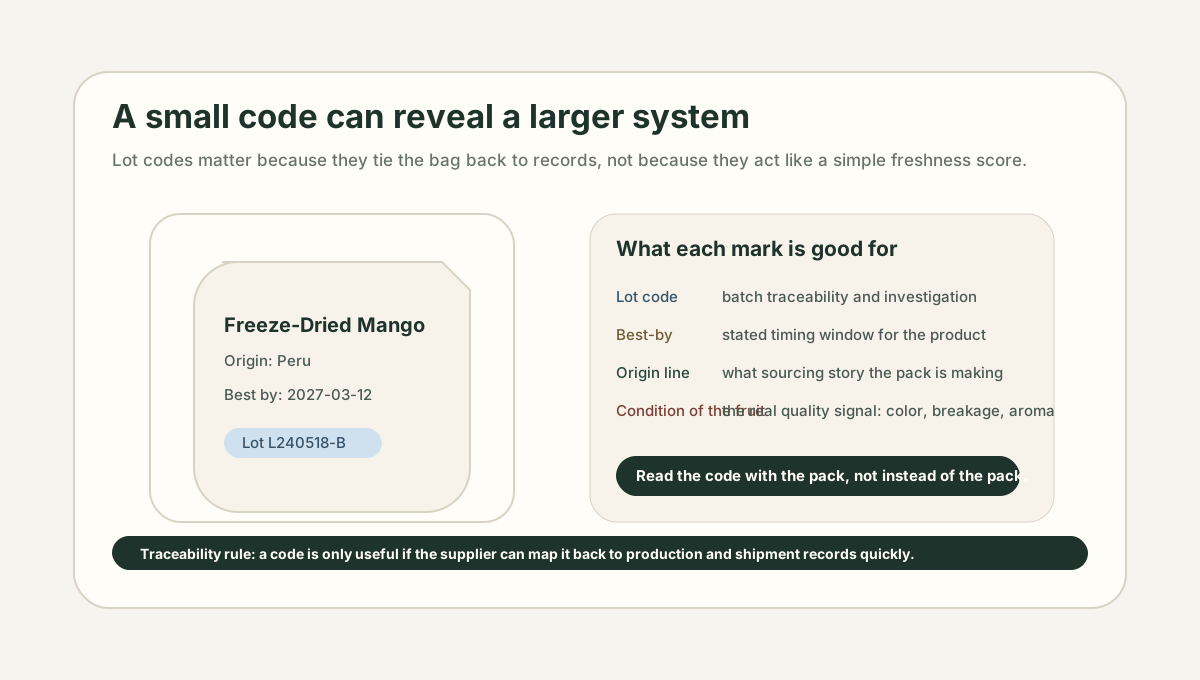
- Lot codes and related marks are traceability tools first; they are not standalone freshness scores.
- The most useful read comes from combining the lot code with best-by dating, pack format, origin language, and the condition of the fruit itself.
- Good traceability systems help brands and buyers isolate issues faster when complaints or quality drift appear.
- A code that is missing, inconsistent, or impossible to tie back to documents is a quality-system concern, not just a label detail.
A small stamped code near the seal or carton flap can reveal more than many buyers realize. In freeze-dried fruit, lot codes and traceability marks are a quiet sign of whether the product is being managed through a disciplined quality system or simply moving through the market with minimal documentation.
That does not mean the code tells the whole story. It means the code is part of how the story can be reconstructed when something goes wrong.
The direct answer
Lot codes on freeze-dried fruit packs are traceability identifiers used to connect a bag or case back to a specific production or packing record. They can help buyers and brands investigate complaints, isolate affected inventory, and understand when a product was run, but they do not act as a standalone quality or freshness grade.
Read the code as a traceability tool, then place it alongside the rest of the label and the condition of the fruit.
What a lot code is trying to do
At minimum, a lot code should help a supplier answer a few practical questions quickly:
- Which batch is this?
- When was it produced or packed?
- Which raw material or production records connect to it?
- Which other cases or pouches are likely related?
The exact structure can vary. Some systems embed dates, shifts, or line identifiers. Others use an internal code that maps to digital records. Both approaches can work if the company can retrieve the underlying information quickly and accurately.
The important point is not whether the code looks simple or complex. It is whether the traceability behind it is real.
Why this matters in freeze-dried fruit specifically
Freeze-dried fruit is often sold across multiple formats:
- retail pouches
- bulk bags
- foodservice packs
- ingredient cartons
The same fruit may also move through different origins, cuts, or packaging runs across the year. That makes traceability discipline especially important when a complaint appears around:
- breakage
- foreign material
- seal quality
- texture drift
- color inconsistency
Without usable lot coding, the supplier may be forced into broad guesses instead of targeted action.
What the code can tell you and what it cannot
This is where many people overread the label.
A lot code can often help you determine:
- whether two bags likely came from the same run
- whether the product is tied to the same shipment or case lot
- whether the pack date appears recent or older
- whether the supplier can trace the product back through records
But the code does not automatically tell you:
- whether the fruit is premium or commodity grade
- whether the drying endpoint was ideal
- whether the packaging barrier is strong enough
- whether the product was stored well after packing
Two bags can carry clean lot codes and still perform differently if one sat in worse conditions after release.
How to read the pack more intelligently
The strongest label read usually combines four signals:
1. Lot code
Use it to identify the batch or ask follow-up questions.
2. Best-by or date marking
Use it to understand the supplier's stated timing window.
3. Origin or product description
Use it to confirm what fruit and sourcing story the bag is actually representing.
4. Physical condition
Use the real product to judge breakage, powder, color, aroma, and seal integrity.
That combination is much more informative than treating the code alone as a verdict.
What good traceability usually looks like
For buyers and brand teams, a strong traceability system usually shows up as clarity rather than drama.
A good supplier should be able to explain:
- where the lot code is printed
- how the code maps to internal production records
- how case and pouch coding relate to each other
- how quickly affected inventory could be isolated if needed
- what documents would be pulled during an investigation
This is not only a compliance conversation. It is also a professionalism conversation. Suppliers with strong systems tend to answer traceability questions directly and without improvising.
Red flags worth noticing
Lot coding becomes important precisely when something has already gone wrong, so weaknesses here matter.
Watch for:
- codes that are hard to read or smear off easily
- pouches and cartons that do not appear to match
- missing codes on some units in the same shipment
- vague answers about what the code actually references
- documentation that cannot tie the code back to a production record
Those issues do not prove the fruit is bad, but they do raise the risk that future quality problems will be harder to manage cleanly.
What consumers and smaller buyers should take from this
A consumer does not need to decode every character on a pouch to use this information well.
The practical lesson is simpler:
- notice whether the product has clear coding at all
- keep the code if you need to report a problem
- do not treat a date-looking code as proof of premium quality
For small retail buyers and emerging brands, the code matters more because it helps judge whether a supplier is prepared to support growth responsibly.
When a supplier can explain the lot code quickly and connect it to packing and shipment records without hesitation, that is usually a good sign that quality management is not being improvised.
Bottom line
Lot codes and traceability marks on freeze-dried fruit packs are there to help identify, isolate, and investigate product lots. They are important because they make quality systems more usable when real issues appear.
But they are not a shortcut to freshness or excellence on their own. The best read combines the code with date marking, origin language, packaging condition, and the actual fruit in the bag.
Frequently Asked Questions
What does a lot code on freeze-dried fruit mean?
A lot code is an identifier used to tie a finished product back to a specific production batch, packing run, or traceability record. The exact format varies by manufacturer, but the purpose is to help the company track and investigate the product if needed.
Does a newer lot code always mean better quality?
Not automatically. A newer lot may be more recently packed, but quality still depends on the raw fruit, drying control, packaging quality, and how the product has been handled since it was produced.
Is the lot code the same as the best-by date?
No. A best-by date is a consumer-facing timing reference, while the lot code is primarily a traceability identifier. Some systems may encode date information inside the lot code, but the two fields do different jobs.
Where are lot codes usually printed on freeze-dried fruit packs?
They are often stamped or ink-jetted near the pouch seal, on the back panel, on the case label, or on a carton flap. Bulk packs may also carry related pallet, carton, or production-line identifiers.
What should buyers do if a supplier's lot coding is unclear?
Ask how the code maps back to production records, packaging records, and shipment documents. If the supplier cannot explain the coding logic clearly, treat that as a traceability-system weakness worth resolving before the relationship scales.