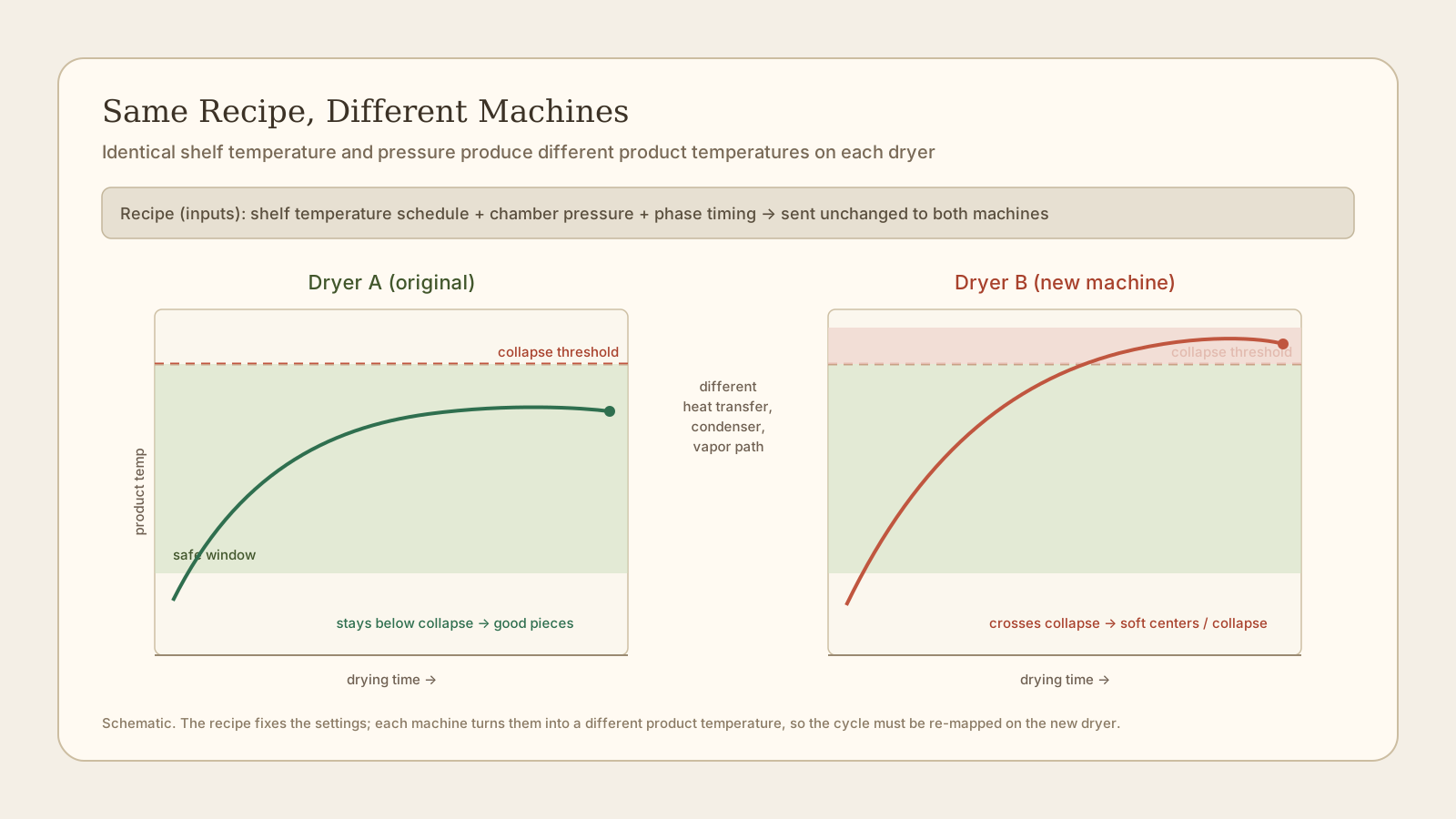
- A cycle is a set of equipment settings, not a direct description of what the fruit experiences, so the same shelf temperature and pressure can give different product temperatures on a different dryer.
- Heat transfer to the trays, condenser capacity, and the chamber-to-condenser path differ between machines, which is why a transferred cycle often shows up as soft centers, collapse, or longer-than-expected runs.
- The safe way to move a cycle is to re-map product temperature and endpoint on the new dryer rather than copying the setpoints and assuming the result will match.
A processor dials in a beautiful cycle for sliced strawberries. The pieces come out light, evenly colored, with a clean snap. Then demand grows, a second freeze dryer is brought online, and the same settings are loaded into it. The first batch comes out with soft, slightly cool centers and a few collapsed pieces near the door. Nothing in the recipe changed. The result did.
This surprises people because a freeze-drying cycle looks like a recipe, and recipes are supposed to travel. In practice a cycle is tied to the machine it was built on more tightly than almost any other step in the process. Understanding why explains a lot of the trouble that shows up when production scales, when a co-packer is added, or when an old dryer is replaced.
A cycle is settings, not experience
The first thing to be clear about is what a cycle actually contains. A freeze-drying cycle is a schedule of equipment settings: shelf temperature over time, chamber pressure, and the timing of each phase. Those are inputs to the machine.
What determines whether the fruit dries well is something the recipe does not directly list: the product temperature, meaning how warm the fruit itself gets while its ice is being removed. The whole craft of freeze-drying is keeping that product temperature in a narrow band, warm enough to dry in reasonable time, but below the point where the structure collapses.
The catch is that product temperature is not set directly. It is the result of the shelf temperature and pressure acting through a specific machine on a specific load. Give two different dryers the identical shelf temperature and pressure, and the fruit inside can end up at two different product temperatures. The recipe is the same; the experience the fruit gets is not.
A cycle records what the machine is told to do, not what the fruit feels. Because product temperature is the real driver and it depends on the equipment, copying the settings does not copy the result.
Where machines differ
Three differences between dryers do most of the damage when a cycle is moved.
The first is heat transfer to the product. Shelves deliver heat to the trays, and how efficiently that happens depends on shelf flatness, tray contact, fluid temperature uniformity, and even the gas conduction at the working pressure. A machine that couples heat into the trays more aggressively will run the same shelf setpoint at a higher product temperature, pushing toward collapse. One that couples less will run colder and slower, leaving soft centers if the clock is copied.
The second is condenser capacity and temperature. The condenser is the cold trap that pulls water vapor out of the chamber. If the new machine's condenser cannot keep up with the vapor coming off the product, pressure control wanders and drying slows. A cycle developed on a dryer with generous condenser headroom can stall on one that is closer to its limit.
The third is the path between chamber and condenser. The duct, valve, and any restriction between the two set how easily vapor can leave the product. A narrower or longer path limits the maximum vapor flow, so the product cannot dry faster than that bottleneck allows no matter what the shelves are doing. Two machines with the same shelves but different ductwork will not dry at the same rate.
Why the same setpoints land in different places
Put those differences together and the picture is straightforward. The recipe fixes shelf temperature and pressure. Each machine turns those into a product temperature and a drying rate through its own heat and vapor characteristics. So the product temperature curve, the thing that actually has to stay below collapse and reach a dry endpoint, lands in a different place on each dryer.
On the original machine, that curve might sit comfortably in the safe window. On the new one, the same setpoints might pull product temperature up across the collapse line during primary drying, or leave it too cold to finish in the scheduled time. The failure mode depends on which way the new machine differs, but the root cause is the same: the cycle was tuned to a product experience that this machine does not reproduce from those settings.
Load makes it worse. The amount of fruit, how the trays are filled, and where pieces sit relative to the door and walls all shift heat and vapor flow. A cycle that was robust on a lightly loaded development run can behave differently at full production load even on the same machine, let alone a new one.
What this means for moving a cycle
The practical lesson is to treat a cycle transfer as a re-mapping job, not a copy-paste. The setpoints are a starting point; the product's experience is what has to be reproduced.
That means putting temperature probes into representative pieces at several tray positions on the new machine, including the spots most likely to run warm or cold, and watching the product temperature curve rather than trusting the shelf reading. It means confirming the chamber can actually hold the target pressure under full vapor load, not just at the start. And it means verifying the endpoint with a real check on moisture or a pressure-based test rather than assuming the original run time still applies.
When a cycle moves to a new dryer, the first run is a measurement run. Map product temperature and endpoint on the new machine before trusting the old setpoints, and expect to adjust shelf temperature, pressure, or time to put the product back in the same safe window.
What this means for buyers
For a buyer, this is useful background when a supplier expands capacity, adds a co-packer, or changes equipment. Those are exactly the moments when texture and moisture can drift even though the supplier insists nothing changed in the recipe. From their point of view, nothing did. The machine changed underneath it.
It is fair to ask a supplier how they qualify a new dryer or a second site for an existing product: whether they re-map product temperature and re-verify endpoint, or simply load the old cycle and hope. The first answer signals an operation that understands its own process. The second is a setup for the kind of lot-to-lot variation that shows up as soft centers one month and collapsed pieces the next.
Bottom line
A freeze-drying cycle is a set of machine settings, not a portable description of what the fruit goes through. Because product temperature, the property that really governs quality, depends on each dryer's heat transfer, condenser, and vapor path, the same recipe can land in the safe window on one machine and miss it on another.
Moving a cycle well means re-measuring the product's experience on the new equipment and adjusting the settings to reproduce it, rather than copying setpoints and assuming the result will follow. When freeze-dried fruit quality shifts after a supplier scales up or changes machines, an un-mapped cycle transfer is one of the first things worth suspecting.
Frequently Asked Questions
Why doesn't a freeze-drying recipe transfer directly between machines?
Because the recipe is a list of equipment settings, mainly shelf temperature and chamber pressure, not a direct record of what the fruit experiences. The product temperature that actually matters is the result of those settings plus the specific machine's heat transfer, condenser capacity, and vapor path. Two dryers given identical settings can deliver different product temperatures and different drying rates, so the same recipe can pass on one and fail on another.
What usually goes wrong when a cycle is copied to a new dryer?
The most common failures are soft or moist centers when the new machine dries slower than expected, and collapse or stickiness when it runs the product warmer than the original. Cycles can also simply take longer or finish unevenly across the chamber. None of these mean the recipe was wrong; they mean it was developed for a different machine.
What should actually be measured when moving a cycle?
Product temperature at representative tray positions, the pressure the chamber can actually hold under full vapor load, and a real endpoint check rather than a fixed clock time. The goal is to reproduce the product's experience, low enough to avoid collapse and dry enough at the finish, not to reproduce the setpoints on the controller.
Is a bigger dryer always slower or faster?
Neither reliably. A larger machine may have more condenser capacity but also more product load, longer vapor paths, and more variation across shelves. What matters is how those factors combine for your product and load, which is why the cycle has to be re-mapped rather than scaled by a simple rule.
Primary sources & further reading
- Freeze-drying of food: principle, process and quality ScienceDirect Topics Referenced for the general relationship between shelf temperature, chamber pressure, and product temperature during primary drying.
- Lyophilization: Introduction and Basic Principles PubMed Referenced for the principle that heat and mass transfer characteristics are equipment dependent and must be re-characterized when a cycle moves between dryers.
- Water Activity (aw) in Foods U.S. Food & Drug Administration Referenced for the role of final moisture and water activity as the endpoint that any transferred cycle still has to meet.
External links open in a new tab. We do not receive compensation from any organization listed; sources are referenced because they are primary, current, and publicly verifiable.