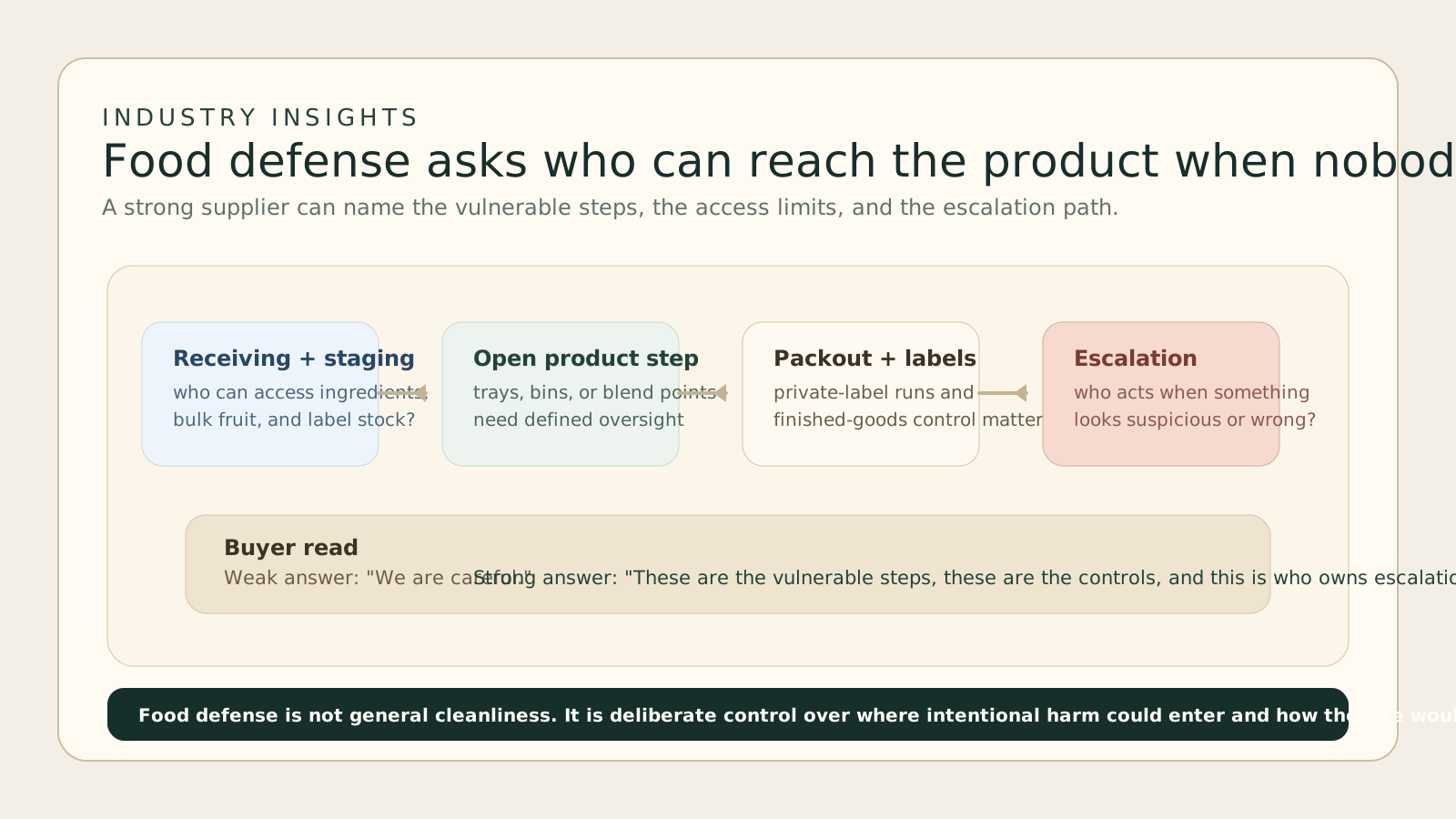
- Food defense is about preventing intentional adulteration, not ordinary food-safety drift or paperwork completeness.
- Freeze-dried fruit programs have vulnerable moments around ingredient staging, open-product handling, repacking, and visitor or contractor access.
- A supplier with credible food-defense readiness can explain vulnerable points, mitigation steps, and who acts when something suspicious happens.
- Buyers do not need a full security manual, but they should expect a coherent explanation of controls, access limits, and escalation logic.
Supplier approval discussions usually spend most of their time on product specs, certifications, microbiology, price, MOQ, and lead time.
Those are all necessary.
They do not answer a different question: how protected is the operation against deliberate harm?
The direct answer
Food defense readiness matters when approving freeze-dried fruit suppliers because it shows whether the supplier has identified where intentional adulteration risk could enter the operation and whether the site has real controls for reducing that risk.
For buyers, that matters because a credible supplier is not only running a clean process. It is also protecting exposed product, restricting access intelligently, and escalating suspicious events in a defined way.
Why this is a separate approval question
Food defense is often blurred into general food safety. That is too loose.
Food safety asks how the plant prevents accidental hazards:
- sanitation failures
- environmental contamination
- allergen cross-contact
- weak process control
Food defense asks how the plant reduces the chance of intentional harm:
- deliberate tampering
- malicious contamination
- vulnerable open-product access
- weak access control in sensitive areas
Those are different risk categories, and they should stay separate in supplier review.
Why freeze-dried fruit has meaningful vulnerable points
Freeze-dried fruit may look like a simple category, but the production flow can create exposed stages that deserve specific attention:
- raw-material receiving and staging
- open-tray or open-bin handling before packout
- repacking into private-label or channel-specific formats
- ingredient addition for blends, powders, or flavored products
- temporary storage of finished pouches, bulk bags, or labels
The point is not that freeze-dried fruit is uniquely dangerous. The point is that dry, open, lightweight foods moving through multiple handling steps can be operationally vulnerable if access and oversight are sloppy.
That becomes more relevant when one facility serves multiple customers, uses contractors, or handles both plain-fruit and more complex flavored or blended SKUs.
What credible food-defense readiness looks like
A strong supplier usually can describe food defense without sounding surprised by the question.
You should hear a coherent explanation of:
- who can access exposed product zones
- how visitors and contractors are controlled
- which process steps are treated as more vulnerable
- what monitoring or supervision exists around those steps
- how incidents are escalated and documented
FDA's intentional-adulteration framework is useful here because it centers the idea of identifying vulnerable steps and applying mitigation strategies deliberately, not generically.
That is the buyer takeaway too. A serious site does not say only "we take security seriously." It can explain where the sensitive points are and what the controls are.
Why a written plan still matters
Food defense can sound abstract until the operation has to prove it is organized.
That is where written planning matters. FDA's Food Defense Plan Builder exists for a reason: sites need a structured way to document vulnerable points, mitigation strategies, monitoring responsibilities, corrective action, and verification habits.
For buyers, the practical lesson is not that every supplier must hand over the full document.
It is that a site using a structured approach usually sounds different in conversation:
- responsibilities are clearer
- control points are named specifically
- escalation paths are less improvised
- access-control language is operational, not decorative
The weak version of food defense is a vague assurance that the plant is locked at night. The strong version is a defined program.
Where buyers should probe without overreaching
You do not need to ask for a security map or every procedural detail. That can become performative quickly.
Better approval questions are narrower and more useful:
- Which production or packout steps are treated as most vulnerable?
- How are non-routine visitors handled near exposed product?
- What controls limit unauthorized access to ingredients, labels, or finished goods?
- Who owns the escalation if suspicious activity is observed?
- Does the site use a formal food-defense plan or builder tool?
Those questions test whether the supplier understands food defense as an operating system rather than as a certification talking point.
What weak readiness sounds like
Warning signs are usually conversational before they are documentary.
Examples include:
- food defense is answered as if it were only sanitation
- nobody can name a vulnerable step
- access control is described loosely or inconsistently
- visitor handling depends on "common sense"
- escalation ownership is unclear
None of those prove a supplier is unsafe. They do show that deliberate-risk thinking may be underdeveloped.
For a buyer, that is enough to keep asking.
Regulatory applicability can vary by facility type and size. The safer commercial habit is to treat food-defense readiness as a supplier-discipline signal even before debating the exact legal scope.
Bottom line
Food defense readiness matters because supplier risk is not only about whether the fruit is processed well when everything goes right. It is also about whether the operation is protected when someone tries to make it go wrong on purpose.
In freeze-dried fruit, that makes food defense a legitimate approval topic, not a niche compliance side quest.
Frequently Asked Questions
What is food defense in simple terms?
It is the set of controls used to protect food from intentional adulteration or deliberate tampering rather than ordinary accidental contamination.
How is food defense different from food safety?
Food safety focuses on preventing unintentional hazards such as pathogens, poor sanitation, or process drift. Food defense focuses on deliberate harmful acts and the controls used to make those acts harder.
Why does this matter for freeze-dried fruit buyers?
Because open-product handling, bulk ingredients, repacking, and multi-customer facilities can create vulnerable moments where weak access control or weak escalation discipline becomes a real commercial risk.
Does every supplier need the same level of food-defense documentation?
No. Regulatory scope can vary, but buyers should still expect a serious operation to understand its vulnerable points and to have practical mitigation and response routines.
What should buyers ask during approval?
Ask who can access exposed product areas, how visitors and contractors are controlled, how suspicious incidents are escalated, and whether the site uses a structured food-defense plan or builder tool.
Primary sources & further reading
- FSMA Final Rule for Mitigation Strategies to Protect Food Against Intentional Adulteration U.S. Food & Drug Administration Referenced for FDA's food-defense framework around actionable process steps, mitigation strategies, monitoring, and corrective actions for intentional adulteration risk.
- Food Defense Plan Builder U.S. Food & Drug Administration Referenced for FDA's own planning tool used to structure site-specific food-defense assessments and written plans.
- Food Defense and Emergency Response USDA Food Safety and Inspection Service Referenced for USDA's broader food-defense framing, training emphasis, and emergency-response context.
External links open in a new tab. We do not receive compensation from any organization listed; sources are referenced because they are primary, current, and publicly verifiable.