- FDA says most domestic and foreign facilities that manufacture, process, pack, or hold food for U.S. consumption must register unless an exemption applies.
- Registration does not prove a supplier is excellent, but missing or mismatched registration can create avoidable import friction and is a clear approval red flag.
- Foreign facilities serving the U.S. must also handle U.S.-agent details correctly as part of the registration framework.
- Buyers cannot look up another firm's registration number publicly, so the useful move is to ask the supplier for status confirmation and understand which facility in the chain is actually registered.
Supplier approval often starts too late in the freeze-dried fruit category. Teams review samples, compare quotes, and discuss packaging before confirming whether the facility behind the product is properly set up for U.S.-bound food in the first place.
That is backward.
The direct answer
FDA food facility registration is a basic gate in freeze-dried fruit buying because it is one of the first operational checks separating a real U.S.-market supply program from an improvised one.
Registration is not the whole approval process. It does not prove the fruit is good, the pouch is strong, or the lot coding is disciplined. But if a required facility is not registered, or if registration details do not line up cleanly, the buyer is already working with avoidable risk.
In practical terms, registration is a threshold question before the rest of supplier evaluation becomes worth much time.
What the requirement actually covers
FDA's registration framework is broad. The agency states that most domestic and foreign facilities that manufacture, process, pack, or hold food for consumption in the United States must register unless a specific exemption applies.
That matters in freeze-dried fruit because the chain often includes more than one business:
- the fruit processor
- the contract packer
- the repacker
- the warehouse or consolidator
- the importer
- the brand owner
The buyer's job is not only to ask "Does the supplier have registration?" The better question is "Which facility in this chain is performing the activity that requires registration, and is that facility properly identified?"
Why this matters before quality review
Registration is easy to treat as background paperwork because it does not taste like fruit or look like packaging. But it influences how smoothly the entire U.S. program runs.
FDA says it verifies registration for firms that require it at import. If the submitted information matches FDA's systems, that part of compliance is straightforward. If the information does not match, FDA may need more information or may detain the product.
For buyers, that means registration is not a legal detail floating outside the commercial process. It can affect timing, inventory flow, and whether the shipment moves cleanly.
Registration is not approval, but it is a professionalism signal
A registered facility can still be the wrong supplier. Registration does not answer the harder questions:
- Is moisture control consistent?
- Are the breakage specs realistic?
- Does the packaging protect the actual application?
- Can the supplier repeat the sample across multiple lots?
But a supplier who cannot explain the registration setup clearly is usually giving you useful information anyway. It suggests the commercial system may be less mature than the quote deck implies.
In that sense, registration behaves like a professionalism signal. Serious suppliers do not treat it as mysterious.
Why foreign-facility details matter
Foreign supply programs add an extra layer. FDA's registration material makes clear that foreign facilities must provide U.S.-agent information as part of the framework. That is not a decorative field. It is part of how the communication path is structured.
For buyers sourcing freeze-dried fruit internationally, this matters because the consumer-facing brand is often several steps away from the actual manufacturing site. A sloppy answer about which entity is registered, who the U.S. agent is, or where the product is packed should slow the approval process down.
The point is not to interrogate suppliers theatrically. The point is to confirm that the legal and operational identity of the product chain is stable before volumes increase.
The confidentiality issue changes how buyers should ask
One practical wrinkle catches many newer brands: FDA says food-facility registration information is confidential and not publicly available.
That means buyers usually cannot self-verify another company's registration number through a public lookup. So the usable approach is more specific:
- ask whether the relevant manufacturing or packing facility is currently registered
- ask which facility in the chain performs the registered activity
- ask whether the supplier has handled recent U.S.-bound shipments under that setup
- ask who owns the U.S. import and documentation workflow
Those questions are more useful than demanding a public database search that does not exist.
Where buyers get tripped up
The most common mistake is assuming that the brand, exporter, factory, and packer are all the same legal or operational entity. In freeze-dried fruit, they often are not.
A second mistake is assuming that because one part of the chain sounds sophisticated, every required facility detail must already be under control. That is not always true. Some strong commercial sellers still rely on partners for critical registration, packing, or import functions.
The third mistake is moving directly from sample approval to purchase order without mapping the facility chain. That works until the first delay, mismatch, or detention request forces the team to learn the chain after the fact.
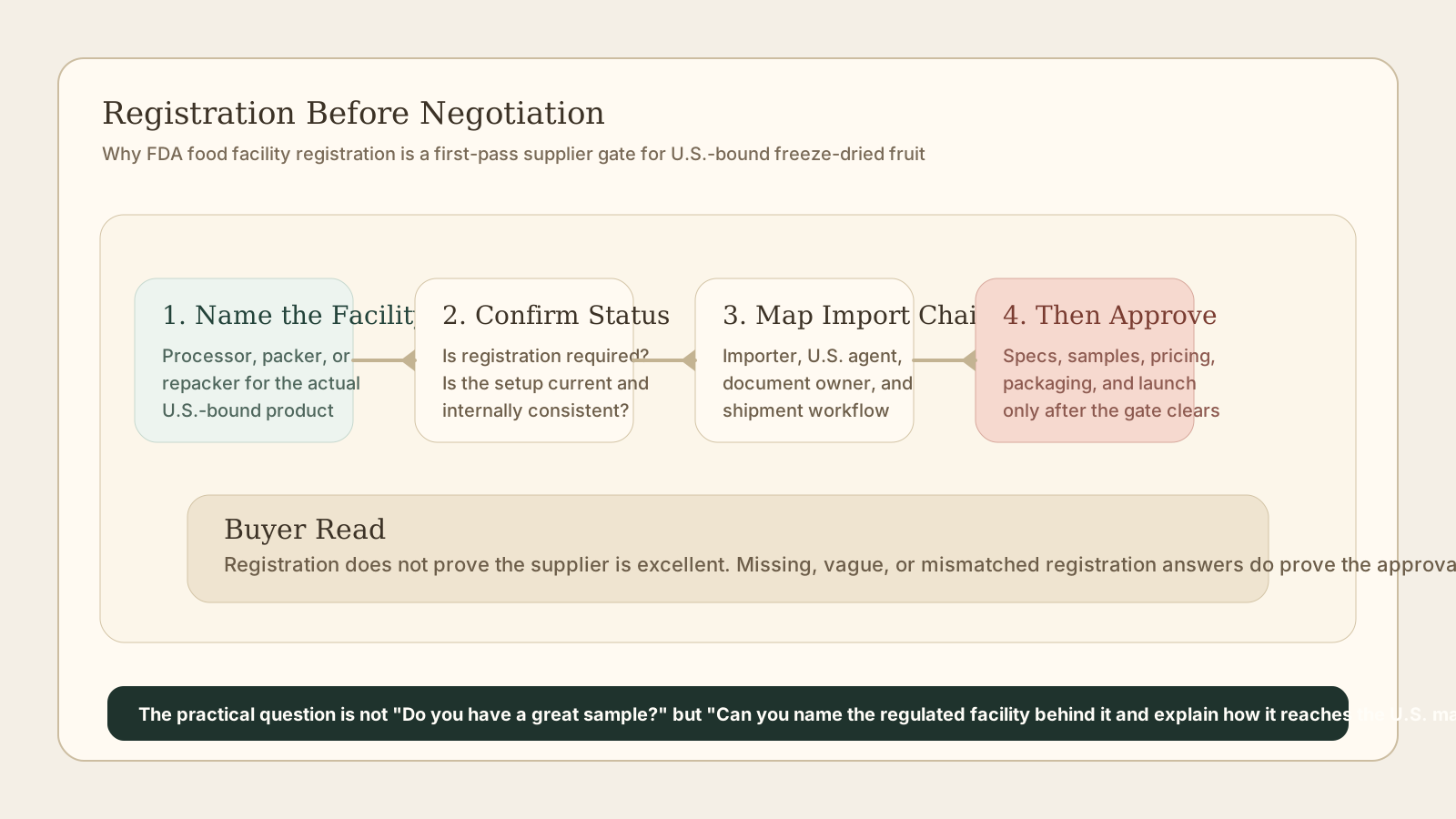
If a supplier cannot clearly name the facility that manufactures or packs the U.S.-bound product, explain its registration status, and describe how the import setup is handled, the buyer should treat approval as incomplete.
What this means for supplier approval
The disciplined sequence is straightforward:
- Identify the actual manufacturing and packing facility.
- Confirm whether FDA registration is required for that facility.
- Confirm that the supplier understands which entity is registered and which entity appears in the import workflow.
- Only then spend serious time on specs, trials, artwork, and launch timing.
That sequence sounds bureaucratic, but it saves time because it eliminates the wrong suppliers earlier.
Bottom line
FDA food facility registration is a basic gate in freeze-dried fruit buying because it confirms that the supplier chain is at least structurally prepared for U.S.-bound food. It is not full approval, but it is a baseline credibility screen.
Buyers should treat it that way: not as a complete quality answer, but as an early test of whether the rest of the supplier conversation is being built on solid ground.
Frequently Asked Questions
Does FDA food facility registration mean a freeze-dried fruit supplier is fully approved?
No. It is a baseline legal and operational requirement for many facilities, not a full quality endorsement. Buyers still need to evaluate product specs, process control, packaging, documentation, and commercial reliability.
Do foreign freeze-dried fruit suppliers usually need FDA registration?
Yes, if they are a foreign facility engaged in manufacturing, processing, packing, or holding food for human or animal consumption in the United States and no exemption applies.
Can buyers verify another company's FDA registration number online?
No. FDA states that food facility registration information is confidential, so buyers typically need to request status confirmation directly from the supplier.
What happens if registration information does not match at import?
FDA says it verifies registration for firms that require it, and if information does not match, the agency may need additional information or may detain the product.
Is the registered facility always the same as the brand owner?
No. In private-label and co-manufacturing arrangements, the registered facility may be the processor or packer rather than the consumer-facing brand.
Primary sources & further reading
- Importing Human Foods U.S. Food & Drug Administration Referenced for FDA's import overview, including that most facilities must register and that FDA verifies registration at import.
- Questions and Answers Regarding Food Facility Registration (Seventh Edition) U.S. Food & Drug Administration Referenced for FDA's guidance on who must register and how the food-facility registration framework applies.
- Online Registration of Food Facilities U.S. Food & Drug Administration Referenced for FDA's registration resources and supporting guidance links used by registrants.
- Food Facility Registration and Registration Cancellation by Paper (Mail or FAX) U.S. Food & Drug Administration Referenced for the registration information FDA requires, including foreign-facility U.S.-agent details.
External links open in a new tab. We do not receive compensation from any organization listed; sources are referenced because they are primary, current, and publicly verifiable.