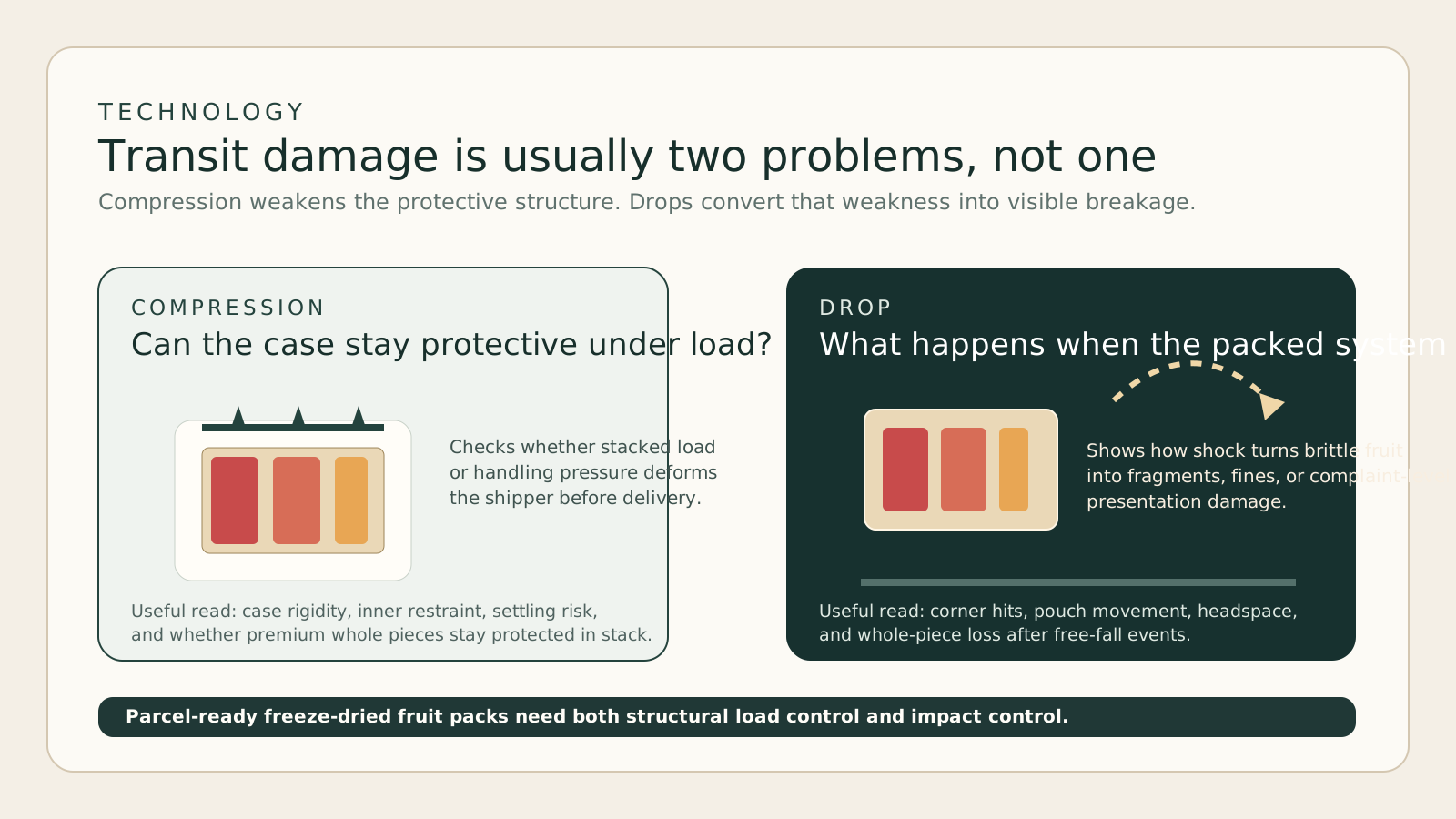
- Compression testing and drop testing answer different packaging questions and should not be treated as substitutes.
- For freeze-dried fruit, case compression protects piece integrity before the box is ever dropped.
- Drop performance is influenced by product brittleness, headspace, void fill, case geometry, and inner pack restraint.
- A good e-commerce pack review connects barrier packaging with transit testing instead of treating them as separate topics.
Parcel shipping is rough on products that are visually judged.
Freeze-dried fruit fits that description exactly. A pouch can remain microbiologically fine and still arrive commercially damaged because the pieces broke down, the shipper deformed, or the finished bag no longer looks premium when the customer opens it.
The direct answer
Drop testing and compression testing matter for freeze-dried fruit e-commerce packs because they evaluate different failure modes. Compression testing helps show whether the case and load can resist stacking and handling pressure. Drop testing helps show how the packed system behaves when it is struck, dropped, or jarred in distribution.
For a brittle product sold on visible piece integrity, both questions matter.
Compression damage often starts earlier than teams expect
Parcel complaints are easy to picture as one dramatic drop. In practice, freeze-dried fruit can lose value earlier in the chain.
Compression matters because:
- outer cases may be stacked before final delivery
- shipper walls can deflect and transfer force inward
- inner pouches can rub, settle, or compact during handling
- brittle fruit pieces can fracture after repeated load plus vibration
ASTM D642 is the standard method buyers and packaging teams commonly reference when they want to evaluate compressive resistance of shipping containers, components, and unit loads. In plain terms, it helps answer whether the shipper can keep its shape and protective function under load.
That question matters for freeze-dried fruit because the product is low-density but not low-risk. A light case can still be structurally weak, and once the case deforms, the bag presentation and piece integrity can degrade quickly.
Drop testing answers a different question
ASTM D5276 focuses on loaded-container free-fall drop testing. That gets closer to the visible damage scenario most brands fear: the box is dropped, corners and edges take impact, and the product has to survive the shock.
For freeze-dried fruit, the relevant issue is not only whether the box bursts open. It is also whether the product inside turns from:
- whole pieces into fragments
- tidy fill into powder-heavy bottoms
- premium presentation into complaint-triggering breakage
That is why a freeze-dried fruit team should look beyond "package survived" and ask what happened to the fruit itself after the drop sequence.
Why brittle food needs both readings together
Compression and drop risks compound each other.
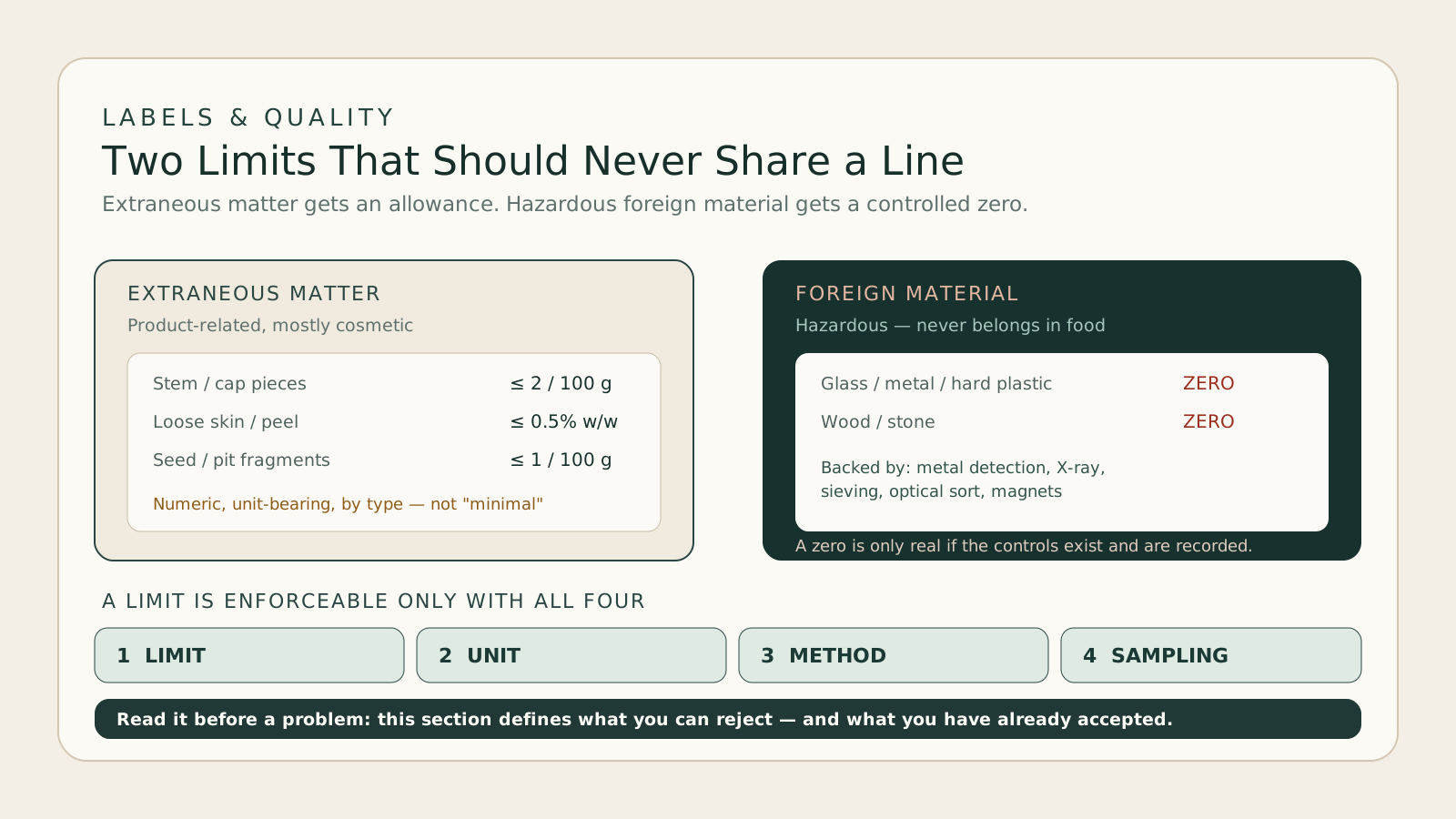
A shipper that weakens under load may deliver less protection when a later drop occurs. A product that has already settled or compacted inside the case may fracture more aggressively on impact. The result is that one test result in isolation can sound reassuring while the real route still remains vulnerable.
For freeze-dried fruit e-commerce packs, useful transit review usually includes:
- outer-case compression strength
- case geometry and board choice
- product restraint inside the shipper
- pouch headspace and pack count
- void fill or dividers where needed
- drop behavior after realistic packed configuration
This is also where packaging teams should connect transit testing back to the consumer bag. A strong barrier pouch does not automatically solve transit breakage, and a strong shipper does not solve humidity pickup after arrival. Both layers have to work.
Where ISTA framing helps
ISTA describes its 3-Series procedures as general simulation tests useful for understanding transport-environment risk, and Procedure 3A is the common parcel-delivery reference point teams use when evaluating packaged-products moving through that type of system.
That matters because freeze-dried fruit sold online is not only a food product. It is also a parcel product. The bag design, shipper design, and packed geometry have to survive an e-commerce route rather than a neat shelf handoff.
The practical lesson is simple: if the commercial plan depends on parcel shipment, the transport test plan should match that reality instead of borrowing assumptions from store-ready corrugate alone.
What buyers and brands should ask suppliers
When reviewing an e-commerce-ready freeze-dried fruit pack, ask:
- What transit test standard or protocol was used?
- Was the product tested in the final sellable pack configuration?
- What happened to whole-piece percentage after testing?
- How much powder or fines increased after testing?
- Was top-load performance reviewed separately from impact performance?
Those questions turn a vague "ship-safe" claim into a packaging conversation that can actually be audited.
Bottom line
Drop testing and compression testing matter because freeze-dried fruit does not need a catastrophic package failure to produce a commercial failure. A bent shipper, fractured contents, and a powdery pouch can be enough.
Compression testing helps show whether the shipping structure stays protective under load. Drop testing helps show what happens when the packed system takes impact. For freeze-dried fruit e-commerce packs, both belong in the same review.
Frequently Asked Questions
Is drop testing enough for freeze-dried fruit mailers?
No. Drop testing helps evaluate impact damage, but freeze-dried fruit can also lose quality when outer cases deform under stacking or handling pressure before any obvious drop event happens.
What does compression testing tell a buyer?
It helps show whether the shipping case, components, and unit load can resist compressive forces during storage and distribution strongly enough to protect the product.
Why is freeze-dried fruit unusually sensitive in parcel shipment?
Because the product is dry, porous, and brittle. Even when food safety is unchanged, repeated impacts and case deformation can turn a premium whole-piece pack into a powder-heavy customer experience.
Does passing an ISTA-style parcel test guarantee zero complaints?
No. It is a risk-reduction tool, not a warranty. Real-world outcomes still depend on pack execution, fill consistency, route severity, and how the consumer receives and opens the shipment.
Primary sources & further reading
- D5276-19(2023) Standard Test Method for Drop Test of Loaded Containers by Free Fall ASTM International Referenced for the standard loaded-container free-fall drop method used to evaluate distribution impact resistance.
- D642-25 Standard Test Method for Determining Compressive Resistance of Shipping Containers, Components, and Unit Loads ASTM International Referenced for the standard compression-resistance method used when evaluating stacked-load performance.
- Procedure 3A Overview International Safe Transit Association Referenced for ISTA's general-simulation parcel-delivery framing for packaged-products.
External links open in a new tab. We do not receive compensation from any organization listed; sources are referenced because they are primary, current, and publicly verifiable.