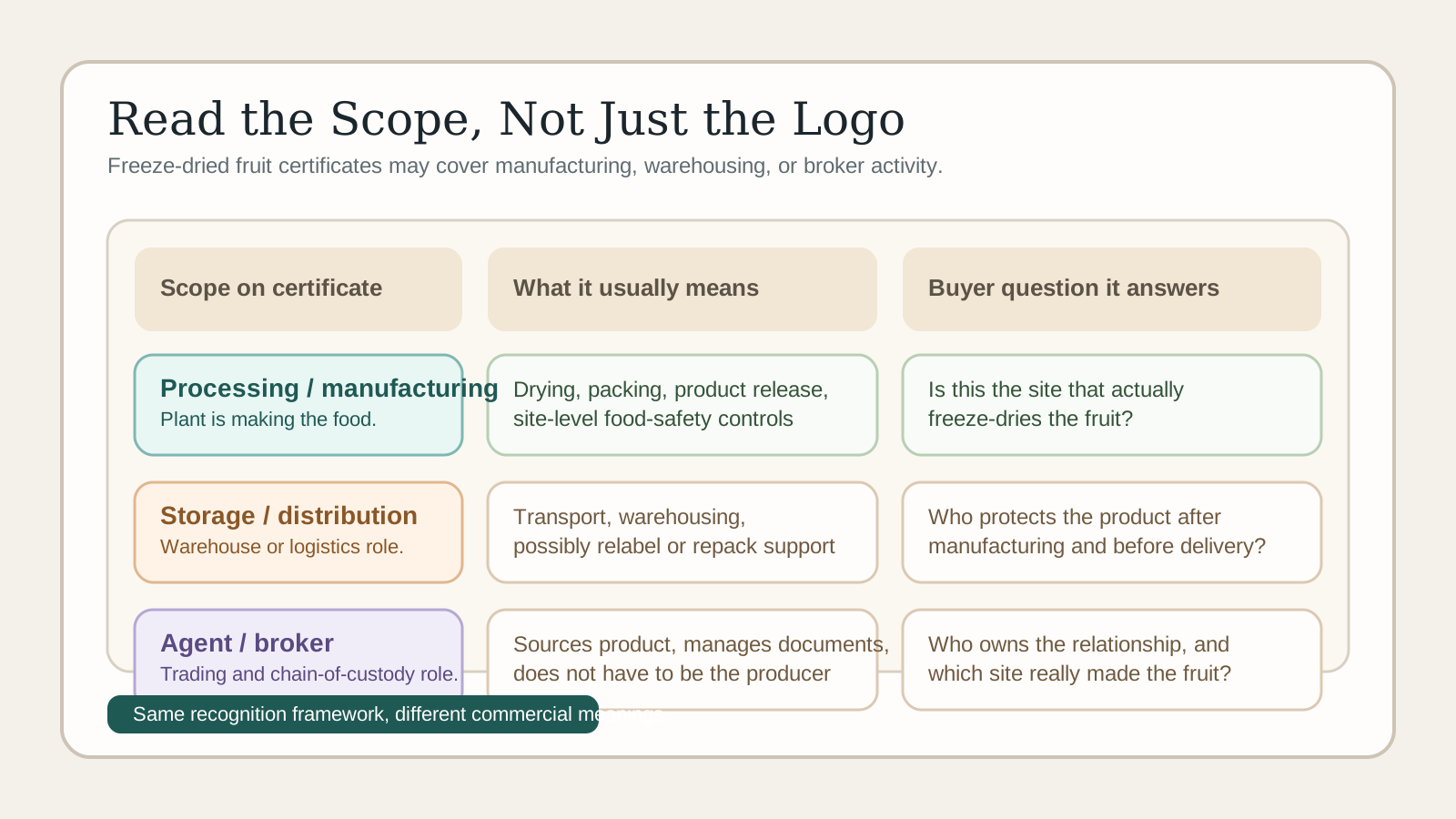
- A GFSI-recognized certificate is not one thing; the scope may cover manufacturing, storage and distribution, or broker activity.
- Freeze-dried fruit buyers should confirm what the certified site actually does before treating a certificate as proof of processing capability.
- A broker or logistics certificate can still be legitimate, but it does not mean the company is the manufacturing site that produced the fruit.
- The safest commercial habit is to match the quoted product, site address, and certificate scope before approving the supplier.
Buyers often ask whether a freeze-dried fruit supplier is "GFSI certified" as if that were a complete answer.
It is a useful first filter. It is not a complete read.
The direct answer
Certificate scope matters more than the GFSI logo because the same recognition framework can cover very different roles in the food chain. A supplier may be certified as a manufacturer, as a storage and distribution operation, or as a broker. Those are all legitimate activities, but they do not prove the same thing.
In freeze-dried fruit, that distinction matters because brands, importers, co-packers, warehouses, and traders are often presented side by side in sourcing conversations.
The logo tells you less than buyers hope
The logo or scheme name can tell you that the business participates in a recognized certification system. That is useful.
It cannot tell you, by itself:
- whether the site actually freeze-dries fruit
- whether the site only stores finished product
- whether the company is acting as a broker between factory and buyer
- whether the quoted SKU is produced at the certified site named on the document
Those are scope questions, not logo questions.
The three scope types buyers confuse most often
For freeze-dried fruit, scope confusion usually lands in one of three buckets.
Manufacturing scope
This is the scope buyers usually think they are looking at. It points to a site that actually processes food.
For freeze-dried fruit, that is the scope most directly tied to:
- intake controls
- cutting and prep
- freeze-drying
- packaging at the production site
- release discipline for the finished product
If your risk question is "Can this site actually make the fruit I am buying?" manufacturing scope is the first thing to confirm.
Storage and distribution scope
A storage and distribution certificate can be fully credible and still represent a different role.
That scope may cover:
- warehousing
- transport
- cross-docking
- relabeling of packed goods
- other logistics activities
That can be highly relevant if the supplier manages finished inventory close to your market. But it does not prove the same process control as the production site itself.
Broker or agent scope
Broker certification is also real, and often commercially useful.
It typically fits companies that:
- source product
- manage approved factories
- coordinate documentation
- facilitate import or customer supply
- never physically manufacture the fruit themselves
That can still be a strong commercial model. It is just not the same thing as a certified freeze-drying plant.
Why freeze-dried fruit is especially vulnerable to scope confusion
This category has a layered supply chain.
A single retail-ready pouch may involve:
- one company owning the brand
- another company brokering the transaction
- a third party operating domestic inventory
- a fourth site physically drying or packing the fruit
That structure is normal. The problem starts when the certificate shown in the sales packet belongs to one link while the buyer mentally assigns it to another.
Treat the certificate as evidence about a site activity, not as a personality trait of the selling company.
What scope mismatch looks like in practice
Common examples include:
- a broker presents its own certificate, but the actual manufacturing site is not yet disclosed
- a warehouse certificate is shared when the buyer is really trying to evaluate process control at the drying plant
- a brand quotes fruit from one site while attaching a certificate from another site in the same group
- a logistics scope is mistaken for full food-manufacturing scope because the scheme name sounds familiar
None of those automatically means deception. But each one can cause an approval error if the buyer does not stop and map the roles.
The right questions to ask with every certificate
A disciplined buyer should ask:
- What activity does this certificate cover?
- What exact site address is certified?
- Is this the site that manufactures the quoted freeze-dried fruit?
- If not, what role does this site play?
- Which certificate covers the actual production site?
- Does the product move through additional certified storage, broker, or repack steps after manufacturing?
Those questions usually clear up the real chain faster than debating which certification logo is strongest in the abstract.
Why this matters commercially, not just technically
Scope mismatch creates downstream problems quickly:
- supplier approvals built on the wrong site
- incomplete audit follow-up
- wrong assumptions about corrective-action ownership
- traceability confusion during complaints
- false confidence in process controls that were never actually reviewed
In freeze-dried fruit, where moisture stability, breakage, and packaging integrity all matter, that confusion costs more than paperwork time.
Broker and logistics scopes are not "bad" scopes
It is important to stay precise here.
A broker certificate is not a fake manufacturing certificate. A storage certificate is not a failed factory certificate. They are different tools for different activities.
Sometimes those activities are exactly what the buyer needs:
- a domestic stock program
- managed import documentation
- multi-factory sourcing under one commercial contact
- third-party warehousing close to the customer
The mistake is not using those models. The mistake is treating them as proof of a different activity than the one they certify.
What a clean approval packet should contain
At minimum, a clean approval packet should let the buyer tie together:
- the selling entity
- the manufacturing entity
- the warehouse or logistics entity if separate
- the certified scope for each relevant site
- the product actually being quoted
If those links are not visible, the buyer is still working from assumptions.
Bottom line
In freeze-dried fruit buying, a recognized certificate is only as useful as its scope. Manufacturing, storage and distribution, and broker activity can all sit inside serious certification systems, but they answer different risk questions.
Read the scope before you trust the logo. That is usually where the commercial truth becomes visible.
Frequently Asked Questions
What does certificate scope mean in freeze-dried fruit buying?
It means the activity the certification actually covers, such as manufacturing, storage and distribution, or broker trading. The logo is not enough without that activity description.
Can a broker have a credible food-safety certificate?
Yes. Broker certification can be legitimate and useful, but it does not mean the broker physically manufactures the freeze-dried fruit.
Why does storage and distribution scope matter?
Because some suppliers mainly warehouse, relabel, or move finished goods. That role can be important, but it is different from processing fruit in a freeze-dryer.
What is the main risk of ignoring scope?
Buyers may assume the certificate covers fruit manufacturing controls when it actually covers only a different link in the chain.
What should a buyer request along with the certificate?
Ask for the exact scope statement, the certified site address, and confirmation that the quoted product is handled or produced within that certified activity.
Primary sources & further reading
- GFSI-Recognised Certification Programme Owners Global Food Safety Initiative Referenced for the distinct recognized scopes that include processing of plant products, food broker or agent activity, and provision of storage and distribution services.
- SQF Code: Agents and Brokers, Edition 9 SQF Institute Referenced for SQF's description that the code applies to entities that source products and facilitate trade across domestic and import channels.
- BRCGS Storage and Distribution Certification BRCGS Referenced for BRCGS's description that storage and distribution certification can apply to logistics operations with storage-only, distribution-only, or transport-only scope.
- Agents and Brokers Certification BRCGS Referenced for BRCGS's explanation that agents and brokers may buy, sell, or facilitate trade without manufacturing, processing, or storing product on their own sites.
- FSSC 22000 Scheme Version 6 Foundation FSSC Referenced for FSSC's category G definition covering third-party storage and transport providers, distinct from manufacturers storing or transporting only their own products.
External links open in a new tab. We do not receive compensation from any organization listed; sources are referenced because they are primary, current, and publicly verifiable.