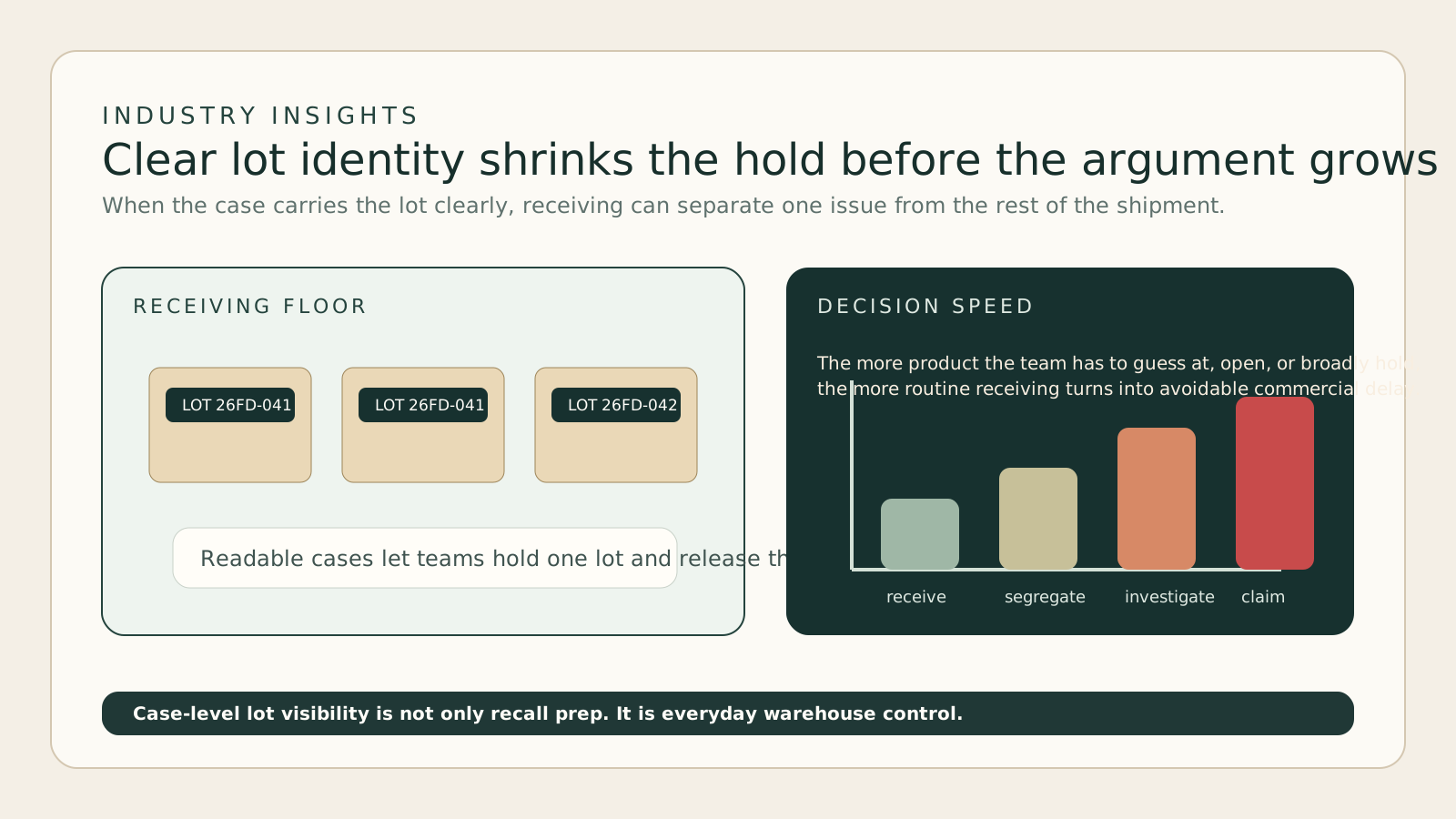
- Case-level lot visibility reduces the amount of product that has to be opened, guessed at, or broadly quarantined during receiving and complaint review.
- FDA traceability logic and consignee communication expectations make lot identity more useful when it stays visible through finished cases.
- GS1-style case labeling can help carry item and lot data in a format trading partners can use consistently.
- A supplier that loses lot clarity during repacking or case relabeling usually creates operational cost long before any formal recall event.
Receiving problems get expensive when the warehouse cannot tell one lot from another.
That is especially true in freeze-dried fruit, where one shipment may include multiple fruits, multiple pouch sizes, multiple private-label formats, and more than one production lot that still looks visually similar from the outside.
The direct answer
Case-level lot visibility speeds freeze-dried fruit receiving and claims because it lets teams identify, separate, and document affected inventory at the case stage rather than after opening finished goods. That reduces broad holds, manual sorting, and avoidable delay when a shipment needs closer review.
In other words, better lot visibility does not only help during recalls. It improves everyday warehouse control.
Why the case matters more than people think
Many brand teams assume the pouch lot code is enough. For warehouse operations, that is incomplete.
Receiving teams usually touch:
- corrugated shippers
- master cases
- pallets
- case labels
- advance shipping and receiving records
They do not begin by opening consumer pouches one by one. If the lot identity is visible and usable at the case level, a team can:
- receive faster
- segregate holds faster
- trace short or damaged shipments faster
- narrow complaint investigations faster
If that identity is missing, the same team often has to over-hold inventory simply because it cannot safely separate good stock from questionable stock.
FDA's traceability logic points in the same direction
FDA's traceability lot code framework treats lot identity as a practical linkage that connects food to the relevant supply-chain history. That makes lot clarity valuable well before a worst-case event.
For a freeze-dried fruit buyer, the implication is straightforward. The more clearly the product can be tied to a lot at receiving, the easier it is to:
- place one lot on hold without freezing several others
- link a complaint to the right shipment
- determine whether a defect is narrow or systemic
- release unaffected inventory with confidence
That is operational speed, not just compliance language.
Claims get wider when case-level identity disappears
A surprising number of commercial problems are not full recalls. They are narrower disputes:
- one damaged pallet
- one leaking case stack
- one short-shipped lot
- one complaint cluster from a specific receipt window
- one suspected packaging or breakage issue
When the case label carries a readable lot and the records match it, teams can narrow the question quickly. When the case is generic, relabeled loosely, or missing the lot entirely, the warehouse often has to open more product or hold more inventory than the issue deserves.
That increases:
- labor
- delay
- uncertainty
- claim size
- relationship friction between buyer and supplier
Why GS1-style case labeling helps
GS1 US materials are useful here because they describe case-level barcode approaches that carry item identity plus batch or lot information in a format trading partners can work with more consistently.
The important point is not barcode theater. The important point is that the warehouse can read the case, connect it to the record, and act without improvising.
A barcode helps when it supports:
- consistent case identification
- lot-level segregation
- faster receiving scans
- cleaner claim documentation
It does not help when the underlying lot logic is vague or when repacking breaks the data trail.
Repacking and relabeling are common failure points
Case-level lot visibility becomes most important when the chain is not simple.
Typical weak points include:
- imported bulk fruit repacked into retail format
- co-packed finished goods for multiple customers
- mixed-lot pallets assembled for convenience
- case relabeling that drops the original lot reference
These situations do not automatically mean the supplier is weak. They do mean the buyer should ask more direct questions about how lot identity survives the transformation from production through finished shipment.
Questions buyers should ask suppliers and warehouses
Useful questions include:
- Does every finished case carry a readable lot or batch identifier?
- Can the case lot be matched directly to the supplier's shipping record?
- If product is repacked, how is lot continuity maintained?
- Can one questionable case group be segregated without opening inner pouches?
- How quickly can the warehouse map one complaint back to the relevant receipt and lot?
Those are not abstract audit questions. They are working-capital questions.
Bottom line
Case-level lot visibility speeds freeze-dried fruit receiving and claims because warehouses make their first decisions at the case level, not at the individual pouch level. When lot identity stays visible there, product can be received, held, investigated, and released more precisely.
For this category, that precision saves time even when nothing dramatic has happened yet.
Frequently Asked Questions
What is case-level lot visibility?
It means the shipping case itself carries usable lot identity that receiving teams can read and match to records without opening every inner pack.
Why does this matter if the inner pouch already has a lot code?
Because warehouses first handle cases, not single snack pouches. If lot identity disappears at the case level, routine receiving, segregation, and claims work slows down immediately.
Is this only a recall issue?
No. It also matters for short shipments, damage claims, hold-and-release decisions, stock rotation, and targeted complaint investigations.
Does a barcode solve the problem by itself?
No. The barcode helps only when the underlying lot logic is consistent, readable, and linked to usable shipping records.
Primary sources & further reading
- Traceability Lot Code U.S. Food & Drug Administration Referenced for FDA's explanation of traceability lot codes as a core linkage for tracing food through the supply chain.
- FDA Calls on Food Industry Leaders to Strengthen Recall Compliance and Ensure Recall Effectiveness U.S. Food & Drug Administration Referenced for FDA's emphasis on product identification by lot or code and direct consignee communication during effective recall execution.
- Implementation Roadmap for GS1-128 Barcodes on Retail Grocery Cases GS1 US Referenced for case-level barcode use carrying GTIN plus lot or batch information in grocery supply-chain operations.
External links open in a new tab. We do not receive compensation from any organization listed; sources are referenced because they are primary, current, and publicly verifiable.