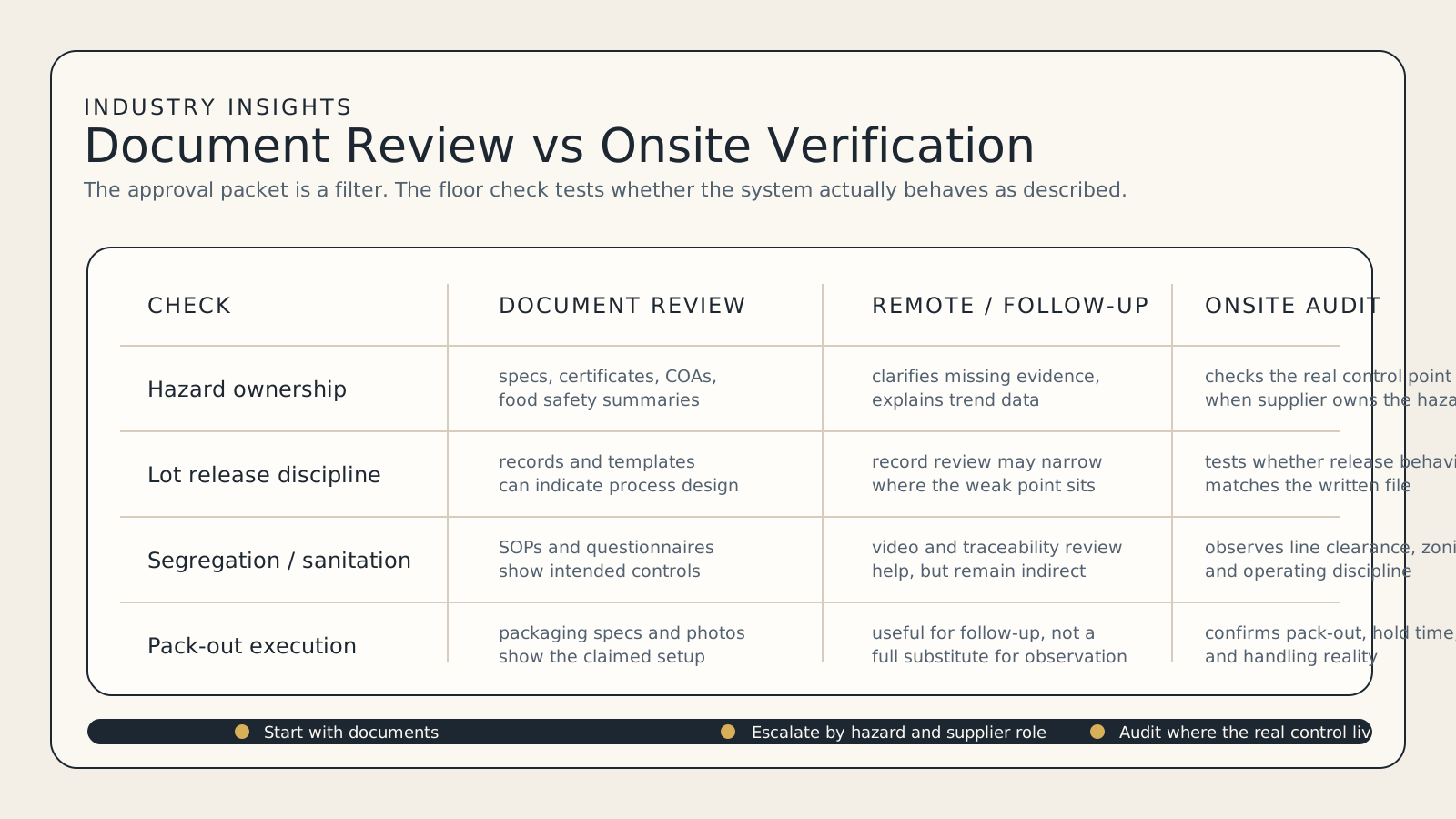
- Document review is a necessary first filter, but it does not replace hazard-based supplier verification.
- FDA's supply-chain framework treats verification as risk-based and, in some cases, expects annual onsite auditing unless a written determination supports another approach.
- Freeze-dried fruit buyers are especially exposed when they approve moisture-sensitive or imported supply on paperwork alone and never test how lot release, segregation, and packaging discipline work in practice.
- The right question is not paperwork versus audit in the abstract, but which verification depth matches the hazard, the supplier role, and the buying risk.
Freeze-dried fruit buyers often start the approval process with a packet:
- specification sheet
- certificate
- COA template
- questionnaire
- traceability form
- maybe a third-party audit summary
That is sensible.
It becomes risky when the packet is treated as the approval.
The direct answer
Document review is not enough when the critical buying risk depends on how the supplier actually controls hazards, handles a moisture-sensitive product, or releases lots in practice. Paperwork is a necessary first filter, but a freeze-dried fruit approval process weakens quickly when written evidence is allowed to stand in for hazard-based verification.
The right question is not whether documents matter.
It is whether documents are the only thing being trusted.
Start with the hazard, not the packet
The cleanest way to decide how much verification is needed is to ask:
Who actually controls the risk that matters to this product?
In freeze-dried fruit, that may include:
- pathogen control at the manufacturing site
- allergen cross-contact prevention in a mixed-use plant
- label accuracy for flavored or blended products
- moisture-sensitive post-drying handling
- packaging and release discipline before shipment
If the supplier controls one of those critical points, then the approval decision should be built around that control, not around the neatness of the PDF set.
What paperwork does well, and what it cannot show
Document review is still valuable because it can show whether a supplier is organized enough to speak clearly about the product.
It is good at revealing:
- whether a written specification exists
- whether the supplier can produce current certificates
- whether the lot file is coherent
- whether a COA format covers the right fields
- whether traceability language is mature or vague
But documents usually do not show execution quality directly.
They may not tell you:
- whether line changeovers are disciplined
- whether the hold-and-release process is really followed
- whether packaging rooms behave the way the SOP says
- whether rework is controlled tightly or casually
- whether the site on the certificate is the one controlling the actual product risk
That is the gap buyers have to manage.
When FDA's framework points beyond paperwork
FDA's preventive-controls and supplier-verification framework is risk-based, not purely administrative.
The most useful signal for buyers is that FDA does not treat all supplier verification activities as interchangeable. In the agency's own third-party-audit resource, annual onsite audits can be required when a supplier-controlled hazard presents serious adverse health consequences or death risk, unless the receiving facility or importer makes a written determination that another verification approach is adequate.
That does not mean every freeze-dried fruit program automatically needs the same audit schedule.
It does mean the approval logic should be built from hazard severity and supplier responsibility, not from document convenience.
Why freeze-dried fruit programs can fool buyers
Freeze-dried fruit often looks like a simpler category than it is.
The product is dry, tidy, and easy to sample. A supplier packet may look strong because the documents are straightforward and the category feels ingredient-simple.
But buyers can still miss floor-level execution details that matter commercially:
- how exposed fruit is between drying and final pack
- whether fragile whole-piece programs are handled gently enough
- whether flavored or blended SKUs are segregated correctly
- whether lot release waits for the right checks
- whether the imported product file matches the physical chain
This is why a supplier can look disciplined on paper and still underperform once the program scales.
Document review is still useful; it is just not the whole approval
None of this argues for skipping paperwork.
The better model is:
- use documents to screen
- use risk to decide verification depth
- use audits, observations, or targeted follow-up where paper cannot answer the real question
That is a stronger system than either extreme:
- trusting paperwork alone
- demanding the same full audit burden for every supplier role and every product risk
Match the verification depth to the commercial exposure
Different programs justify different levels of scrutiny.
A document-led approval may carry more weight when the program is narrow and the risk is limited. An imported whole-piece retail pouch, a moisture-sensitive premium format, or a supplier controlling critical food-safety steps usually deserves a more demanding verification logic.
The practical mistake is pretending those programs are equivalent.
For buyers, useful framing questions are:
- Is this a manufacturer, broker, warehouse, or co-packer?
- Which party controls the critical hazard?
- Would a paperwork error or execution failure be expensive, merely inconvenient, or safety-relevant?
- If the supplier failed in practice, would the current packet have warned us?
Those questions usually point to the right level of audit pressure faster than generic policy language does.
What an onsite check can confirm
When a deeper verification step is justified, an onsite audit or direct plant review can help confirm things documents only imply:
- whether the physical flow matches the written flow
- whether sanitation and segregation are practiced consistently
- whether packaging and release controls are being executed where they matter
- whether the team understands the product's actual risks
- whether complaint and corrective-action records connect back to visible plant behavior
That is why an onsite check is not just a trust ritual. It is a way to compare the written system with the operating system.
Bottom line
Document review matters in freeze-dried fruit supplier approval, but it is not enough when the real buying risk depends on supplier-controlled hazards or floor-level execution. FDA's framework is risk-based for a reason: some programs can be supported by paperwork and other verification activities, while others need onsite evidence unless a written alternative is justified.
Treat the approval packet as the start of verification, not the finish.
Frequently Asked Questions
What counts as document review in supplier approval?
Usually specifications, certificates, questionnaires, COAs, food-safety-plan summaries, audit reports, traceability forms, and commercial documents reviewed without physically observing the site.
Is document review enough to approve a freeze-dried fruit supplier?
Sometimes as an initial screen, but not always as the final approval method. The right depth depends on the hazard, the supplier's role, and whether critical controls are being applied by that supplier.
When does FDA expect onsite auditing?
FDA's supply-chain and FSVP framework can require annual onsite auditing when a serious hazard is controlled by the supplier, unless the receiving facility or importer makes a written determination that other verification activities or less frequent auditing are adequate.
What can an onsite audit reveal that paperwork may miss?
Execution details such as segregation discipline, line-clearance behavior, hold-and-release logic, packaging-zone practices, rework control, and whether actual operations match the written description.
Does an onsite audit mean every selling company needs its own factory audit?
No. The target should match the role that controls the risk. If a broker or warehouse is selling the fruit but the manufacturing site controls the critical hazard, the deeper verification often belongs at the manufacturing site.
Primary sources & further reading
- FSMA Final Rule for Preventive Controls for Human Food U.S. Food & Drug Administration Referenced for FDA's explanation that covered facilities need a written food safety plan, preventive controls, verification activities, and approved-supplier logic when supply-chain-applied controls are involved.
- Guidance for Industry: Supply-Chain Program Requirements and Co-Manufacturer Supplier Approval and Verification for Human Food and Animal Food U.S. Food & Drug Administration Referenced for FDA's supply-chain program guidance and the distinction between supplier approval expectations and co-manufacturing arrangements.
- Industry Resources on Third-Party Audit Standards and FSMA Supplier Verification Requirements U.S. Food & Drug Administration Referenced for FDA's statement that annual onsite audits can be required when supplier-controlled hazards create serious adverse health consequences risk, unless a written determination supports another verification approach.
- FSMA Final Rule on Foreign Supplier Verification Programs (FSVP) for Importers of Food for Humans and Animals U.S. Food & Drug Administration Referenced for the importer-side requirement to verify that foreign suppliers are producing food with the same level of public-health protection expected under applicable FDA food-safety rules.
External links open in a new tab. We do not receive compensation from any organization listed; sources are referenced because they are primary, current, and publicly verifiable.