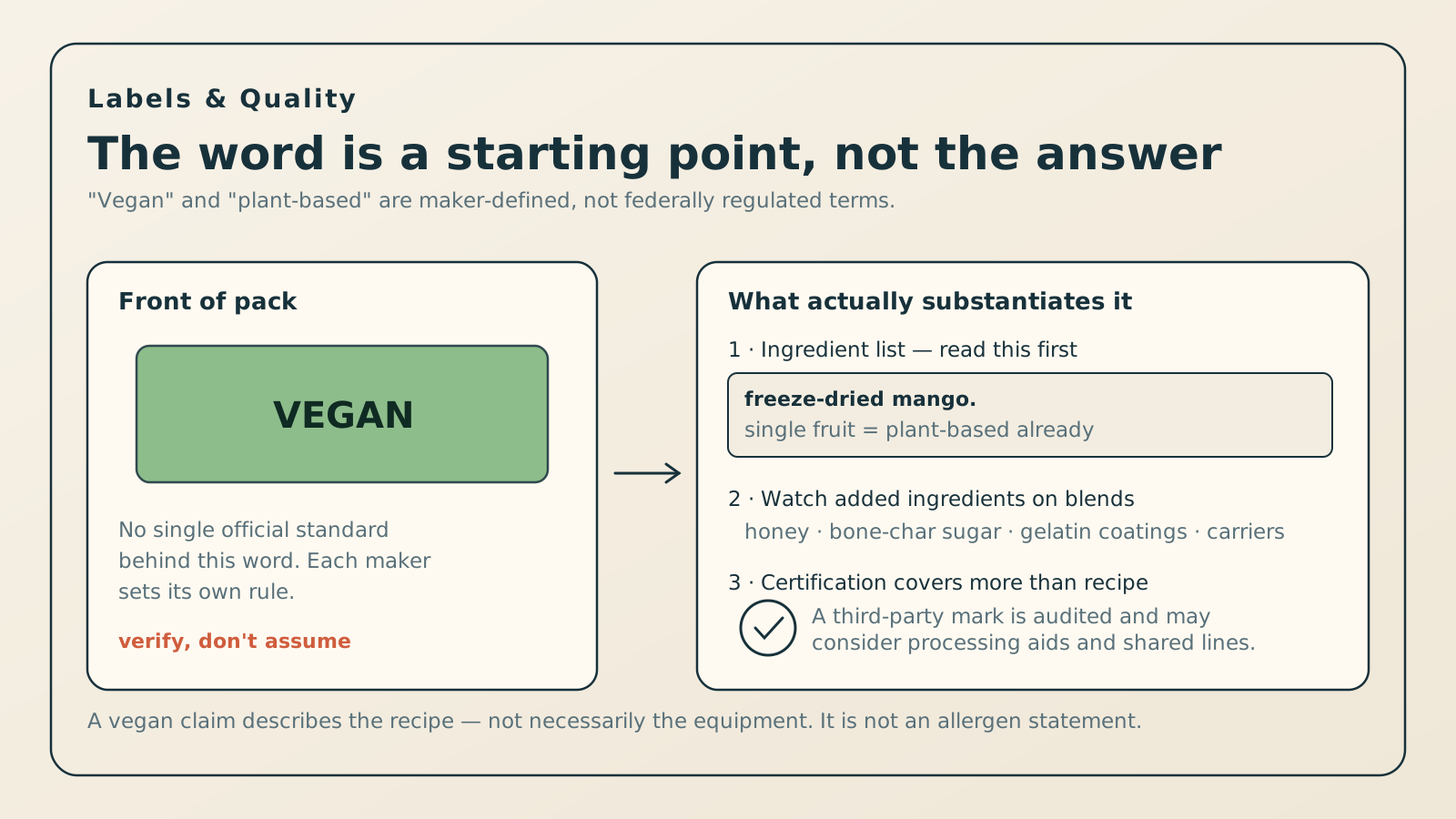
- In the United States, 'vegan' and 'plant-based' are not formally defined by regulation, so each maker sets its own standard for the claim.
- For plain single-fruit products the claim adds little, since the fruit is already plant-based; it matters most on blends, crisps, and sweetened products with added ingredients.
- Watch for animal-derived processing aids and shared-equipment cross-contact, which a third-party vegan certification is more likely to address than an unverified label word.
- Read the ingredient list first; treat the front-of-pack claim as a starting point to verify, not a finished answer.
Freeze-dried fruit is one of the few products where a "plant-based" badge can be almost redundant. A bag of nothing but freeze-dried strawberries was never going to contain an animal product. So when these claims appear, the useful question is not whether the word is allowed, but what it is actually doing on that particular package.
The direct answer
In the United States, "vegan" and "plant-based" are not defined by federal regulation. There is no single official standard a freeze-dried fruit product must meet to print either word. Each maker, or the third-party certifier they choose, sets the standard behind the claim.
That means the claim is only as reliable as the policy behind it. For a single-fruit product it tells you little you did not already know. For a blend, a sweetened crisp, or a coated product, it is a signal worth verifying against the ingredient list.
Why the claim adds little to plain fruit
Plain, single-ingredient freeze-dried fruit is plant-based by its nature. If the ingredient list reads "freeze-dried mango" and nothing else, the product is plant-based whether or not the front of the pack says so. The word is doing marketing work, not informational work.
This is worth keeping in mind so you do not pay a premium or make a sourcing decision based on a claim that the product structure already guarantees. The claim earns its keep only when there is something in the formula it could meaningfully exclude.
Where the claim starts to matter
The moment a product moves beyond a single fruit, animal-derived ingredients become at least possible, and the claim has real content. Watch for it on:
- Blends and trail-style mixes that combine fruit with other components
- Sweetened fruit crisps where a sweetener or coating is added
- Powders with carriers where the carrier could, in principle, be animal-derived
- Yogurt-coated or candy-style products where coatings often are not plant-based
In these formats, a few specific ingredients are the ones to check.
Honey as a sweetener, certain sugars refined with bone char, gelatin or other animal-based coatings and carriers, and some additives can all appear in value-added fruit products. None are common in plain fruit, but each is possible once the formula grows beyond the fruit itself.
Recipe versus equipment
There is a difference between a product whose recipe contains no animal ingredients and a product made with no animal contact at all. Most unverified "vegan" claims describe the recipe. They are saying the formula does not include animal-derived components.
What an unverified claim usually does not promise is anything about shared equipment, processing aids used and then removed, or a line that also runs dairy-coated products. A buyer who needs assurance at that level should look for a recognized third-party vegan certification, which is more likely to consider processing and shared lines, rather than relying on the bare word.
Keep this separate from allergen labeling. A vegan claim is not an allergen statement, and a product can carry a vegan claim while still bearing a "may contain milk" advisory because of shared equipment. The two answer different questions.
How certification changes the picture
A third-party vegan certification does not have the force of a government standard, but it does add an external rule set and, usually, an audit. Different certifiers set different bars, so the mark tells you a defined policy was applied and checked, rather than that the maker simply decided the product qualified.
This is the same logic that applies to other label marks: the value is in the verification behind the symbol, not the symbol itself. If a vegan claim is important to your purchase, a recognized certification is more dependable than an uncertified word, while still being worth reading alongside the ingredient list.
A practical way to read the claim
For most freeze-dried fruit, the fastest path to confidence is to ignore the front-of-pack word at first and go straight to the ingredient list. Then work outward:
- If the list is a single fruit, the product is plant-based regardless of the claim.
- If the list has added ingredients, scan for the animal-derived possibilities above.
- If any of those are present, or the product is coated or blended, look for a certification or ask the maker.
- If processing or shared-equipment concerns matter to you, treat that as a separate question the recipe claim may not answer.
Bottom line
On a freeze-dried fruit label, "vegan" and "plant-based" are maker-defined claims rather than regulated terms. They add almost nothing to plain single-fruit products and the most to blends, sweetened crisps, and coated items where animal-derived ingredients are actually possible. Read the ingredient list first, lean on a recognized certification when the claim matters, and remember that the word describes the recipe, not necessarily the equipment it was made on.
Frequently Asked Questions
Are 'vegan' and 'plant-based' legally defined for food labels?
In the United States they are not defined by federal regulation. There is no single official standard a product must meet to use either word, so the meaning depends on the maker's own policy or a third-party certifier's rules.
Is plain freeze-dried fruit vegan?
Plain, single-ingredient freeze-dried fruit is plant-based by nature. The label claim adds little for these products. It becomes more useful on blends, sweetened crisps, or coated products where added ingredients could come from animal sources.
What animal-derived ingredients could appear in a fruit product?
Possibilities include certain sugars processed with bone char, honey as a sweetener, gelatin or other animal-based coatings or carriers, and some additives. They are uncommon in plain fruit but possible in blended or value-added products.
Does a vegan claim mean no cross-contact with animal products?
Not necessarily. An unverified claim usually refers to the recipe, not the equipment. A third-party vegan certification is more likely to consider shared lines and processing aids, though it is still separate from allergen labeling.
How should I verify a vegan or plant-based claim?
Read the full ingredient list, look for a recognized third-party certification if it matters to you, and contact the maker about processing aids or shared equipment if the product is a blend or coated item.
Primary sources & further reading
- Food Labeling Guide U.S. Food & Drug Administration Referenced for the framework of how food labeling claims are regulated and the general requirement that label statements be truthful and not misleading.
- Ingredients, Additives, GRAS & Packaging Guidance Documents & Regulatory Information U.S. Food & Drug Administration Referenced for background that ingredient and additive identity is governed by FDA rules, while 'vegan' and 'plant-based' are not among the federally defined claim terms.
External links open in a new tab. We do not receive compensation from any organization listed; sources are referenced because they are primary, current, and publicly verifiable.