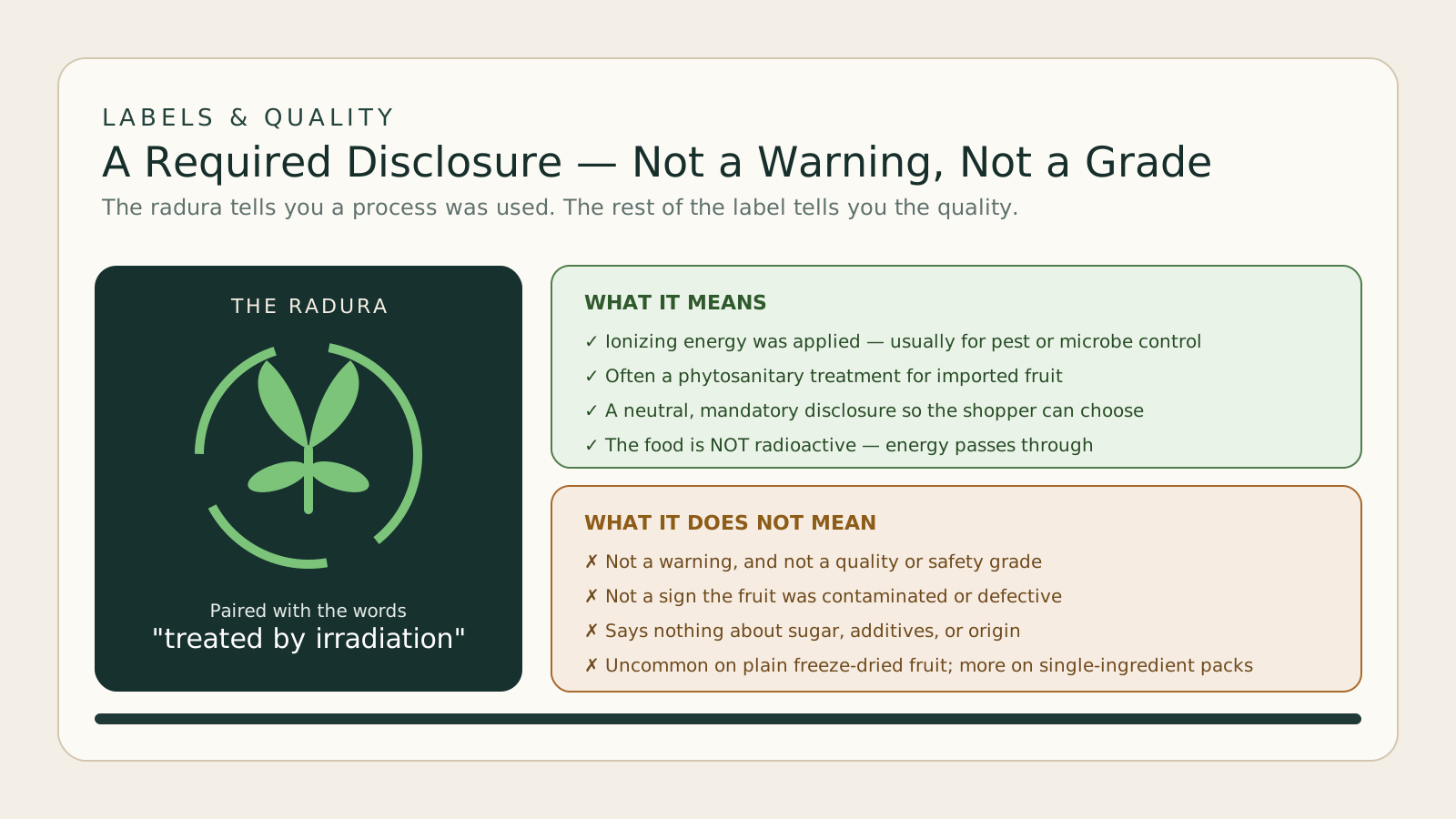
- In the US, irradiated food for retail must carry a disclosure statement like 'treated by irradiation' or 'treated with radiation' and the radura symbol; it is a required disclosure, not a warning, and not a quality grade.
- Irradiation is used mainly to control pests and microbes; it is uncommon on plain freeze-dried fruit but can appear on imported product treated for phytosanitary reasons, so the symbol tells you a process was applied, not that the fruit had a problem.
- The disclosure applies to the food itself; when irradiated fruit is only an ingredient in a multi-component product, the labeling rules differ, which is why the symbol shows up more on single-ingredient packs than inside blends.
Most of what happens to a fruit before it reaches a bag is invisible on the label. Washing, freezing, drying, sorting — none of it gets named. Irradiation is one of the rare exceptions. When a whole food has been treated with ionizing energy, US rules require the package to say so and to carry a small green symbol that looks like a stylized flower inside a broken circle. That symbol is the radura, and it tends to prompt more questions than it answers. Here is what it actually communicates on a freeze-dried fruit pack, and what it deliberately leaves out.
What the symbol and the statement are
Two things travel together. The first is a disclosure statement in words — typically "treated by irradiation" or "treated with radiation." The second is the radura, an internationally recognized symbol used to indicate that a food has been irradiated. In the US, irradiated foods sold at retail are required to carry both.
The key word is disclosure. This is not a warning label in the sense of a hazard, and it is not a quality mark like organic or a grade. It is a factual statement that a specific process was applied, put there so a shopper can identify treated whole foods and choose accordingly. Reading it as either an alarm or an endorsement misses what it is: a neutral, required note about process.
What irradiation does
Irradiation exposes food to a controlled dose of ionizing energy. Depending on the dose and the food, it is used to kill or sterilize insects, reduce spoilage organisms, and lower levels of harmful bacteria. In practical trade terms, one of its most common jobs is phytosanitary: treating fruit so that any pests it might carry are neutralized before it crosses a border, satisfying an importing country's pest-control requirements.
Critically, the process does not make food radioactive. The energy passes through the product; it does not remain in it. The common analogy is luggage moving through an airport scanner — the bag is scanned, not made radioactive. That distinction is the single most useful thing to understand, because the fear the symbol sometimes triggers rests on a misconception.
The radura tells you a process happened. It does not tell you the fruit was low quality, contaminated, or unsafe beforehand — nor that it is better than untreated fruit. It is orthogonal to the quality questions the rest of the label answers.
Why it is uncommon on plain freeze-dried fruit
You will not see the radura on most freeze-dried fruit, and there is a sensible reason. Freeze-drying removes most of the water and leaves the product at very low water activity, which already suppresses the microbial growth that irradiation is often used to control. A shelf-stable, low-moisture fruit crisp has less need for microbial-reduction treatment than a fresh or higher-moisture food.
Where it does appear is narrower. Certain imported fruits are irradiated for phytosanitary reasons — pest control on entry — and if such fruit is then freeze-dried and sold as a single-ingredient retail item, the disclosure can carry through. So the symbol on a freeze-dried fruit pack usually points to a border-crossing pest treatment rather than to anything about the fruit's condition or the drying step. It is a signal of trade logistics more than of quality.
The ingredient wrinkle
There is a labeling nuance worth knowing because it explains where the symbol shows up. The disclosure requirement is built around the irradiated food as sold. When irradiated fruit is a stand-alone retail product, the statement and symbol apply to it directly. When irradiated fruit is instead one component inside a multi-ingredient product — a trail mix, a cereal, a fruit-and-nut bar — the labeling treatment differs, and the radura is not necessarily carried onto the finished mixed product in the same way.
The practical consequence for a shopper is that you are far more likely to encounter the radura on a single-ingredient bag of freeze-dried fruit than buried inside a blend. If irradiation matters to you, single-ingredient packs are where the disclosure is most reliably visible.
How to read it in context
If you find the symbol, treat it as one line of information among several. It answers a process question — was ionizing energy used — and nothing else. It does not report sugar, additives, origin, or grade. Those still come from the parts of the label that always carry them: the ingredient list, the nutrition panel, and any country-of-origin statement.
It is also worth keeping the nutritional picture in proportion. Irradiation can cause minor changes to some nutrients in some foods, broadly comparable in scale to other forms of processing and ordinary cooking. For a low-moisture fruit product, this is not the number that decides whether the food is worth buying. The additives, the sugar, and the actual fruit content matter far more to the eating experience and the value.
The short version: the radura and "treated by irradiation" are a required, neutral disclosure that a pest- or microbe-control process was applied, most often for import reasons. It is uncommon on plain freeze-dried fruit, it does not mean the food is radioactive or defective, and it should be read alongside — not instead of — the rest of the label.
Choosing whether to buy irradiated food is a personal preference, and both treated and untreated options are considered safe by food-safety regulators. The label exists precisely so the choice stays with the shopper.
Frequently Asked Questions
Does the radura symbol mean the fruit is radioactive?
No. Irradiation passes ionizing energy through food to kill pests and microbes; it does not make the food radioactive, any more than luggage becomes radioactive passing through an airport scanner. The symbol is a disclosure that the process was used, not a hazard mark.
Is irradiated freeze-dried fruit common?
Plain freeze-dried fruit is not usually irradiated, partly because the freeze-drying process and low water activity already limit microbial growth. Where you are most likely to see it is on certain imported fruits treated for phytosanitary (pest-control) reasons before entering a market. It remains the exception rather than the rule.
Why does irradiation have to be disclosed when other processes don't?
Regulators in the US treat irradiation as requiring specific labeling so consumers can identify treated whole foods, which is why it gets both a statement and the radura symbol. Many other processing steps carry no equivalent named disclosure. The rule reflects labeling policy, not a ranking of how intensive the processes are.
Does the symbol tell me anything about quality or nutrition?
Very little. It signals a process, not a grade. Irradiation can cause minor nutrient changes in some foods, similar in scale to other processing and cooking, but the symbol itself does not report quality, sugar, additives, or origin. For those, read the rest of the label — ingredient list, nutrition panel, and origin statement.
Primary sources & further reading
- Food Irradiation: What You Need to Know U.S. Food and Drug Administration Referenced for the US disclosure requirement, the radura symbol, and general background on how irradiation is used and regulated.
- Irradiation and Food Safety U.S. Department of Agriculture, Food Safety and Inspection Service Referenced for general background on the purpose and safety of food irradiation.
External links open in a new tab. We do not receive compensation from any organization listed; sources are referenced because they are primary, current, and publicly verifiable.